Last week we left the Regency courtesan, Harriette Wilson, playing games on the men who had spent the previous twelve months, and more, condemning her. So let’s get on with her story and see how these games pan out. But before we do, as usual, for anyone joining this series of posts today, here’s the background, and for anyone who’s been following and already read them, as always pick up the story from the end of the italics.
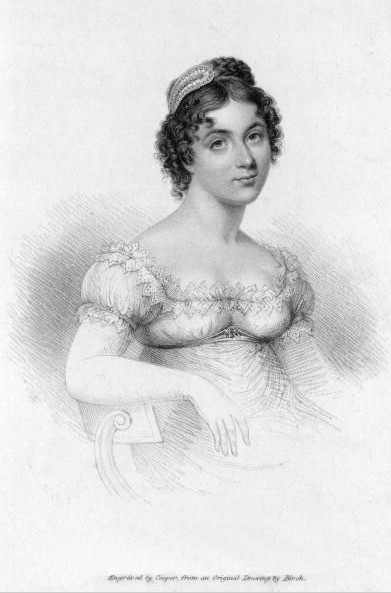
In 1825 Harriette Wilson, a courtesan, published a series of stories as her memoirs in a British broad sheet paper. The Regency gentleman’s clubs were a buzz, waiting to see the next names mentioned each week. While barriers had to be set up outside the shop of her publisher, Stockdale, to hold back the disapproving mob.
Harriette was born Harriette Debochet, she chose the name Harriette Wilson as her professional name, in the same way Emma Hart, who I’ve blogged about previously, had changed her name. Unlike Emma, it isn’t known why or when Harriette changed her name.
She was one of nine surviving children. Her father was a watchmaker and her mother a stocking repairer, and both were believed to be from illegitimate origin.
Three of Harriette’s sisters also became courtesans. Amy, Fanny and Sophia (who I have written about before). So the tales I am about to begin in my blogs will include some elements from their lives too.
For a start you’ll need to understand the world of the 19th Century Courtesan. It was all about show and not just about sex. The idle rich of the upper class aspired to spending time in the company of courtesans, it was fashionable, the thing to do.
You were envied if you were linked to one of the most popular courtesans or you discovered a new unknown beauty to be admired by others.
Courtesans were also part of the competitive nature of the regency period too, gambling was a large element of the life of the idle rich and courtesans were won and lost and bartered and fought for.
So courtesans obviously aspired to be one of the most popular, and to achieve it they learnt how to play music, read widely, so they could debate, and tried to shine in personality too. They wanted to be a favoured ’original’.
The eccentric and outspoken was admired by gentlemen who liked to consort with boxers and jockeys, and coachmen, so courtesans did not aim for placid but were quite happy to insult and mock men who courted them, and demand money for any small favour.
Well, Harriette’s amusement continued when she left the theatre one night, in search of a hackney-coach, and saw the young man who had been known to condemn her to her former lover’s parents, Mr Meyler, apparently waiting ‘slyly’ outside, near the Haymarket entrance looking as if he wished to speak with her.
Harriette’s comment. ‘And Harriette Wilson had refused to become Marchioness of Worcester, to be waited for, in a corner, by a vile sugar-baker! Oh! Ye Gods! I wonder I did not drop down dead on the spot! But, as Lord Byron says, There is no spirit now a days!
Meyler’s bueautiful dimple as he smiled on me, did not disarm me in the least.
“Mr Meyler” said I, en passant. “It is not necessary for you to conceal yourself in corners, in order to acknowledge me, and for this very simple reason, I wish to be allowed to decline your acquaintance.’
When Mr Meyler begged to know why, Harriette cut him, with a declaration that she found him a ‘dead bore’, she then climbed into the hackney with her friend leaving him in the street.
A moment later though, he ran after their carriage, shouting for the coachman to stop, and when he did, Harriette claims Mr Meyler begged to be allowed to sit in their carriage for a moment, ‘while he made his apologies and explained things.’
Obviously seeking to make the man feel even lower in her opinion, Harriette let him know it was unnecessary, implying she did not care at all for excuses, and then asked him to detain them no longer.
Mr Meyler, apparently turned to Harriette’s friend. “Mrs Johnstone,” said Mr Meyler, addressing Julia, beseechingly, “pray intercede for me. Do pray allow me to speak to you five minutes. You may put me down again at White’s, in St James’s Street, if you are tired of me.”
As much of a sucker for a pretty young face as Harriette, Julia said it would do no harm to let him in, and opened the door without Harriette’s agreement, so Harriette claims. Mr Meyler then pleaded that if only Harriette would allow it, he would be most ‘desirous’ of the opportunity to escort and protect her at the next opera ‘or anywhere else’, where he would be ‘proud’ to acknowledge her.
I think this whole piece was written by Harriette to make this man cringe, and how much of it is truth and how much Harriette’s form of half fiction is hard to tell, but she makes the man sound more and more desperate to please her. Though when I read on, the story starts to become more and more unbelievable, and Harritte’s friend Julia was one of those who when the memoirs were published called them a pack of lies. I can’t help but think this is one of the scenes she may have been speaking about…
Harriette says that Julie was suddenly afraid she’d lost some money in their opera box, and Mr Meyler immediately offered to run back and look for it if they stopped the carriage and waited. They did, but while he was gone, Julia, who was pregnant at the time, felt sick, and asked to drive on, and Harriette, oddly, says she decided to climb out of the carriage and wait alone in the street beside a watchman for Mr Meyler – do you see what I mean, the story does not sound at all like Harriette.
Anyway when Mr Meyler returns Harriette says she had covered her head, so no one would recognise her standing alone in the street, and he assumes she is a street prostitute pushing her away and saying ‘not tonight’. Now the Harriette I know would be disgusted by this assumption, but she says not a word about that. Only that he made another apology for it.
“I declared that, since the evening was so warm and moonlight, I proposed walking home, if he insisted on accompanying me; and we actually walked, full dressed, from Pall Mall to Camden Town! During which said long walk, Meyler endeavoured to make himself as amiable as possible, and took his leave at my door, without teasing me for anything except permission to call on me, some morning.” Now this to me, sounds like Harriette, and this is purely my assumption, but I think the whole thing with Julia was made up so she could write about the walk home they really shared without admitting how that walk home came about… Reading between the lines. But don’t you wish you knew the truth? I do.
Anyway, Harriette says rather than upset Lord Worcester whom she was still officially contractually bound to, she refused to meet Mr Meyler at her own home, but said he might call on her at Julia’s. I think we are talking semantics Harriette 😉 . Only to then withdraw her offer and leave him sitting in Julia’s drawing room waiting to see if Harriette would show, even though she had already written to him and told him she would not.
Then as he’d failed to gain Harriette’s attention, he resorted to more hardened attempts and forced his way into her house when she refused to admit him, and even came upstairs and tried her sitting room door which she’d locked, proving himself boorish and disrespectful once more.
I sort of believe this picture of Mr Meyler too, from all she says about him, he was not bred into the nobility, and perhaps had never played the game of respect the courtesan’s demanded. When I continue telling you how his and Harriette’s story unfolds, which they definitely did have a story to tell, he also frequently displays a hot-headed nature. But for this week, let me leave you with Harriette’s response to his bullish attempt to break into her room.
Miss Wilson, presents her compliments to Mr Meyler, is under the necessity of informing him that she requires a little more respect than he seems disposed to show towards her. Mr Meyler might have taken it for granted that, if she had been at home this morning, and disposed to receive his visits, she should have been denied to him.
Camden Town
Oh Harriette, I cannot help but think you are sending some message to the man through this text, why say you signed it Camden Town, did he condemn where you lived? Or did you live in a better area than him? The girl does make me laugh.
Jane Lark is a writer of authentic, passionate and emotional love stories.
See the side bar for details of Jane’s books, and Jane’s website www.janelark.co.uk to learn more about Jane. Or click ‘like’ on Jane’s Facebook page to see photo’s and learn historical facts from the Georgian, Regency and Victorian eras, which Jane publishes there. You can also follow Jane on twitter at @janelark
 Author, Jane Lark's stories