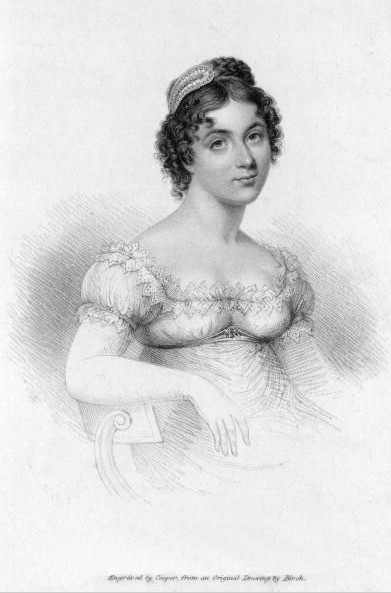
 So where did we leave Harriette last week, ah I remember, we left her playing a hand to win a prince as her protector.
Well before I begin I’ll review, for those who missed last week’s blog, the brief introduction of Harriette’s history. I’ll put this piece in every week for people who might pick the blog up for the first time, but skip it if you’ve already read it.
In 1825 Harriette Wilson, a courtesan, published a series of stories as her memoirs in a British broad sheet paper. The Regency gentleman’s clubs were a buzz, waiting to see the next names mentioned each week. While barriers had to be set up outside the shop of her publisher, Stockdale, to hold back the disapproving mob.
Harriette was born Harriette Debochet, she chose the name Harriette Wilson as her professional name, in the same way Emma Hart, who I’ve blogged about previously, had changed her name. Unlike Emma, it isn’t known why or when Harriette changed her name.
She was one of nine surviving children. Her father was a watchmaker and her mother a stocking repairer, and both were believed to be from illegitimate origin.
Three of Harriette’s sisters also became courtesans. Amy, Fanny and Sophia (who I have written about before). So the tales I am about to begin in my blogs will include some elements from their lives too.
For a start you’ll need to understand the world of the 19th Century Courtesan. It was all about show and not just about sex. The idle rich of the upper class aspired to spending time in the company of courtesans, it was fashionable, the thing to do.
You were envied if you were linked to one of the most popular courtesans or you discovered a new unknown beauty to be admired by others.
Courtesans were also part of the competitive nature of the regency period too, gambling was a large element of the life of the idle rich and courtesans were won and lost and bartered and fought for.
So courtesans obviously aspired to be one of the most popular, and to achieve it they learnt how to play music, read widely, so they could debate, and tried to shine in personality too. They wanted to be a favoured ’original’.
The eccentric and outspoken was admired by gentlemen who liked to consort with boxers and jockeys, and coachmen, so courtesans did not aim for placid but were quite happy to insult and mock men who courted them, and demand money for any small favour.
What you have to remember then, when Harriette made her pitch for a prince, is that the Prince of Wales, heir to the throne in Britain at the time, was widely known as a womanizer, so it was very easy for Harriette to assume (especially when she was very young) that her contact might be favoured by the Prince.
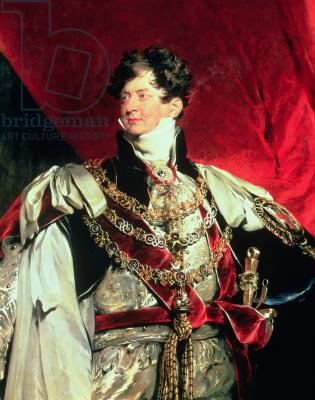 She wrote and told him she was very beautiful, convinced every man must think so by the attentions and favours of the men about her, especially Frederick Lamb, who I mentioned last week.
She said in her letter, ‘so, perhaps, you would like to see me; and wish that, since so many are disposed to love me, one, for in the humility of my heart I should be quite satisfied with one, would be at pains to make me love him. In the mean time, this is all very dull work, Sir, and worse even than being at home with my father: so if you pity me, and believe you could make me in love with you, write to me, and direct to the post-office here.’
Do you see what I mean about the competition? Hariette is hardly selling herself, calling the life of a courtesan ‘dull work’, but she knows exactly what she is doing in this letter, (remember she had older sisters in the game she must have been learning from). She is trying to prod the prince into wishing to prove to her sex is not dull, and compete with others to win not only her but her affection over others. This is where being a courtesan in the 19th Century was far different to any sexual trade, or the establishment of mistresses, in later generations. I think her reference to her father is also potentially deliberate, to indicate just how young she is without explicitly selling her age, which would have been too crass. Her age would have possibly only been fifteen or perhaps sixteen at the time.
The Prince did reply and he invited her to London, where he was at the time. However Harriette was a courtesan who liked devotion and not a mere summons. She strongly refused to play the chaser and liked to be chased. Her response to the Prince, so she says, was;
‘SIR,
To travel fifty-two miles, this bad weather, merely to see a man, with only the given number of legs, arms, fingers, etc. would you must admit, be madness in a girl like myself, surrounded by humble admirers, who are ever ready to travel any distance for the honour of kissing the tip of her little finger; but if you can prove to me that you are one bit better than any man who may be ready to attend my bidding, I’ll e’en start for London directly…’
What a clever girl, saying no, but again aiming to encourage him to chase… It’s all about pulling for devotion. I love Harriette, she’s such a character.
I will warn you though, as we go through the stories, they are hers, but when she wrote her memoirs she did muddle dates and settings up so often things happened in her memoirs in a time period when they couldn’t have happened. For instance she called the Duke of Wellington by his title in one episode when he did not have his title at the time she was speaking of. So if you spot any oddly placed facts then forgive Harriette, not me ;-).
One of the Harriette’s facts which I think probably happened, but the order in the memoirs is probably more a little embellishment for story telling purposes, is that she says when she was on her way to post her refusal to the Prince of Wales, she met Frederick Lamb’s father. Who then challenged her over why she had thrown Frederick out of her house before dark, when Lord Craven was not even there.
Harreitte says Frederick joined them during this conversation and that his father’s conclusion was, ‘I’ll leave you two together and I fancy you’ll find Miss Wilson more reasonable.’ She says Frederick laughed ‘long, loud and heartily’ over his father’s pushing for her to offer favours and that Frederick laughed still more over her refusing the Prince.
She declares herself still not in love with Frederick, but when she had her current boring protector to compare to, I think any young devoted man would have generated some interest, and as Frederick’s attentions became less passionately forceful ‘wild fits of passion’ and more verbally urging and expressing adoration, Harriette admits feeling flattered, and the force of habit. She spent far more time with Frederick than with her protector Lord Craven, and mentions spending ten days in Frederick’s constant company.
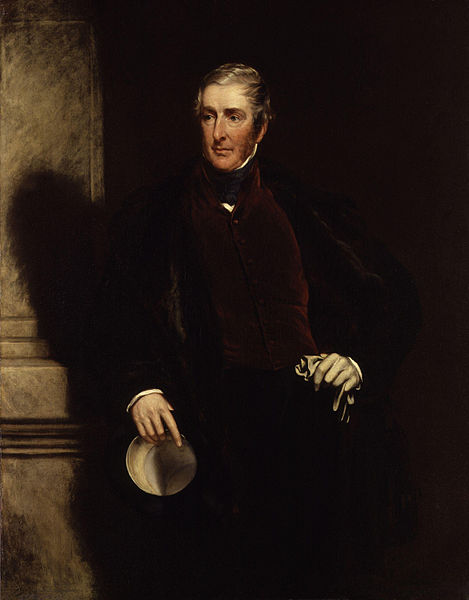 When Frederick has to leave Brighton with his regiment, Harriette describes their parting scene as ‘tender’ and says Frederick asked to be able to introduce his brother William to her (Caroline Lamb‘s husband, although I doubt he was married to Caro at the time). She teases Frederick that she might fall in love with his brother, but Frederick tells her it’s unlikely William could love her as Frederick did.
Although Harriette’s memoirs claim all her relations with Frederick Lamb were chaste, it was still this which ended her time as Lord Craven’s mistress.
Hearing of the amount of time Harriette has been spending with Frederick from a friend, Lord Craven writes to her and tells her their relationship is at an end and they must separate. He says in this letter he has seen their intimacy, which I should imagine before Lord Craven would have been Frederick kissing her hand, or touching her hair. All things bestowed by a courtesan to inspire a desire for more in one man and jealousy from another.
Harriette replies;
‘MY LORD
Had I ever wished to deceive you, I have the wit to have done it successfully; but you are old enough (I assume a dig at the fact he is much older than her and Frederick) to be a better judge of human nature, than to have suspected me of guile or deception. In the plentitude of condescension, you are pleased to add, that I ‘might have done anything with you, with only a little more conduct,’ (in other words if no one had seen her with Frederick, Lord Craven would have ignored it), now I say, and from my heart, the Lord defend me from ever doing anything with you again! Adieu.’
So Harriette – not by her design – ends this period without a protector, and of course, as a fallen woman her options are then limited. She cannot return home, her father would not have accepted her back. So to whom can she turn? Well there is one young man who will at least give her a roof to sleep under…. She runs to Frederick…
More next week 😀
Jane Lark is a writer of authentic, passionate and emotional love stories.
See the side bar for details of Jane’s books, and Jane’s website www.janelark.co.uk to learn more about Jane. Or click ‘like’ on Jane’s Facebook page to see photo’s and learn historical facts from the Georgian, Regency and Victorian eras, which Jane publishes there. You can also follow Jane on twitter at @janelark




 Author, Jane Lark's stories