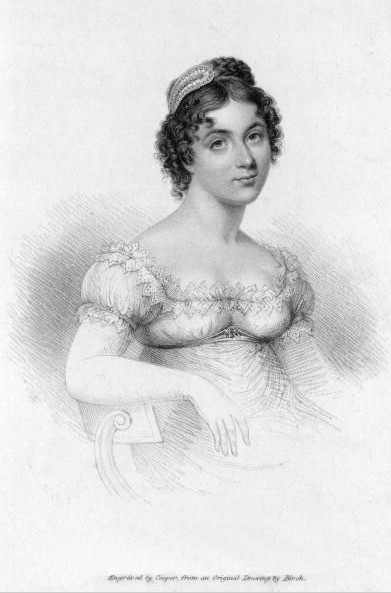
Courtesan’s portrayal of a real Regency villain

Harriette_Wilson00As Harriette’s memoirs draw to a close, they become an odd clutter of short targeted attacks on those who she held grudges with, but there a couple more little stories to be captured and shared…

Before I do though, as ever, here’s the history to this series of posts for anyone joining today. For those who have been following Harriette’s story skip to the end of the italics, and I’ll mark the place to start reading again with bold type.

In 1825 Harriette Wilson, a courtesan, published a series of stories as her memoirs in a British broad sheet paper. The Regency gentleman’s clubs were a buzz, waiting to see the next names mentioned each week. While barriers had to be set up outside the shop of her publisher, Stockdale, to hold back the disapproving mob.

Harriette was born Harriette Debochet, she chose the name Harriette Wilson as her professional name, in the same way Emma Hart, who I’ve blogged about previously, had changed her name. Unlike Emma, it isn’t known why or when Harriette changed her name.

She was one of nine surviving children. Her father was a watchmaker and her mother a stocking repairer, and both were believed to be from illegitimate origin.

Three of Harriette’s sisters also became courtesans. Amy, Fanny and Sophia (who I have written about before). So the tales I am about to begin in my blogs will include some elements from their lives too.

For a start you’ll need to understand the world of the 19th Century Courtesan. It was all about show and not just about sex. The idle rich of the upper class aspired to spending time in the company of courtesans, it was fashionable, the thing to do.

You were envied if you were linked to one of the most popular courtesans or you discovered a new unknown beauty to be admired by others.

Courtesans were also part of the competitive nature of the regency period too, gambling was a large element of the life of the idle rich and courtesans were won and lost and bartered and fought for.

So courtesans obviously aspired to be one of the most popular, and to achieve it they learnt how to play music, read widely, so they could debate, and tried to shine in personality too. They wanted to be a favoured ’original’.

The eccentric and outspoken was admired by gentlemen who liked to consort with boxers and jockeys, and coachmen, so courtesans did not aim for placid but were quite happy to insult and mock men who courted them, and demand money for any small favour.

Before telling us the story I am going to share today, Harriette detours to mention dining with a lawyer called Brougham, who she says advised her to pursue both Lord Worcester (her former lover) and his father the Duke of Beaufort to restore the income he said he would give her, and then tricked her out of. You will hear more of Brougham again, when I tell you some of the things Harriette did not put in her memoirs.

Then her next little dig is at the Duke of Wellington, a man who refused to pay her bribe to keep his name out of her memoirs extremely bluntly, I shan’t share the full interlude, but just this – she says she met him in a street, and he asked to call on her. She agrees, and then records mocking him like this…

The ladies here tell me you make a bad hand at Ambassadorship,’ said I to him.

‘How so?’

‘Why the other day you wrote to ask a lady of rank if you might visit her a cheval? What does that mean, pray?’

‘In boots, you foolish creature! What else could it mean?’

‘Why the lady thought it just possible that the great Villainton, being an extraordinary man, might propose entering her drawing-room on the outside of his charger, as being the most warrior-like mode of attacking her heart.’

See what I mean, she seems to be grabbing at last chances to have a stab at the ego’s and reputations of the men she disliked most… So now you know that, when I tell you the next story, perhaps read it with a pinch of salt, because I don’t know what Prince Esterhazy had done to her, but it would seem it is definitely an attempt to damage his character, and it may or may not, be true.

This story she relates as taking place after she’s returned to London. Napoleon has escaped his prison on the island of Elba, and was progressing across France and returning to Paris, and so the British fled.

In London, she says that Prince Esterhazy had tracked her down, it was no chance meeting, and he asked to come and visit her. Harriette agreed…

A few days later the Prince entered and, throwing off his large German cloak, shook hands with me.

‘Prince,’ said I, ‘I know you don’t come here to make love to me, which knowledge renders me the more curious to learn what you do come here for.’

The Prince explained, ‘In short, I have great confidence in you, and I am going to point out to you how we may serve each other very effectively. I want a friend like you. It is what I was always accustomed to in Paris. In short, I want to make the acquaintance of some interesting young ladies. I hate those which are common or vulgar; now you could make a party here in this delightful cottage; and invite me to pay my court to any young lady of your acquaintance, perhaps your sister!’

‘Do you allude to an innocent girl, Prince?’ said I, ‘and do you really imagine that, for all your fortune, paid to me twice over, I would be instrumental in the seduction of a young lady of education? And, if I would, would you not yourself scruple, as a married man, to be the cause of misery to a poor young creature?

‘There are many girls who determine on their own fall,’ said Esterhazy. ‘All I want is that, when you see them going down, you will give them a gentle push, thus,’ said he.

‘Prince,’ said I, ‘I will never injure a woman while I breathe, and I will assist and serve those of my own sex wherever I can, as I always have done. No innocent girl, however inclined she may be to fall, shall receive the push you suggest from me. On the contrary, I will always lend my hand, as I did to my sister Sophia, (who was now a respectably married woman who Harriette hated – another little dig to remind Sophia of her origins – and more truth to come on this too) to try to prevent her from falling, or to lift her up again. If I knew a poor young creature, deserted by her friends and her seducer, and you would make a provision for her during her life, I would for her sake, not yours, perhaps present her to you.’ (Mmmm more truth on this too after Harriette’s memoirs).

‘Perhaps I would make a settlement on her,’ said Esterhazy; ‘but mind, she must be very young, very fair, and almost innocent.’

‘Why, Prince, you are like the ogre in Tom Thumb. And all the while you have the enjoyment of the most beautiful wife in Europe!’

‘Oh Harriette! a wife is altogether so very different from what is desirable, no sort of comparison can be made with them,’ replied His Excellency, taking up his cloak.

In two days, he came to me again, in a dirty greatcoat, all over wet and mud, just at my dinner-time. He placed himself before my fire so that I could not see a bit of it, with his hat on, and declared he was much disappointed at not having heard from me…’

‘I saw two of the most lovely sisters, walking with their mothers today. They would not measure around the waist more than so much’ describing to me the circumference with his hands. ‘I watched them home, to…… Do pray contrive to get acquainted with them.’

‘You had better leave my house,’ said I, beginning to be truly disgusted at the very honourable employment which his princely representative of imperial dignity, morality, disinterestedness and humanity wished to force upon me.’

Harriette claims she did throw him out, and then immediately moved to another story… Like I say, the end of her memoirs are a clutter… I shall share her next story, next week…

Jane Lark is a writer of authentic, passionate and emotional Historical and New Adult Romances, and the author of a No.1 bestselling Historical Romance novel in America, ‘The Illicit Love of a Courtesan’.

Book 3 in the Marlow Intrigues series, The Scandalous Love of a Duke, will be published on the 7th April, and is now available for pre-order, click on the cover on the right-hand side to order. Jane’s novels, The Passionate Love of Rake and I Found You, will also be available in Paperback on 17th April and are available to pre-order.

Why not also read A Lord’s Desperate Love the story of two of the characters from The Passionate Love of a rake which Jane is telling for free here, there is a link to each part in the index of posts. 

Click here to find out more about Jane’s books, and see Jane’s website www.janelark.co.uk to learn more about Jane. Or click  ‘like’ on Jane’s Facebook  page to see photo’s and learn historical facts from the Georgian, Regency and Victorian eras, which Jane publishes there. You can also follow Jane on twitter at @janelark

A regency courtesan caught in a love triangle

Harriette_Wilson00Although Harriette Wilson had, as I said a couple of weeks ago, chosen to return to Mr. Meyler after teaching him an eye-for-an-eye lesson with Lord Ebrington, Lord Ebrington was not willing to simply withdraw, and because of Meyler’s insufferable temper, Harriette begins an emotional tug of war between the two of them.

But as always, before I tell this part of her story, here’s the background to this series of posts for anyone joining Harriette’s story today, and if you have already read this, then skip to the end of the italics, I have marked the start of the story in bold type again this week…

In 1825 Harriette Wilson, a courtesan, published a series of stories as her memoirs in a British broad sheet paper. The Regency gentleman’s clubs were a buzz, waiting to see the next names mentioned each week. While barriers had to be set up outside the shop of her publisher, Stockdale, to hold back the disapproving mob.

Harriette was born Harriette Debochet, she chose the name Harriette Wilson as her professional name, in the same way Emma Hart, who I’ve blogged about previously, had changed her name. Unlike Emma, it isn’t known why or when Harriette changed her name.

She was one of nine surviving children. Her father was a watchmaker and her mother a stocking repairer, and both were believed to be from illegitimate origin.

Three of Harriette’s sisters also became courtesans. Amy, Fanny and Sophia (who I have written about before). So the tales I am about to begin in my blogs will include some elements from their lives too.

For a start you’ll need to understand the world of the 19th Century Courtesan. It was all about show and not just about sex. The idle rich of the upper class aspired to spending time in the company of courtesans, it was fashionable, the thing to do.

You were envied if you were linked to one of the most popular courtesans or you discovered a new unknown beauty to be admired by others.

Courtesans were also part of the competitive nature of the regency period too, gambling was a large element of the life of the idle rich and courtesans were won and lost and bartered and fought for.

So courtesans obviously aspired to be one of the most popular, and to achieve it they learnt how to play music, read widely, so they could debate, and tried to shine in personality too. They wanted to be a favoured ’original’.

The eccentric and outspoken was admired by gentlemen who liked to consort with boxers and jockeys, and coachmen, so courtesans did not aim for placid but were quite happy to insult and mock men who courted them, and demand money for any small favour.

Lord Ebrington was the first to make the next move in the newly forming love triangle. Harriette says he called on her, and accused her, ‘You have behaved very ill to me…’ Harriette claims it was not her fault, that she did not wish to treat him ill, and that she had truly agreed to end any commitment to Meyler.

But still you admit him just as usual.’

Because Meyler is so violent in his temper, and just now, so uneasy in his mind, which, added to his indifferent state of health, is more than I can resist…’ But it’s Harriette who leaves a metaphoric door open for Lord Ebrington, ‘Meyler will not remain long in France; but while he is here, my heart fails me when I attempt to turn him out of my house, and he must be permitted to visit me; neither will I shock nor disgust him, while he is in this constant and penitent humour, by allowing him to find you so often here’ … and the words between the statement… But if you wait for him to leave France… Then… Just like Harriette to always leave her options open.

Perhaps while writing of her own love triangle, Harriette’s conscience twanged, because at that moment, she takes the opportunity to hint at a similar love triangle for the sister she’d rivaled for men, for most of her life, Amy, who she claims arrived in Paris, with both Nugent and Luttrell. I think, knowing Harriette, it was a dig to draw ill judgement away from her own goings on, but she highlights, subtly, that Amy is staying in the same hotel as both men. I laugh. Oh Harriette you can be vicious.

Anyway back to her own, less ménage-à-trois like relationship.

‘As for Meyler, he continued to be all a woman could possibly wish him, as long as there was rivalry with Lord Ebrington; (which is probably another reason Harriette was deliberately keeping Ebrington close – to keep Meyler in line) but as soon as ever His Lordship had, or seemed to have, relinquished the pursuit, Meyler left off being amiable by slow degrees, till he became just what he had been before Ebrington had made an infraction in the complete harmony of our ménage. At that time Lord Hertford’s remark occurred to me: ‘Better live on a bone, than with a man of uneven or bad temper.

In Harriette’s defense, Meyler could be mean and cutting though, from what Harriette’s said.

In one of Meyler’s fits of dogged humour, he asked me if I imagined he was vain enough or dupe enough to believe that I had given up such a man as Lord Ebrington for him. ‘You know as well as I do… that you are only making a merit of necessity. Ebrington got tired of you!’

I bit my lips with indignation, as ladies are wont to do on these occasions; but I remained silent, considering that most dignified. ‘…be it as you will, only pray, pray, a little peace if you please, and a little respite from these eternal quarrels, or part we must and part we will.’

When this angle of attack did not succeed in fully irritating Harriette into anger, Meyler, headed around to it by another route. ‘Perhaps,’ observed Meyler, in his zeal to tease and provoke, ‘ perhaps Ebrington likes you still and wishes to visit you, while you are so excessively cold-blooded as to leave the man you like to stay with me, because I am so much richer.’

Ha, ha, he may well have a point with that one! 😀 It certainly succeeded in making Harriette feel enough was enough.

‘Which of the two of us must leave the room?’ said I, taking up my bonnet and ringing my bell in a violent passion.’

Meyler having never seen me so violently disturbed, and half afraid  he might have gone too far, he affected to turn the whole into a mere joke, when he took leave of me, as he said, to dress for dinner.

The very instant he turned his back I wrote a note to Lord Ebrington, declaring, whether he ever wished to see me again or not, Meyler and I were now separated

Lord Ebrington responded to her summons immediately, and in person, ‘pride had not permitted him to show any symptoms of regret when he was dismissed, yet he very willingly expressed his delight and satisfaction at being reinstated.’

Lord Ebrington remained with Harriette from ‘five in the evening until past three the following day, when, after obtaining my promise to receive him again on the same evening, he made his departure in full dress, having called on me the day before, merely with intention to make me a flying visit on his way to a large dinner party.’

Then…

Ebrington’s pretty cabrolet, which he had sent for, was scarcely driven from the door when–enter little Mr Dick Meyler, M.P., and sugar-baker, as pale as a ghost! I was really shocked, having seldom seen him look so ill, and I took hold of his hand, which was as cold as death.’

Meyler explained to Harriette, that he had seen Lord Ebrington arrive, from his house across the street, and from there he’d watched from a window half the night, and seen the man send his carriage away, and not seen Lord Ebrington leave until just now. But this time, Harriette would not let herself be drawn back to him and his ill-temper by pity.

only do for heaven’s sake let me alone; for nothing you can now say or do shall induce me to be tormented with your society.’

Realizing that he had now truly pushed Harriette too far, Meyler conceded, but not without extracting a promise from her, that if she continued with Lord Ebrington, he would not have to endure watching the affair and thinking of Lord Ebrington with her. So Harriette did indeed continue with Lord Ebrington, but under the condition that he sneaked in and out of her house when Meyler was not at home, or watching.

But then Lord Ebrington decided to leave Paris and travel further into the newly reopened war-torn Europe, on an excursion with friends to Italy, and then again, Meyler was at Harriette’s door. This time he announced that he was also about to leave France.

‘I shall go to England in three days… May I see you constantly till I go.’  

Hariette agreed, but her agreement was to be a disastrous move. That night, while she was in bed, asleep, while Meyler slept in a bed beside hers, Lord Ebrington returned, and she says he actual not only entered her house, but entered her bedchamber to surprise her, expecting her to be delighted that he had changed his mind and returned to Paris.

Harriette says she awoke in a panic.

‘Dear little Harry, have I frightened you?’ said Lord Ebrington, in speechless dismay.

I pointed my finger towards the small French bed, where poor Meyler was still calmly sleeping, and Lord Ebrington hastily bolted from the room…’

She never admitted the scene to Meyler, but once he’d left Paris, Lord Ebrington did return to Harriette’s bed, although only for a week. Harriette felt, that had she not taken Meyler back for those three days, Lord Ebrington may have invited her to travel to Italy with him, but having returned to find her back with Meyler, his pride was too cut, and she admits to talking constantly of Meyler in the week they did spend back together.

I fancy his vanity was irreparably wounded with what he saw on his arrival… Meyler spoiled my preferment with Ebrington by hurting His Lordship’s vanity and thus damping his ardour… Ebrington took his leave of me and Paris. Could I wonder at it?’

Harriette’s memoirs begin drawing to a close after this, but I will share them to the very end, and then share some of the things I’ve discovered which happened in her life, but she chose to not mention in her memoirs… Those things will make you feel sorry for her. If they don’t, then you must be a lot more hard-hearted than me…

Jane Lark is a writer of authentic, passionate and emotional Historical and New Adult Romances, and the author of a No.1 bestselling Historical Romance novel in America, ‘The Illicit Love of a Courtesan’.

Why not also read A Lord’s Desperate Love the story of two of the characters from The Passionate Love of a rake which Jane is telling for free here, there is a link to each part in the index of posts. 

Click here to find out more about Jane’s books, and see Jane’s website www.janelark.co.uk to learn more about Jane. Or click  ‘like’ on Jane’s Facebook  page to see photo’s and learn historical facts from the Georgian, Regency and Victorian eras, which Jane publishes there. You can also follow Jane on twitter at @janelark