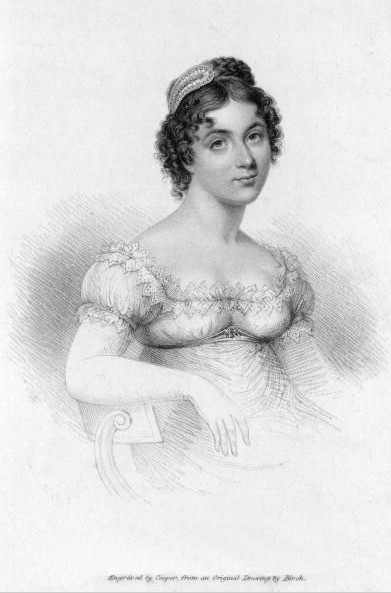
Harriette, the Regency courtesan, kicks the next man out of her bed ‘and I , to show my indifference, would make a point of joining any gay evening parties’

Harriette_Wilson00We left Harriette last week feeling blue ‘I was deeply hurt to think that, do what I would to deserve it, no one would like me; and there was nothing on earth, half so desirable, half so consoling, to me, as the esteem and steady friendship of others…’ Or more particularly the esteem of a man 🙂

So let’s find out what Harriette gets up to next, but before I do, as always, here’s the background to this series of posts for anyone joining today. If you’ve read it already, start reading from the end of the italics.

In 1825 Harriette Wilson, a courtesan, published a series of stories as her memoirs in a British broad sheet paper. The Regency gentleman’s clubs were a buzz, waiting to see the next names mentioned each week. While barriers had to be set up outside the shop of her publisher, Stockdale, to hold back the disapproving mob.

Harriette was born Harriette Debochet, she chose the name Harriette Wilson as her professional name, in the same way Emma Hart, who I’ve blogged about previously, had changed her name. Unlike Emma, it isn’t known why or when Harriette changed her name.

She was one of nine surviving children. Her father was a watchmaker and her mother a stocking repairer, and both were believed to be from illegitimate origin.

Three of Harriette’s sisters also became courtesans. Amy, Fanny and Sophia (who I have written about before). So the tales I am about to begin in my blogs will include some elements from their lives too.

For a start you’ll need to understand the world of the 19th Century Courtesan. It was all about show and not just about sex. The idle rich of the upper class aspired to spending time in the company of courtesans, it was fashionable, the thing to do.

You were envied if you were linked to one of the most popular courtesans or you discovered a new unknown beauty to be admired by others.

Courtesans were also part of the competitive nature of the regency period too, gambling was a large element of the life of the idle rich and courtesans were won and lost and bartered and fought for.

So courtesans obviously aspired to be one of the most popular, and to achieve it they learnt how to play music, read widely, so they could debate, and tried to shine in personality too. They wanted to be a favoured ’original’.

The eccentric and outspoken was admired by gentlemen who liked to consort with boxers and jockeys, and coachmen, so courtesans did not aim for placid but were quite happy to insult and mock men who courted them, and demand money for any small favour.

Having been scorned by the young Marquis of Worcester, ‘In a very desponding temper’ Harriette sat down and wrote to Mr Meyler, a close friend of the Marquis’s mother, and the man she had been trying to keep in the wings for a year as a fall back if her plans with Lord Worcester never came off. A man she favoured over Worcester anyway.

It is long, very long, since I heard from you, and, like the rest of the world I take it for granted you have forgotten me, else I would have been yours, and yours only, as long as you were disposed to protect me. I always liked you; but twice the love I ever felt towards you would not have made me act unfeelingly towards anybody breathing, while I knew or fancied they deserved my gratitude. The reward for this steadiness in what I believed was right, is, that all have forsaken me: even Lord Worcester has turned against me, and written me romantic professions latterly, in cold blood, on purpose, as it seems , to betray me, by the goodness of my heart, with sending him an answer, which , by law, would deprive me of the small annuity which had been granted for my future existence.

The money is nothing!-I never cared about money; but all this harsh treatment wounds me more than I can describe to you. And you, too, have forgotten me, n’est-ce pas? If you have not, I hope you will tell me so, by return of post. In the meantime, God bless you dear Meyler.

By the earliest post’ Harriette received her reply. In a letter which she deemed ‘unusually romantic’.  It said he would be back in town at the same speed as the letter. He’d thought she was in Spain with Lord Worcester and his hope had died. ‘He had won a considerable wager by my dear, kind letter; but was too happy to enrich himself at any man’s expense, therefore refused to accept a guinea of it.’

He told her that she would not call him cold again if she knew how he felt at that moment, and that she needn’t worry about Worcester’s annuity, they would be together for life, he had no desire to take a wife, and he’d not felt for anyone what he felt for  – so many men had said that to her by now, surely she didn’t actually believe it? But maybe her ego was so desperate for attention she did. After all Mr. Meyler was several years younger than her, as Lord Worcester had been. And maybe she just didn’t care, it was income and adoration for now…

As Harriette’s writing changed, to the point you could hear her infatuation in the words, when she fell for Lord Ponsonby. It changes again now, she did have some genuine feeling for Mr Meyler, but it was different to her writing about Lord Ponsonby. In every other relationship she seems to only have given a little of her true self, and her words are always carefully couched, but with Meyler she is straight to the point, I don’t think she hid anything of herself from him. Perhaps because as she said above, he was not the naturally romantic type, he was a like-me-warts-and-all man, so that is what she gave him back.

Meyler struck me as having grown much more handsome than when we last parted; but that might only be my fancy.’

They hired a house in ‘the New Road, close to Gloucester Place.’ And Harriette says for a fortnight they were ‘both in love, and did not quarrel.’ ‘…but, alas! In rather less than three weeks, I discovered that Meyler, the lively Meyler, was one of the worst tempered men in England!’

And coming out of her relationship with Lord Worcester who’d spent his days wishing to do anything he possibly could for her, and having spent a quiet year in the country – I think Harriette was a bit shocked. ‘I cannot describe Meyler’s temper for I never met with anything, in the way of temper, at all to be compared to his. It was sort of periodical temper; and when he had passed a whole day in sweet soft conversation, I was perfectly sure that a storm was at hand for the next day, and vice versa.

At first I would not stand it… and used to kick him out of bed the moment he began to run restive, and then he would turn out in the middle of the night, to return to his house in Grosvenor Square, and I , to show my indifference, would make a point of joining any gay evening parties.

He would show up the next day though, looking ‘penitent, arch, and beautiful.

Harriette’s sister Amy, who was constantly fighting with Harriette, prodded him not to come back with his figurative tail between his legs, but to let Harriette chase after him, saying that Harriette would come looking for him after a couple of days. To which Harriette says Mr. Meyler replied, ‘so I would, only some man would–in the meantime, perhaps.’

Harriette confesses to what I implied above, that with Meyler, she could be a tyrant too and gave as good as she got. I can only imagine perhaps how wonderful this might have felt after years of quietly seducing men, to have a man she could have a really good verbal fight with, no holding back.

Harriette beautifully wraps it all up with one word – passion. ‘…my feelings towards Meyler were all made up of passion.’

From Harriette’s writing, I think they had a very hot relationship in more ways than one, but I think rather than putting her off, it pulled her deeper in…

I’ll continue the story of Mr Meyler, and Harriette, next week.

Jane Lark is a writer of authentic, passionate and emotional Historical and New Adult Romance stories.

See below on the side bar for details of Jane’s books, and Jane’s website www.janelark.co.uk to learn more about Jane. Or click  ‘like’ on Jane’sFacebook  page to see photo’s and learn historical facts from the Georgian, Regency and Victorian eras, which Jane publishes there. You can also follow Jane on twitter at @janelark

A courtesan scorned

Harriette_Wilson00In my last post I left Harriette having just discovered that her long-term protector, the now twenty-one year old Marquis of Worcester, who she’d lived with for years, had run off with a woman on the continent. After Harriette had lived for a whole year out of society to prove her faithfulness. So what did Harriette do next?

Well as always before I tell you, here’s the background to this series of posts for anyone joining Harriette’s story today, and if you’ve read it before just skip to the end of the italics.

In 1825 Harriette Wilson, a courtesan, published a series of stories as her memoirs in a British broad sheet paper. The Regency gentleman’s clubs were a buzz, waiting to see the next names mentioned each week. While barriers had to be set up outside the shop of her publisher, Stockdale, to hold back the disapproving mob.

Harriette was born Harriette Debochet, she chose the name Harriette Wilson as her professional name, in the same way Emma Hart, who I’ve blogged about previously, had changed her name. Unlike Emma, it isn’t known why or when Harriette changed her name.

She was one of nine surviving children. Her father was a watchmaker and her mother a stocking repairer, and both were believed to be from illegitimate origin.

Three of Harriette’s sisters also became courtesans. Amy, Fanny and Sophia (who I have written about before). So the tales I am about to begin in my blogs will include some elements from their lives too.

For a start you’ll need to understand the world of the 19th Century Courtesan. It was all about show and not just about sex. The idle rich of the upper class aspired to spending time in the company of courtesans, it was fashionable, the thing to do.

You were envied if you were linked to one of the most popular courtesans or you discovered a new unknown beauty to be admired by others.

Courtesans were also part of the competitive nature of the regency period too, gambling was a large element of the life of the idle rich and courtesans were won and lost and bartered and fought for.

So courtesans obviously aspired to be one of the most popular, and to achieve it they learnt how to play music, read widely, so they could debate, and tried to shine in personality too. They wanted to be a favoured ’original’.

The eccentric and outspoken was admired by gentlemen who liked to consort with boxers and jockeys, and coachmen, so courtesans did not aim for placid but were quite happy to insult and mock men who courted them, and demand money for any small favour.

Well as I said last week, of course she’d hot footed it off to town, to the hallowed ground of London, men and parties, but the man Harriette had been holding in reserve for a year, Mr Meyler, was sadly out of town in the country, so there was no immediate romantic welcome.

Her sister fanny however forbid Harriette to write to the second young man before first seeking compensation from the Marquis of Worcester’s father, the Duke of Beaufort. Harriette had been offered a sum of money if she left his son as he disagreed with the relationship. Of course Harriette, as usual, claimed she would not have sought it if her sister had not persuaded her to ask, but her sister did.

Her request for the originally offered £500 was rejected with a denial that he’d ever said such a sum, he offered £300, with no ground to bargain.

Harriette had little choice but to agree and so ‘the Duke set his attorney to work to draw up the papers.’

But then two ‘parcels,’ I think she means letters, arrived from Lord Worcester. ‘He had not seduced Mrs Archdeacon, for Mrs Archdeacon had followed him up to the army, whether he would or not, and he had her sent her back immediately, and wished her dead for her disgusting assurance: and he adored me, etc. etc.as usual.’

The prize was definitely in Lord Worcester, she has been telling us for weeks she never loved Lord Worcester but had already begun falling in love with Mr Meyler, and now she does not progress her move to leave Lord Worcester behind, but puts the brakes on everything, and tells his father she cannot sign any document – yet… Perhaps Lord Worcester’s future dukedom calling again – maybe 🙂

Anyway, most of her little games she’s played well, but this one she got completely wrong, of course her delay gave the Duke of Beaufort time to hear the same rumour about his son that Harriette had heard, and the moment he heard the tale that his son had moved on to a new woman, any offer of money was instantly withdrawn. ‘the Duke heard of Mrs Archdeacon, and, believing his son had forgotten me, kindly wrote me word, he would now do nothing for me, and I might starve if I did not like to live with another man.

Harriette’s answer, ‘I could no longer endure the Duke’s excessive selfishness calmly, and therefore assured him that I had still many letters, with promises of marriage, from Lord Worcester, written since those I had delivered up to him, trusting to the frail reeds, his generosity and honour, all which were, at that time, in my possession.’

‘The Duke now wrote me a most insulting and impertinent letter, declaring that, if I were humble and civil, he had no objection to giving me a small sum for my letters; but recommended me to be moderate in my demands, otherwise he should not think them worth attending to, or taking any notice of.’

This time the Duke had the honour of putting me in a passion, and I consequently wrote to this effect.

Your Grace must excuse my flattering, with civility, you whose conduct has been so invariably selfish, mean, and artful towards me, as to have, at last, inspired me with perfect contempt. Having your promise of £300 provided I fulfil certain conditions, without one bit of the civil humility you recommend, I beg to acquaint you that, if the annuity is not made out directly, I will publish the promise of marriage, and put an execution into your house for the annuity.’

This won the Duke over – within days she received an agreement although not for £300 a year, but for £200 a year, but there was one other condition, that Harriette never spoke to or wrote to Lord Worcester again. Harriette therefore once again passed over all the letters she’d received from Lord Worcester, and the agreement was signed and witnessed.

Lord Worcester wrote a parcel of very pathetic letters to my sister Fanny: he wished me happy: he knew well that he should never be allowed to see me again: he did not think I could have agreed never to write or speak to him again: he had heard that I was with Mr Meyler; but, even in that case; he could not fancy my having cut him.

He wrote three or four letters to Fanny in the same style, but then he wrote to Harriette…

‘It was impossible to resist addressing me, cruelly as I had left him, etc.etc.’

‘So it is, very mercenary, cruel, and unnatural,’ said I to Fanny, after having finished His Lordship’s letter to me: ‘in short, were he to be killed abroad, I should never enjoy another hour’s rest’; and in spite of all they could say or do to prevent me, I wrote to tell Worcester, that I trusted to God, and to his good heart, for seeing that I was somehow provided for; but that nothing should again induce me to cut him, while I believed him still fond of me, and unhappy for my sake.’ – or perhaps willing to make her a duchess 😉

After writing this letter, Harriette received her first half-year payment £100 from the Duke of Beaufort, ‘and in less than a month afterwards, the same attorney applied to me for the £100 back’

Harriette believed the whole thing was a set up, and that Lord Worcester had quite deliberately written to her, so that she would write back and break the contract so his father would not have to pay a thing. ‘Lord Worcester has acquainted his father that you have written to him, and therefore, since you are not entitled to that £100 the Duke insists on its being returned.’

When Harriette argued, should she not be allowed it if she remained separated from Lord Worcester? The answer was, ‘Certainly not even then, The fact is, His Grace believes that his son has left you altogether.

And when she called on his good nature, for the fact that she could have been his daughter years before, and did not take the opportunity, and did they not care what became of her, it was said, ‘That is a matter of perfect indifference to His Grace, and also to me.’

But I said weeks ago, when I began the tale of Harriette and Worcester, that all along I wondered if her real hope was to acquire a Duke and a title of her own (especially as her younger sister was marrying his uncle, a Baron, when they met) – so when all her attempts to win over fail now, and Harriette’s affair with Lord Worcester finally comes to an end, what does she say? ‘for this I had left the gay world, and buried myself in a village. It was to ensure the esteem of the Beauforts, that I refused to become one of them.’ Almost her last statement on the subject.

What does Harriette do now? Well there’s little choice really, for income, and for her self-esteem, she must move on to the next man, and make him fall in love and flatter her.  TO BE CONTINUED 🙂

Jane Lark is a writer of authentic, passionate and emotional Historical and New Adult Romance stories.

See the side bar for details of Jane’s books, and Jane’s websitewww.janelark.co.uk to learn more about Jane. Or click  ‘like’ on Jane’sFacebook  page to see photo’s and learn historical facts from the Georgian, Regency and Victorian eras, which Jane publishes there. You can also follow Jane on twitter at @janelark