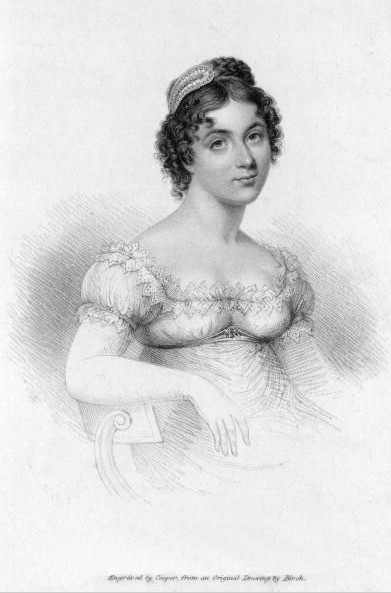
What happens once Lord Worcester has gone, will the Courtesan play?

Harriette_Wilson00Once Lord Worcester had left the courtesan, Harriette, behind, she had two choices. To stay at home and pine, or get on with her life. Well if you have been following this series of posts there are no odds at all on which she picked. But before I tell you what happened, as usual here’s the quick recap on the history of this series of posts for anyone joining the story today. Skip to the end of the Italics if you’ve already read it.

In 1825 Harriette Wilson, a courtesan, published a series of stories as her memoirs in a British broad sheet paper. The Regency gentleman’s clubs were a buzz, waiting to see the next names mentioned each week. While barriers had to be set up outside the shop of her publisher, Stockdale, to hold back the disapproving mob.

Harriette was born Harriette Debochet, she chose the name Harriette Wilson as her professional name, in the same way Emma Hart, who I’ve blogged about previously, had changed her name. Unlike Emma, it isn’t known why or when Harriette changed her name.

She was one of nine surviving children. Her father was a watchmaker and her mother a stocking repairer, and both were believed to be from illegitimate origin.

Three of Harriette’s sisters also became courtesans. Amy, Fanny and Sophia (who I have written about before). So the tales I am about to begin in my blogs will include some elements from their lives too.

For a start you’ll need to understand the world of the 19th Century Courtesan. It was all about show and not just about sex. The idle rich of the upper class aspired to spending time in the company of courtesans, it was fashionable, the thing to do.

You were envied if you were linked to one of the most popular courtesans or you discovered a new unknown beauty to be admired by others.

Courtesans were also part of the competitive nature of the regency period too, gambling was a large element of the life of the idle rich and courtesans were won and lost and bartered and fought for.

So courtesans obviously aspired to be one of the most popular, and to achieve it they learnt how to play music, read widely, so they could debate, and tried to shine in personality too. They wanted to be a favoured ’original’.

The eccentric and outspoken was admired by gentlemen who liked to consort with boxers and jockeys, and coachmen, so courtesans did not aim for placid but were quite happy to insult and mock men who courted them, and demand money for any small favour.

Harriette does try to convince us that when Lord Worcester left London she would by choice have stayed at home and declined from the pain of his loss – but. Yes she then gives us a but, and I am not convinced by her denial at all. The but is that of course he had already paid for her opera box, and how stupid then would it be not to use it. Even the fact his parent’s opera box is directly opposite hers and they would willing report to Lord Worcester any sign that she intended to break her agreement to wait at least 12 months for his return did not put her off. No she decides that currently Lord Worcester is only on route to France and not in danger of death, and so tries to convince her readers there could be nothing wrong in her deciding to watch a few ballets before she would feel it too distasteful to socialize while he had bullets flying about his head. So she buys a new dress and accompanies her sister and her friend Julia to use their opera box.

Then it seems that perhaps Harriette was not the only one to immediately, figuratively, stab poor young Lord Worcester in the back.

Harriette says that, that same night, who should send an acquaintance of hers to request permission to be received in her box for an introduction, but Mr Meyler. If you’ve been reading these posts you may remember Mr Meyler was the young man who was a little older than Lord Worcester but had been at school with him, and developed a questionable relationship with Lord Worcester’s mother. He had been staying with Lord Worcester’s mother and viciously condemned Harriette as being entirely unworthy of Lord Worcester’s interest. At the time Harriette had heard he was pretty and admitted being in half a mind to make his words false by making him love her, and here he was asking to see her.

She and her sister were concerned about his intentions. Harriette thought he was here as a spy, or perhaps his plan was to encourage her to be unfaithful and then if she agreed he would walk away laughing and write to Lord Worcester. But because he was reported charming and beautiful (a sucker for pretty face) Harriette agreed to meet him.

Harriette’s perspective of their meeting, ‘certainly of very interesting appearance, and with a most expressive countenance. His manner too was particularly unaffected and gentlemanlike, and the tones of his voice were very sweet: nevertheless, it was easy to discover, in spite of his naturally good breeding, that he held me rather cheap.

In short, to put the idea of respect to me out of the question, he attempted to give me a kiss as we descended the stairs together…’ Now Harriette could have just told him no, but instead, ‘…but though I refused decidedly, it was done rather coquettishly, on purpose that he might be induced to renew the attack at some future day, with a little more ceremony.’ Naughty girl, but what did we expect this is Harriette we are speaking of.

But even odder the next day, at three o’clock, who should call on Harriette at home, but Lord Worcester’s father. He did not initially give his name but announced himself as a man who lived in Grosvenor Square. As always Harriette never liked the men she spoke to to have the upper hand so she  insisted on having his name before seeing him, but even so when the Duke of Beaufort did come into her drawing-room she admits bewilderment.

I was surprised to receive a visit from His Grace, and still even more so, when I found that he really had nothing particular to say to me. He hesitated a good deal, looked rather foolish, and wishes, for my own sake, as well as his son’s, that I would abandon all hopes, and leave off corresponding with his son.’

Harriette then challenged him by asking if he would have her break the oath she had made to his son.

The Duke, from very shame, perhaps, was silent, and stood against my door, fidgeting and hesitating, as though he would have proposed something or other, but that he wanted courage. After a long pause, he suddenly , and with abruptness, said, ‘Who makes your shoes?’ (Harriette had very little feet)

I fixed my eyes upon His Grace in unaffected astonishment at this irrelevant question.

“We will say nothing of the feet and the ankles,” continued His Grace.

This compliment was so very unlooked for from such a quarter, and struck me so very odd, that I felt myself actually blushing up to my very eyes, and I immediately changed the conversation from my feet and ankles to the young Marquis and the peninsular war.

His Grace when he took his leave of me, had made no single proposal, nor said one single word, which could in any way assist my guess, as to why he did me the honour to call on me.’

Well clever old Harriette, let us remember when she wrote this she has been through a horrendous battle with the people over her intentions towards Lord Worcester and in this one two page excerpt she’s successfully destroyed the characters of the two men who spoke most hotly against her. She carefully tiptoes around telling us his father was there to make an inappropriate offer, but ensures that is what we think, rightly or wrongly…

I do love the woman’s strength of character… more next week 🙂

Jane Lark is a writer of authentic, passionate and emotional love stories.

See the side bar for details of Jane’s books, and Jane’s website www.janelark.co.uk to learn more about Jane. Or click  ‘like’ on Jane’s Facebook  page to see photo’s and learn historical facts from the Georgian, Regency and Victorian eras, which Jane publishes there. You can also follow Jane on twitter at @janelark

The cost of love – even for a courtesan – is sometimes too high

Harriette_Wilson00I will open my post today in Harriette’s words, ‘Things went on worse and worse at Badminton, (the place of Lord Worcester’s parents’ home) and I was now delighted that they did so, being altogether most miserably tired of the Beaufort story.

So let’s get back to the tale of the demise of Harriette’s and Lord Worcester affair. But as usual here is the quick recap of the history of this series of posts for anyone joining Harriette’s story today, as always, if you’ve read it before skip to the end of italics.

In 1825 Harriette Wilson, a courtesan, published a series of stories as her memoirs in a British broad sheet paper. The Regency gentleman’s clubs were a buzz, waiting to see the next names mentioned each week. While barriers had to be set up outside the shop of her publisher, Stockdale, to hold back the disapproving mob.

Harriette was born Harriette Debochet, she chose the name Harriette Wilson as her professional name, in the same way Emma Hart, who I’ve blogged about previously, had changed her name. Unlike Emma, it isn’t known why or when Harriette changed her name.

She was one of nine surviving children. Her father was a watchmaker and her mother a stocking repairer, and both were believed to be from illegitimate origin.

Three of Harriette’s sisters also became courtesans. Amy, Fanny and Sophia (who I have written about before). So the tales I am about to begin in my blogs will include some elements from their lives too.

For a start you’ll need to understand the world of the 19th Century Courtesan. It was all about show and not just about sex. The idle rich of the upper class aspired to spending time in the company of courtesans, it was fashionable, the thing to do.

You were envied if you were linked to one of the most popular courtesans or you discovered a new unknown beauty to be admired by others.

Courtesans were also part of the competitive nature of the regency period too, gambling was a large element of the life of the idle rich and courtesans were won and lost and bartered and fought for.

So courtesans obviously aspired to be one of the most popular, and to achieve it they learnt how to play music, read widely, so they could debate, and tried to shine in personality too. They wanted to be a favoured ’original’.

The eccentric and outspoken was admired by gentlemen who liked to consort with boxers and jockeys, and coachmen, so courtesans did not aim for placid but were quite happy to insult and mock men who courted them, and demand money for any small favour.

Last week we left Harriette under pressure to relinquish all of Lord Worcester’s love letters, particularly any promising to marry her. Harriette’s answer to this pressure, was to take all his letters to a solicitor. The solicitor’s answer, after reading all the ‘repeated and solemn promises of marriage,’ spanning over two years was to tell Harriette ‘I conceive the damages, if he should now declare off, would be rated, at least twenty-thousand pounds!’ – which was a lot at a time a house could be bought for a hundred pounds or less.

Harriette told Lord Worcester’s father’s bully boy this, and even though he agreed to put an offer to the Duke of Beaufort, Harriette refused to negotiate through him. Instead she wrote to the Duke Beaufort herself and delivered the letter to his town house, by hand. She says she merely gave him the letters back. With and explanation claiming she meant no harm.

But even as she gave those letters back, Harriette tells us Lord Worcester is writing more, and visiting her twice a week in town, or in a village half way between London and Brighton, while his parents, and his mother’s young male friends are still seeking to persuade him to have nothing more to do with her.

Then one day Harriette received a letter that confused her. ‘Such an incoherent scrawl I never had known him, nor anybody else, write before! It was all over wives and angels, and eternal constancy, and eternal despair!!’ She said it was blotched as though he had cried over it, and what it was trying to tell her was that he was being posted abroad as an aide-de-camp to the Duke of Wellington, under the specific request of his father.

Harriette actually says, ‘I knew not, nor would have suspected, how much Worcester’s loss would affect me, until there was no remedy, and my case desperate,’  He’d asked her to go with him, but she said she knew she would not be allowed to go. ‘I burst into a violent flood of tears. It struck me very forcibly, that Worcester deserved all my devoted attachment, and that I had no been half grateful enough to him. That he would lose his life in Spain I felt convinced and that since his regiment remained in England I should have his blood on my head.’

‘After a second flood of tears!! on went the red pelisse and charming white hat, and, in less than half an hour, behold me standing at the Duke of Beaufort’s street door.’

It sounds very unlike the Harriette we’ve been reading about the last few months, either she really did have a conscience buried somewhere inside her, or she finally realised any chance of becoming a future duchess were now nearly written off.

Here’s one key thing I’ve learnt from Harriette’s memoirs though. The door was not answered by a butler, as we all say in our historical romances, it was attended by a porter, she uses this term in several points in her memoirs, I don’t use it in my books, it would just confuse people, but when you think about it, it makes sense the most important male servant would not have stood near the door all day.

Harriette describes how when the porter opens the door to her, he looks at her suspiciously as she has come without a maid or footman, and she says he looked at her as though judging the Duke’s morality, she assumed he wondered if she was about to declare a child by the Duke. He then challenged her asking if she was certain it was the Duke himself she wanted to see. But when she gave him a note, asking the Duke if he’d speak to her, and asked him to take it the Duke, then her eyes flooded with tears, he gave in and agreed to take it.

Harriette feared one or two of the footmen would put her back outside the door as she waited while the Porter handed the letter to another servant to take to the duke.

Harriette was left to wait in the grand hall for a quarter hour, sitting with her handkerchief to her eyes and looking at the floor. But then the Duke came down to the hall himself, and actually apologised for leaving her waiting in the hall. He took her into the dining room to talk and there Harriette says she burst into tears and so he fetched her a chair.

She says she then offered to do all she could to end her affair with Lord Worcester if he would not send his son to war because of her. His answer is that it is too late now to change it, and then he began to lecture her although not sternly, on how she should never have hoped to marry Lord Worcester, saying such unequal marriages seldom worked.

She still claims she had no intention of it. The Duke agreed to shake her hand at the end of the conversation (I feel that might be a little like Jesus turning his left cheek. It had some other meaning. Turning your left cheek was an insult to the person who slapped you not a gesture of submission, perhaps offering her hand was forcing him to treat her more like an equal). He also fetched her a glass of water himself before she left, and walked her to the door, although he called for his porter to open it.

The conclusion was that Lord Worcester was to go to war, and yet he insisted that before he left he was allowed to come to London and spend two full weeks with Harriette, spending the whole of every day with her, despite his mother using her servant who was Lord Worcester’s man servant to do her best to interrupt them. ‘My Lord, Will Haught would say through the key-hole of our bedroom, my lord the Duchess desired me to tell you that she has a great deal of business to settle with you today, about, in short, about all manner of things my Lord.

Very well, that is enough, Will. His Lordship would answer.

In another hour his torment would knock again.

My Lord, Her Grace looked rather displeased this morning. The Duchess was almost in a passion.

You be damned! Go along! Was the elegant reply.

My Lord (in another hour), ‘you see I’m tired of standing in this here room, and the Duchess this morning – I assure you my Lord – your Lordship knows what I mean, Her Grace had got a very particular look in her face; you know my Lord, how she looks when she’s vexed liked, and takes on, you know, my Lord.

Go to hell! Vociferated Worcester, from the emergency of the case although he had by no means the habit of swearing.

I’m going my Lord, answered Will Haught.

I had to share the exchange she recorded, it’s just such a fabulous window into the past.

Anyway, in that two weeks it was all planned for Harriette to go with him, they had even hired a female servant for Harriette, but Lord Worcester was ill with worry, and when they rationalized it Harriette would have only been able to travel as far as Lisbon, and if she was to stay in Lisbon and not see him, she might as well stay in London and not see him. Lord Worcester also admitted she would make a coward of him, because he knew he would not be able to go to war if he feared she were ill or lonely and stuck in Lisbon.

The Marquis of Worcester. 7th Duke of Beaufort. in later life

The Marquis of Worcester. 7th Duke of Beaufort. in later life

So instead they parted under the agreement. ‘but in twelve months from the day I leave you, supposing I am not on my road to join you in England, remember you are to come to me.’

Lord Worcester had asked his father to settle money on Harriette, before he left, a quarterly annuity, but as soon as he was gone, his father sent his bully boy back to agree a single sum, that would ensure Harriette left Lord Worcester alone and for the rest of her life. There is a little more to their story, but I’ll end the post today, with Harriette’s reflections as she writes this piece.

‘being now in the daily habit of meeting this profligate Marquis of Worcester about Paris, with the sister of his late wife, and seeing him look as if he did not even know me by sight, while I often forget, until he has passed, where or when I have seen that man before, the face being familiar, and perhaps the name even forgotten – Oh, by the by! I say to myself, if I meet him a second time in the same morning, now I think of it, that long-nosed, tall man is Worcester.’

Sad to think his complete devotion died so flatly in the end.

Jane Lark is a writer of authentic, passionate and emotional love stories.

See the side bar for details of Jane’s books, and Jane’s website www.janelark.co.uk to learn more about Jane. Or click  ‘like’ on Jane’s Facebook  page to see photo’s and learn historical facts from the Georgian, Regency and Victorian eras, which Jane publishes there. You can also follow Jane on twitter at @janelark