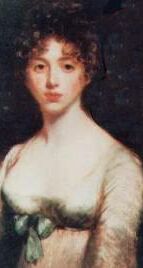
 On the 17th May 1809 the illegitimate daughter of the Duke of Devonshire, also called Caro, who had been brought up with Caro Lamb and her cousins, married George Lamb, Caro’s brother-in-law. The married couple moved into his parents’ household, joining Caro and William and put Caro and William’s fate wounded marriage to shame. But before I tell you what happened next, here is the history of this series of posts for anyone joining today, as always if you’ve read it before skip to the end of the italics where I have marked the text in bold font.
I was drawn to Lady Caroline Lamb, who lived in the Regency era, because Harriette Wilson the courtesan who wrote her memoirs in 1825, mentions the Ponsonby and the Lamb family frequently. Also the story of Caroline’s affair with Lord Byron captured my imagination. Caroline was also a writer, she wrote poems, and novels in her later life. I have read Glenarvon.
Her life story and her letters sucked me further into the reality of the Regency world which is rarely found in modern-day books. Jane Austen wrote fictional, ‘country’ life as she called it, and I want to write fictional ‘Regency’ life rather than simply romance. But what I love when I discover gems in my research like Caroline’s story is sharing the real story behind my fiction here too.
Lady Caroline Lamb was born Caroline Ponsonby, on the 13th November 1785. She was the daughter of Frederick Ponsonby, Viscount Duncannon, and Henrietta (known as Harriet), the sister of the infamous Georgiana, Duchess of Devonshire.
Caroline became an official lady when her grandfather died, and her father became Earl of Bessborough earning her the honorific title ‘Lady’ and she grew up in a world of luxury, even Marie Antoinette was a family friend. Caroline was always renowned as being lively, and now it is suspected she had a condition called bipolar. As a child she earned herself a title as a ‘brat’, by such things as telling her aunt Georgiana that Edward Gibbon’s (the author of The Decline and fall of the Roman Empire) face was ‘so ugly it had frightened her puppy’.
And when she grew up Byron once described Caroline as “the cleverest most agreeable, absurd, amiable, perplexing, dangerous fascinating little being that lives now or ought to have lived 2000 years ago.”
As William had begun to work more and stay away from home often, Caro found herself left to watch the success of the now nicknamed Caro George, (Caro was known as Caro William). While Caro was needy, strong-willed and passionate in temperament, and hated by William’s family, Caro George was adored for her sweet, genteel nature. Plus while Caro and William struggled on very little income, the Duke of Devonshire had given his illegitimate daughter the same dowry he had given his daughter by Georgiana, £30,000 with £500 a year thereafter, so William’s brother who was not an heir was able to live far better than William who was.
Life threw another stone at Caro on the 19th October 1809 when a second marriage caused disagreement in the family. Bess, the Duke of Devonshire’s long standing mistress, and the mother of Caro George, married the Duke, “at last the name also,” she wrote into her journal. The marriage had been a private ceremony, which no one knew of. Even the vicar did not realise that was what he had been called to the estate to do until he was there. But Caro had hotly urged the Duke who was her uncle, and whom had been like a second father to her in her childhood, not to marry. His former wife, her aunt, had been extremely close to Caro and so the marriage plans felt like betrayal to Caro. Harryo, the duke’s other illegitimate daughter described Caro as “Like a Volcano on the subject,” as she called Bess a witch and rallied the Duke’s legitimate son, Hart, to fight against the marriage. Of course there was nothing Hart or anyone could do.
But each of these steps in Caro’s life led her towards the person she began to become, and in 1809 while William frequently escaped from a life that had not turned out as he had probably planned and imagined, Caro sought her escape in the excitement of the elite set of people in Regency life. She filled her hours with entertainments and ensured she was everywhere she ought to be to enjoy the best events and meet the most fashionable people. She rode on rotten row, and attended soirees and at homes, but most importantly she went to balls and masquerades and danced until 6 or 8 am, and in these places, away from her in-laws, and the constrictions and altercations of her family, she felt free to be herself. Yet rumours stirred about her, and unlike the days when she had been courted by William and she had somehow remained sheltered by her family, now her eyes were wide open, and William had opened them. “What a world it is dear sweet boy,” she said in a letter to Hart, ” what a flimsey patched work face it has, all profession, little affection, no truth.”
She had become truly Jaded, “how then can any heart be callous to a diamond necklace...” But the desire she had for dramatics as a child, and the need to be center of attention, had not gone, she loved to play tricks and several of her letters record them. On one occasion, the hostess of a party she was attending was awaiting the arrival of Prince Blücher, when he did not arrive Caroline acted a charade to entertain the party, then slipped away, found a greatcoat and hat, and then left the house by another door to return and knock upon the front door, making everyone think the Prince had arrived, only to discover it was Caroline mocking them all.
For her foolish tricks and flirtatious behaviour Caro was earning herself a reputation and many of her letters became penned from a point of excusing her actions, and denying that any harm had been done. But everything about her life suggests she was desperately unhappy, and desperate for attention. I find it very difficult to hear Caro maligned, when we know that both her mother and her mother-in-law had had affairs and had given birth to illegitimate children. It was William’s illegitimacy which was the cause of their poverty. Then on Chritmas Eve 1809 Granville, the young man Caro’s mother had had an affair with for over ten years, and had born at least two illegitimate children with (whom Caro had walked in upon as a child) married the person Caro thought of as her last female cousin, another illegitimate child of the Duke of Devonshire. Harryo was not born of Bess but from a former relationship. Her dowry was £10,000, a third of her sisters, and Caro was deliberately excluded from the wedding invitations for fear she would disrupt proceedings, because she hated the idea of this wedding also.
All this ill-feeling and loneliness, and desire to escape, had Caro drinking to the extent that Hart wrote her a remedy for a hangover when they were both in town and behaving badly together. One of his names for himself at the end of his letters was “Devilshire”. But while she partied, William left her to it and ignored her, avoiding the fights their early marriage had been well known for. “I have a bad head ache and am just setting out for Brocket Hall where I left William…” Caro’s Jaded spirit then began to touch her heart, “Many a fair outside covers a blacker heart…” In another letter she wrote to Hart, after categorizing a weekend of entertainments she says, “& now mean to adjure the delights of the flesh & all the pomps and vanities of this Wicked World.”
At home it was not only Caroline who was under assault, though, but her son too, Augustus had continued to have fits, and it was said that he foamed at the mouth, so I would strongly believe it was epilepsy, but the doctors of the 1800s kindly prescribed it as fits of ill-temper and ordered Caro to employ a nurse to discipline him, which William’s mother strongly fought for. Caro had received the treatment of such a nurse as a child when she had been out of sorts as her mother spent more time with young men than her daughter. She would not let her son be subjected to it. William turned his back still further, and where once he had practiced his political speeches with Caro and discussed his views with her he now turned to his mother (who of course would have loved another dagger to thrust in her daughter-in-laws back).
So Caro spent more and more time out of the house in the daytime too, and became closer to Lady Holland who socialised with the political set, so there would have been a drawing room full of gentlemen. It was here Caro met Lady Holland’s eldest son from her first marriage, Sir Godfrey Vassal Webster.
In romance we write about Regency “rakes” but we do not generally paint the picture of a real one, in fiction there is always good in them in real life it was not always true.
Godfrey was not allowed into any gentlemen’s clubs, he had such a bad reputation. He was a soldier, who had fought in the Peninsular War, (like one of Caro’s brothers) and even though he was twenty I should imagine he had a charming edge of experience and Caro, at the age of twenty-four, fell head over heels for the attention he bestowed on her. He bought her gifts, jewelry and even a puppy, and escorted her to events, all done openly – which of course broke the Regency rule.
“Sir Godfrey gave me a bracelet at Argyle street with his hair (that means it would have had a lock of hair enclosed in the decoration. In the days before pictures it was what people used to remember each other by) & just before I went I desired him to put it on which he did behind one of the doors. The Next morning I made a jeweller come and rivet it so that it could not come off without breaking the chain…”
Regency intrigue rule one ~ Have as many affairs as you wish but no one must see it occurring…
“Yr behaviour last night was so disgraceful in its appearance and so disgusting in its motives that it is quite impossible it should ever be effaced from my mind.” William’s mother wrote to Caro. She cut Caro entirely, seething over the fact Caro was damaging William’s political career, especially as her affair was being undertaken with the stepson of a strong political ally of William’s.
Caro began to realise her folly and wrote to William, then wrote to his mother, “I tore the bracelet off my arm & and put it up with my chains in a Box by itself I have written my desire some one will fetch the dog… On my knees I have written to William to tell him not any falsehoods not as you say any stories to conceal any guilt but the whole disgraceful truth. I have told him I have deceived him I have trusted only solely to his mercy & generosity…”
Of course that was another broken rule,
Regency intrigue rule two ~ When you have an affair, never admit it to your husband or wife…
William did not reply to the letter, (but I would guess he could hardly truly complain because knowing his history I would strongly believe he had mistresses, whom he probably did not speak of, and was not seen with).
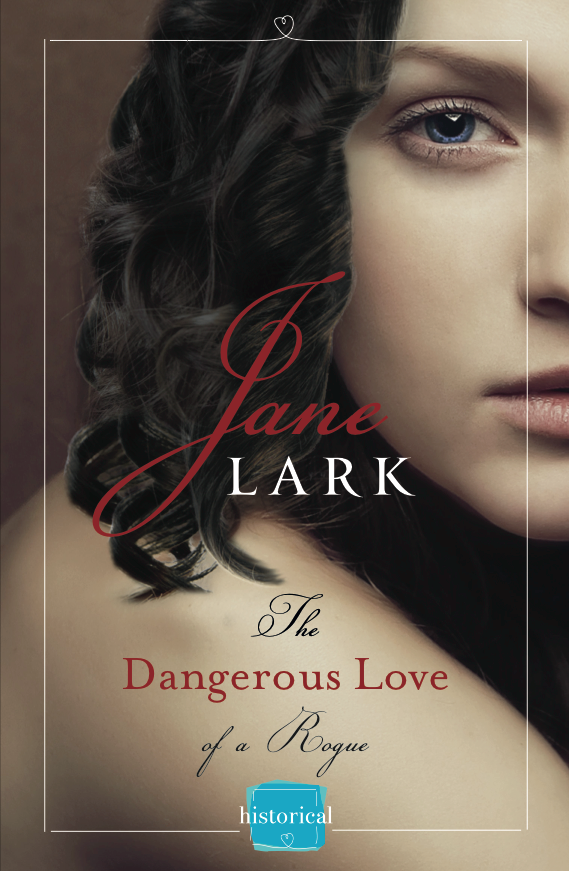
More of Caro’s affair with Godfrey in my next post… follow my blog to make sure you don’t miss it and if you would like to read my historical romance story that’s inspired by Caroline’s life it’s available now The Dangerous Love of a Rogue.
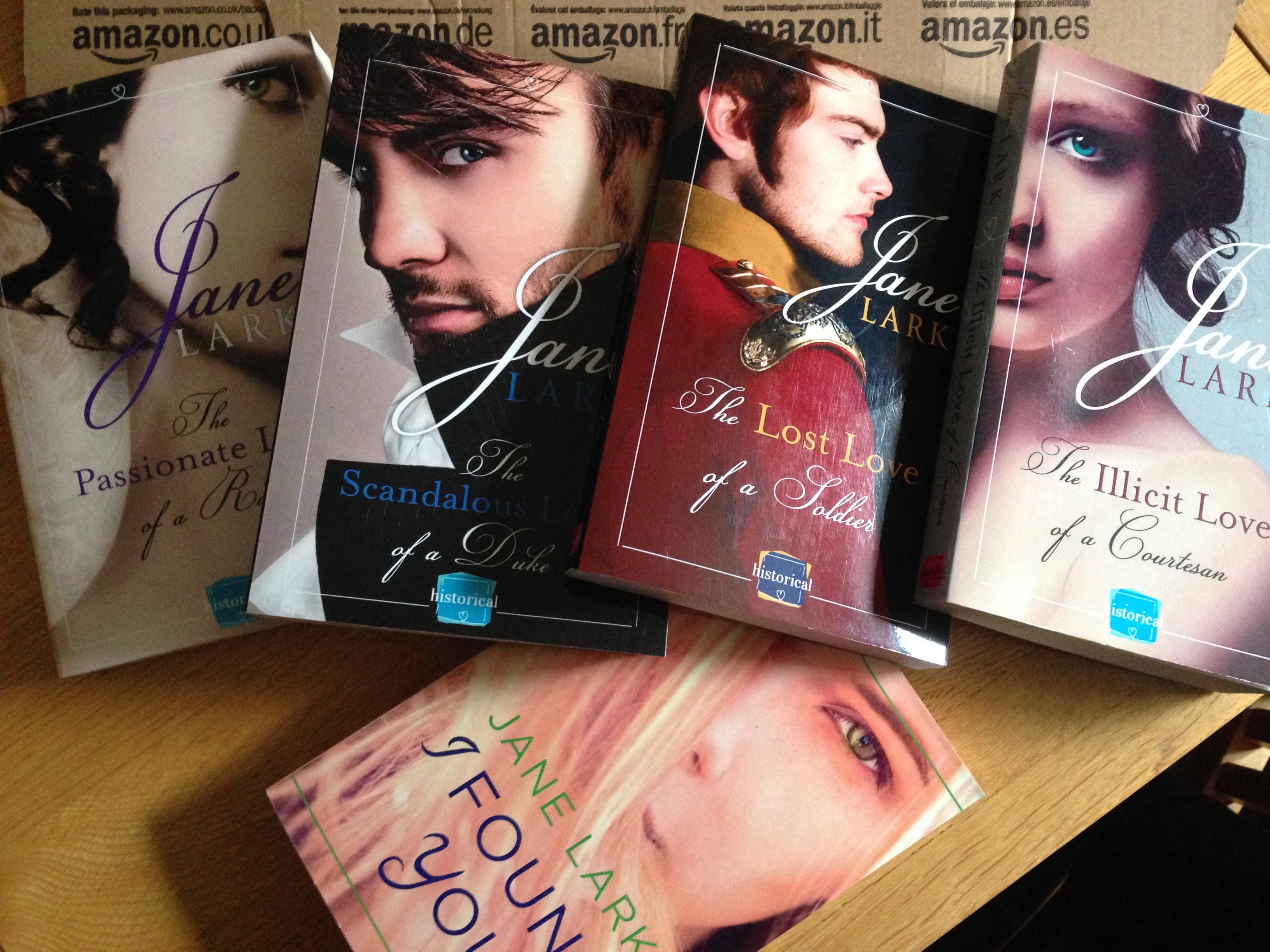
Or grab any one of my books, with free novellas and full novels in the UK from 99p and in the USA from $1.99
Go to the index
For
- the story of the real courtesan who inspired The Illicit Love of a Courtesan,
Jane Lark is a writer of authentic, passionate and emotional Historical and New Adult Romance stories, and the author of a No.1 bestselling Historical Romance novel in America, ‘The Illicit Love of a Courtesan’.
Click here to find out more about Jane’s books, and see Jane’s website www.janelark.co.uk to learn more about Jane. Or click ‘like’ on Jane’s Facebook page to see photo’s and learn historical facts from the Georgian, Regency and Victorian eras, which Jane publishes there. You can also follow Jane on twitter at @janelark
Jane’s books can be ordered from amazon by clicking on the covers in the sidebar, and are available from most booksellers.
 Author, Jane Lark's stories