If you visit the town, I strongly recommend you look around the Guildhall where Shakespeare was schooled.
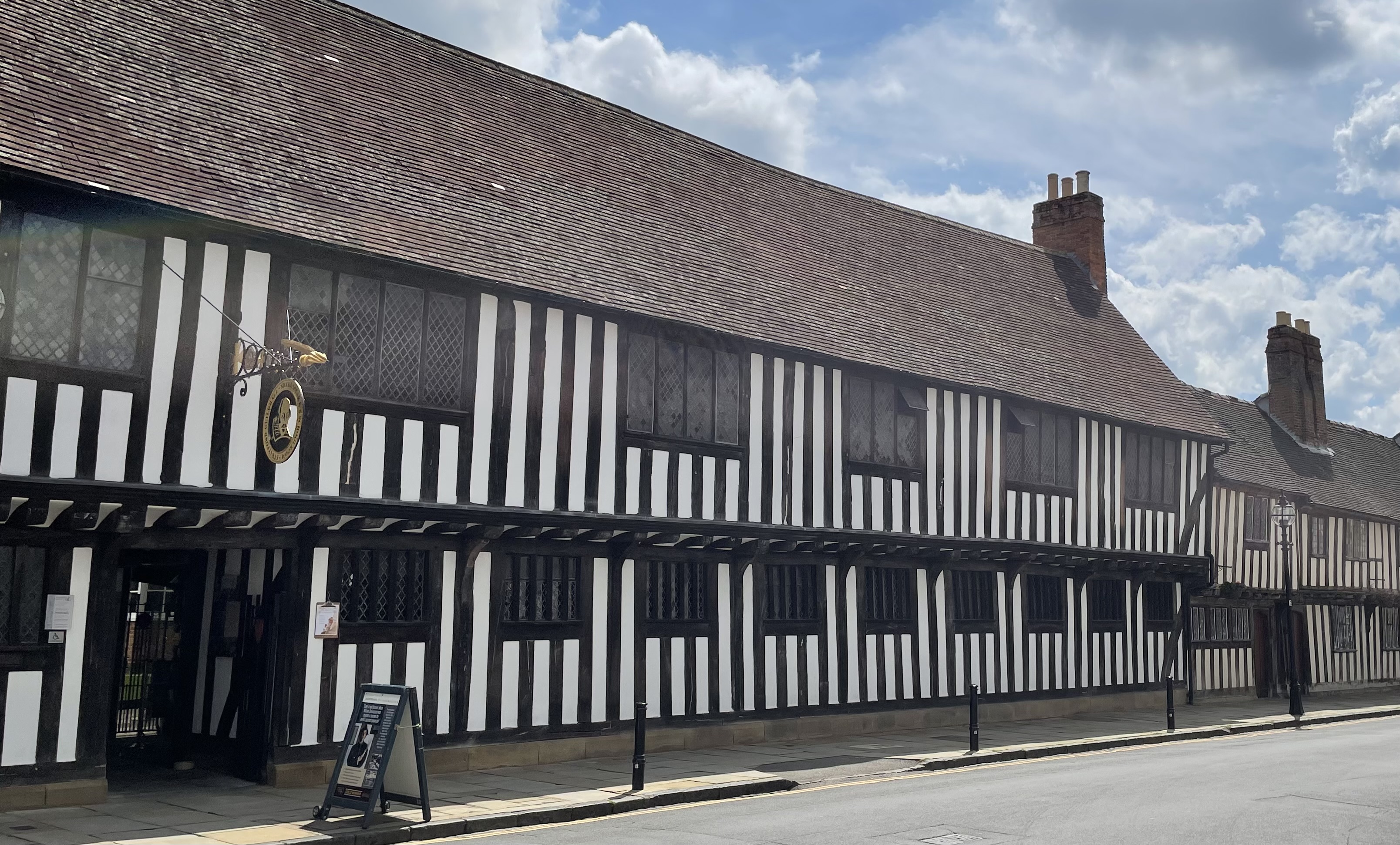
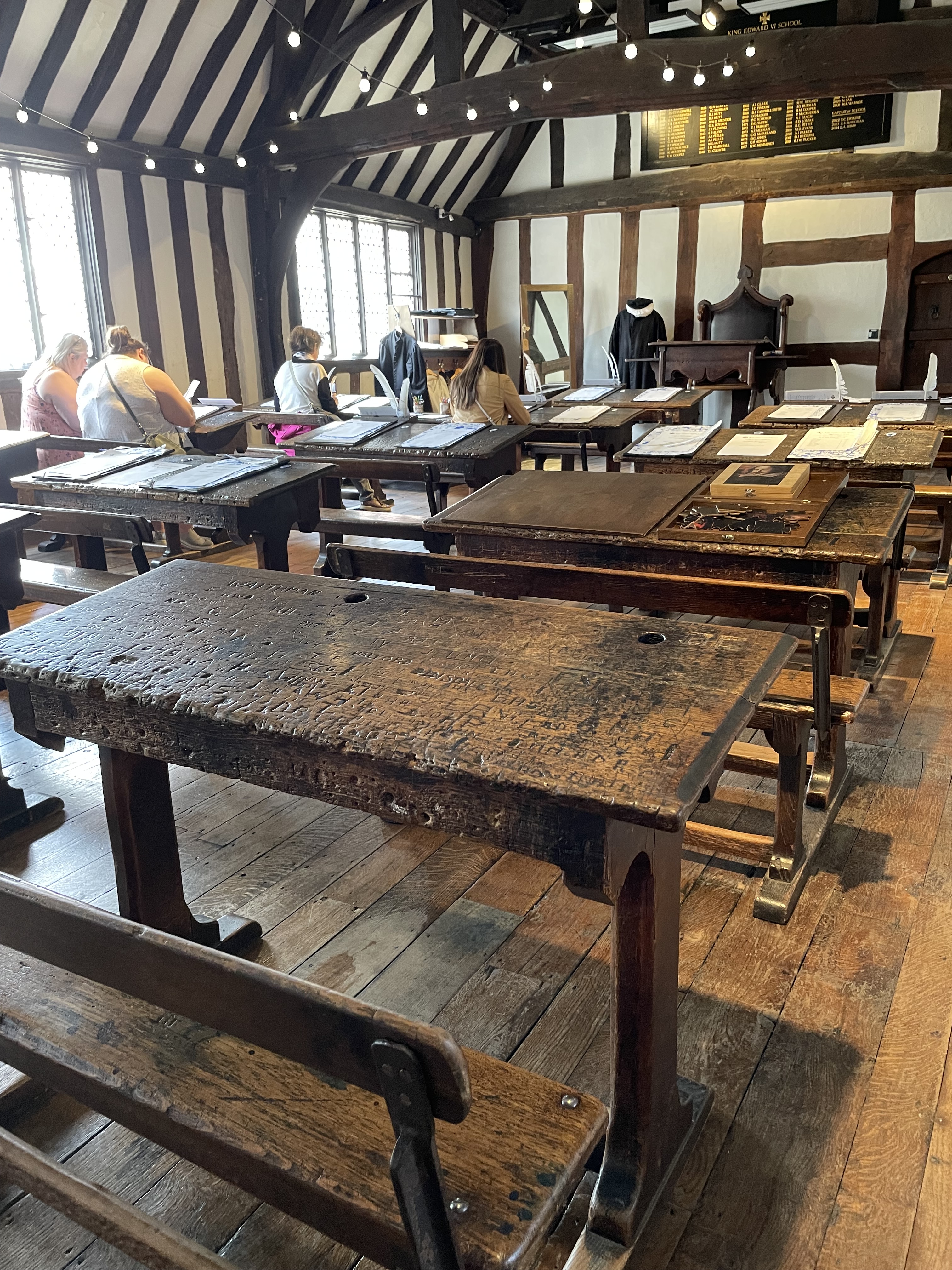
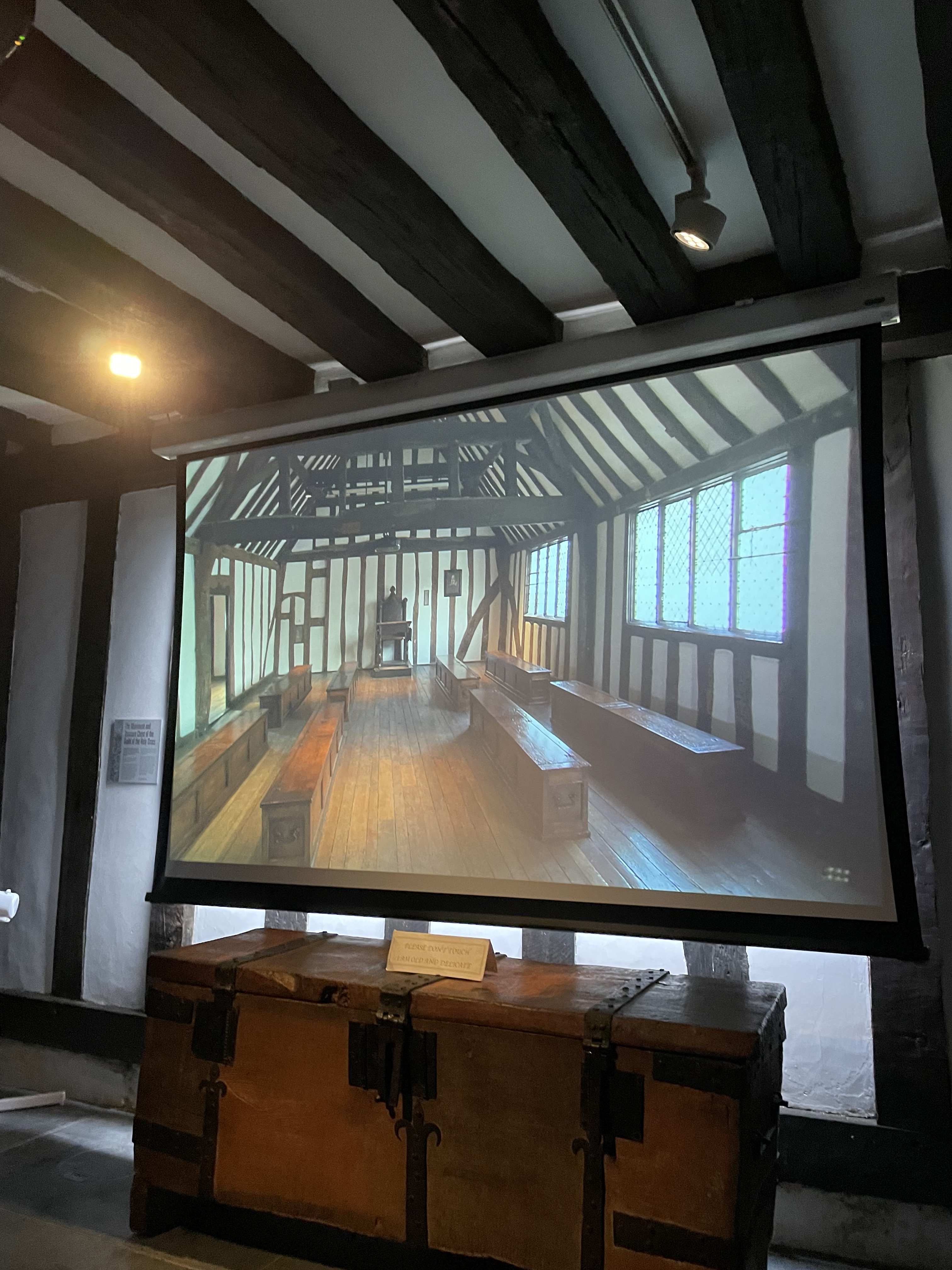
In my last post I told you that New Place, Shakespeare’s family home, is actually a relatively modern building built on the site of his house. In comparison, this building, the Guildhall, is older than Shakespeare. This building is not just maintained as a place once connected to Shakespeare but with many later alterations, its history is well preserved and holds the atmosphere of the earliest part of Shakespeare’s life. It is here that he developed his desire to write and the schoolroom and furniture and decoration in it are preserved to show how it would have been in Shakespeare’s life. You will step through the door and immediately step back in time, into a room where the young William Shakespeare would have watched actors perform plays. Then walk upstairs to the school room where he learned to write, and taught younger boys to write too.
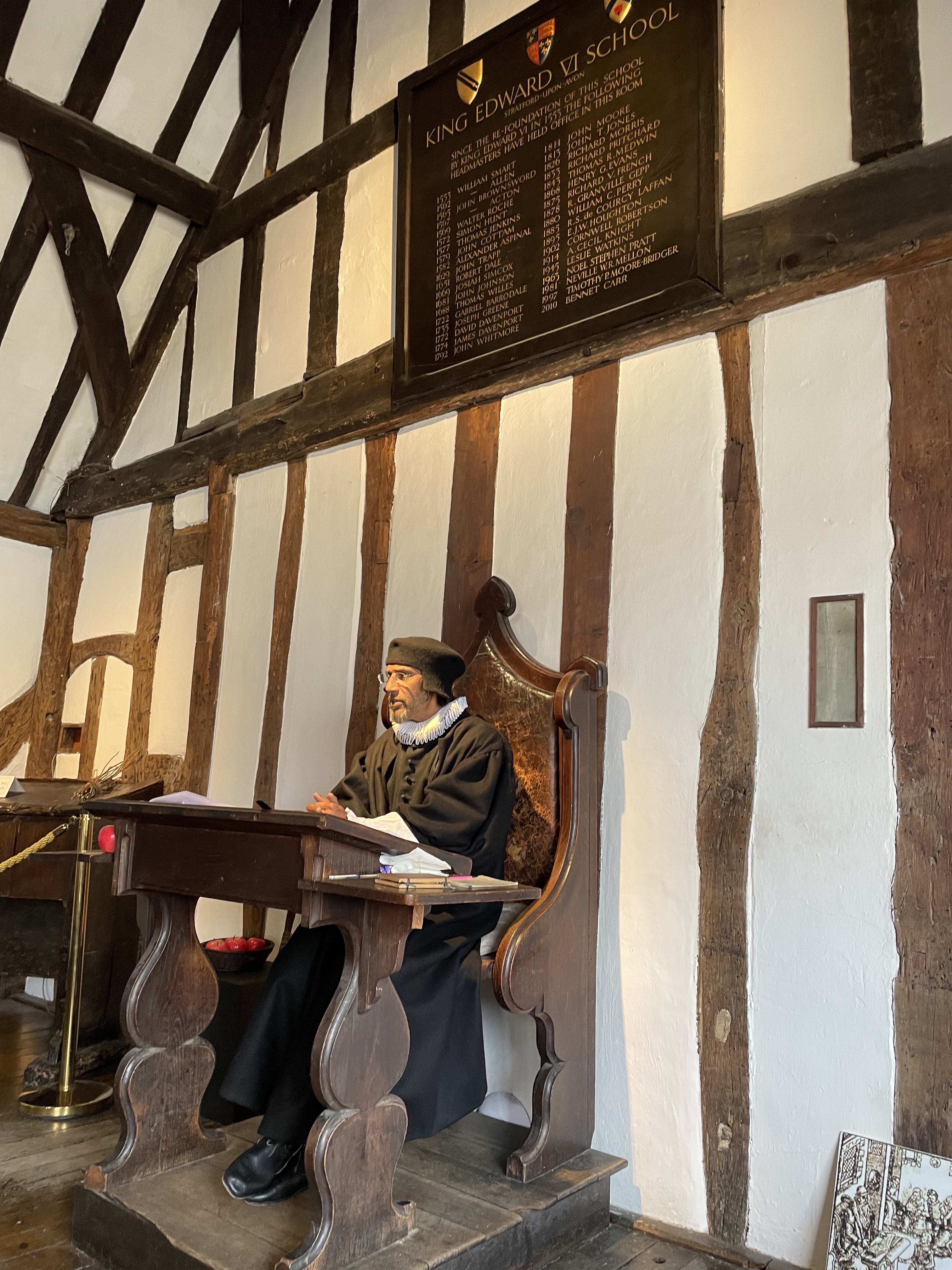
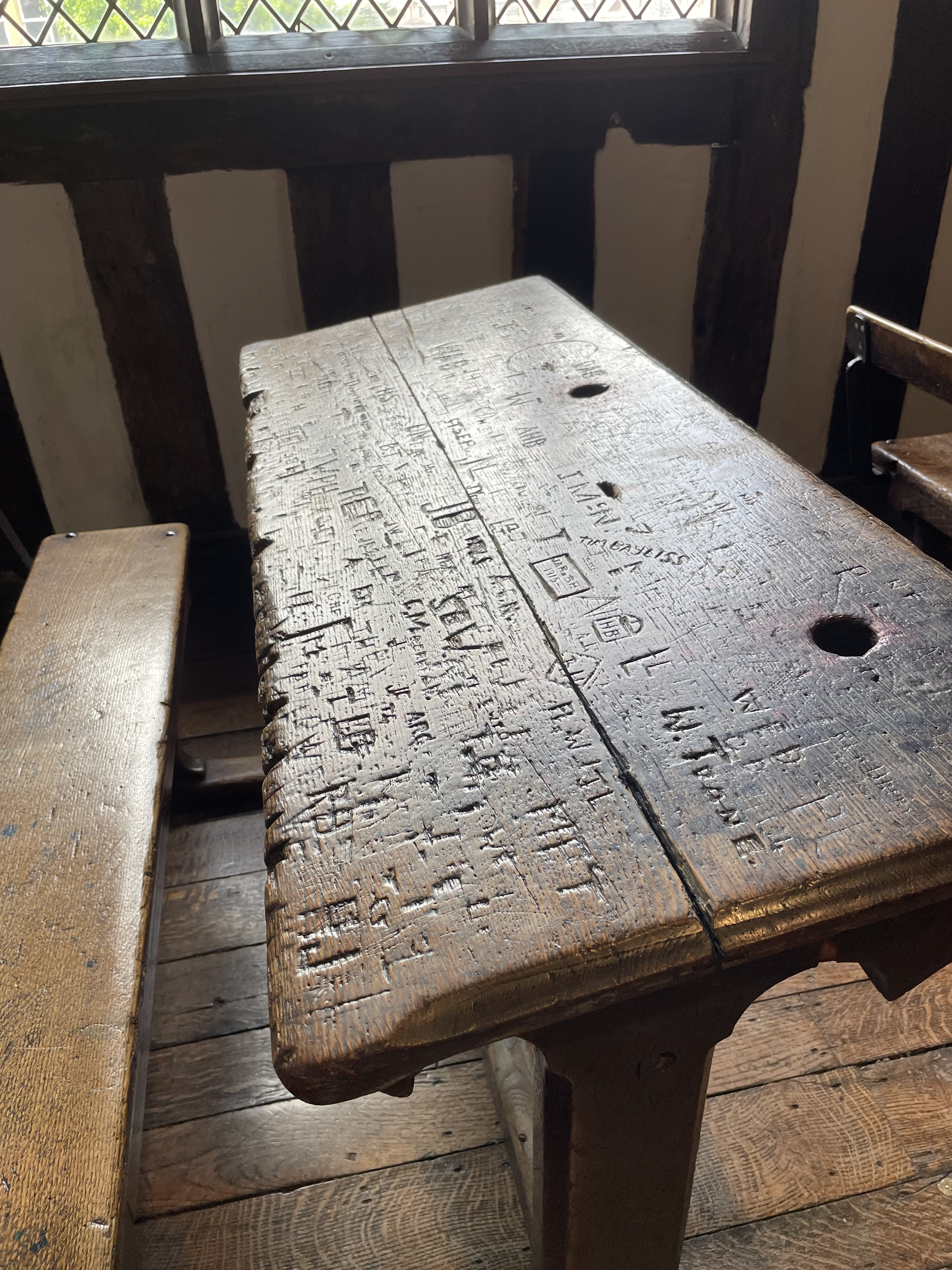
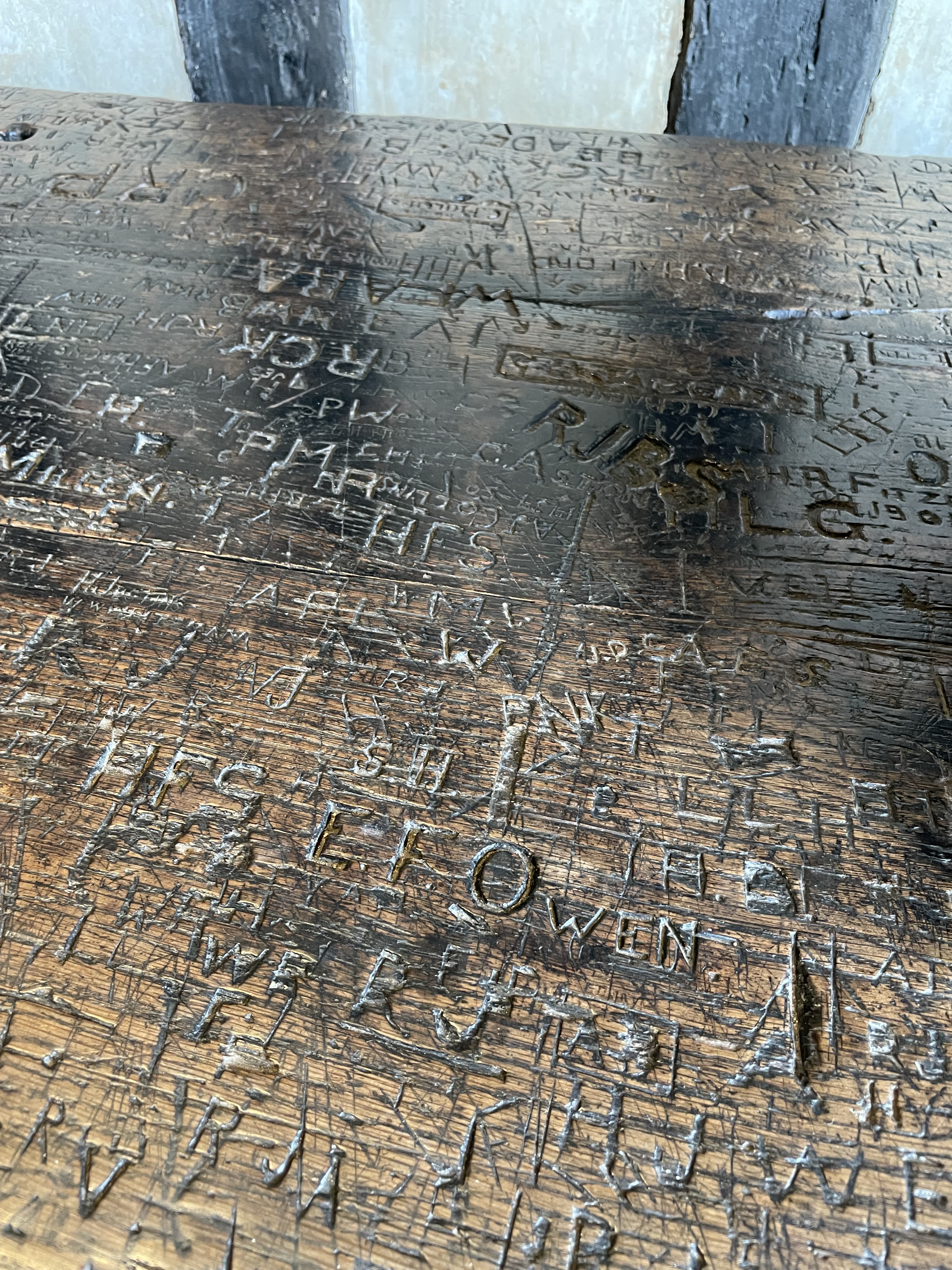
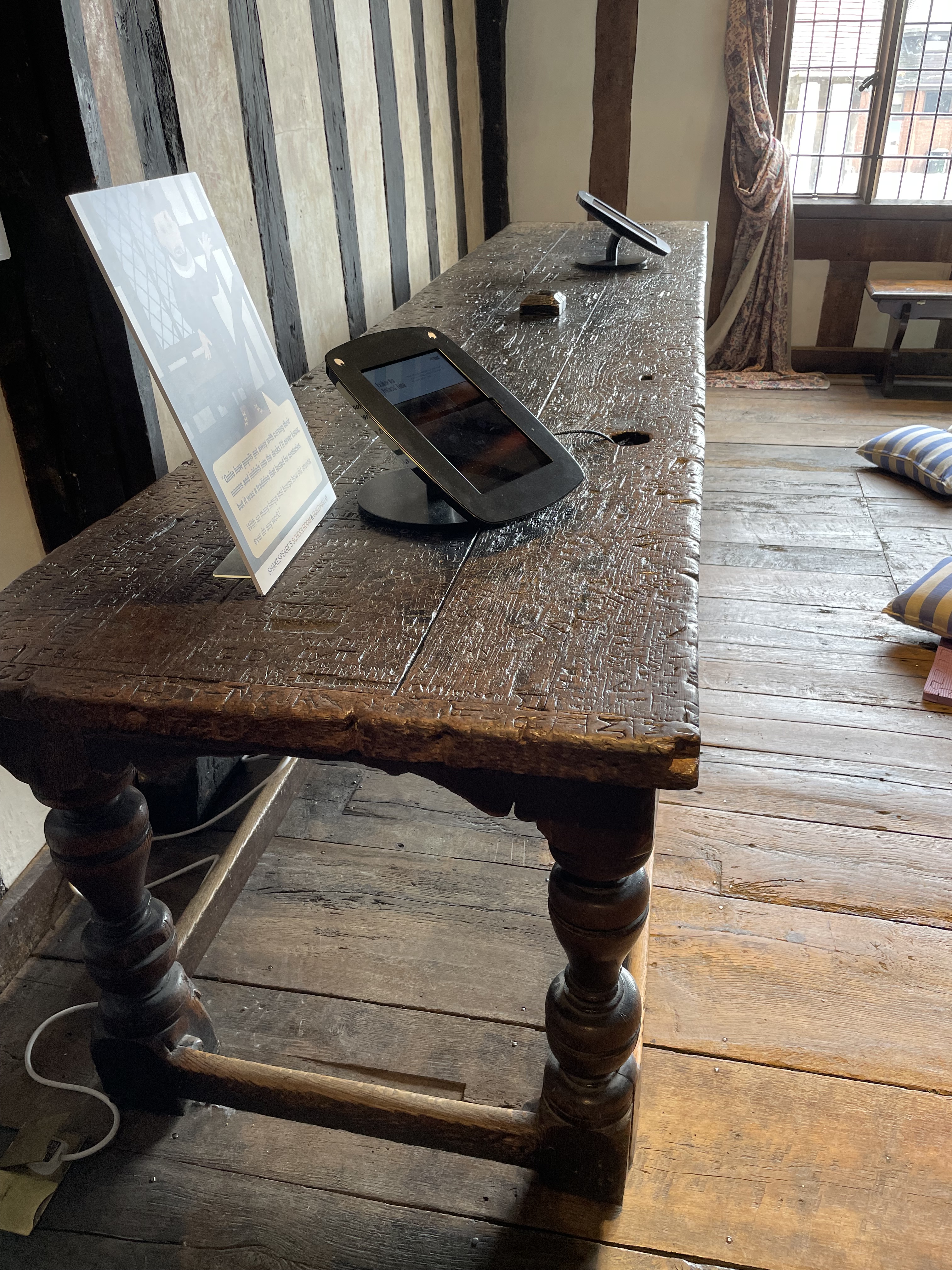
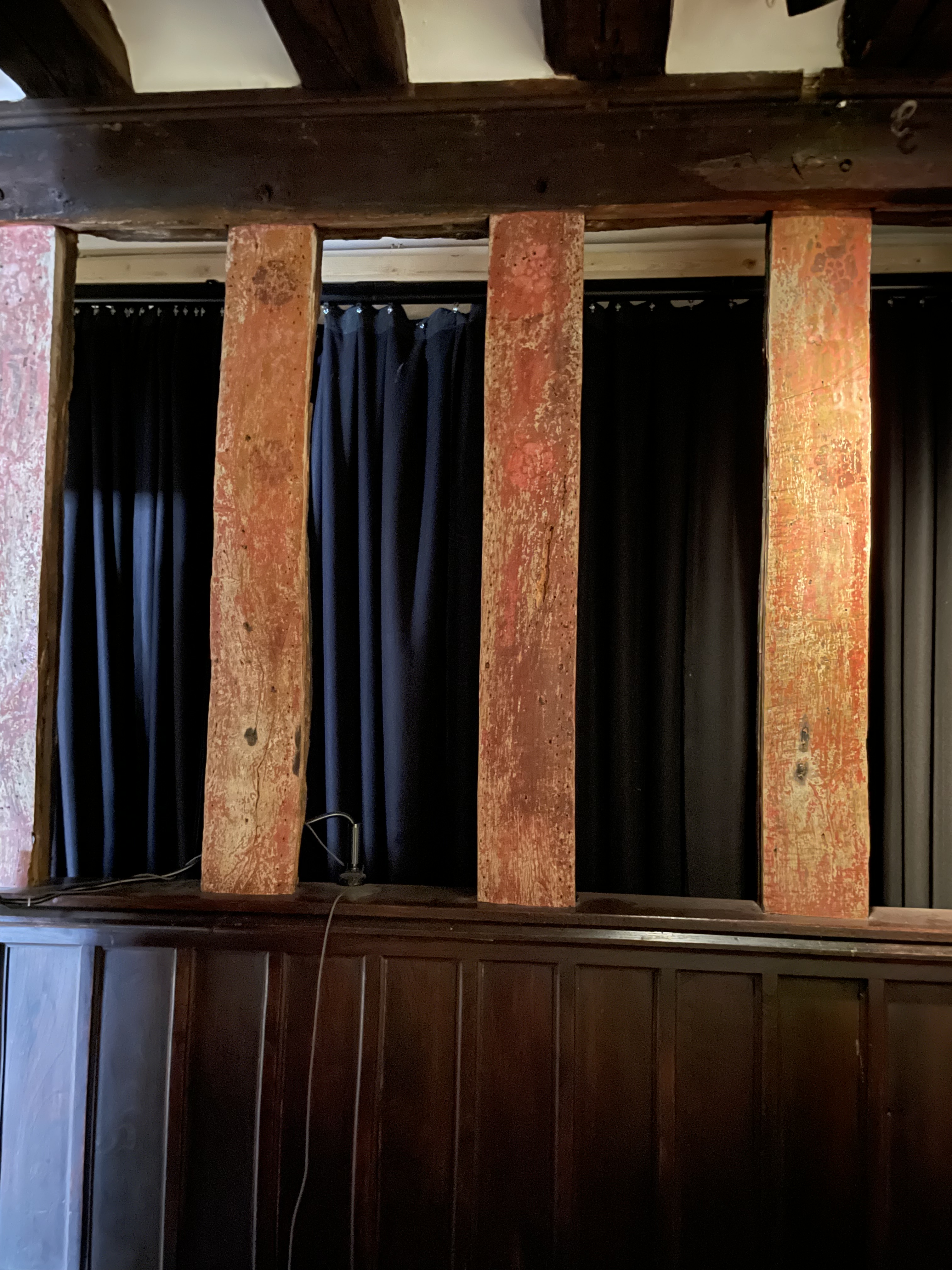
It was particularly fascinating for me, because the schoolroom in a village in Cumbria, where the poet Wordsworth studied, is the same. And, as there was in the school in the village of Hawkshead, there was graffiti everywhere. And, as you can see in the pictures below, because the guildhall and schoolroom date back to the 14th Century, at least, it was colourfully decorated. Originally every wall and wooden inset would have been brightly and beautifully painted. Now, there are some very special paintings that have survived.
So if you go to Stratford upon Avon, a visit to the Guildhall and Schoolroom is a must in my opinion!
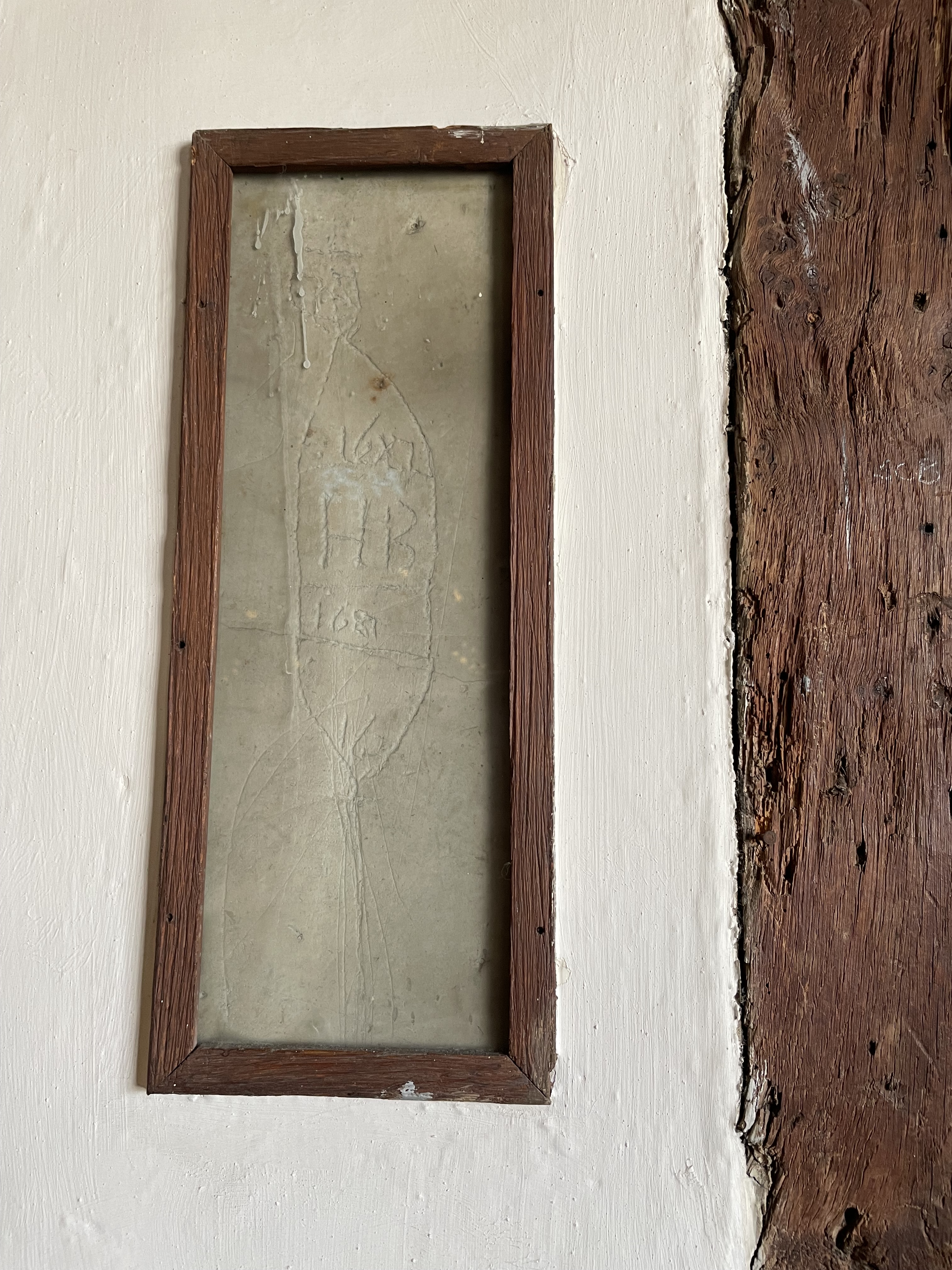
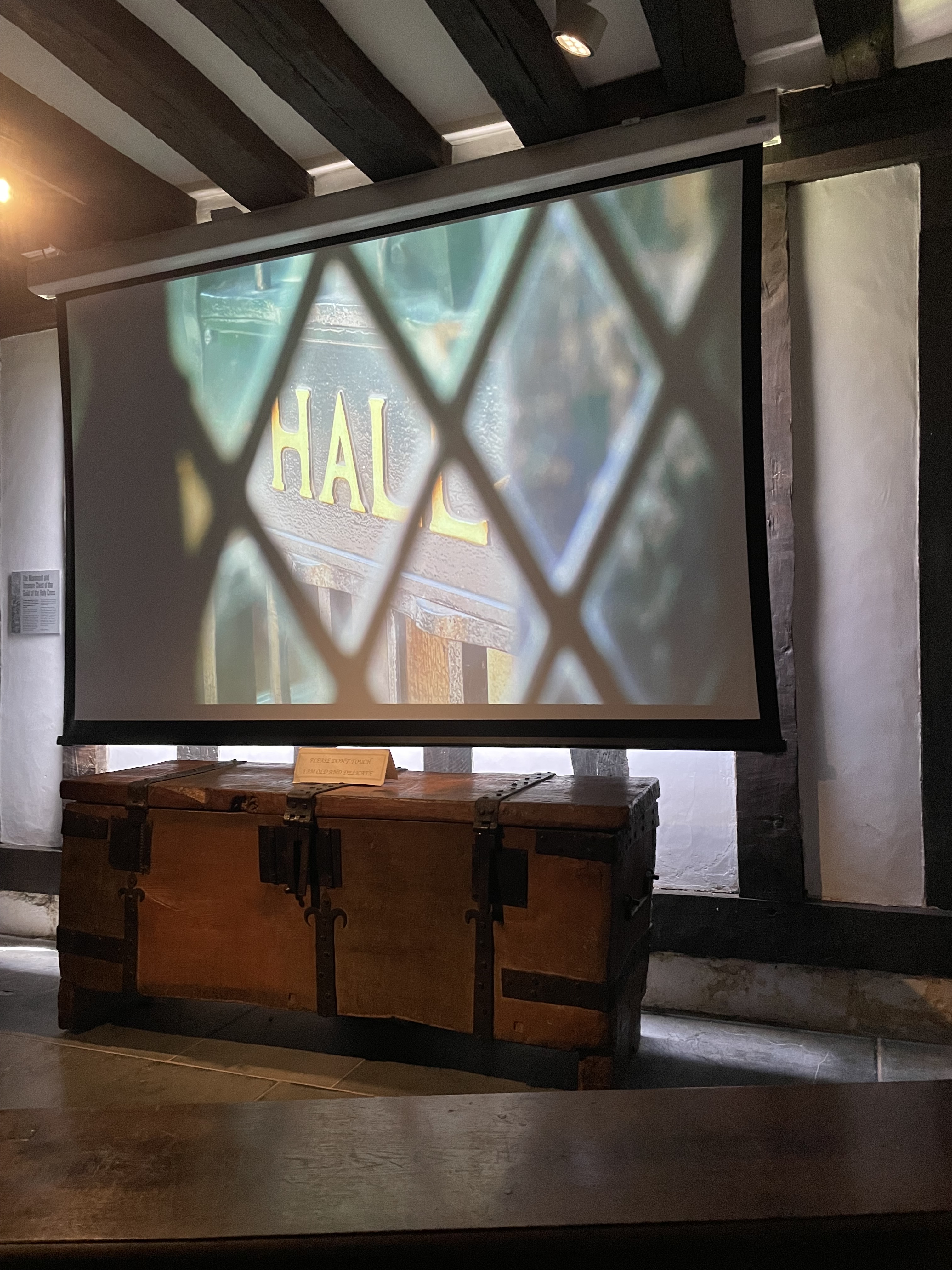
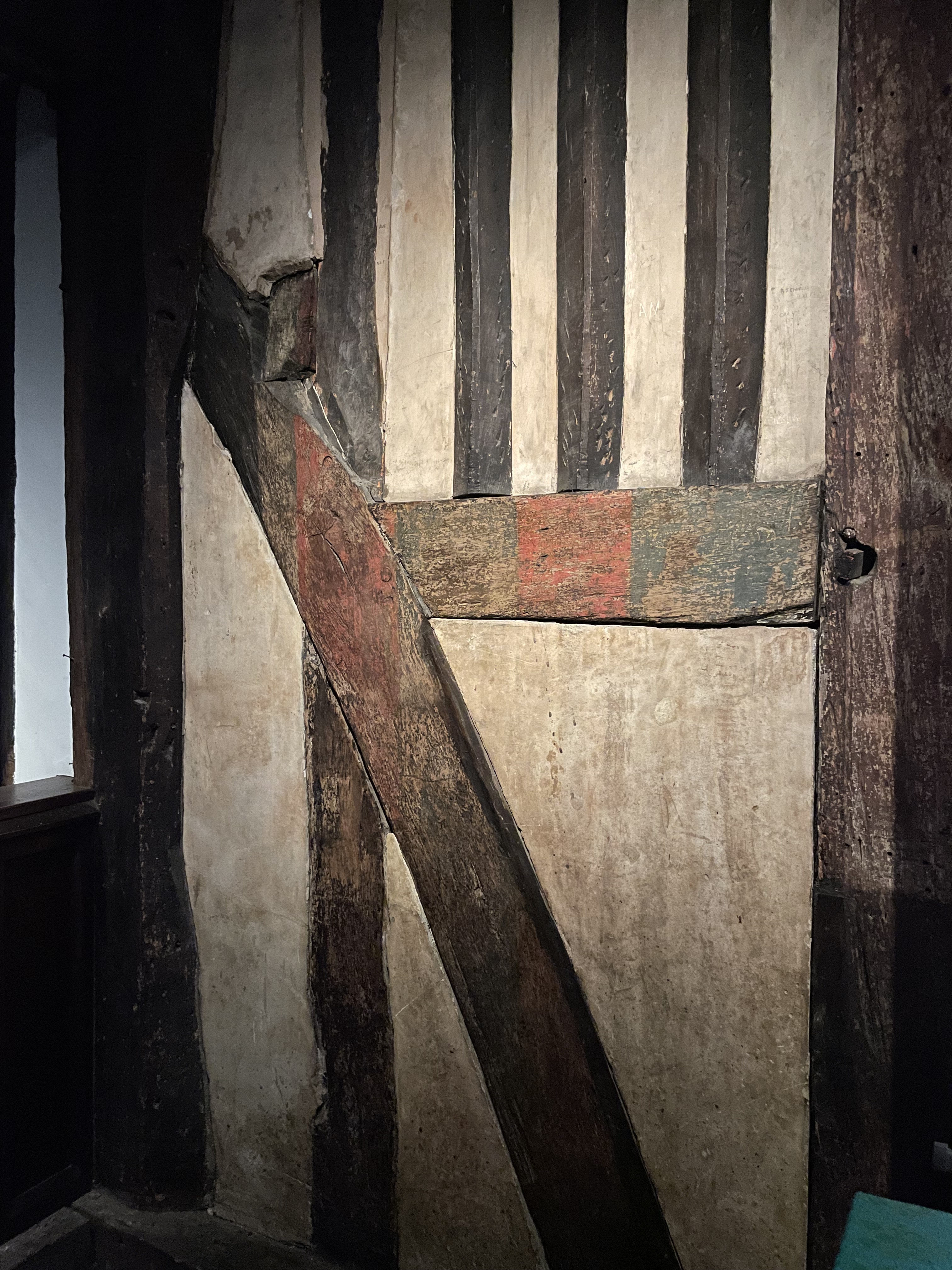
In one of the upstairs rooms that was added onto the hall in the early 1400s, the wall paintings have survived the passing of time uncovered.
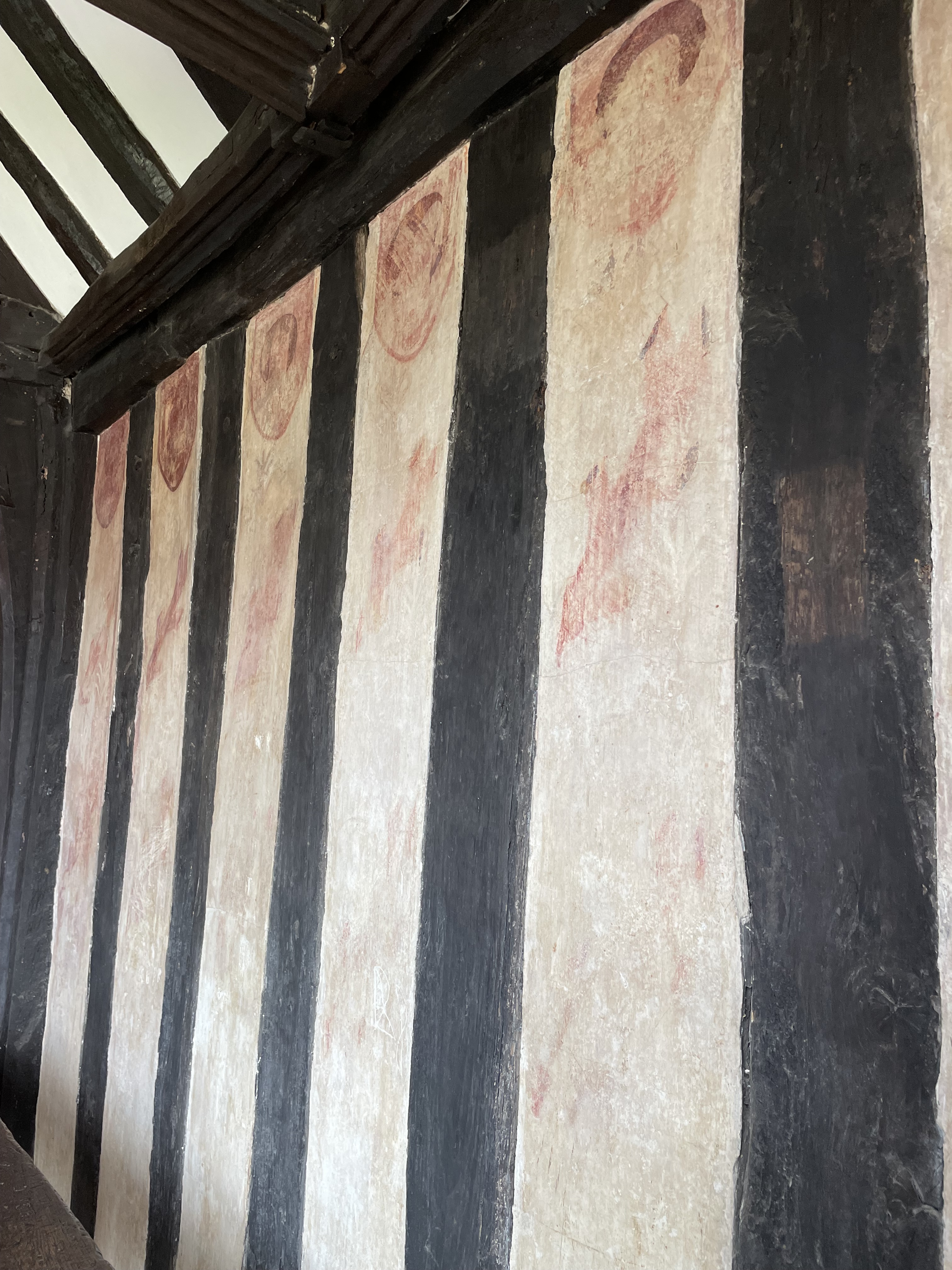
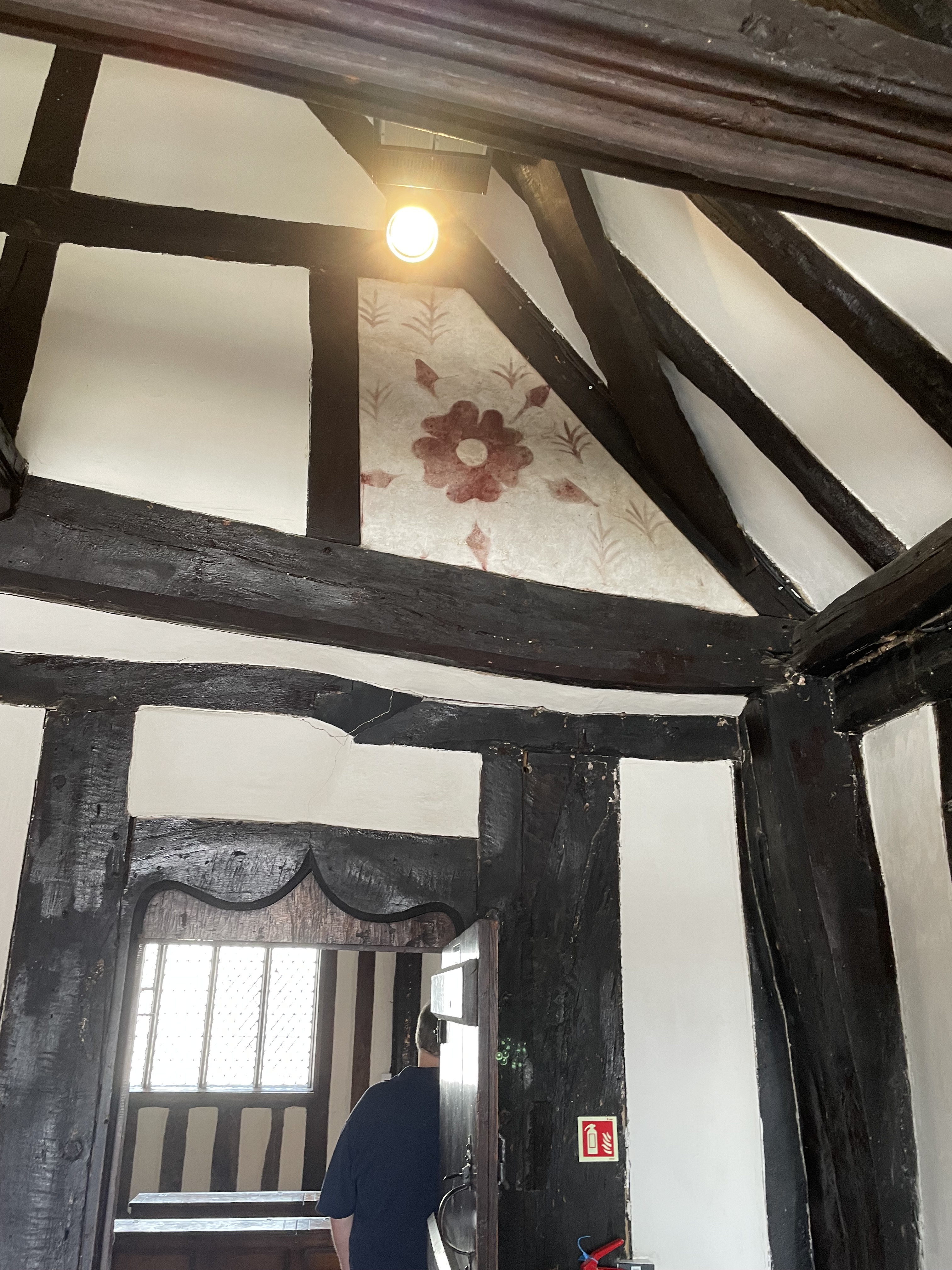
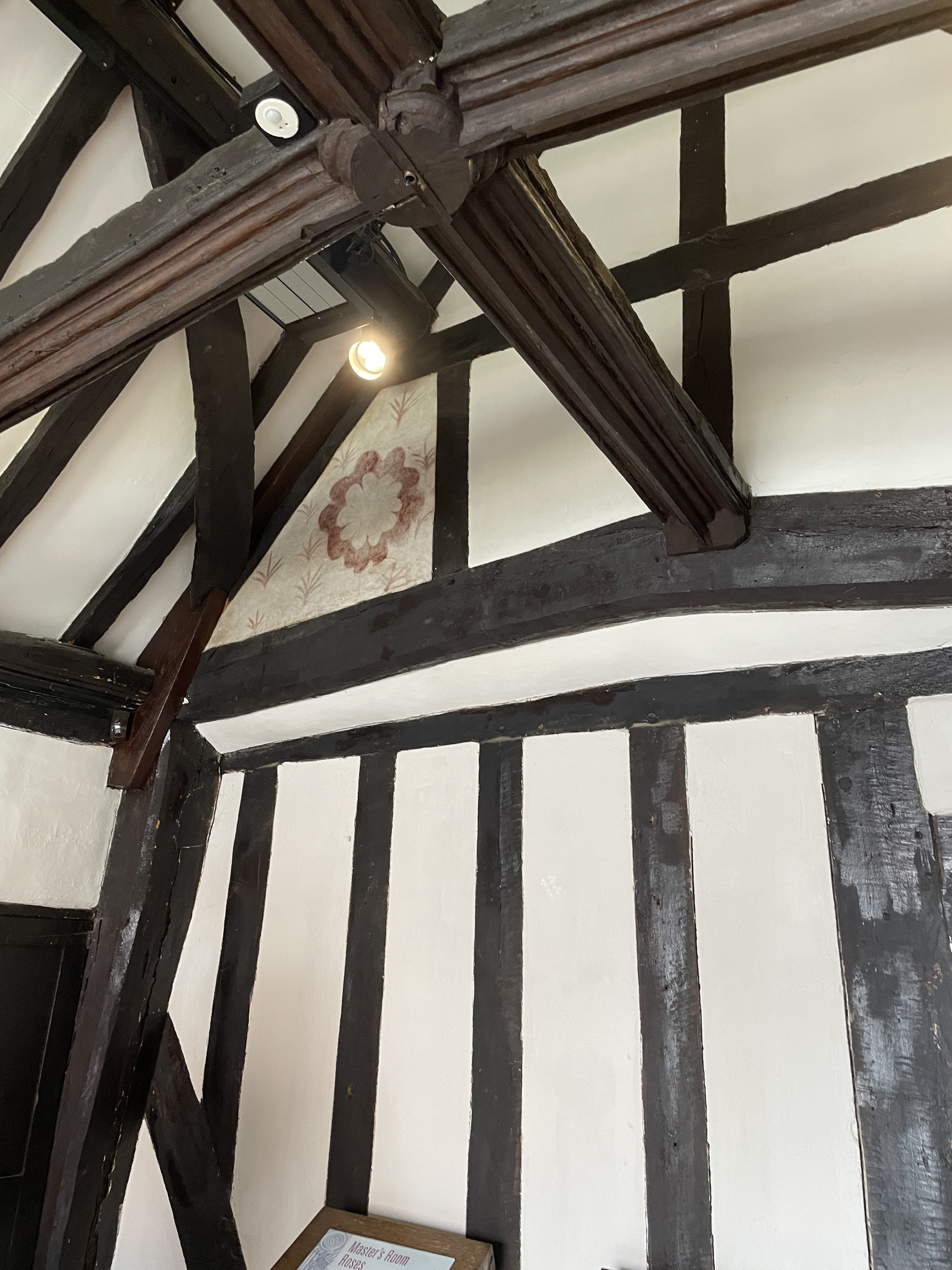
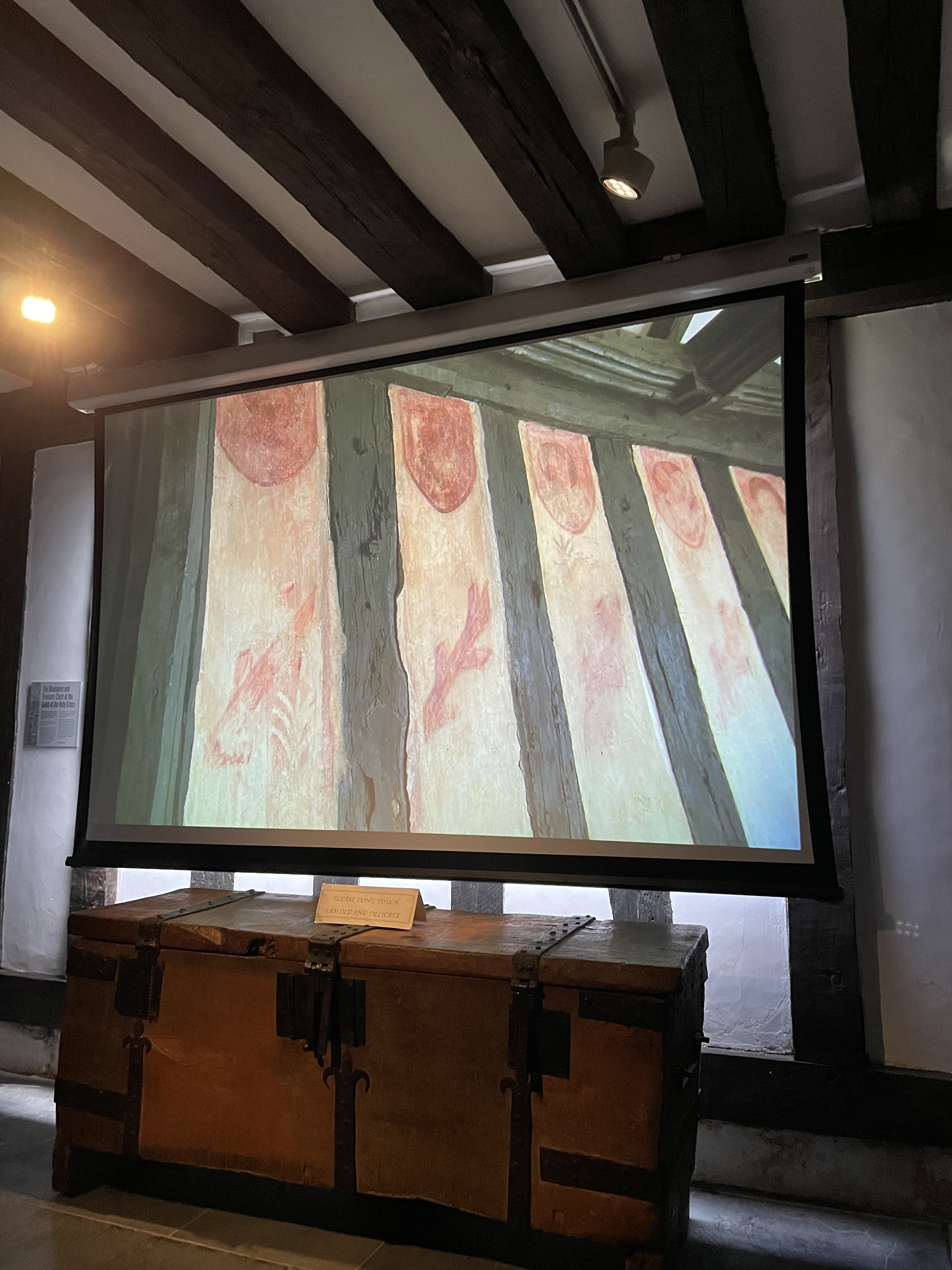
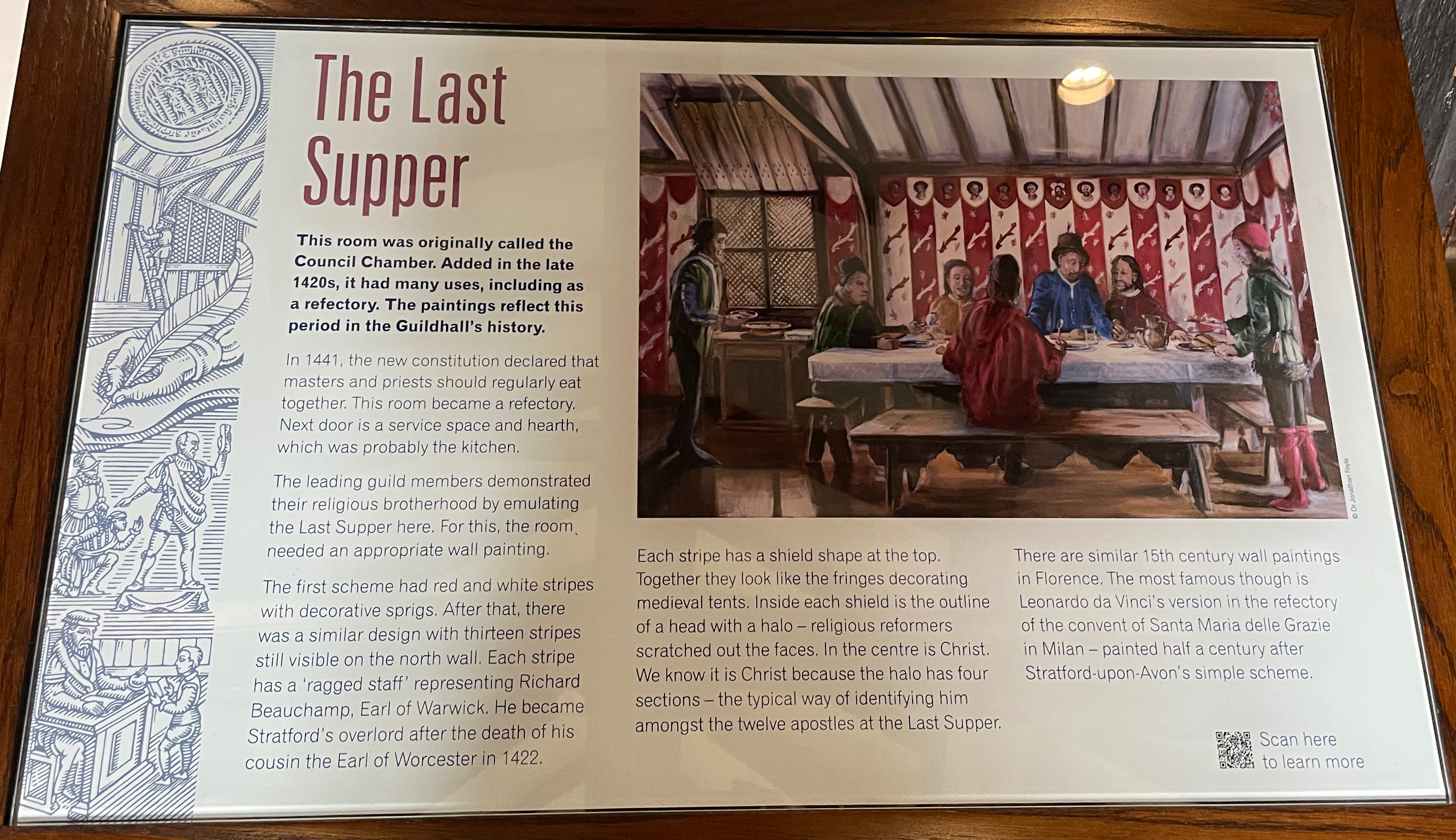
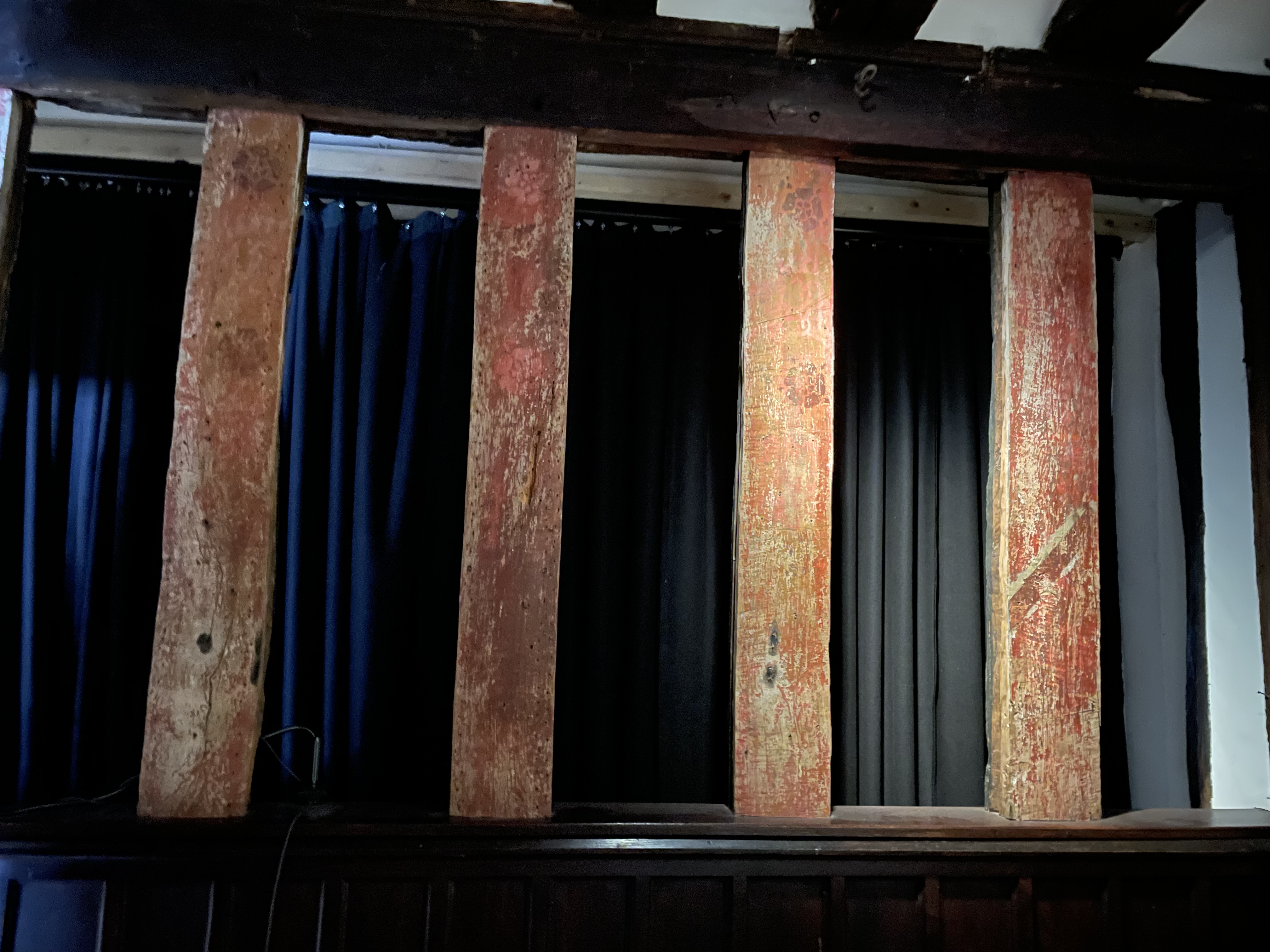
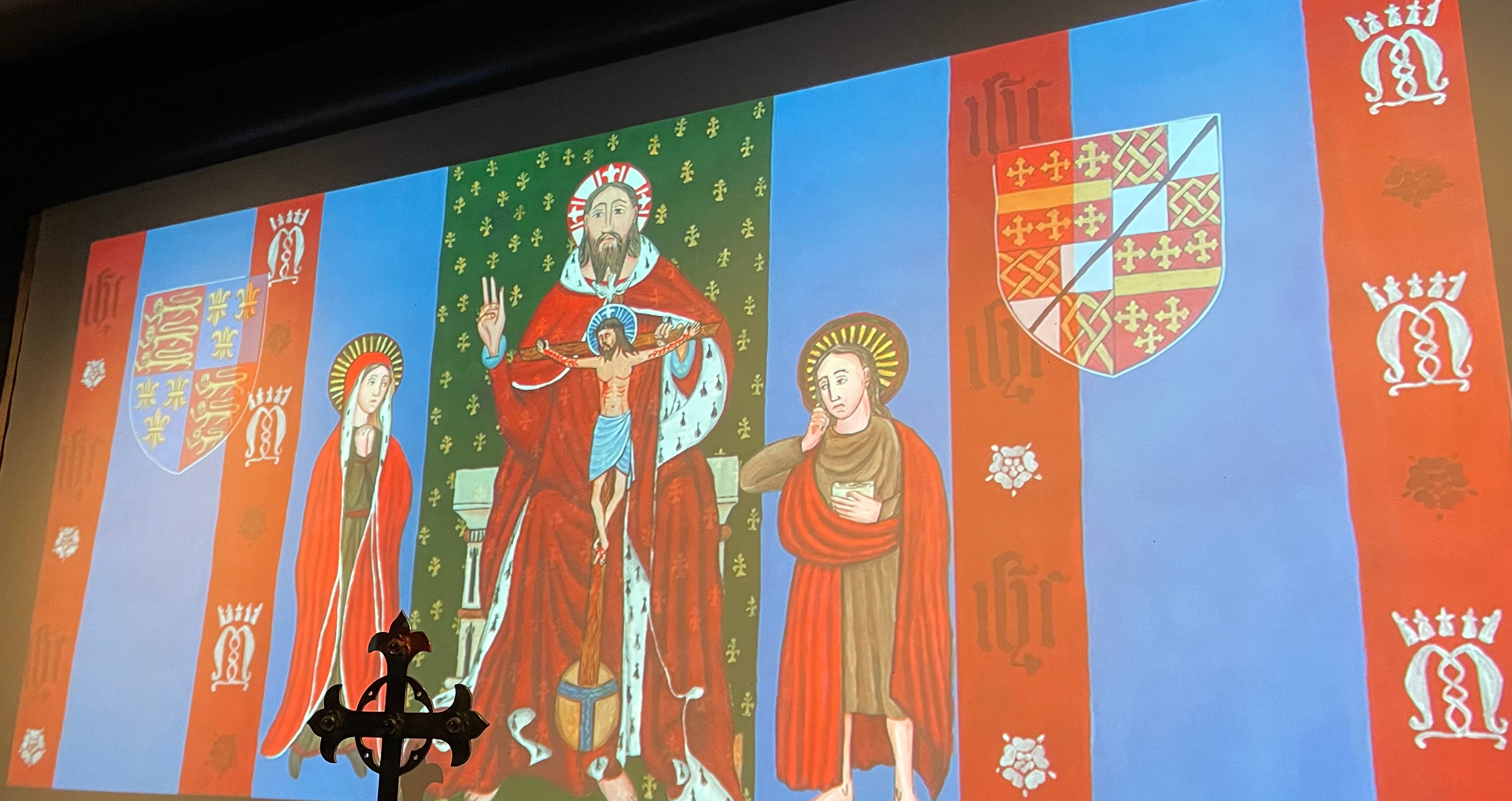
In an earlier room ~ where William Shakespeare would have sat once upon a time to watch travelling actors perform to prominent town members, including his father, before the players were permitted to perform before residents ~ a very high quality painting was found behind wooden panelling. These wall paintings are kept covered by curtains so light does not damage them.
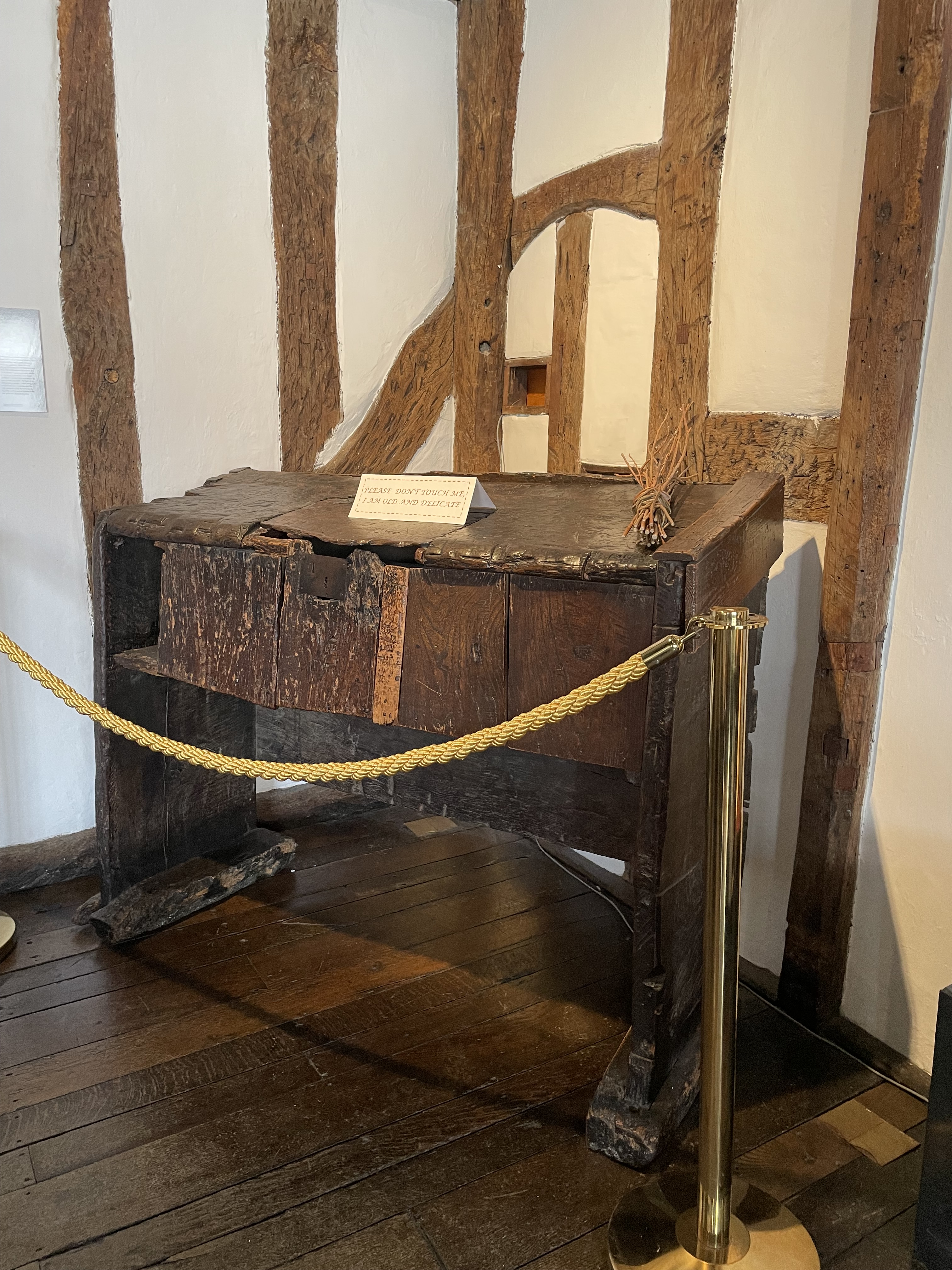
In the school room above, there is also a very old school master’s desk also dating back to as early as possibly the 1400s.
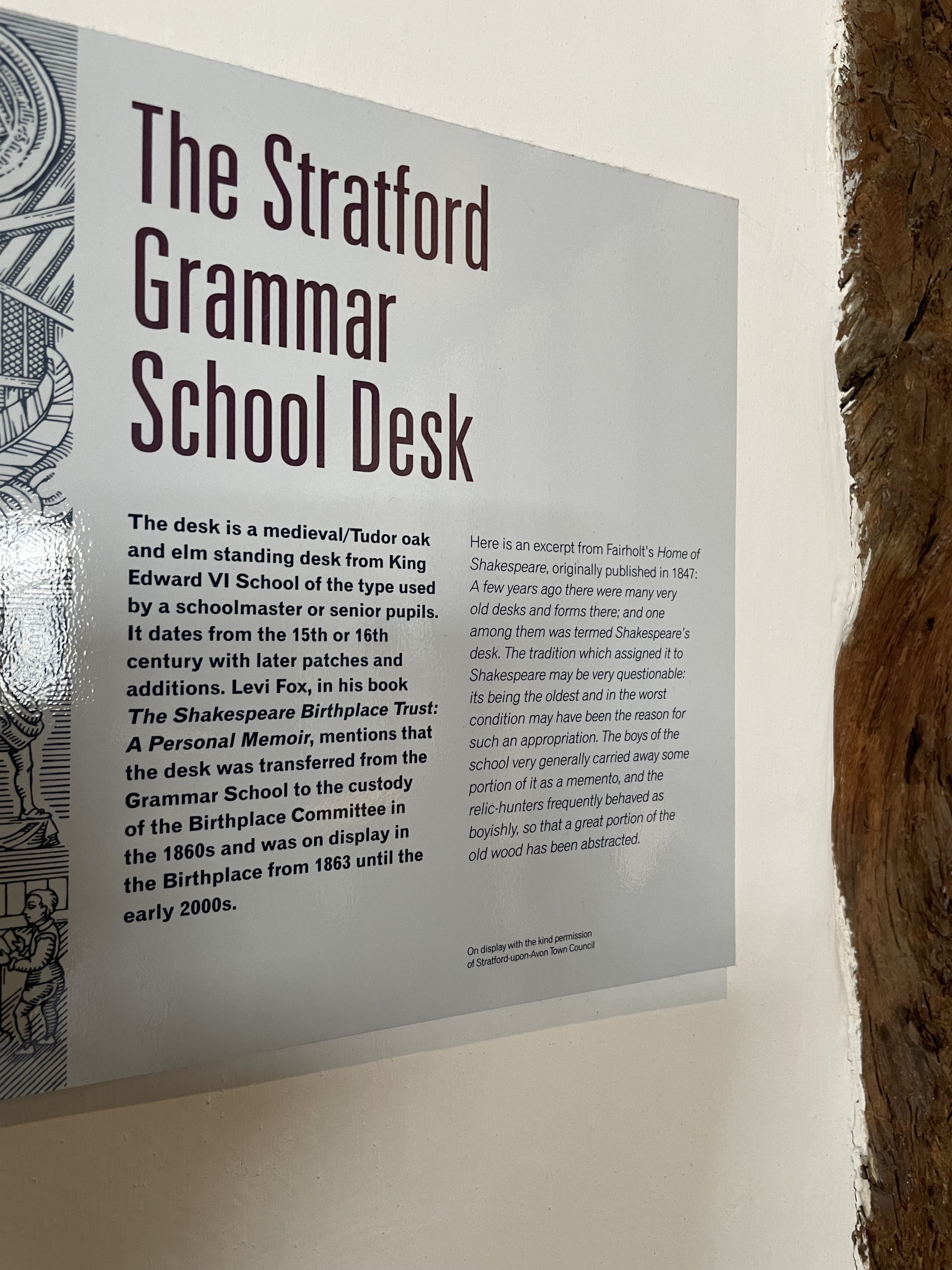
My earlier blog on the reason that more buildings in Stratford upon Avon survived the eras of Georgian makeovers explains why I think this building has managed to hold onto all of its history, however, why is such a significant place here in the first place?
Guilds were formed by men to network, they were ‘associations’ of craftsmen and merchants who came together to pool time, knowledge and money, to extend their economic interests, establish protection and provide both physical and spiritual aid for all involved. In times where people feared God, they worked with the local clergy and would have supported the poor to ensure the guild members were successful in the after life as well as in this life.
They were also, often, men who wanted to work their way up in society. These were working men not nobles, they may even have been born into poor families. Their status came from the money they earned, and therefore they were men with entrepreneurial minds, clever men who wanted to show people what they had, and could, achieve/d. What better way then, than to build beautiful buildings, to show both the towns people and the nobles that they were the wealthiest among them and that their word should be respected.
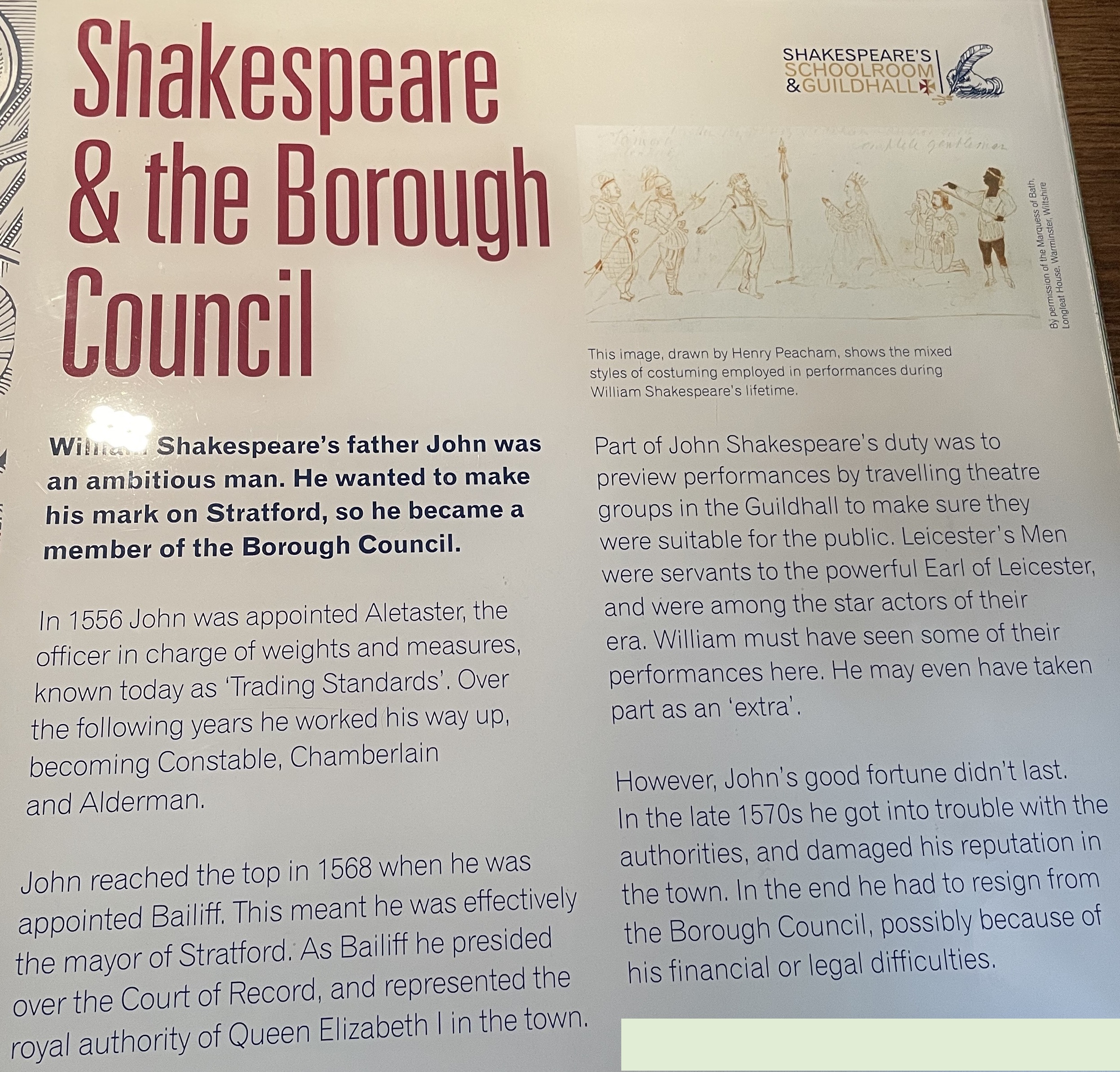
These guildhalls were where these like minded successful men met, and by the time of William Shakespeare these men had become a Borough Council with official duties metered out from Queen Elizabeth. Shakespeare’s father was one of these men! Read the panel in the image below to find out about his role.
These men wanted people to feel indebted to them, not only to respect them, but to be in awe of them and afraid of them in the way people might fear the wrath of God. So the guild members helped to educate people, to support other working people to be successful. They would have created the school in this building to teach the eldest son to read, write and complete accounts. His capabilities would have helped his whole family by him being able to earn more. The guilds did also support the poor in a borough, they might feed families who fell on hard times and provide accommodation.
Guilds helped some small towns grow into industrial centres or become well known markets for produce people travelled for miles to sell or buy. Yet, in other places, even in villages, you’ll notice an old hall, and realise it must have belonged to a guild that tried to make something of a small town and didn’t succeed.
It’s a very rare opportunity, though, to find a guildhall that you can look around that has been so unaltered through time.
The Guild Hall in Stratford on Avon is a beautiful place… Go if you like history and can get there!




 Author, Jane Lark's stories