The story of a house that became a palace…
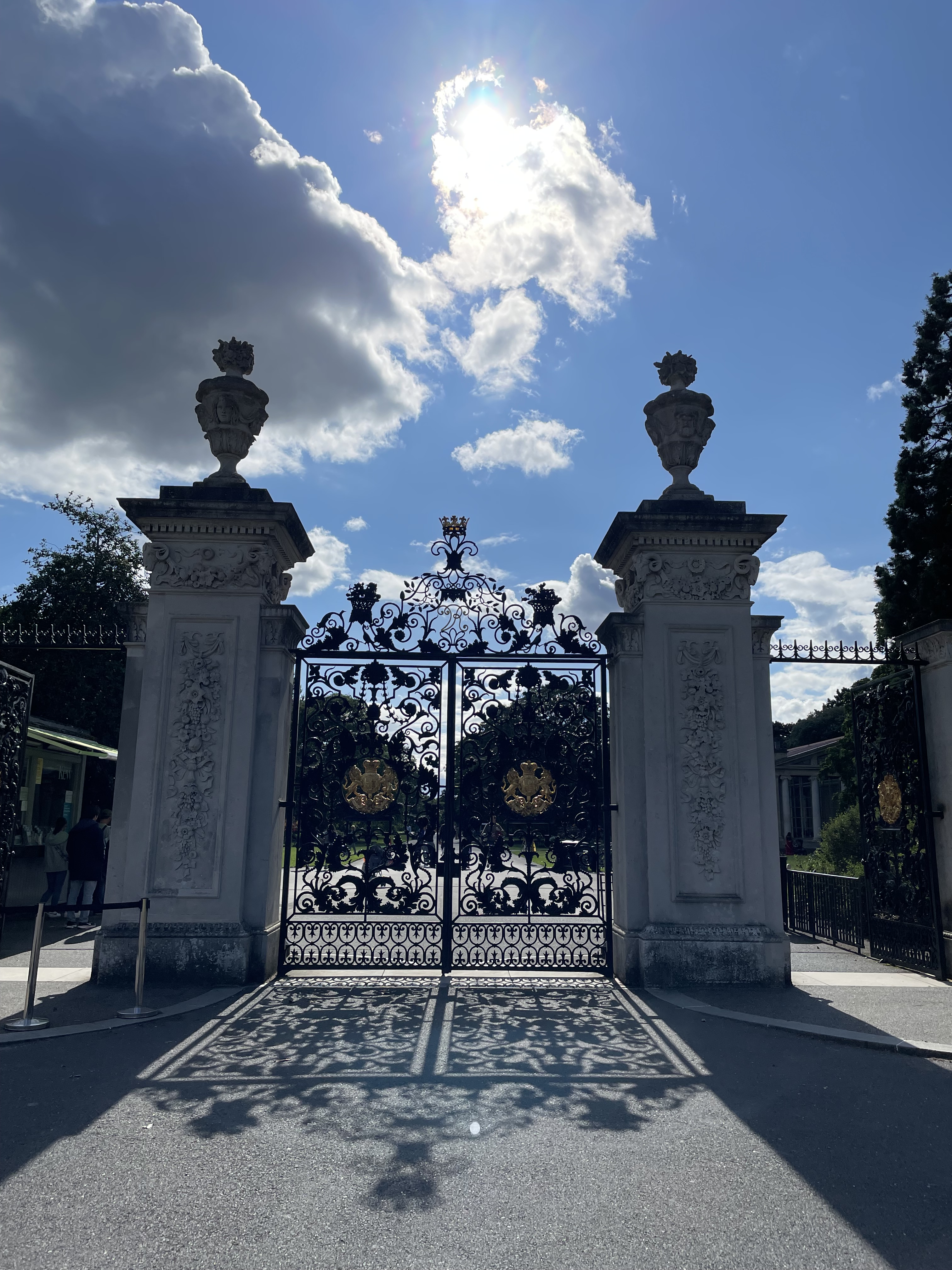
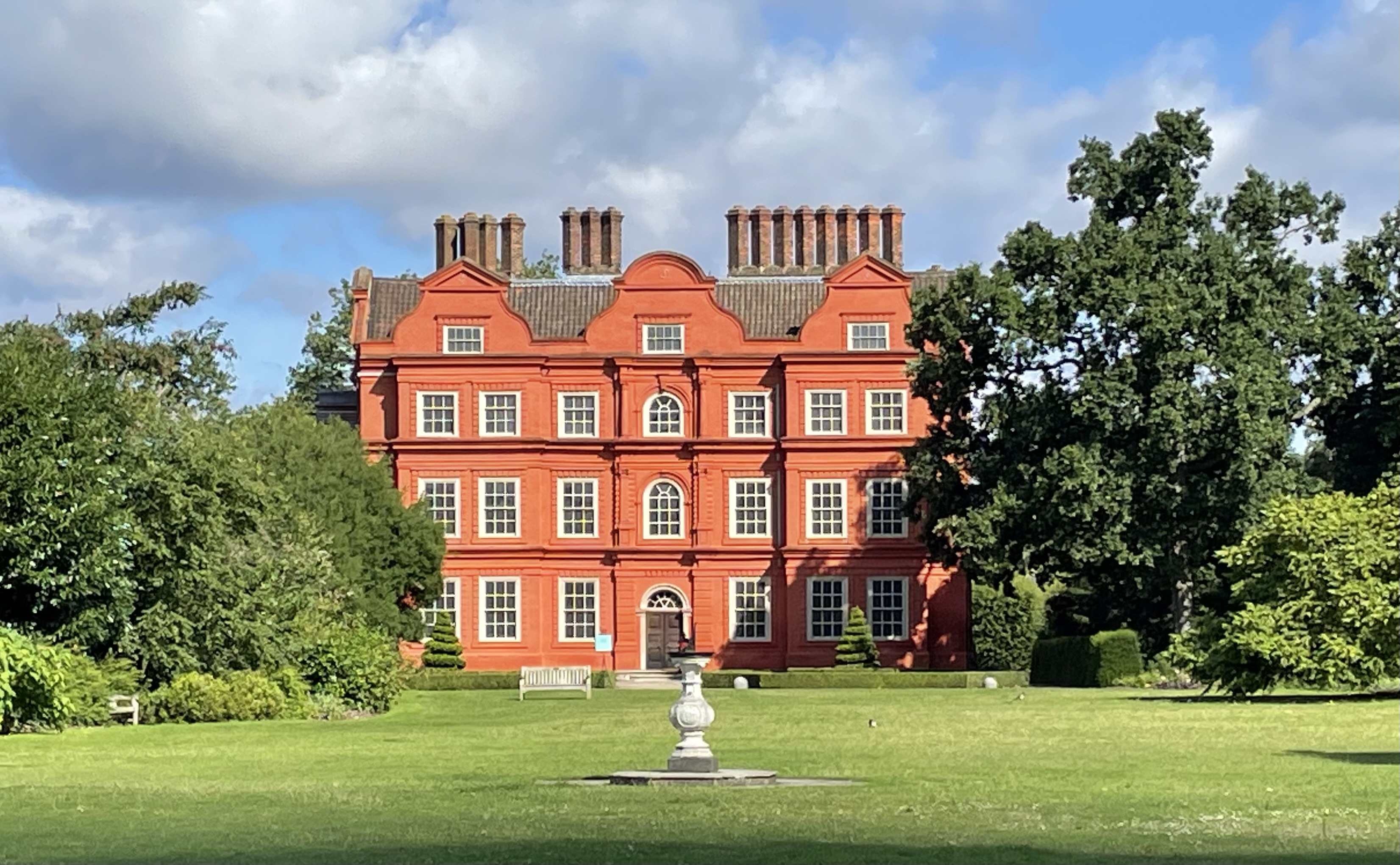
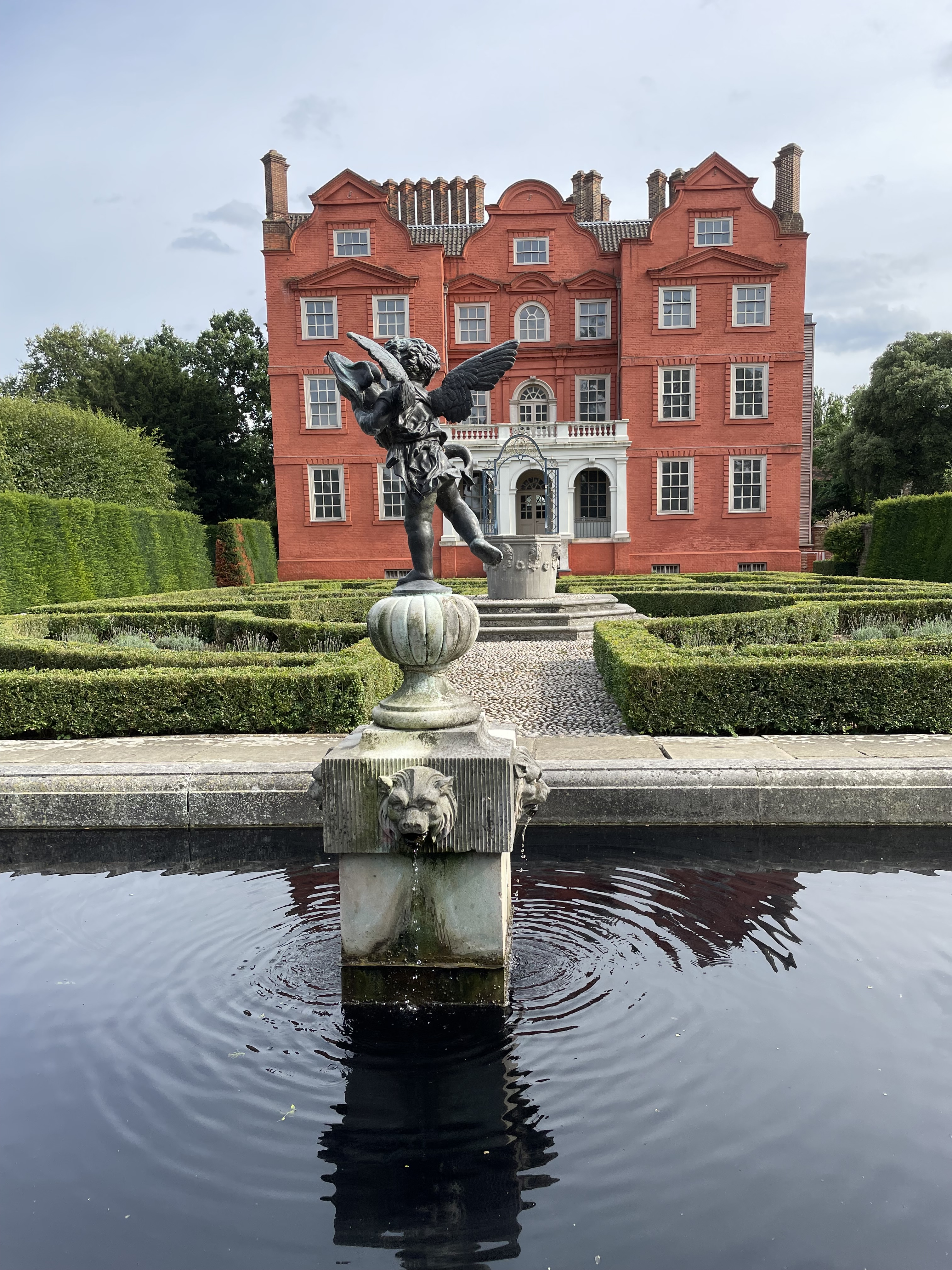
In the summer I spent a couple of nights in London, staying near Kew Palace and Gardens, just on the other side of what was once the green of Kew village. I have wanted to visit Kew for years. Even though I don’t write regency romance now I have been fascinated by history since my childhood and I will never rid myself of my amateur historian, the draw of wanting to know how people lived historically, what happened and why will never leave me. I love research and investigating, looking for clues of the things that aren’t generally known. Many of the things I discovered would have once upon a time crept into my regency stories because I do love hiding true aspects and moments within my fiction, and you never know there maybe a time-slip thriller in the future to incorporate some of the things I found out so I will keep some things to myself.
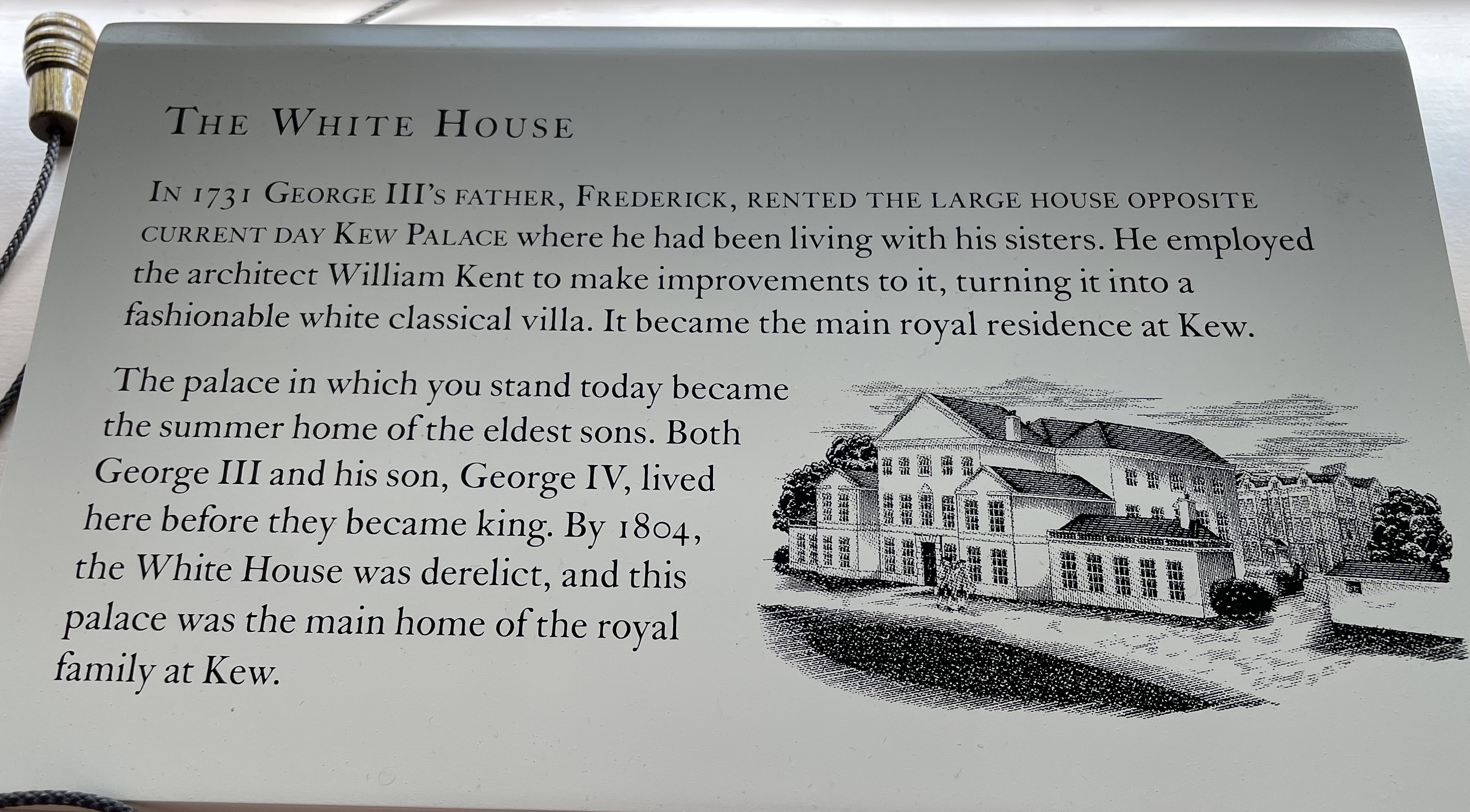
I was very surprised by the size of Kew Palace, the home of King George III and Queen Charlotte (now of Bridgerton storytelling fame). The palace is more like a Manor House in size and nature. Not at all palatial, and yet the park around the house that is now Kew Gardens, is palatial. That is because the main house at Kew that was originnaly used by the Royal family, known as The White House, was rented as a holiday home. A little like the royal family use Balmoral now, the Royal family would spend their summers at Kew escaping London life for the summer season. The White House fell out of use and became derelict, but the property ‘little kew’ continued to be used by the Royal family.
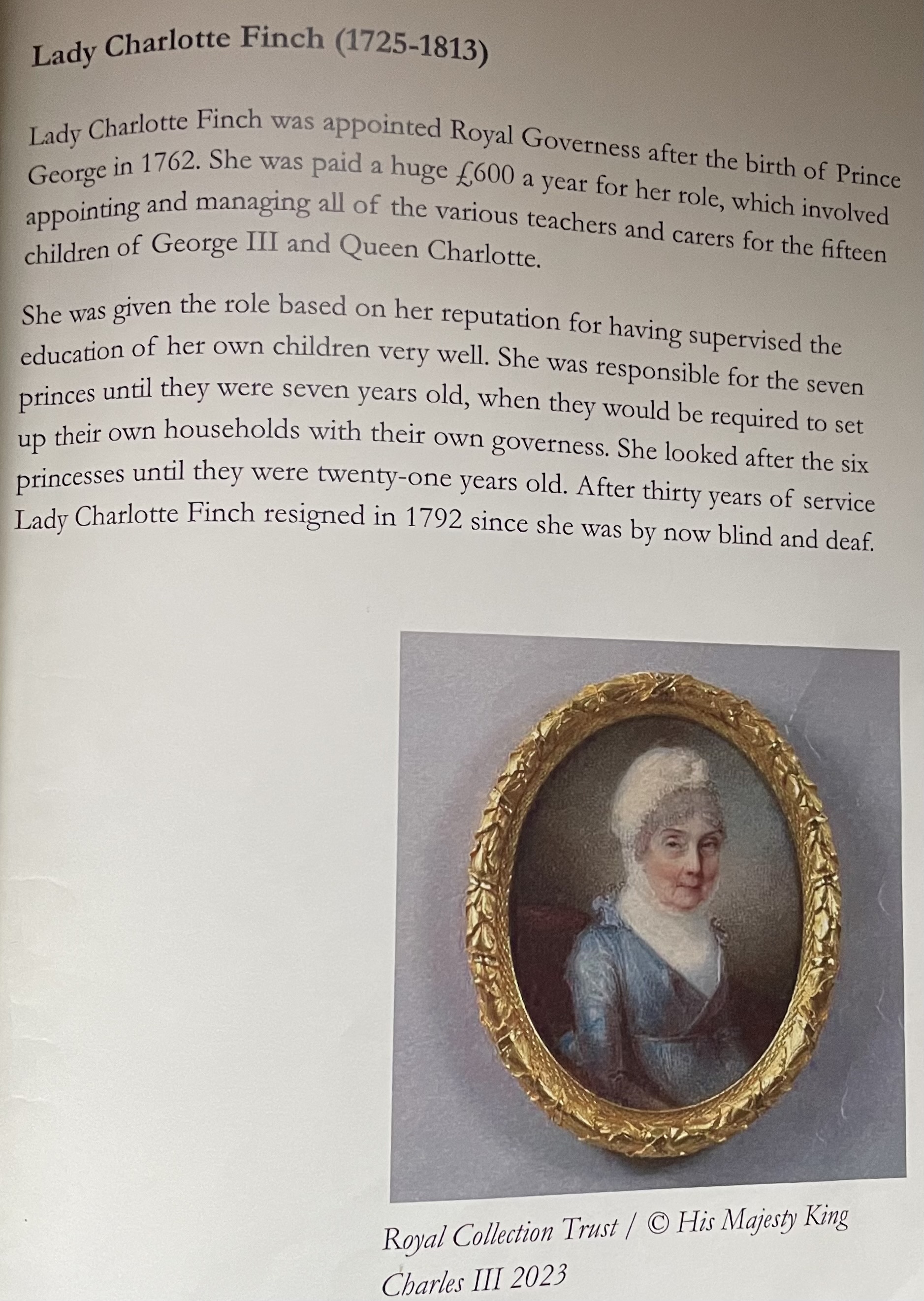
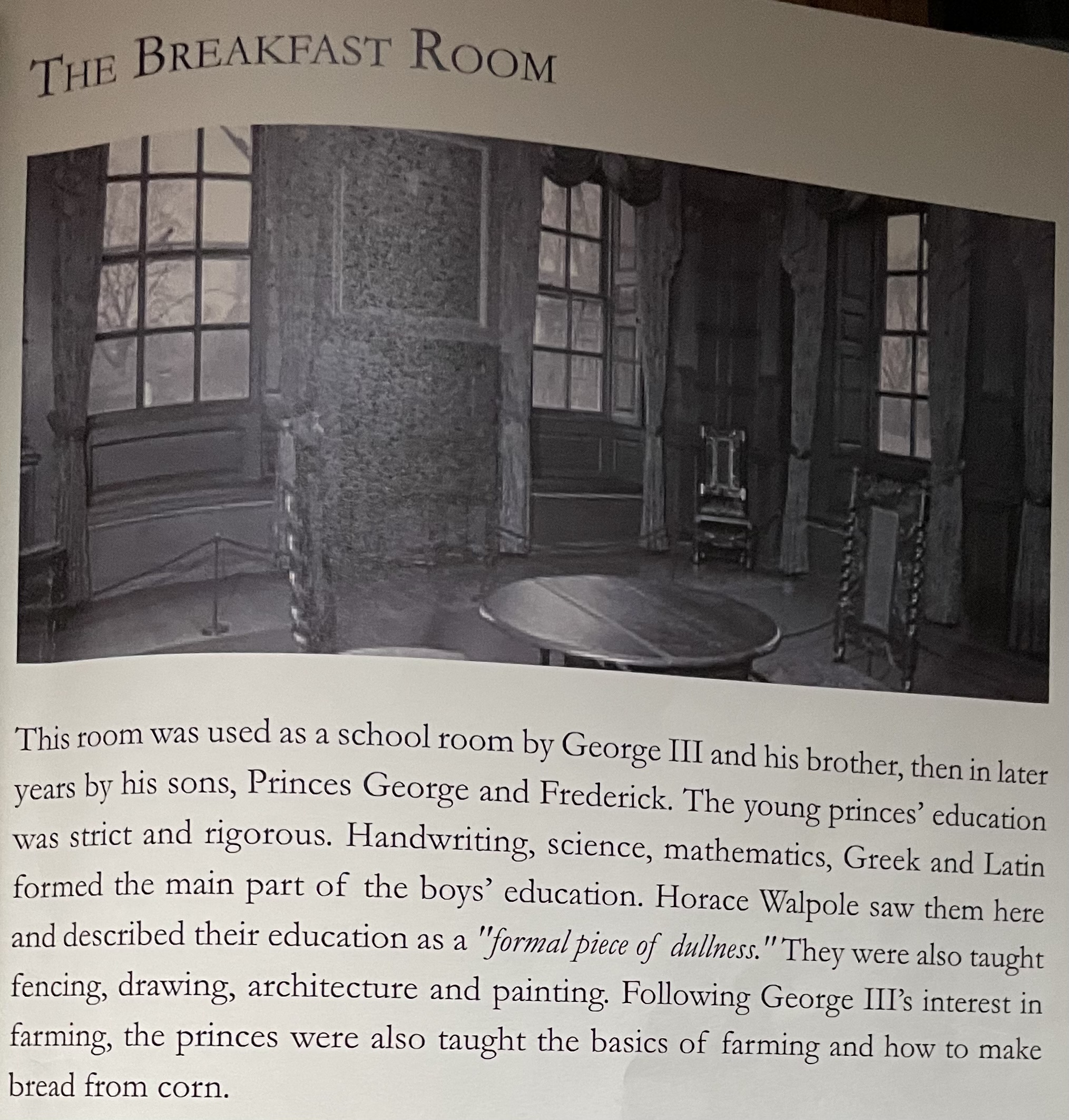
What became Kew Palace, once the land had been purchased by the Royal family, was a much smaller house that had stood in the grounds of The White House. Kew Palace was King George III’s childhood school house, and also where he sent his sons to learn after they were seven years. The following article about the governess King George III and Queen Charlotte employed mentions that from the age of seven a separate household was established for young princes.
As a child, King George III, with his brother, was taught by a tutor in the house for long days from 7 a.m. until 10 p.m. But as heirs to the throne they had to be knowledgable, capable and wise in numerous subjects.
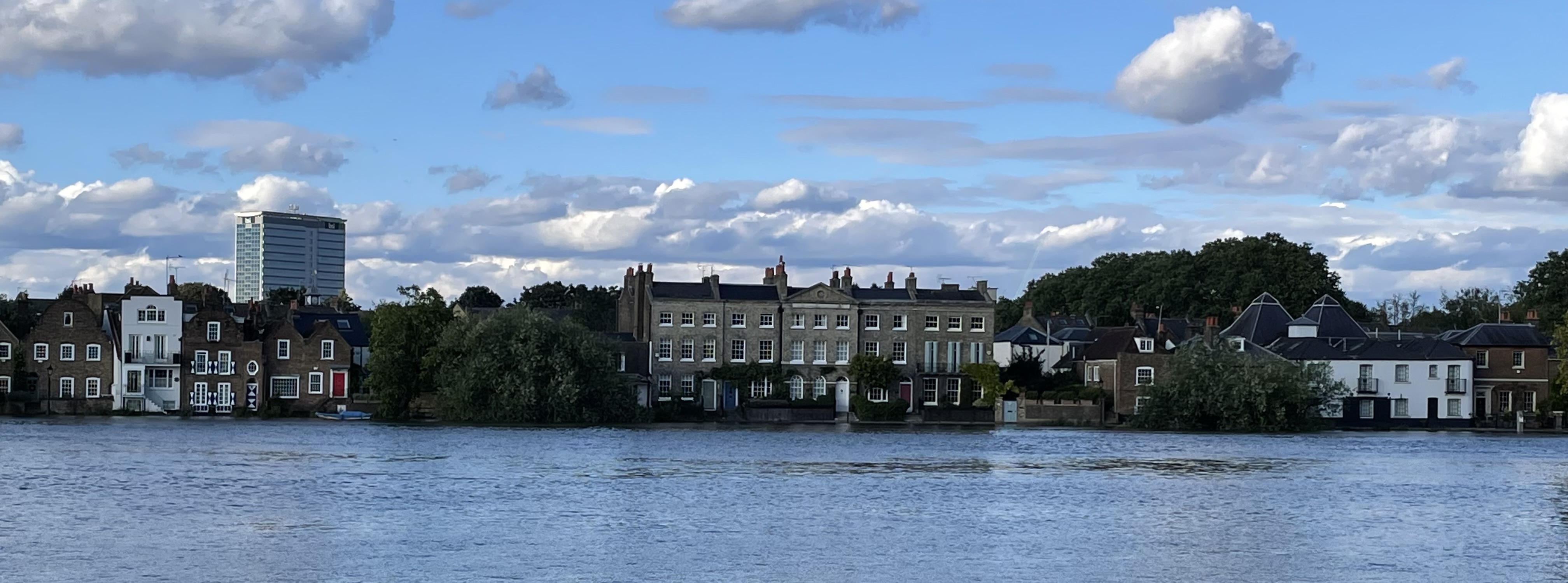
Kew Palace gardens, as with all the older palaces, in or around London, run up to the bank of the Thames. It was the position along the river which probably made the Royal family decide to rent a property in Kew. It was a popular, a fashionable, area for the wealthy from the 1600s. Allowing them to escape the sickness harboured in the narrow London streets. And, of course, in the 1500s and 1600s rivers were like motorways. Rowing boats were the quickest form of travel over longer distances, because narrow and often muddy roads were slower to navigate for carriages and carts and even on horseback. Officials and family could easily travel up the river and then return to the City of London, to Westminster, or continue upriver to Hampton Court Palace or Windsor Castle. and yet be close enough should they need to return to parliament or to undertake business.
You can see in this image below, on the opposite bank, older houses still have their steps leading down to the river where they would have called over one of the many ferrymen who rowed boats on The Thames in river in the same taxis now operate on the roads.
There are some images of historic paintings on this site where you can see just how many boats were on the river on a daily basis even in the 1700s.
I was very lucky when I visited Kew Palace to have a one to one tour of the areas of the building people don’t usually see. The historians know very little about the history of the property, other than it was previously developed as a Silk Merchant’s home in 1631, a man who would have also valued access to the river. This was the house King George II and Queen Caroline rented, they turned it into a more modern property for the time and later purchased the land. It became a palace when it became the property of the crown. But In the attic and the basement you can see hints of the house that became a palace and clues that a house stood here before 1631.
This paint work was found beneath other layers of paint in the attic, in the position where a Tudor staircase must have been removed during the 1700s renovations.
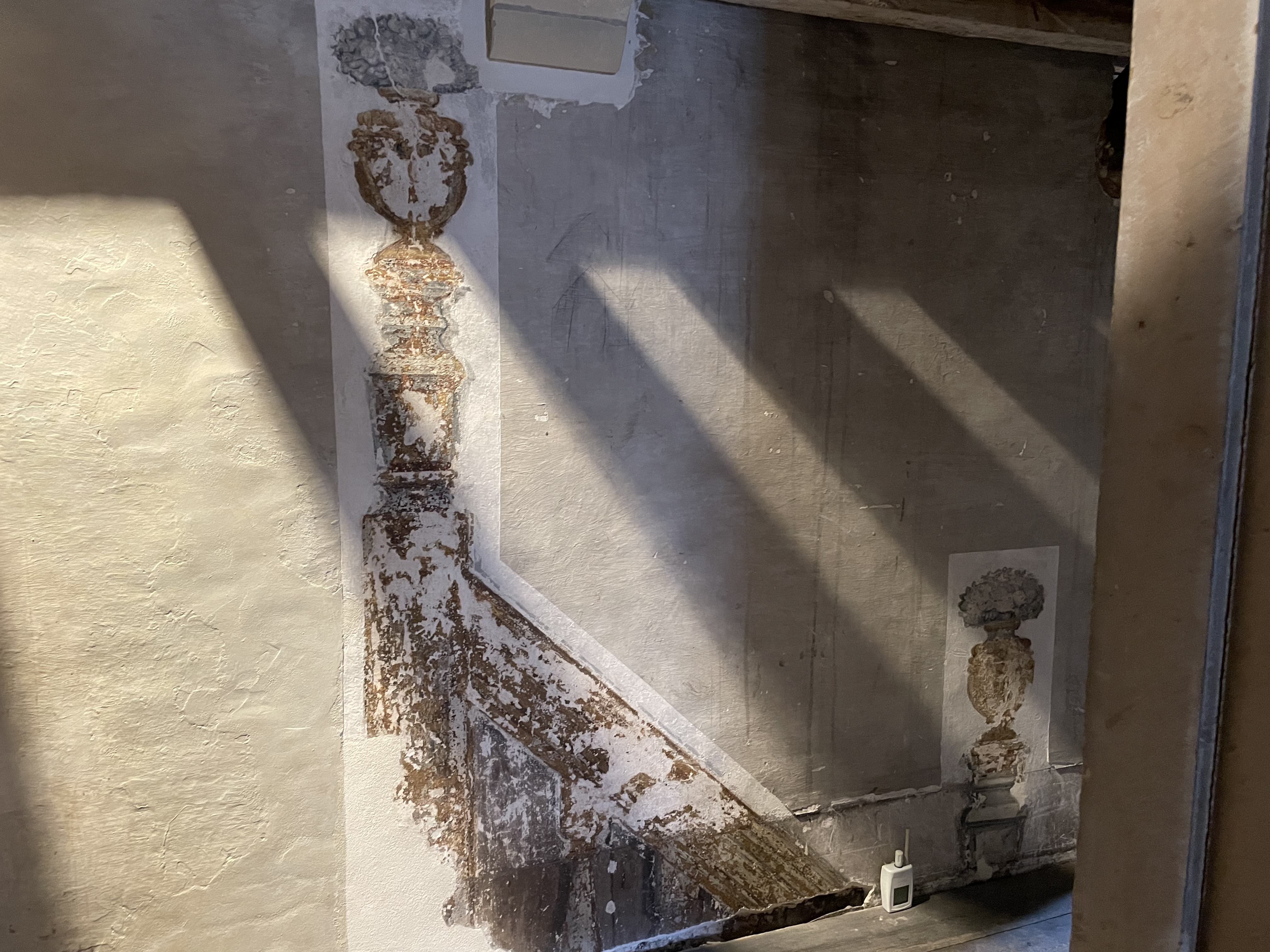
I have seen this approach in somewhere much closer to where I live and in a much more humble abode. The Merchant’s House in Marlborough Hight Street was built after the English Civil War, and when you walk around that house you will see that they painted everything at that time, one room has the walls and even the door painted in a striped pattern that matches the fabric on the chairs.
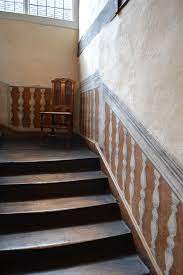
On the wall there, opposite the staircase, is also a painted stair rail. It is not as glamorous as the one painted in Kew Palace above, though, so perhaps that is a hint that the London silk merchant had more wealth to make a greater impression with.
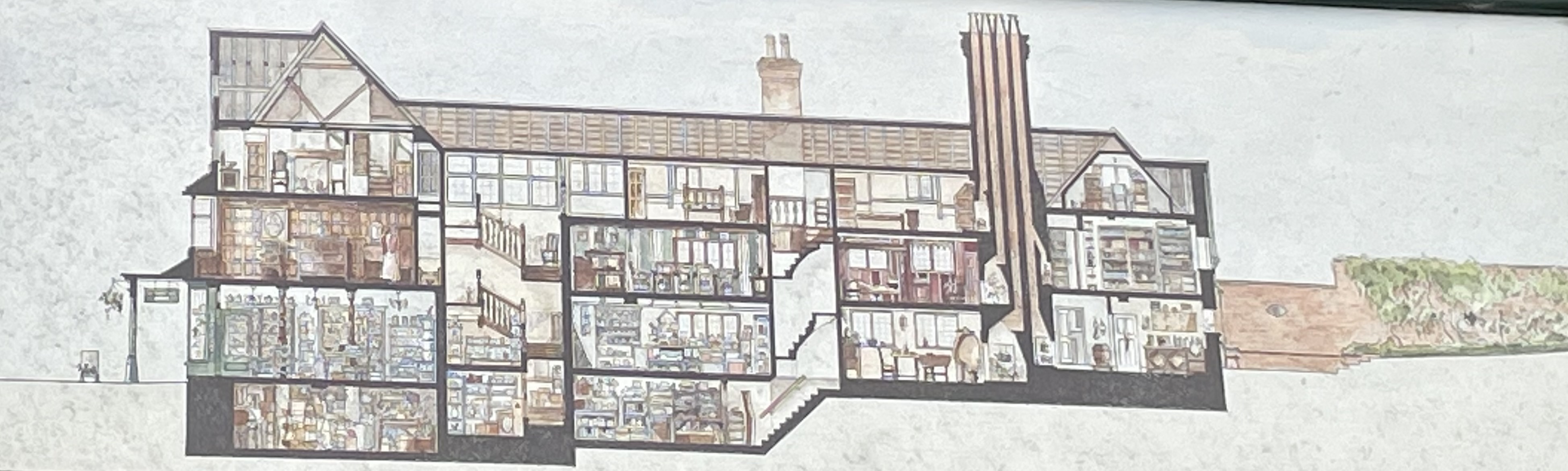
The image below is of the house in Marlborough, which was also owned by a silk merchant, who did travel to Venice for his silks so he was not poor. He may well have known the London merchant as there would have only been a few trading routes for silk. The staircase leads from the shop up to the drawing room and dinning room above, and then up to the bedrooms. I can only imagine then, if the house at Kew was grander how much grander would it have been, if not a palace, nor to the standard of a stately home then what was the middle ground.
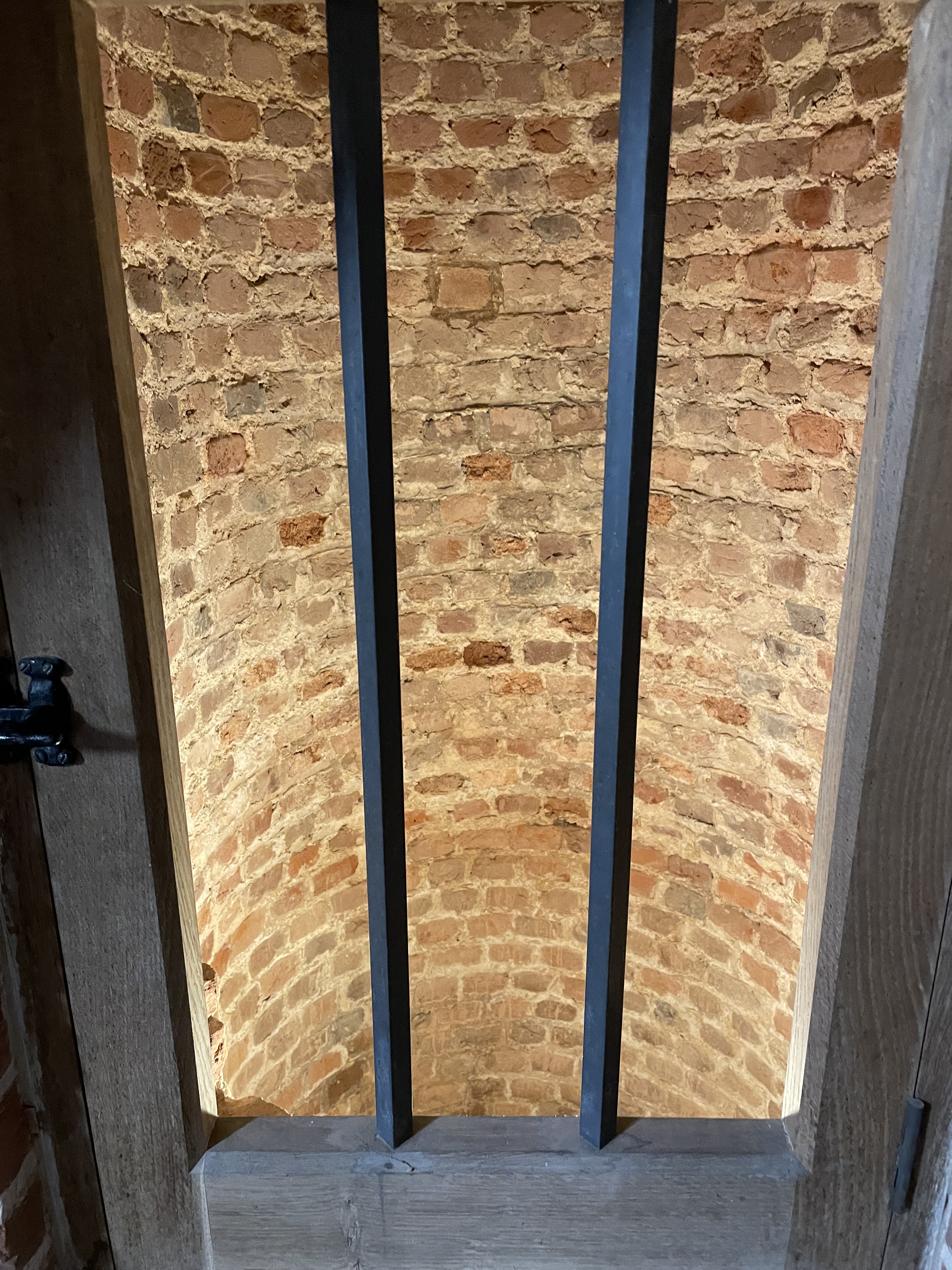
There was a further mystery in the cellar, which I was told was not used for storage during the period the Royal family lived there, and has very unusual architecture that was described as earlier than 1631. Even though historians know a Tudor property was updated in the Georgian period, they have not identified when a well was incorporated into the house and in use. There is no access to the well from the house above. Nor do they know why the arches are so unevenly built, and crossed. They only thing people do know is that an old iron door means there was something or someone owners of the house wanted to keep safe down here.

I have a couple more stories to share about Kew Palace, so more next week.


 Author, Jane Lark's stories