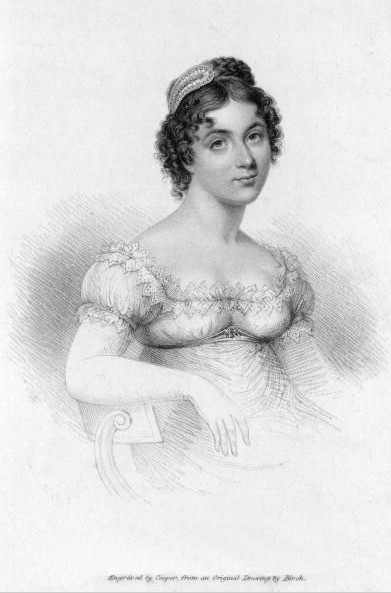
 Harriette gives us another fabulous insight into Regency life this week, but before I share it, as usual, here’s the recap for anyone joining the blog today, if you’ve already read it as always, skip to the end of the italics.
In 1825 Harriette Wilson, a courtesan, published a series of stories as her memoirs in a British broad sheet paper. The Regency gentleman’s clubs were a buzz, waiting to see the next names mentioned each week. While barriers had to be set up outside the shop of her publisher, Stockdale, to hold back the disapproving mob.
Harriette was born Harriette Debochet, she chose the name Harriette Wilson as her professional name, in the same way Emma Hart, who I’ve blogged about previously, had changed her name. Unlike Emma, it isn’t known why or when Harriette changed her name.
She was one of nine surviving children. Her father was a watchmaker and her mother a stocking repairer, and both were believed to be from illegitimate origin.
Three of Harriette’s sisters also became courtesans. Amy, Fanny and Sophia (who I have written about before). So the tales I am about to begin in my blogs will include some elements from their lives too.
For a start you’ll need to understand the world of the 19th Century Courtesan. It was all about show and not just about sex. The idle rich of the upper class aspired to spending time in the company of courtesans, it was fashionable, the thing to do.
You were envied if you were linked to one of the most popular courtesans or you discovered a new unknown beauty to be admired by others.
Courtesans were also part of the competitive nature of the regency period too, gambling was a large element of the life of the idle rich and courtesans were won and lost and bartered and fought for.
So courtesans obviously aspired to be one of the most popular, and to achieve it they learnt how to play music, read widely, so they could debate, and tried to shine in personality too. They wanted to be a favoured ’original’.
The eccentric and outspoken was admired by gentlemen who liked to consort with boxers and jockeys, and coachmen, so courtesans did not aim for placid but were quite happy to insult and mock men who courted them, and demand money for any small favour.
After Harriette wrote the letter I spoke about last week, she then tells us how the post arrived in the village. This is one thing that has always been a mystery to me when I’ve researched it, but here, Harriette says…
‘Two days after I had dispatched this letter, the little postwoman (for we had no postman), a good old soul, trotted… down the hill with a lanthorn (I think she means lantern); the mail used to come into Charmouth at ten o’clock at night, and Eliza Edmond and I had watched this poor creature, every night, during almost a fortnight, from my little window, as the light of her lamp appeared for an instant, and was lost again, while she stopped to deliver her letters. At last she stopped at our door, and presented two heavy packages for Mrs Wilson.’
Eliza’s mother rushed upstairs with Harriette’s mail, and then Eliza revealed Harriette’s deceit, last week we knew Harriette had not admitted she was a courtesan but now her outright lie is revealed when Eliza said, ‘One of these is a foreign letter, and, no doubt, from your husband.’
Harriette admits she ‘answered in the affirmative’, and then her new friend Eliza drifted from the room.
It was from Lord Worcester, who had already been involved in one battle, ‘He had prayed for me, as to his tutelar saint, kissed my chain, which he wore about his neck, and his party had been successful.’ He wrote the details of the battle to her and said he’d already learned Spanish, and promised eternal love and fidelity.
Then she turned her attention to the second letter. That was from Mr Meyler, the young man who had previously condemned her but was now trying to seduce her away from Lord Worcester. He said he’d sought to forget her, as there was little chance of them meeting while she was in the country, but then he said there was no question of that, and as he was unwell, he might travel down to Devon.
Harriette describes his letters as unaffected, and very different to the gushing she’d received from Lord Worcester for several years. Mr Meyler ‘was anything rather than romantic: his manner and voice were particularly pleasing at all times; but the former had, generally, something of melancholy, till he had drank a few bottles of claret, though not all noisy, ungentlemanlike, he appeared all animation and happiness.’
Harriette immediately wrote back to Mr Meyler – not to Lord Worcester.
‘I can candidly confess that I am glad you have not forgotten me; and I wish you happy, with all my heart and soul; but, believe me, I cannot prove myself more desirous of being liked and esteemed by you, than I have and shall continue to do.
As I keep faith with Worcester, so hereafter will you be inclined to trust me, if unexpected circumstances should oblige me to separate from him…’
She goes on to tell Meyler, if he should come to Devon, she would leave, and she could not imagine him there with her anyway, as she walked to church on a Sunday wearing her straw bonnet, and helping the elderly and the poor – Pushing him away, but encouraging him not to go too far away, just in case she would like to call him back again, keeping a bird in the bush as it were 😉
She does also ask him if he still sees Lord Worcester’s mother, and speaks of Lord Worcester’s family, which makes me wonder, if had he not been a friend of the Beauforts, she might actually have been tempted to see him regardless.
Perhaps at this point she still had some hope of being Lord Worcester’s future duchess, but equally knew the odds were long and so just in case she lost him, wished to keep another pretty young man on her tether. Good old Harriette.
More next week…
Jane Lark is a writer of authentic, passionate and emotional Historical and New Adult Romance stories.
See the side bar for details of Jane’s books, and Jane’s website www.janelark.co.uk to learn more about Jane. Or click ‘like’ on Jane’s Facebook page to see photo’s and learn historical facts from the Georgian, Regency and Victorian eras, which Jane publishes there. You can also follow Jane on twitter at @janelark
 Author, Jane Lark's stories