A Lord’s Desperate Love Part Seven ~ A Historical Romance Story

A Lord’s Desperate Love

A Historical Romance Story

Part One

Part Two

Part Three

Part Four

Part Five

Part Six

Part Seven

The fog had finally lifted and sun glowed through the parlour window. Its brightness reminded Violet of her breakfast parlour at home. The windows there always caught the morning sunlight. But that was her old house, and her old life. It was no longer home.

The sunlight made her restless, calling her outside. She’d never done so little in her life.

After the last few days of loneliness and boredom, she was willing to admit how much she missed the parties and the people – as well as Geoff. Yet once the child came, she would be fine. She was not worried that this was a life sentence. It was merely adjusting from the old to the new. But there were three more months before the child would come.

Anxiety and impatience rattled through her nerves, battling. She wished the child here and yet, she did not. She was afraid of becoming a mother… She had no idea how to be a mother… But she longed to be one… Her fingers spread across the rise of the bump in her stomach slipping over her muslin dress as if comforting the child to tell it, it was loved.

“Janet, I think I shall go for a walk.” Violet spoke to her maid, putting down the book she’d been reading. It had failed to hold her attention, she’d merely read the same page thrice.

“Did you wish me to accompany you, Ma’am?”

“Not today, Janet. Just fetch my bonnet and cloak.” She felt too much like weeping. Besides, this was a small village and she was a widow, no one would care if she walked alone. After all she was Mrs Mayer here, not Lady Rimes.

Her fingers settled on her stomach as she walked to the window and looked out, stroking the taut convex curve before falling away. The street outside was busy. People were hurrying about their business. She wished for somewhere or someone to hurry to.

“Ma’am?”

Violet turned. Janet held up her cloak and settled it on Violet’s shoulders. Violet tied the tapes in a bow, then took her bonnet from Janet’s hands and put it on. As she tied the ribbons, she was suddenly disoriented.

It was so strange to be wearing all this black, only a few weeks ago she’d persuaded Jane to give hers up, and now here Violet was masking herself, hiding behind it – lying.

Oh she was feeling melancholy today and this ill mood would do the child no good. She would walk and breathe in some fresh air and enjoy the prettiness of her new surroundings and force her heart to be glad again.

She took her gloves from Janet and slipped them on. “Thank you.” Then she nodded and turned to leave. Janet hurried to open the door and held it as Violet walked out.

The sunshine immediately touched her face, warming her skin a little. The autumn day was chilly, but now the fog had gone, in the sunlight, it was not harshly cold.

The summer had been long this year, and hot. She’d spent several hours of it walking with Jane. She wished Jane were here.

A time they’d walked in Hyde Park came to mind. They’d seen Barrington’s niece. Mary was a pretty little thing.

Suspecting her own condition but denying it wholeheartedly at the time, Violet had been enchanted. It was the first moment she had let herself accept the possibility and hope.

She thought of Jane as she walked about the village, peering into the bakers and milliners shop windows, and then wandering on; smiling at anyone who smiled at her, and greeting them if they spoke. She didn’t know many people yet, bar her neighbours. If she’d have been in London now, she would have called on friends. But she was not in London.

If only Jane had not married Barrington, Violet could have asked Jane to visit and she would have come. But Violet could hardly ask Jane to keep the secret from Barrington, he was Geoff’s close friend. Her friendship with Jane was another casualty of this muddle. She could neither write nor ask her to come and none of Violet’s other friends could be trusted to keep a secret.

Isolation settled on Violet’s shoulders like a second cloak as she walked on through the people busy shopping in the market square, away from the inns. She sought somewhere silent to sulk and suffer her heartache.

This was so foolish. She’d made this choice for good reason. Her hand touched her stomach. It was not her way to mope. She forced a smile and tried to lighten the mood in her heart, walking on down a side street. Then she turned left at the narrow cobbled ford which crossed to a row of cottages on the far side. She looked at the stepping-stones but instead decided to turn left and carry-on up the hill where the cottages grew sparser.

Violet laughed suddenly, remembering how she’d accused Barrington of toying with Jane. Barrington would laugh now if he saw how far Violet had tumbled from her pedestal.

Reaching a wooden gate at the entrance of a field, where a deep cart rut was cut in the meadow, from hundreds of loads and horses passing through over centuries of use, Violet leaned her elbows on the top bar and looked out across the long grass.

Another wash of pain and misery swept over her in a wave as she thought of Geoff.

~

A Lord’s Desperate Love is the  story of two of the secondary characters from the 2nd book in the Marlow Intrigues Series

~ ‘The Passionate Love of a Rake’.

The true story of a courtesan, who inspired The Illicit Love of a Courtesan, which I’ve been telling every Sunday, will continue alongside this.

Jane Lark is a writer of authentic, passionate and emotional Historical and New Adult Romance stories, and the author of a No.1 bestselling Historical Romance novel in America, ‘The Illicit Love of a Courtesan’.

Click here to find out more about Jane’s books, and see Jane’s website www.janelark.co.uk to learn more about Jane. Or click  ‘like’ on Jane’s Facebook  page to see photo’s and learn historical facts from the Georgian, Regency and Victorian eras, which Jane publishes there. You can also follow Jane on twitter at @janelark
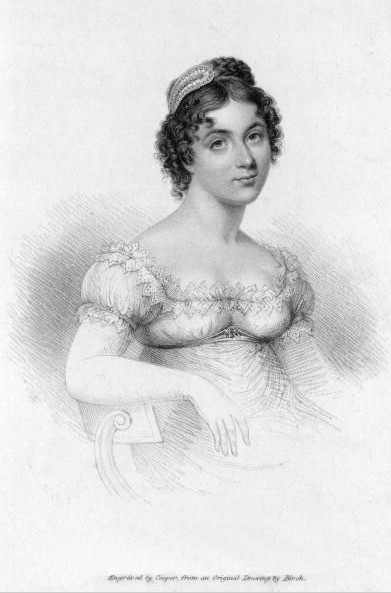
A Courtesan deserted – Fanny’s break-up with Colonel Parker

Harriette_Wilson00I am slipping backwards in Harriette’s story today. What I didn’t share, because I didn’t want to break up the elements of her story with Meyler and their inconstancy agreement; was that before Harriette headed off to Paris, her sister had a disappointment that delayed Harriette’s journey…

But before I tell you Fanny’s story, as always, here’s the quick recap of the history of this series of posts for anyone joining today. If you’ve already read it, then skip to the end of the italics.

In 1825 Harriette Wilson, a courtesan, published a series of stories as her memoirs in a British broad sheet paper. The Regency gentleman’s clubs were a buzz, waiting to see the next names mentioned each week. While barriers had to be set up outside the shop of her publisher, Stockdale, to hold back the disapproving mob.

Harriette was born Harriette Debochet, she chose the name Harriette Wilson as her professional name, in the same way Emma Hart, who I’ve blogged about previously, had changed her name. Unlike Emma, it isn’t known why or when Harriette changed her name.

She was one of nine surviving children. Her father was a watchmaker and her mother a stocking repairer, and both were believed to be from illegitimate origin.

Three of Harriette’s sisters also became courtesans. Amy, Fanny and Sophia (who I have written about before). So the tales I am about to begin in my blogs will include some elements from their lives too.

For a start you’ll need to understand the world of the 19th Century Courtesan. It was all about show and not just about sex. The idle rich of the upper class aspired to spending time in the company of courtesans, it was fashionable, the thing to do.

You were envied if you were linked to one of the most popular courtesans or you discovered a new unknown beauty to be admired by others.

Courtesans were also part of the competitive nature of the regency period too, gambling was a large element of the life of the idle rich and courtesans were won and lost and bartered and fought for.

So courtesans obviously aspired to be one of the most popular, and to achieve it they learnt how to play music, read widely, so they could debate, and tried to shine in personality too. They wanted to be a favoured ’original’.

The eccentric and outspoken was admired by gentlemen who liked to consort with boxers and jockeys, and coachmen, so courtesans did not aim for placid but were quite happy to insult and mock men who courted them, and demand money for any small favour.

Harriette’s favourite sister, Fanny, had been in a relationship with Colonel Parker for years. She’d borne him one child, and gone by the name Mrs Parker for a very a long time, as he had supported her even when he was abroad for months at a time, fighting during the Peninsular War. But now the Peninsular War was over, and Colonel Parker had been back in England for a few weeks, living with Fanny.

Colonel Parker, being one of those sort of animals whose constitution requires variety, had been, of late, cooling towards Fanny, his amiable, and I will swear, most faithful companion, the mother of his child, too, and merely because he had been in possession of her person too many months for his habit of variety.’

He told Fanny he was going to visit a female cousin, and Harriette says that Fanny joked, ‘he should not make love to her…’

‘Love to her!’ exclaimed Parker, ‘she is the greatest fright imaginable. I wish you could once see her. It would set your mind at rest for the remainder of your life, on that head at least.’

Colonel Parker promised to return to Fanny in a week, but two weeks passed and he did not return, and nor did she hear anything. Fanny grew more and more concerned as each day passed and she heard nothing. Then… ‘somebody told her that he was in town, and residing at a hotel in Vere Street. Fanny set off that very instant, by herself, and on foot, to the hotel, declaring her conviction of its utter impossibility.’

But he was there…

Fanny, ‘met Parker on the steps of the hotel, and placed her hand upon his arm, absolutely breathless and speechless.

‘Fanny,’ said Parker, ‘you are, no doubt, surprised that I did not either go to you, or inform you of my arrival in town… but’ continued Parker—and he hesitated.

‘Pray, speak,’ said Fanny.’ She was feeling ill.

‘I have bad news for you,’ said Parker, rather confused than agitated. ‘I am going to be married,’ he continued, observing that Fanny could not speak.

Fanny was so shocked by the news, that Colonel Parker, finally expressed some concern for her, and hired a Hackney to bring her home, accompanying her on the journey.

Harriette claims she was calling on her friend Julia, who Fanny was sharing a house with at the time, when Fanny and Colonel Parker returned home.

‘The little sitting-room, which Fanny had furnished and fitted up for herself, was a back parlour, looking into the garden. Her veil was down, when she descended from the coach, and, though we expected they would have come upstairs (sitting-rooms were more often upstairs in the regency period) Julia and I determined not to interrupt them. I was to pass the day with Julia: and, when the dinner was on the table, the servant was desired to knock at Fanny’s door, and inform Colonel and Mrs Parker, that we were waiting. The servant brought us word that they must beg to be excused. I became uneasy, and, without knocking, or any further ceremony, entered the room. Fanny was sitting on the sofa, with her head reclined on the pillow. She was not in tears, and did not appear to have been shedding any; but her face, ears, and throat were visibly swollen, and her whole appearance so changed that I was frightened.

‘My dear, Fanny, what is the matter?’

Fanny did not even lift her eyes from their fixed gaze on the ground.

‘Colonel Parker,’ said I, ‘for God’s sake, tell me what has happened.’

‘She heard some unpleasant news, too abruptly,’ said Colonel Parker (so caring :/ )

‘I implore you not to inquire,’ said Fanny, speaking with evident difficulty. ‘I would not be left alone, this night, and I have been on my knees, to entreat Parker to remain with me. He refuses.’

‘Surely you do not mean to leave her in this state!’ said I, addressing Parker.

‘I can do her no good. It is all too late: since my word is passed, and, in ten days, I shall be the husband of another. My presence only irritates her, and does her harm.’

‘Fanny, my dear, Fanny,’ said I, ‘can you make yourself so completely wretched, for a man who acts without common humanity towards you?’

‘Pray, pray, never expect to console me, in this way,’ said Fanny impatiently, ‘I derive no consolation from thinking ill of the father of my dear child.’

‘Come to bed, dear Fanny,’ said I, taking hold of her burning hand.

‘Yes, I shall be better in bed.’

Harriette and Parker helped her upstairs, and then at one o’clock, Parker left.

Harriettes says, that Fanny was stupefied by her loss and sadness, she could not cry, but she stayed in bed to mourn her lover for two days. Then on the third when she rose she said, ‘All I entreat of you, is to keep secret from me the day of their marriage, and everything connected with it.’

Unfortunately for Fanny, as she tried to return to a life of merriment to hide her pain, a man she had rejected in favour of Colonel Parker in the past, was not going to respect her desire to think nothing more of Colonel Parker. He not only told her the day and hour, and place, of Colonel Parker’s wedding, he brought Fanny as piece of Colonel Parker’s wedding cake.

Again, Fanny retired to her room, to deal with her pain. But after a day, she came out and continued on with her life, having lost the stable relationship she’d had for years, and thought would last… Harriette says, after this Fanny was much altered. She was ill often, and changed, ‘from gay to serious.’

So many of the courtesan’s had sad heartbroken endings, as the men they’d committed to walked away from them to continue a respectable life, or a new relationship with a younger, prettier, or just different lover. When the courtesan’s were young and at their peak, they must have felt that all the power was in their hands as they picked  out the men they favoured, and absorbed all the courtship and adoration, but then… When they grew older… They were left alone with very few choices of how they could live…

Back to Harriette’s story next week…

Jane’s contemporary story ‘I Found You’ is still 99p on Amazon in the UK until midnight today!

Jane Lark is a writer of authentic, passionate and emotional Historical and New Adult Romance stories.

Why not also read A Lord’s Desperate Love the story of two of the characters from The Passionate Love of a rake which Jane is telling for free here, access each part on the index of posts. 

Click here to find out more about Jane’s books, and see Jane’s website www.janelark.co.uk to learn more about Jane. Or click  ‘like’ on Jane’s Facebook  page to see photo’s and learn historical facts from the Georgian, Regency and Victorian eras, which Jane publishes there. You can also follow Jane on twitter at @janelark