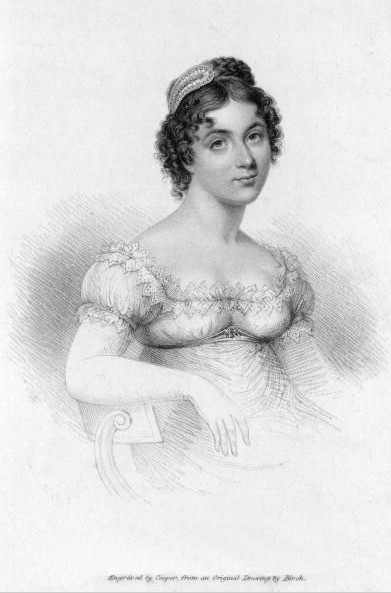
 This week let’s return to Harriette’s story, although I will be honest and warn you, that after she speaks of end of her love affair with Lord Ponsonby, her memoirs take on a new edge, which rings of half-truths and callous feelings.
First though, here’s the recap explaining the background of this series of posts, if you’ve read it before please read from the end of the Italics.
In 1825 Harriette Wilson, a courtesan, published a series of stories as her memoirs in a British broad sheet paper. The Regency gentleman’s clubs were a buzz, waiting to see the next names mentioned each week. While barriers had to be set up outside the shop of her publisher, Stockdale, to hold back the disapproving mob.
Harriette was born Harriette Debochet, she chose the name Harriette Wilson as her professional name, in the same way Emma Hart, who I’ve blogged about previously, had changed her name. Unlike Emma, it isn’t known why or when Harriette changed her name.
She was one of nine surviving children. Her father was a watchmaker and her mother a stocking repairer, and both were believed to be from illegitimate origin.
Three of Harriette’s sisters also became courtesans. Amy, Fanny and Sophia (who I have written about before). So the tales I am about to begin in my blogs will include some elements from their lives too.
For a start you’ll need to understand the world of the 19th Century Courtesan. It was all about show and not just about sex. The idle rich of the upper class aspired to spending time in the company of courtesans, it was fashionable, the thing to do.
You were envied if you were linked to one of the most popular courtesans or you discovered a new unknown beauty to be admired by others.
Courtesans were also part of the competitive nature of the regency period too, gambling was a large element of the life of the idle rich and courtesans were won and lost and bartered and fought for.
So courtesans obviously aspired to be one of the most popular, and to achieve it they learnt how to play music, read widely, so they could debate, and tried to shine in personality too. They wanted to be a favoured ’original’.
The eccentric and outspoken was admired by gentlemen who liked to consort with boxers and jockeys, and coachmen, so courtesans did not aim for placid but were quite happy to insult and mock men who courted them, and demand money for any small favour.
Since the end of her affair with Lord Ponsonby, it seems to me as though Harriette;s fame as a courtesan, has slipped to more of an echo of her fame, and perhaps as Amy and Sophia (who’ve I’ve written about the last couple of weeks), she had some desire for a respectable happy ending, though she never admits it, but the story I am leading into this week has suggestions of it.
This week I am merely painting the scene though, as Harriette speaks about one particular night in her theatre box, and this particular scene does have a ring of truth to me.
The implication immediately is that the men gathering about Harriette, now, are much younger. No longer the older most respected men, seeking to pour their wealth out on an experience with a coveted young beautiful courtesan, this group of adolescent men come up to town from university, to kick against the restraints of their fathers and families, seeking notoriety and the envy of friends, and what better way than to claim you kept company with a previously highly acclaimed scandalous courtesan.
The young titled, and heirs, of some of the most renowned families would travel from Oxford to London to be seen in her company and then brag about it to their friends, to the point that in the University there was a fashion to dress as Harriette preferred. – Seriously, I have said this so many times, human nature has not changed through the ages, teenagers have their trends now, and they had them then, and Harriette was the trend at Oxford.
One night she is sitting with a one of the men who comes to visit her from Oxford, and claims, he declares, in an agitated manner. ‘…my friend… is come up from Oxford on purpose to try to get introduced! I know he must return to college tonight, and I am, I confess, rather anxious that he should be disappointed.’
This tone struck me so much like any nineteen year old today, envious and angry of a friend trying to muscle in on his girl, but this is beyond that, being a friend of Harriette’s had a huge acclaim to it, that he didn’t want others to have. Of course Harriette being Harriette, just enjoys the game and slips in a spoon to stir the mix…
‘Is he Handsome?’
The young Duke of Leinster, declares his friend not handsome at all, but describes him when the women press for more. ‘He is a long, thin, pale fellow, with straight hair.’
Apparently his friend, the Marquis of Worcester, heir to a dukedom, had tried several avenues to obtain an introduction to Harriette, but everyone he had tried to persuade had refused to introduce him, as Harriette still liked to maintain her feel of exclusivity so discouraged gentlemen from introducing friends.
Leinster then looked down at the pit and pointed out, ‘a very tall young fellow, in silk stockings, looking steadfastly up at this box. Upon my honour, he won’t wear trousers or curl his hair, because he heard that you dislike it.’
Harriette, her sister fanny and her friend Julia, all look down at the young man, looking up at them, but of course being young he was disconcerted and looked away. Harriette says she thought no more of him then (a statement I would believe was written for the older Lord Worcester, in her memoirs, to make it clear that she had never really had any genuine feeling for him).
But the Marquis of Worcester obtained his introduction. It was Harriette’s sister’s former protector (using the word loosely) who brought Worcester up, as Lord Deerhurst had no care for sensibilities.
Under normal circumstances Harriette would have refused the unwelcome intrusion, but something must have touched her, and perhaps it was his youthful adoration, as she describes, ‘the young Marquis, blushed so deeply, and looked so humble, that it was impossible to treat him without civility.’
Harriette says he spoke very little, and his friend, who had not wanted him to have the introduction, claimed his higher status in Harriette’s company by taking the liberty of whispering in her ear, ‘What do you think of him?’ Harriette only answered him with a promise to tell him tomorrow, and then indulged in studying the Marquis more.
Harriette describes him as appearing nervous, and wishing to come across well, and speaks of him complimenting her hair, and other men saying she would not mind if he wished to touch, she then offered that he could. When he did, she said, ‘without vanity, and in very truth, let him deny it if he can, I never saw a boy, or a man, more madly, wildly, and romantically in love with any daughter of Eve, in my whole life.’ Again a statement written years later for the older Lord Worcester who may or may not have read her words. But Harriette clearly, surely, recognized possibility in this young man who was heir to a dukedom, so did she, or did she not, act like Amy, and go out to try to obtain a more permanent commitment?
I’ll continue Harriette’s and Lord Worcester’s story next week…
Jane Lark is a writer of authentic, passionate and emotional love stories.
See the side bar for details of Jane’s books, and Jane’s website www.janelark.co.uk to learn more about Jane. Or click ‘like’ on Jane’s Facebook page to see photo’s and learn historical facts from the Georgian, Regency and Victorian eras, which Jane publishes there. You can also follow Jane on twitter at @janelark
 Author, Jane Lark's stories