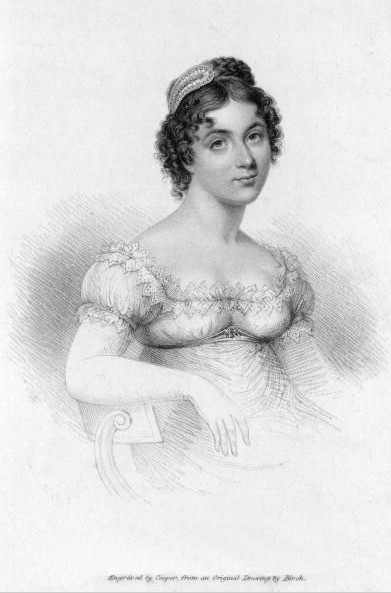
 I have mentioned for the last couple of week about Harriette’s unknown favourite, the man she has seen, and admired from a distance, but doesn’t know how to approach because she doesn’t know his name.
Well today, I will tell you how she meets him.
But first, as usual, if you’re joining my blog for the first time today, here’s some scene setting. If not, then read from the end of the italics.
In 1825 Harriette Wilson, a courtesan, published a series of stories as her memoirs in a British broad sheet paper. The Regency gentleman’s clubs were a buzz, waiting to see the next names mentioned each week. While barriers had to be set up outside the shop of her publisher, Stockdale, to hold back the disapproving mob.
Harriette was born Harriette Debochet, she chose the name Harriette Wilson as her professional name, in the same way Emma Hart, who I’ve blogged about previously, had changed her name. Unlike Emma, it isn’t known why or when Harriette changed her name.
She was one of nine surviving children. Her father was a watchmaker and her mother a stocking repairer, and both were believed to be from illegitimate origin.
Three of Harriette’s sisters also became courtesans. Amy, Fanny and Sophia (who I have written about before). So the tales I am about to begin in my blogs will include some elements from their lives too.
For a start you’ll need to understand the world of the 19th Century Courtesan. It was all about show and not just about sex. The idle rich of the upper class aspired to spending time in the company of courtesans, it was fashionable, the thing to do.
You were envied if you were linked to one of the most popular courtesans or you discovered a new unknown beauty to be admired by others.
Courtesans were also part of the competitive nature of the regency period too, gambling was a large element of the life of the idle rich and courtesans were won and lost and bartered and fought for.
So courtesans obviously aspired to be one of the most popular, and to achieve it they learnt how to play music, read widely, so they could debate, and tried to shine in personality too. They wanted to be a favoured ’original’.
The eccentric and outspoken was admired by gentlemen who liked to consort with boxers and jockeys, and coachmen, so courtesans did not aim for placid but were quite happy to insult and mock men who courted them, and demand money for any small favour.
While Harriette was continuing her meetings with the Duke of Wellington, she was also courting another favourite of England’s elite society, the ton, Beau Brummel, who was a favourite of the Prince Regent, and a fashion icon of the time. It is partly thanks to Brummel that men stopped wearing breeches and started wearing trousers. And it is probably also thanks to Brummel that men still wear ties, as he made it the thing for men to tie their neckcloths, cravats, in a fashionable and complicated style.
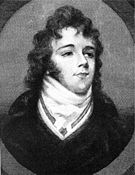
Beau Brummell
Well, Harriette used to walk regularly in Hyde Park during the day, in the company of Beau Brummell, but admits that as she walked she ignored his protestations of love. Because of course Brummell led fashion, so Brummel had to capture the interest of one of the most fashionable courtesans. He did not wish to be out-done, but at the head of any new craze and Harriette was the craze, hence why she won Wellington’s interest too. Any one who was anyone, and male, wanted to know her. If they were interested in courtesans. But while she walked beside Brummell Harriett admits she is not thinking of Brummell, or even listening to him, but looking out for her unknown man.
She says she walked as often as she could persuade someone to join her. Solely to have opportunity to see this man.
And she says, which I love, because I have said this loads of times and I’ll say this loads more, it just proves people acted then as they act now, their thinking and their feelings were the same all through history, it was only environments and expectations that were different (and that is what I always try to capture in my books). So, Harriette says, ‘he always turned his head back, after he passed me; but whether he admired, or had, indeed observed me, or whether he only looked back after his dog, was what puzzled and tormented me.‘
She likens her interest to the fever she had with Scarlet Fever. She had attraction, lust, bad 🙂 I just love someone in the 1800s describing the spark anyone might feel today too.
One night, at 6pm, Harriette says when she was dining with her sister Fanny, she had an urge to go to Hyde Park, only to see the man, because she thought he was there, even though she’d never seen him there at that hour. Fortunately for Harriette, some of her sister’s admirers had ignored the fact Fanny ate dinner at six and called on her without concern for her way of life. Harriette persuades one of the gentlemen to take her to Hyde Park. He teased her all the way, as he knew why she was going. But there was no sign of her quarry in the park, and her gentleman friend wasn’t waiting with her. She says he whispered in her ear. ‘I’m not going to be groom.’
Harriette stayed in the park alone for an hour, walking along the Serpentine. She did not see him. But when she left she met an old gentleman who was pleasant to her, and then a beggar woman, and with no money for the beggar woman, rushed back to ask for money from the man. Only to discover when she returned that the man she admired was sitting on his horse hidden between two tress. She thinks he may have been watching her, but again doesn’t know. Then when she returns home, he rides past her slowly and she looks directly at him, to try to see if he really does look at her but when their eyes meet he blushes and looks away.
She wishes she could only see him walking with a man she knew, because then she could ask that man who he was.
The following night Harriette had to endure an evening of being paraded before other men by an acquaintance, as a mutual friend of her sisters asked them both to dine, and then tried to set Harriette up with an attractive young, but poor (not to Harriette’s taste) man. After this Harriette heads for the theatre and their opera box, and there, she and Fanny, meet their friend Julia. The third of the three graces. But low-and-behold, who is in the audience. Her unknown favourite.
Harriette is overjoyed. She speaks of only wishing to touch his horse or his dog because he has touched them and loved them, and wanting to stand outside his house to have the chance of seeing him or hearing his voice.
And at last, her friend Julia, lifts her opera glasses to her eyes, and says, she knows him. His name is Lord Ponsonby. She describes him as having the reputation of being the most handsome man in England. He is the brother of the man who hid in Harriette’s sisters bedroom, and the eldest brother of Lady Caroline Lamb.
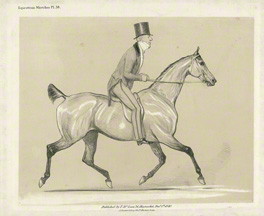
John Ponsonby, 4th Earl of Bessborough
The next night, Harriette admits passing his house five times, and staring at his door knocker remembering the fact he must have held it many, many times.
Finally within a few days, she has some sign her infatuation may be returned even in part, when she goes to Hyde Park late one night, sees him there and then he follows her home on his horse, all be it at a distance, but right to her door, and then once she has entered he rides on past. But when Harriette is inside she races upstairs climbing right up to the roof and onto the garret, on the leads, so she could look down on the street. She says when he got almost out of sight at the end of the road, he suddenly turned and rode back.
Hope blossomed…
More next week 🙂
Jane Lark is a writer of authentic, passionate and emotional love stories.
See the side bar for details of Jane’s books, and Jane’s website www.janelark.co.uk to learn more about Jane. Or click ‘like’ on Jane’s Facebook page to see photo’s and learn historical facts from the Georgian, Regency and Victorian eras, which Jane publishes there. You can also follow Jane on twitter at @janelark

 Author, Jane Lark's stories