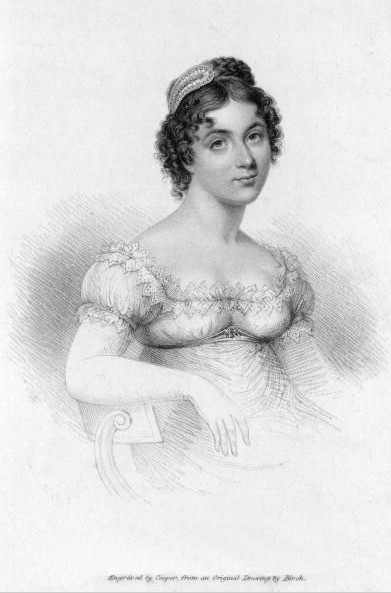
 Anger, control, jealousy and passion ~ that was the essence of Harriette’s affair with Meyler, as I said last week, and in her time with him she did many things that were out of character for every other relationship she’d had. Here’s another of the tales she tells of her affair with the young wealthy son of a business man, who’d found a place in Regency high society.
But before I tell it, as always, here’s the recap for anyone joining this series of posts today, and if you’ve read it before just skip to the end of the italics where I’ve marked the start of the story in bold type.
In 1825 Harriette Wilson, a courtesan, published a series of stories as her memoirs in a British broad sheet paper. The Regency gentleman’s clubs were a buzz, waiting to see the next names mentioned each week. While barriers had to be set up outside the shop of her publisher, Stockdale, to hold back the disapproving mob.
Harriette was born Harriette Debochet, she chose the name Harriette Wilson as her professional name, in the same way Emma Hart, who I’ve blogged about previously, had changed her name. Unlike Emma, it isn’t known why or when Harriette changed her name.
She was one of nine surviving children. Her father was a watchmaker and her mother a stocking repairer, and both were believed to be from illegitimate origin.
Three of Harriette’s sisters also became courtesans. Amy, Fanny and Sophia (who I have written about before). So the tales I am about to begin in my blogs will include some elements from their lives too.
For a start you’ll need to understand the world of the 19th Century Courtesan. It was all about show and not just about sex. The idle rich of the upper class aspired to spending time in the company of courtesans, it was fashionable, the thing to do.
You were envied if you were linked to one of the most popular courtesans or you discovered a new unknown beauty to be admired by others.
Courtesans were also part of the competitive nature of the regency period too, gambling was a large element of the life of the idle rich and courtesans were won and lost and bartered and fought for.
So courtesans obviously aspired to be one of the most popular, and to achieve it they learnt how to play music, read widely, so they could debate, and tried to shine in personality too. They wanted to be a favoured ’original’.
The eccentric and outspoken was admired by gentlemen who liked to consort with boxers and jockeys, and coachmen, so courtesans did not aim for placid but were quite happy to insult and mock men who courted them, and demand money for any small favour.
This tale focuses around a hunting trip. A male domain. ‘Soon after this, Meyler went to hunt in Leicestershire, where, according to the rules of their society, I was told I could not accompany him. However, though Meyler and I were eternally at variance when together, yet we were very miserable and jealous whilst separate. One day I lost all patience: and, ordering post horses, went to join him at Melton by surprise’ She would not have been bold in this way with any of her past lovers, she was always previously willing to give them the space to lead the life they had in society. ‘He appeared delighted to see me; and I was invited to dine, every night I should remain in Leicestershire, at their club.’
‘The members of the Melton club led what I considered a very stupid sort of life. They were off at six in the morning, dressed up in old single-breasted coats which once had been red, and came back to dinner at six. While they sat at table, it was the constant habit of a few wretched, squalid prostitutes to come and tap at their windows, when those who were not too sleepy were seen to sneak out of the room. The rest snored and drank till ten, and went to bed till hunting-time again.’
Gosh I think this is going to be one of those weeks when Harriette’s words in her memoirs just tell it all… ‘The evening hunt dress is red, lined with white, and the buttons, and whole style of it, are very becoming. I could not help remarking that these gentlemen never looked half so handsome, anywhere in the world, as when glowing with health, they took their seats at dinner in the dress and costume of the Melton hunt; and when the signal of those horrible, dirty prostitutes was slyly attended to, by either Mildmay, Lord Herbert or Berkeley Craven, I could not help saying, Mon Dieu! Quel dommage!’ ~ Darn it all! What a pity! 😉
You can imagine how, with the relationship between Harriette and Meyler running so passionate and high-tempered with jealousy, with Harriette, on her own among other men, and men who were during that period using whores, where this conclusion is leading.
One night, ‘Meyler got into a desperate rage, and declared me to be such a loose, profligate, wicked woman, that he was really afraid to leave the room, even for an instant, lest I should offer myself to some of those very handsome and most amorously disposed young gentlemen, as an indoor substitute for the dirty, shivering, frail ones without; but this my readers are aware was vile, infamous scandal!’
Harriette then, yet again, assures us, her readers, that she was forever faithful when she was committed to someone by an agreement, if she believed that they were also wholly faithful and committed to her.
But then she says, ‘But we are told, now I come to reflect, that whosoever has even thought about it, had committed adultery in her heart. And so, with regard to Melton, and thinking about it, I really do not know what excuse to make for the thought, which, I am afraid, did strike me, very forcibly indeed. However of course, every rule has an exception; and, if women will tap at windows, for the sole purpose, and beautiful young men will retire for the sole purpose, why the idea is forced upon one; and whether one likes it or not, is all a chance, you know.’
Probably one of the most truthful visions of Harriette’s sexual feelings she gives through the whole of her memoirs.
Next week the beginning of the end of another affair that the man had promised would last forever.
Jane Lark is a writer of authentic, passionate and emotional Historical and New Adult Romance stories.
See below on the side bar for details of Jane’s books, and Jane’s website www.janelark.co.uk to learn more about Jane. Or click ‘like’ on Jane’s Facebook page to see photo’s and learn historical facts from the Georgian, Regency and Victorian eras, which Jane publishes there. You can also follow Jane on twitter at @janelark
 Author, Jane Lark's stories