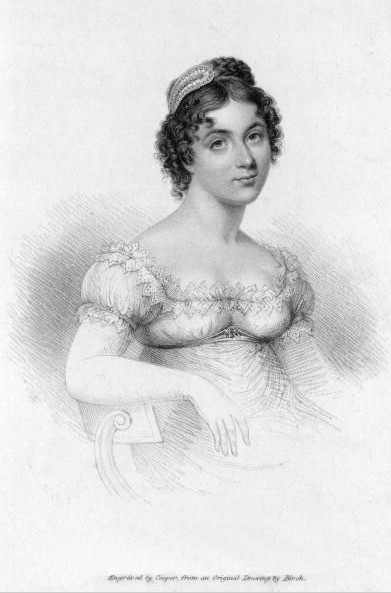
Having last week told the tale of how Amy, Harriette’s sister, picked her next conquest… This week we’ll look at how Harriette chose her next protector. But first I’ll just say, Amy having agreed an arrangement of two hundred pounds per month with a man she did no particularly like, took the first payment paid off her debts and then never saw him. Claiming one of her other followers had told her he couldn’t stand to see her throw herself away on his less admirable competitor.
But before I begin Harriette’s story for this week, let’s have a quick recap on the background of this series of blogs for anyone following for the first time today – if you’ve read it before, pick up after the italics 🙂
In 1825 Harriette Wilson, a courtesan, published a series of stories as her memoirs in a British broad sheet paper. The Regency gentleman’s clubs were a buzz, waiting to see the next names mentioned each week. While barriers had to be set up outside the shop of her publisher, Stockdale, to hold back the disapproving mob.
Harriette was born Harriette Debochet, she chose the name Harriette Wilson as her professional name, in the same way Emma Hart, who I’ve blogged about previously, had changed her name. Unlike Emma, it isn’t known why or when Harriette changed her name.
She was one of nine surviving children. Her father was a watchmaker and her mother a stocking repairer, and both were believed to be from illegitimate origin.
Three of Harriette’s sisters also became courtesans. Amy, Fanny and Sophia (who I have written about before). So the tales I am about to begin in my blogs will include some elements from their lives too.
For a start you’ll need to understand the world of the 19th Century Courtesan. It was all about show and not just about sex. The idle rich of the upper class aspired to spending time in the company of courtesans, it was fashionable, the thing to do.
You were envied if you were linked to one of the most popular courtesans or you discovered a new unknown beauty to be admired by others.
Courtesans were also part of the competitive nature of the regency period too, gambling was a large element of the life of the idle rich and courtesans were won and lost and bartered and fought for.
So courtesans obviously aspired to be one of the most popular, and to achieve it they learnt how to play music, read widely, so they could debate, and tried to shine in personality too. They wanted to be a favoured ’original’.
The eccentric and outspoken was admired by gentlemen who liked to consort with boxers and jockeys, and coachmen, so courtesans did not aim for placid but were quite happy to insult and mock men who courted them, and demand money for any small favour.
Harriette, as I said last week had a favoured man, whom she’d seen when out walking. She says he was attractive, but neither young, nor fancily dressed, an unlikely favourite for a young woman. But she couldn’t seek his company because she didn’t know who he was. So, like Amy, with debts to her name Harriette couldn’t be choosy and had to take what came her way.
At the time, having become a part of fashionable Regency society Harriette had a number of men she might seek to interest. But she has always struck me as a girl who wanted to aim for the best. She was competitive. And so when she was on the hunt for a financially profitable arrangement, and an arrangement which would lift her reputation, well then she was going to aim high. So she turned her interest on the Duke of Wellington.
The Duke of Wellington was well known for his womanizing. It’s reported but not confirmed that he even took up with Napoleon’s mistress in Paris, at the end of the war generated by the French Revolution.
However, before I tell this tale I will put a warning on it. I don’t doubt Harriette had a relationship with him but her memoirs tell two mocking stories of the Duke of Wellington which may or may not be true. When Harriette printed these stories before she wrote them she tried to blackmail money out of men she’d had relationships with asking them to pay her not to speak about them. The Duke of Wellington refused to pay, saying “publish and be damned” but then he sued her for liable, dragging her through the London courts.
So, perhaps her mean stories, mocking the Duke Wellington, may not be true, but farcical, and designed only to antagonize him.
But I’ll tell you anyway.

The Duke of Wellington
She claims that a woman who ran a brothel Wellington attended approached her, saying she had an admirer who wished to meet Harriette at the brothel, for a considerable sum. She would not tell Harriette the name of her proposed lover. Harriette claims she didn’t go but sent an old hag wearing a black veil, and that Wellington was fooled until the hag lifted the veil up.
Harritte says that following this snub, Wellington was not put off, but merely more determined to win the current prize of the demimonde, Harriette, so he sent the procuress off to meet with Harriette again. And as she was probably going to take her cut for the introduction she was extremely encouraging, insisting Harriette give the Duke a chance and meet him.
In Harriette’s memoirs she rarely openly states what she was meeting a man for, the detail sits more in her implications, and this tale is no exception in that. The procuress is described as saying, when having admitted that Harriette’s unnamed admirer is the Duke of Wellington, that he is anxious to meet her, and stated that all he wants is to do is meet Harriette, because his situation prevents him having any regular introduction. My assumption from what is implied is that he was offering payment for a single liaison and not an extended arrangement.
Harriette admits freely that her decision was only made out of her need for a friend who would keep the bailiff away.
When Harriette meets Wellington, her words imply he was a blunt no frills man, which I believe is probably true, you can imagine it of a man whose skill came to the fore and a battlefield.
He immediately takes her hand and calls her a ‘beautiful creature’, and basically asks if they will be alone. Then when Harriette asks why he has come he says it is for her beautiful eyes. But when she does her usual seeking for compliments his response is that he is a man who has better things to do than make fine speeches for women.
He doesn’t sound Harriette’s type at all does he? 🙂 But then this is a financial decision, and also as I said in the beginning a move which would lift her status, after all the Duke of Wellington was famous, and Harriette therefore wished to associate with his fame, just as someone might sleep with a pop-star or sports-star today. In Harriette’s words, comparing Wellington to her previous protector, Lord Loren, ‘What was a mere man, even though it were the handsome Duke of Argyle, to a Wellington!!!!’
But Wellington must have been happy with the outcome of his visit, because although he did not contract her in a permanent arrangement, he became a regular visitor of Harriette’s, and Lord Lorne, hearing of this, wrote to Harriette and threatened to take up with other women in Scotland to spite her. Harriette ignored his protestation, she had bills to pay and a busy social life she wished to keep.
But as I guessed Harriette was not happy. She says although the Duke of Wellington was constant visitor, he was ‘a most unentertaining one, Heaven knows!’
So her eyes continued to look for the stranger she favoured but did not know, as she endured her relationship with the Duke of Wellington to support her lifestyle.
Next week I will tell the story of Harriette meeting her stranger…
Jane Lark is a writer of authentic, passionate and emotional love stories.
See the side bar for details of Jane’s books, and Jane’s website www.janelark.co.uk to learn more about Jane. Or click ‘like’ on Jane’s Facebook page to see photo’s and learn historical facts from the Georgian, Regency and Victorian eras, which Jane publishes there. You can also follow Jane on twitter at @janelark
 Author, Jane Lark's stories