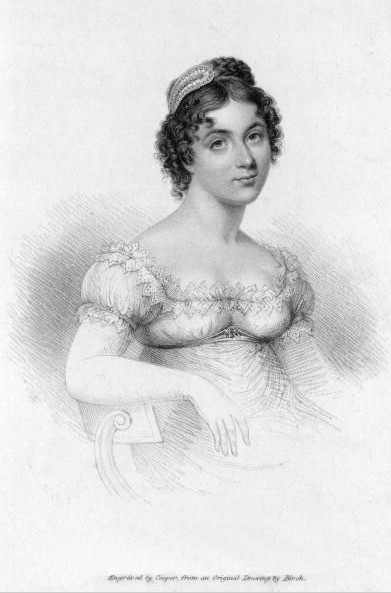
 Next week will sadly be the last part of Harriette’s memoirs I have to share on my blog 😥 Shedding a little tear… I will miss sharing her stories, but that will then give me an opportunity to tell you some of the things I’ve discovered about her life which she left out of her memoirs, and don’t worry after that, I still have lots of other true Regency life stories to move on to.
But this week, I will share what Harriette has to say about the kick back and the judgement which befell her, in response to her kiss and tell memoirs being published. As always though, before this, here is the background to this series of posts, for anyone joining the blog today (all the titles are listed in the index), and for all those who have been following this series of posts, I have highlighted the place for you to skip to in bold.
In 1825 Harriette Wilson, a courtesan, published a series of stories as her memoirs in a British broad sheet paper. The Regency gentleman’s clubs were a buzz, waiting to see the next names mentioned each week. While barriers had to be set up outside the shop of her publisher, Stockdale, to hold back the disapproving mob.
Harriette was born Harriette Debochet, she chose the name Harriette Wilson as her professional name, in the same way Emma Hart, who I’ve blogged about previously, had changed her name. Unlike Emma, it isn’t known why or when Harriette changed her name.
She was one of nine surviving children. Her father was a watchmaker and her mother a stocking repairer, and both were believed to be from illegitimate origin.
Three of Harriette’s sisters also became courtesans. Amy, Fanny and Sophia (who I have written about before). So the tales I am about to begin in my blogs will include some elements from their lives too.
For a start you’ll need to understand the world of the 19th Century Courtesan. It was all about show and not just about sex. The idle rich of the upper class aspired to spending time in the company of courtesans, it was fashionable, the thing to do.
You were envied if you were linked to one of the most popular courtesans or you discovered a new unknown beauty to be admired by others.
Courtesans were also part of the competitive nature of the regency period too, gambling was a large element of the life of the idle rich and courtesans were won and lost and bartered and fought for.
So courtesans obviously aspired to be one of the most popular, and to achieve it they learnt how to play music, read widely, so they could debate, and tried to shine in personality too. They wanted to be a favoured ’original’.
The eccentric and outspoken was admired by gentlemen who liked to consort with boxers and jockeys, and coachmen, so courtesans did not aim for placid but were quite happy to insult and mock men who courted them, and demand money for any small favour.
At the point that Harriette brings her memoirs to a close, the full flourish of the Regency era was drawing to a close. Beau Brummel who had been a leading light of fashion within the aristocracy, including the Prince Regent, defining what people wore and the way they should act, fell into disgrace when he set up a scam to obtain money from influential men, who were not tolerant of being duped – that left him bankrupt and fleeing to the continent.
Then Lord Byron’s – who Harriette claims right at the end of her memoirs she befriended and saw frequently – marriage broke up, with accusations of inappropriate behaviour and he too fled Britain to avoid arrest.
So at the point Harriette decided to sell her life story, the men she had spent most of her life befriending and servicing, were all moving on, and becoming more staid developing political careers. The era of the courtesan was beginning to die out…
‘To proceed with my disasters: the next was a pressing letter form Stockdale (Harriette’s publisher)… declaring that he must have the rest of my memoirs, because folks began to think it was all a hoax…
…Arrived at Mr Stockdale’s house, ‘willa’ I would call it were it at all Cockneyish, I handed him over, as a plenipo-pacificator, the chief part of my delectable memoirs. I conceived that my disasters were now completely at an end, and I looked forward to a rich harvest, with unbounded applause.
Unfortunately Stockdale, in a courteous fit, acquainted the immortal Wellington that I was about to publish part of his private life, under the impression, of course, that every act which relates to so great a hero must be interesting.
Will it ever be believed? His Grace, in the meek humility of his heart, has written to menace a prosecution if such trash be published. What trash, my dear, Wellington? Now, I will admit, for an instant, and it is really very good of me, that you are an excellent judge of literature, and could decide on the merits or demerits of a work with better taste and judgement than the first of Edinburgh reviewers. Still, in order to pronounce it trash, we should fancy that even Wellington himself must throw a hasty glance on one of its pages at least. Quite the contrary. Wellington knows himself to be the subject, and therefore wisely prejudges the book trash one fortnight before it sees light! So far so good! But when my own Wellington, who has sighed over me and groaned over me by the hour, talked of my wonderful beauty, ran after me, bribed Mrs Porter over and over again, after I refused to listen to her overtures, only for a single smile from his beautiful Harriette! Did he not kneel? And was I not the object of his first, his most ardent wishes, on his arrival from Spain? Only it was a pity Argyle got to my house first. No matter! Though Argyle was not his rose, he had dwelled with it; therefore, what could my tender swain Wellington do better than stand in the gutter at two in the morning, pouring fourth his amorous wishes in the pouring rain, in strains replete with the most heart-rendering grief, to the favoured and fortunate lover who had supplanted him, as Stockdale has indulged me by getting so inimitably delineated. When I say, this faithful lover, whose love survived six winters, six frosts, six chilling, nay, killing frosts, when Wellington sends ungentle hint to my publisher, of hanging me, beautiful adored, and adorable me, on whom he had so often hung! Alors je pends la tete! Is it thus he would immortalize me?
I’ll e’en make my will, and so good-bye to ye, old Bombastes Furioso.
There is surely something harsh and unmanly in threatening a woman with any kind of law or prosecution, unless we were to do something much worse than telling the truth: and there is a double want of gallantry in threatening a fair lady, whose favours have been earnestly courted! N’est-ce pas?
Yet, if all the laws, and law givers are like Wellington, in the habit of threatening poor devils of authors and booksellers with prosecution, hanging, and destruction, as often as they are about to publish any facts which do not altogether redound to their honour and glory, while they modestly swallow all the applause which may be bestowed on their luck or their talents for killing men and winning battles, I can no longer be surprised that even Beaufort has maintained his good character up to this present writing, since publishers will quake when heroes bully.
There’s no spirit nowadays.
~
Another hero in a passion! Another lover threatens prosecution! No less a personage than the most prolific plenipo, the Hon. Frederick Lamb, who yesterday called on Stockdale to threaten him, or us, with prosecution, death, and destruction, if his conduct towards me in times auld lang syne was printed and published in any part of my Memoirs, after Part 1, which he acknowledged that his counsel informed him he could not lay hold of. No wonder that he is sore. I have certainly told, as the Hon. Frederick Lamb was well aware must be the case, harsh truth about him, I confess: but then it will disgust one to think that a man would feel such violent passion for a girl, without the heart to save her from absolute want afterwards. Yet I never deceived him, and I endeavoured to live on nothing, at my nurse’s in Somerstown, pour ses beaux yeux, as long as I possibly could. When I say nothing, I mean nothing, in the literal sense of the word. Frederick had never given me a single shilling up to the time when hard necessity obliged me to accept the Duke of Argyle for my lover.
As to Frederick Lamb’s rage at my publishing these facts, he was fully acquainted with my intention; and had he, now that he is in better circumstances, only opened his heart, or even his purse, to have given me but a few hundreds, there would have been no book, to the infinite loss of persons good taste and genuine morality, and who are judges of real merit.
~
Harriette’s legal adviser at the time was Mr Brougham, (another former lover who she was blackmailing to support her, as he sought to be Priminister and did not wish his name included in her memoirs). This is the conversation she records holding with him, revealing his opinion on it all…
‘I express half the gratitude I feel, and shall entertain to the end of my life, for the steady, active friendship Mr Brougham has invariably evinced towards me, actuated, as he is, solely by a spirit of philanthropy. When I see a man of such brilliant talents pleading the cause of almost all those persons whose characters I have sketched in these pages, with such honest warmth and benevolence of feeling, as Brougham did yesterday, to say I look up to him and love him, is but a cold description of the sentiment he inspires in my heart.
‘A pretty list indeed,’ said Brougham, alluding to my characters, as advertised in the newspapers by Stockdale. ‘Almost everyone of my particular friends is among them! The poor Duke of Argyle! What has he done? I am very angry with you. I don’t really think I can shake hands with you.’
‘I have strictly adhered to the truth.’
‘Yes; but then, who wants to have their secrets exposed! Secrets, some of them, sixteen years old.’
‘Who do you think would have entrusted me with their secrets fifteen years ago? Besides, why don’t my old friends keep me among them? They are all rich. I have applied to them and they refuse me the bare means of existence. Must I not strive to live by my wits? You say you have not read even the first page of my book. How do you know that it is severe?’
‘Well! perhaps not! The Duke of Leinster tells me that it is not severe, nor does it, he says, contain any libel.’
‘To be sure not! Why, as his Grace goes on, he will find that I give him credit for a little more intellect than even a Newfoundland dog?… But I wish to explain the Duke of Beaufort’s conduct, certainly.’
‘Aye! True! The Duke of Beaufort treated you shamefully. You are very welcome to tell the world that I am your counsel in that business; that I said then, and repeat now, that he took shameful advantage of your generosity. There, you behaved only too well.’
‘Thus then, though many of you are angry with me, you all agree in being disgusted with the heartless selfishness of the Duke of Beaufort… if Beaufort means to fight all those who call his treatment of me infamous, he may gain the high-sounding epitaph of fighting Bob before he knows where he is: so farewell Beaufort. I would not change hearts with you. May you meet with all the respect you merit here, and forgiveness hereafter. I have certainly deserved better form you.’
‘Well! never mind Beaufort,’ said Brougham, ‘tell all the truth of him; but, as to the others, pray don’t be severe. Write something from your fancy, I cannot endure the idea of all this. You perhaps do not address your letters correctly when you want money. You are so careless. I was once desired to send you some in a great hurry, and there was no date to your letter! I am sure these old friends of yours would provide for you, if applied to civilly.’
‘I tell you, you judge of them by your own excellent heart: you who have never refused me any assistance I asked you for, nor any act of friendship in your power, while I have not nor never had any claim upon you…’
I am told time and time again in my life I am a good judge of character… What I love about Harriette’s writing is how her mood seeps through the words she writes. You can hear her frustration, bitterness, and anger as she must have scribbled all this down in a rage. Then she concludes, after threatening another set of memoirs about another set of named people who were among the elite during the Regency era…
‘… let me conclude, or rather let us proceed to draw these anecdotes into something like the form of a conclusion, because I their writer am tired of them, if you the reader of them are not…’
She does go on to tell us one more story though – which I will share next week…
~
Jane Lark is a writer of authentic, passionate and emotional Historical and New Adult Romances, and the author of a No.1 bestselling Historical Romance novel in America, ‘The Illicit Love of a Courtesan’ and ‘I Found You’ a bestselling novel in the contemporary chart. Currently reduced to $1.99 in the USA from $7.
Book 3 in the Marlow Intrigues series, The Scandalous Love of a Duke, will be published on the 3rd April, and is now available for pre-order, click on the cover on the right-hand side to order. Jane’s novels, The Passionate Love of Rake and I Found You, will also be available in Paperback on 17th April and are available to pre-order. The Illicit Love of a Courtesan and I Found You, are already available in print in the USA.
Why not also read A Lord’s Desperate Love the story of two of the characters from The Passionate Love of a rake which Jane is telling for free here, there is a link to each part in the index of posts.
Click here to find out more about Jane’s books, and see Jane’s website www.janelark.co.uk to learn more about Jane. Or click ‘like’ on Jane’s Facebook page to see photo’s and learn historical facts from the Georgian, Regency and Victorian eras, which Jane publishes there. You can also follow Jane on twitter at @janelark
 Author, Jane Lark's stories