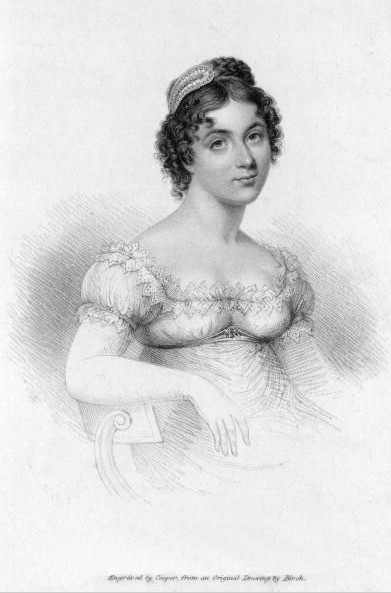
Harriette’s description of a stay in a small ‘apology for an inn’

Harriette_Wilson00So this week, we are back to Harriette’s affair with her under age lord. The Marquis, Lord Worcester. But before I continue their tale, let me do the quick recap for anyone joining my blog today. As usual, if you’ve read it, skip to the end of the italics.

In 1825 Harriette Wilson, a courtesan, published a series of stories as her memoirs in a British broad sheet paper. The Regency gentleman’s clubs were a buzz, waiting to see the next names mentioned each week. While barriers had to be set up outside the shop of her publisher, Stockdale, to hold back the disapproving mob.

Harriette was born Harriette Debochet, she chose the name Harriette Wilson as her professional name, in the same way Emma Hart, who I’ve blogged about previously, had changed her name. Unlike Emma, it isn’t known why or when Harriette changed her name.

She was one of nine surviving children. Her father was a watchmaker and her mother a stocking repairer, and both were believed to be from illegitimate origin.

Three of Harriette’s sisters also became courtesans. Amy, Fanny and Sophia (who I have written about before). So the tales I am about to begin in my blogs will include some elements from their lives too.

For a start you’ll need to understand the world of the 19th Century Courtesan. It was all about show and not just about sex. The idle rich of the upper class aspired to spending time in the company of courtesans, it was fashionable, the thing to do.

You were envied if you were linked to one of the most popular courtesans or you discovered a new unknown beauty to be admired by others.

Courtesans were also part of the competitive nature of the regency period too, gambling was a large element of the life of the idle rich and courtesans were won and lost and bartered and fought for.

So courtesans obviously aspired to be one of the most popular, and to achieve it they learnt how to play music, read widely, so they could debate, and tried to shine in personality too. They wanted to be a favoured ’original’.

The eccentric and outspoken was admired by gentlemen who liked to consort with boxers and jockeys, and coachmen, so courtesans did not aim for placid but were quite happy to insult and mock men who courted them, and demand money for any small favour.

So, to Harriette and Worcester. The last we heard of Worcester, Harriette had packed him off to charm his father, the Duke of Beaufort and his mother. Fortunately for Harriette while he was there, to be persuaded to drop the courtesan he’d fallen far too deeply for, his uncle advised his father of a new plan. Which Harriette only learned of years later (so she says). But his parents’ new plan, was to stop trying to persuade him to leave Harriette if he swore he’d never marry her, in the hope that his love/infatuation would die out with time. He wrote and told Harriette what they wished him to swear to, saying he’d refused, but she urged him not to let himself be cut off (there by taking away her income and any chance she would want to marry him), and so she said swear what they want you to.

After he had made that promise, he was allowed to return to her in Brighton and the two of them were left to live in peace for ‘six or eight months’ Harriette says, ‘during which time nothing very remarkable occurred, except that Worcester’s love and passion absolutely did increase daily.’

So of course when the Duke of Beaufort’s plan B did not work either, he grew angry again. Apparently according to Harriette they came to Brighton and called on him hourly, and a maid reported to Harriette his mother had actually said she’d prefer to see him dead under his horses hooves than married to the courtesan.

Lord Worcester’s answer to that was to beg Harriette to dress in disguise and travel with him to Gretna Green. (I’ve said before, as those of you who follow my blog will know that I think Harriette secretly hoped he would marry her, but she would not wish to be married to a man who had been cut off and lost his wealth even if she’d still be a duchess eventually). She reminded him of his promise. But Worcester claimed it to be invalid as it had been conditional and his father had not kept his side and left the two of them alone.

The Marquis of Worcester. 7th Duke of Beaufort. in later life

The Marquis of Worcester. 7th Duke of Beaufort. in later life

Worcester did escape his father though when he was posted to a village near Portsmouth to guard prisoners. But even then he would not leave Harriette, he begged her to come with him, which she did. She claimed to have never once argued with him. But instead of travelling there in the carriage he’d hired with four post-horses to pull it, Harriette says she rode among the officers, with him, all the way, dressed in her ‘regimental cap and habit, like a little recruit.’

While they stayed in the village she even lived with Worcester and the other officers in a ‘pot-house,’  ‘Our bedroom served us for parlour, kitchen, and hall, and we dined together in the only spare room there was.’

She gives us a fascinating view of what the inn looked like too. She speaks of heavy high-backed leather chairs, and the wainscot adorned with pictures of a fox-chase, the Virgin Mary, Bellingham the murderer of Perceval, King George III, a county map, and then the holy apostles eating the last supper, and finally a poll parrot done in cloth work. It sounds as eclectic as some pubs I’ve gone in today. There was also plenty of sand on the floor, and ‘wine glasses, toothpicks, and cruets on the sideboard’.

And beyond even that description she describes the smell of tobacco and beer, and that the sign outside was continually rocking in the wind, creaking constantly as it rained and blew up a storm for the first fortnight they were there.

Even in this, what Harriette describes as an ‘apology for an inn,’ though, Lord Worcester’s love endured. She describes him, one evening, wiping away the sour beer which fantastically varied the top of a mahogany table, (all her words, but jumbled up), and laying his ‘lordly head’ upon it, to say ‘Oh Harriette, my adored, delicious, lovely divine Harriette, what perfect happiness is this! Passing, thus, every minute of the day and night, in your society!! God only knows, how long I shall be permitted to enjoy all this felicity; but it is too great, I feel, to last. Nobody was ever been thus happy long.

What brought their idyllic times, in a less than idyllic setting, to an end was a trip to the Theatre in Portsmouth, Harriette says the officers had hired a stage-box (see my post on the theatre in Bath to find out exactly what that looked like) but basically it was a box, but instead of being in front of the stage it would have been on the stage, above it and to the side, which of course put them in clear view of the audience, who were mainly sailors and took a dislike to the men in the dress uniforms of the Hussars. As I said in my post on the theatre in Bath sometime ago, audiences then were not like audiences now, they talked and shouted through a performance, and in this situation they threw oranges at Harriette’s and Lord Worcester’s party.

This picture shows one of the boxes built at the side of the stage, which is still in situ, look up to the left

This picture shows one of the boxes built at the side of the stage, which is still in situ, look up to the left

When this story reached the Duke of Beaufort, he was of the view that the only thing that could have caused the crowd to be offended was the fact that Worcester had attended with a courtesan, and so once again, poor Worcester was at the mercy of his father’s anger.I’ll tell what happens next, next week…

Jane Lark is a writer of authentic, passionate and emotional love stories.

See the side bar for details of Jane’s books, and Jane’s website www.janelark.co.uk to learn more about Jane. Or click  ‘like’ on Jane’s Facebook  page to see photo’s and learn historical facts from the Georgian, Regency and Victorian eras, which Jane publishes there. You can also follow Jane on twitter at @janelark

The second courtesan to seek a fairytale ending…

Harriette_Wilson00Last week, I told Amy’s story, of how she looked for a fairytale ending to her life as a courtesan, through marriage to a Duke. Amy’s ending wasn’t the fairytale she’d hoped; it came crashing to a sorry conclusion when her Duke married someone else two weeks after she gave birth to his son.

But now I’ll tell the story of Harriette’s younger sister, Sophia. I talked in an earlier post, about how Sophia was seduced into becoming a courtesan, but now she’s parted ways with Lord Deerhurst, she can consider better options.

Before I begin her story, as ever, here’s the quick recap of the background to this series of posts, as usual, if you’ve read it before skip to the end of the italics and read on.

In 1825 Harriette Wilson, a courtesan, published a series of stories as her memoirs in a British broad sheet paper. The Regency gentleman’s clubs were a buzz, waiting to see the next names mentioned each week. While barriers had to be set up outside the shop of her publisher, Stockdale, to hold back the disapproving mob.

Harriette was born Harriette Debochet, she chose the name Harriette Wilson as her professional name, in the same way Emma Hart, who I’ve blogged about previously, had changed her name. Unlike Emma, it isn’t known why or when Harriette changed her name.

She was one of nine surviving children. Her father was a watchmaker and her mother a stocking repairer, and both were believed to be from illegitimate origin.

Three of Harriette’s sisters also became courtesans. Amy, Fanny and Sophia (who I have written about before). So the tales I am about to begin in my blogs will include some elements from their lives too.

For a start you’ll need to understand the world of the 19th Century Courtesan. It was all about show and not just about sex. The idle rich of the upper class aspired to spending time in the company of courtesans, it was fashionable, the thing to do.

You were envied if you were linked to one of the most popular courtesans or you discovered a new unknown beauty to be admired by others.

Courtesans were also part of the competitive nature of the regency period too, gambling was a large element of the life of the idle rich and courtesans were won and lost and bartered and fought for.

So courtesans obviously aspired to be one of the most popular, and to achieve it they learnt how to play music, read widely, so they could debate, and tried to shine in personality too. They wanted to be a favoured ’original’.

The eccentric and outspoken was admired by gentlemen who liked to consort with boxers and jockeys, and coachmen, so courtesans did not aim for placid but were quite happy to insult and mock men who courted them, and demand money for any small favour.

The first we here of Sophia’s new conquest is that he drives, back and forth, past Julia’s front door, in his curricle, all day, and it is highlighted that there is a coronet on his curricle.

Harriette then tells us, that after two weeks of this man passing the house, Sophia now shares with Julia, on a regular basis, he speaks to a friend who knows Julia, and seeks an introduction to Sophia. The man is Lord Berwick, Harriette calls him a Viscount. He was a Baron.

Harriette is very disparaging of poor Sophia, so I am never certain how much in her memoirs is realistic when it comes to Sophia, or whether Harriette just loved having a dig, and being mean to Sophia, but I’ll tell the story as she has.

Unlike Amy, from what Harriette says, Sophia had no eye for wealth or status when she met Lord Berwick, she judged people by whether she liked them or not, and she did not like Lord Berwick. Sophia was still under seventeen; and Lord Berwick in his forties – I think. Yet she had recognised that his barouche was very comfortable to drive in.

Lord Berwick took to calling daily, courting Sophia’s attention, but as she did not like him Sophia refused to meet him alone but always asked either Harriette or Julia to accompany her if she dined with him, or rode with him in his carriage.

Harriette recalls the era of Lord Berwick’s courting as a busy, pleasant time, as he took them all out for parties in Richmond regularly, with friends, and became one of the set the courtesans constantly mingled with (and perhaps Harriette began to build up her own hopes, with one of the party, but that’s another story).  Lord Berwick’s courting even continued when Harriette went to Brighton with her new conquest, and Sophia went too.

But, Sophia’s story is entirely different to Amy’s, in that she never sought Lord Berwick’s favour. You might think she was being coy, perhaps she was, and showing him no interest, to increase his interest. But in Brighton, Harriette tell us, that Sophia so blatantly showed her disapproval of Lord Berwick, by being ill-tempered, that it made the whole party feel uncomfortable.

So when Lord Berwick comes to Harriette, asking her to help him persuade Sophia to become his mistress for £500 a year, Harriette, highlights that Sophia dislikes him. But Lord Berwick says ‘I do not mind that, and by giving her what she wants, she may perhaps get over that dislike.’ He goes on to say, what he likes about Sophia, is that he believes everything Sophia says, and does not feel he would need to watch or suspect her.

Harriette, describes this as Sophia being, candid. 🙂

The following night, they all go to the theatre and sit in Lord Berwick’s box, and Harriette describes Lord Berwick as sitting at the back in the dark, where he cannot see or hear the play, while Sophia completely ignored him.

The next night the party dined at Harriette’s love nest, and when the women retired from the table, leaving the men behind, as part of their discussion they told Sophia, she was wrong to be taking so much from Lord Berwick and to give him nothing. So by the end of the night Sophia had been persuaded to agree to his Lordship setting up, and furnishing, a house for her in London. (Although Harriette later says, Lord Berwick had paid Julia, for persuading Sophia to accept). But still Sophia avoided Lord Berwick, by asking Fanny to stay with her in the town house, he’d set up, for a whole week.

But true to his word, not only did he give her a house, but her own carriage, which she travelled out in with her sisters, paying calls.

Then, without any apparent persuasion from Sophia, he took it in his head to marry her.

Sophia, who Harriette loves telling us had been hugely impressed by a few valueless trinkets when she was seduced at a very young age by Lord Deerhurst, was perhaps convinced purely by his gifts, as he’d planned. Because, although she continued to protest her dislike of Lord Berwick, and Harriette says, delayed the wedding, her sisters thought the delay was only a ruse to make it appear she had not been easily won. Harriette relates, that when Fanny played devil’s advocate and told Sophia his Lordship was thinking of withdrawing the offer, so it was a good thing Sophia did not care for him, Sophia blushed and then the next day went ahead with her wedding plans.

So for Sophia, there was a respectable end, and a very happy father who was thrilled to have a daughter raised to the status of nobility. While Harriette and her other sisters, who were courtesans, were left behind and no longer recognised, now Lord Berwick considered Sophia washed clean of sin by marriage. (This is why I doubt Harriette’s descriptions because jealousy does, sometimes, seem to ooze from the page, although Harriette never admits any envy)

But a fairtytale? Well, Sophia, had everything she wanted, and I’m currently sharing pictures of the house she lived in on my Facebook page, so you can see the luxury she resided in.  Yet although Lord Berwick continued to shower her with gifts, to make her happy, Sophia never really liked him… The consequence was that in the end he became bankrupt and they had to leave the country to avoid debtors prison, while all their lovely things went up for auction. Fortunately Lord Berwick’s brother saved a lot of it.

I think Sophia’s fairytale ending, was far more likely be the point in her life after Lord Berwick died in Naples, when she came back to England, supported by his family, and lived comfortably, and alone, until she died in her eighties.

You can still see some of their furniture at Lord Berwick’s house, and a very special gift Lord Berwick gave to Sophia, a music box…

Like my Facebook page to see all the pictures.

Jane Lark is a writer of authentic, passionate and emotional love stories.

See the side bar for details of Jane’s books, and Jane’s website www.janelark.co.uk to learn more about Jane. Or click  ‘like’ on Jane’s Facebook  page to see photo’s and learn historical facts from the Georgian, Regency and Victorian eras, which Jane publishes there. You can also follow Jane on twitter at @janelark