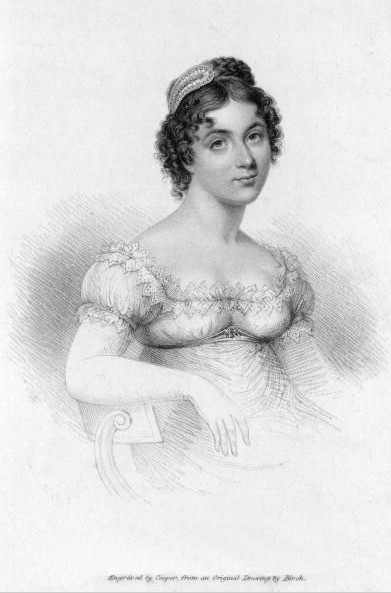
 As Harriette’s memoirs draw to a close, they become an odd clutter of short targeted attacks on those who she held grudges with, but there a couple more little stories to be captured and shared…
Before I do though, as ever, here’s the history to this series of posts for anyone joining today. For those who have been following Harriette’s story skip to the end of the italics, and I’ll mark the place to start reading again with bold type.
In 1825 Harriette Wilson, a courtesan, published a series of stories as her memoirs in a British broad sheet paper. The Regency gentleman’s clubs were a buzz, waiting to see the next names mentioned each week. While barriers had to be set up outside the shop of her publisher, Stockdale, to hold back the disapproving mob.
Harriette was born Harriette Debochet, she chose the name Harriette Wilson as her professional name, in the same way Emma Hart, who I’ve blogged about previously, had changed her name. Unlike Emma, it isn’t known why or when Harriette changed her name.
She was one of nine surviving children. Her father was a watchmaker and her mother a stocking repairer, and both were believed to be from illegitimate origin.
Three of Harriette’s sisters also became courtesans. Amy, Fanny and Sophia (who I have written about before). So the tales I am about to begin in my blogs will include some elements from their lives too.
For a start you’ll need to understand the world of the 19th Century Courtesan. It was all about show and not just about sex. The idle rich of the upper class aspired to spending time in the company of courtesans, it was fashionable, the thing to do.
You were envied if you were linked to one of the most popular courtesans or you discovered a new unknown beauty to be admired by others.
Courtesans were also part of the competitive nature of the regency period too, gambling was a large element of the life of the idle rich and courtesans were won and lost and bartered and fought for.
So courtesans obviously aspired to be one of the most popular, and to achieve it they learnt how to play music, read widely, so they could debate, and tried to shine in personality too. They wanted to be a favoured ’original’.
The eccentric and outspoken was admired by gentlemen who liked to consort with boxers and jockeys, and coachmen, so courtesans did not aim for placid but were quite happy to insult and mock men who courted them, and demand money for any small favour.
Before telling us the story I am going to share today, Harriette detours to mention dining with a lawyer called Brougham, who she says advised her to pursue both Lord Worcester (her former lover) and his father the Duke of Beaufort to restore the income he said he would give her, and then tricked her out of. You will hear more of Brougham again, when I tell you some of the things Harriette did not put in her memoirs.
Then her next little dig is at the Duke of Wellington, a man who refused to pay her bribe to keep his name out of her memoirs extremely bluntly, I shan’t share the full interlude, but just this – she says she met him in a street, and he asked to call on her. She agrees, and then records mocking him like this…
‘The ladies here tell me you make a bad hand at Ambassadorship,’ said I to him.
‘How so?’
‘Why the other day you wrote to ask a lady of rank if you might visit her a cheval? What does that mean, pray?’
‘In boots, you foolish creature! What else could it mean?’
‘Why the lady thought it just possible that the great Villainton, being an extraordinary man, might propose entering her drawing-room on the outside of his charger, as being the most warrior-like mode of attacking her heart.’
See what I mean, she seems to be grabbing at last chances to have a stab at the ego’s and reputations of the men she disliked most… So now you know that, when I tell you the next story, perhaps read it with a pinch of salt, because I don’t know what Prince Esterhazy had done to her, but it would seem it is definitely an attempt to damage his character, and it may or may not, be true.
This story she relates as taking place after she’s returned to London. Napoleon has escaped his prison on the island of Elba, and was progressing across France and returning to Paris, and so the British fled.
In London, she says that Prince Esterhazy had tracked her down, it was no chance meeting, and he asked to come and visit her. Harriette agreed…
‘A few days later the Prince entered and, throwing off his large German cloak, shook hands with me.
‘Prince,’ said I, ‘I know you don’t come here to make love to me, which knowledge renders me the more curious to learn what you do come here for.’
The Prince explained, ‘In short, I have great confidence in you, and I am going to point out to you how we may serve each other very effectively. I want a friend like you. It is what I was always accustomed to in Paris. In short, I want to make the acquaintance of some interesting young ladies. I hate those which are common or vulgar; now you could make a party here in this delightful cottage; and invite me to pay my court to any young lady of your acquaintance, perhaps your sister!’
‘Do you allude to an innocent girl, Prince?’ said I, ‘and do you really imagine that, for all your fortune, paid to me twice over, I would be instrumental in the seduction of a young lady of education? And, if I would, would you not yourself scruple, as a married man, to be the cause of misery to a poor young creature?
‘There are many girls who determine on their own fall,’ said Esterhazy. ‘All I want is that, when you see them going down, you will give them a gentle push, thus,’ said he.
‘Prince,’ said I, ‘I will never injure a woman while I breathe, and I will assist and serve those of my own sex wherever I can, as I always have done. No innocent girl, however inclined she may be to fall, shall receive the push you suggest from me. On the contrary, I will always lend my hand, as I did to my sister Sophia, (who was now a respectably married woman who Harriette hated – another little dig to remind Sophia of her origins – and more truth to come on this too) to try to prevent her from falling, or to lift her up again. If I knew a poor young creature, deserted by her friends and her seducer, and you would make a provision for her during her life, I would for her sake, not yours, perhaps present her to you.’ (Mmmm more truth on this too after Harriette’s memoirs).
‘Perhaps I would make a settlement on her,’ said Esterhazy; ‘but mind, she must be very young, very fair, and almost innocent.’
‘Why, Prince, you are like the ogre in Tom Thumb. And all the while you have the enjoyment of the most beautiful wife in Europe!’
‘Oh Harriette! a wife is altogether so very different from what is desirable, no sort of comparison can be made with them,’ replied His Excellency, taking up his cloak.
In two days, he came to me again, in a dirty greatcoat, all over wet and mud, just at my dinner-time. He placed himself before my fire so that I could not see a bit of it, with his hat on, and declared he was much disappointed at not having heard from me…’
‘I saw two of the most lovely sisters, walking with their mothers today. They would not measure around the waist more than so much’ describing to me the circumference with his hands. ‘I watched them home, to…… Do pray contrive to get acquainted with them.’
‘You had better leave my house,’ said I, beginning to be truly disgusted at the very honourable employment which his princely representative of imperial dignity, morality, disinterestedness and humanity wished to force upon me.’
Harriette claims she did throw him out, and then immediately moved to another story… Like I say, the end of her memoirs are a clutter… I shall share her next story, next week…
Jane Lark is a writer of authentic, passionate and emotional Historical and New Adult Romances, and the author of a No.1 bestselling Historical Romance novel in America, ‘The Illicit Love of a Courtesan’.
Book 3 in the Marlow Intrigues series, The Scandalous Love of a Duke, will be published on the 7th April, and is now available for pre-order, click on the cover on the right-hand side to order. Jane’s novels, The Passionate Love of Rake and I Found You, will also be available in Paperback on 17th April and are available to pre-order.
Why not also read A Lord’s Desperate Love the story of two of the characters from The Passionate Love of a rake which Jane is telling for free here, there is a link to each part in the index of posts.
Click here to find out more about Jane’s books, and see Jane’s website www.janelark.co.uk to learn more about Jane. Or click ‘like’ on Jane’s Facebook page to see photo’s and learn historical facts from the Georgian, Regency and Victorian eras, which Jane publishes there. You can also follow Jane on twitter at @janelark
 Author, Jane Lark's stories