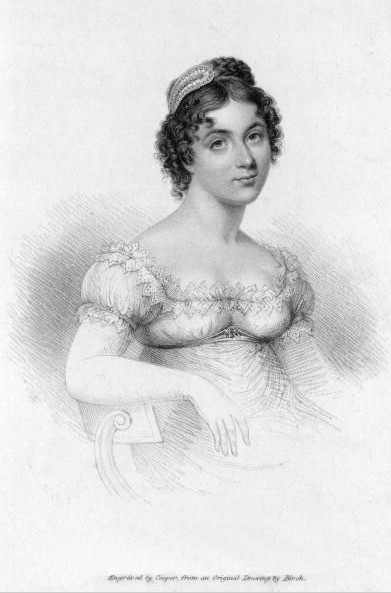
A courtesan caught in a possessive relationship – wracked with jealousy on both parts

Harriette_Wilson00This week Harriette starts her piece by saying ‘Meyler led me but an unhappy life, during the first year of our living together.’

I find the words Harriette uses in this part of her memoirs so different. When she describes relationships previously she used romantic words or at least words which expressed thought and obligation, but her relationship with Mr Meyler, seems much baser – living together – it was love and lust and battles without any rose-tinted vision. But before I go on to tell you this chapter in Harriette’s life, for anyone joining the blog today, here’s the background to this series of posts. As usual if you’ve read this before just skip to what Harriette has to say.

In 1825 Harriette Wilson, a courtesan, published a series of stories as her memoirs in a British broad sheet paper. The Regency gentleman’s clubs were a buzz, waiting to see the next names mentioned each week. While barriers had to be set up outside the shop of her publisher, Stockdale, to hold back the disapproving mob.

Harriette was born Harriette Debochet, she chose the name Harriette Wilson as her professional name, in the same way Emma Hart, who I’ve blogged about previously, had changed her name. Unlike Emma, it isn’t known why or when Harriette changed her name.

She was one of nine surviving children. Her father was a watchmaker and her mother a stocking repairer, and both were believed to be from illegitimate origin.

Three of Harriette’s sisters also became courtesans. Amy, Fanny and Sophia (who I have written about before). So the tales I am about to begin in my blogs will include some elements from their lives too.

For a start you’ll need to understand the world of the 19th Century Courtesan. It was all about show and not just about sex. The idle rich of the upper class aspired to spending time in the company of courtesans, it was fashionable, the thing to do.

You were envied if you were linked to one of the most popular courtesans or you discovered a new unknown beauty to be admired by others.

Courtesans were also part of the competitive nature of the regency period too, gambling was a large element of the life of the idle rich and courtesans were won and lost and bartered and fought for.

So courtesans obviously aspired to be one of the most popular, and to achieve it they learnt how to play music, read widely, so they could debate, and tried to shine in personality too. They wanted to be a favoured ’original’.

The eccentric and outspoken was admired by gentlemen who liked to consort with boxers and jockeys, and coachmen, so courtesans did not aim for placid but were quite happy to insult and mock men who courted them, and demand money for any small favour.

Harriette says, ‘His jealousy was downright selfish; for he would be jealous of my pianoforte, if that instrument amused me. He was in fact, always jealous, unless I was counting the minutes of his absence.’ And not only was he jealous, he was the controlling type, ‘If I procured a private box, to witness a play, tête-a-tête with my sister Fanny, he would send a note, by his coachman, this effect:  Dearest Harriette, I send a carriage to convey you to the play, to prove my wish to put no restraint on your wishes; but if, for my sake, you would stay at home, I should be both grateful and happy, and will return to you as soon as possible.’

But Harriette’s jealousy was just as bad, ‘He often left me to pass a week at the Beauforts at Badminton, (the family of Harriette’s ex-lover who had tricked her out of her final settlement when she’d been cast off). And this never failed to render me completely wretched. ‘My God.’ Said Meyler, one day, striking his head with his hand, ‘What am I to do? I would rather blow my brains out, than be thus the slave of any woman. Mine is not the passion of a day, or a year. I shall never cease to love you; but I must enjoy a little liberty.’

Harriette admits she was moved by such a passionate declaration, even if that passion was anger, and she compares it to her former lover’s declarations which were sweet, whining and unending, until his affection seemed to die overnight. ‘and Meyler is so rich! so very, very beautiful, and it would be so shocking to lose him altogether.’ So she made a choice to ‘put up with him’ and accept him, ‘in his own way’ for as long as he proved constant, and she declared she knew half the women in London would gladly take over her position as his lover if they could pry him away.

But when Harriette then decides to reject her jealously and abide by him regardless; she asked him to dinner the night before he was to leave for Badminton. He arrived expecting her to be fretting and crying, ‘as usual’, but instead she played ‘his favourite airs on the pianoforte, gave him an excellent dinner, and drank my proper allowance of champagne, with spirit’  then obligingly wished him a pleasant week in Badminton, and said she would bide her time while he was gone with books and music. Meyler’s response – He could neither eat nor drink, he was not in the mood. ‘What is the matter I asked.’ ‘He only sighed!’

‘Do, my pretty, little Meyler, tell me what you would be at?’

‘It would be impossible for you to keep such delightful spirits knowing I am about to visit a fine woman, if you loved me.

Harriette reassured him, and told him he had merely convinced her of his faithfulness, and admitted that she did not want to be a dull jealous woman, because jealously was so unattractive.

‘I see you are delighted to be rid of me,’ said Meyler, ‘and I could never love, nor believe in the love of any woman who was not madly jealous of me. I see your affectation and therefore I hate you, Harriette, so in order to punish you, I will not go to Badminton at all.

Harriette exclaimed. ‘Bravo! You’ll stay then with me’ and she kissed him, ‘Indeed, indeed, I but acted with indifference from dread of disgusting you.; but now since you will stay, I am so very,very, happy.’

Next, Harriette says, ‘Meyler being satisfied that it would make me miserable, set off for Badminton early next morning’

What a relationship! Well next week you kind find out what her sister, Fanny, and her friends thought of this toxic love affair Harriette had now been pulled into, by lust.

Jane Lark is a writer of authentic, passionate and emotional Historical and New Adult Romance stories.

See below on the side bar for details of Jane’s books, and Jane’s website www.janelark.co.uk to learn more about Jane. Or click  ‘like’ on Jane’sFacebook  page to see photo’s and learn historical facts from the Georgian, Regency and Victorian eras, which Jane publishes there. You can also follow Jane on twitter at @janelark

A messy separation – Regency Courtesan style

Harriette_Wilson00This week I am going to share the end to Harriette’s year of isolation. What happened at the end of her year of saving herself for Lord Worcester’s return? But before I tell you, as usual, here’s a recap for people joining this series of posts today, and if you’ve read it, skip to the end of the italics.

In 1825 Harriette Wilson, a courtesan, published a series of stories as her memoirs in a British broad sheet paper. The Regency gentleman’s clubs were a buzz, waiting to see the next names mentioned each week. While barriers had to be set up outside the shop of her publisher, Stockdale, to hold back the disapproving mob.

Harriette was born Harriette Debochet, she chose the name Harriette Wilson as her professional name, in the same way Emma Hart, who I’ve blogged about previously, had changed her name. Unlike Emma, it isn’t known why or when Harriette changed her name.

She was one of nine surviving children. Her father was a watchmaker and her mother a stocking repairer, and both were believed to be from illegitimate origin.

Three of Harriette’s sisters also became courtesans. Amy, Fanny and Sophia (who I have written about before). So the tales I am about to begin in my blogs will include some elements from their lives too.

For a start you’ll need to understand the world of the 19th Century Courtesan. It was all about show and not just about sex. The idle rich of the upper class aspired to spending time in the company of courtesans, it was fashionable, the thing to do.

You were envied if you were linked to one of the most popular courtesans or you discovered a new unknown beauty to be admired by others.

Courtesans were also part of the competitive nature of the regency period too, gambling was a large element of the life of the idle rich and courtesans were won and lost and bartered and fought for.

So courtesans obviously aspired to be one of the most popular, and to achieve it they learnt how to play music, read widely, so they could debate, and tried to shine in personality too. They wanted to be a favoured ’original’.

The eccentric and outspoken was admired by gentlemen who liked to consort with boxers and jockeys, and coachmen, so courtesans did not aim for placid but were quite happy to insult and mock men who courted them, and demand money for any small favour.

Harriette tells us that at the end of her year in the countryside, she is still receiving letters from Lord Worcester who his very excited that the year is nearly up and ready to pack and leave for home immediately, while Mr Meyler is also still writing to her hoping Lord Worcester will not come home.

But then when the end is nigh… Lord Worcester writes to say his regiment has been posted to Spain and he cannot come back, but he instead asks Harriette to go to him.

Dutifully, and perhaps still with the idea of one day being a duchess, she tells the women she has been living with in Charmouth that she must leave immediately for Falmouth as she has to go to Spain. (I have to say this whole piece of Harriette’s memoirs sounds a little tongue in cheek, but I’ll share it as she does).

Well when she announces this, one of the older woman in the house, Eliza’s Aunt Martha, who Harriette has begun calling her own Aunt Martha, cannot stand the idea of letting Harriette travel alone, and while she will not travel to Spain with her, insists she may at least travel with her to Falmouth and see her on to a ship.

So having done an overnight sewing repair to Aunt Martha’s Calico Habit, so she is dressed to travel, Harriette sets off with this woman on the mail-coach to Falmouth.

When they arrive Harriette tells us there are hardly any rooms in the inns because the weather has been too bad for ships to sail to Spain and so the inns are full and they are confined in a small ‘garret’ room with no sight of a maid or waiter, or even a bell to call for one.

But within their inn, is a some sort of official, ‘a Consul or an Ambassador’ waiting to travel to Spain, and he of course has the best rooms, and Harriette of course happens to have made his acquaintance in London, so earns herself an invitation to dine with him. She says that she whispers to him asking him not to reveal to her Aunt Martha, who exactly she is, and nor to mention Lord Worcester to her, as Aunt Martha believes her married to a soldier.

Aunt Martha, mind you, believed the officials invitation may have been given on her own account as he may have a preference for her! 🙂

For a couple of weeks they live in the inn, and share their meals with the official and his senior officers, and Harriette comments on a lack of letters from Lord Worcester, believing they would have been forwarded from Charmouth if received. But then a young officer arrives from the Army’s headquarters and Harriette takes the opportunity to ask the man if he knows Lord Worcester, or has heard anything of him – well actually – Yes, he has.

‘he hinted something of a story, that Mrs Archdeacon, the sister of the paymaster’s second wife, who formerly made such an attack on Worcester’s virtue at Brighton (you may remember the lady who lay in wait for him, while Harriette was out of town) and who was living with her husband in Lisbon, had been ran away with by the Marquis of Worcester.

Harriette asks if the young officer was certain, but admits she was not that distressed by the tale (although I have to say her response implies a little distress).

He was not, he said; but it was a fact that Mrs Archdeacon had left her husband, and gone up to the army with somebody. He knew that the Marquis, when he last came down to Lisbon, had been in the habit of dining with Mr Archdeacon and his wife.’

‘This fool thought I, after tormenting his parents, and keeping me here, lest he should die!-after refusing the prayers of his father, whose very life seemed to depend on leaving me suddenly takes another woman away, notwithstanding his last letter was as full of solemn vows of everlasting constancy as any he ever wrote. What steadiness could I expect from such an ass as Worcester?’

So in true woman scorned response Harrriette’s answer is… ‘I’ll go to London: that’s settled! Life is short, and I have been quite patient enough.’

So that was an end to any hopes of becoming Lord Worcester’s duchess when he inherited from his father and became a duke, and any thought of languishing anymore in the countryside.

Harriette says that she also heard before she left Falmouth, that there was a rumour if she travelled to Lisbon, the Duke of Beaufort, Lord Worcester’s father, had a plan to have her put on a ship to America. It was definitely decided then, Harriette told Aunt Martha that she’d received a letter which meant she must go to London, and duly travelling back past Charmouth, Harriette dropped Aunt Martha off and said her goodbyes to the family she’d lived with for a year. Then immediately got back on the mail-coach and carried on to London.

I was tired of the country, tired of suspense, disgusted with the whole set of Beauforts, and dying to be refreshed once more by the sight of Meyler’s bright expressive countenance…’

We’ll leave Harriette’s return to London, and the whole continuation of the messy separation for next week 🙂 …

Jane Lark is a writer of authentic, passionate and emotional Historical and New Adult Romance stories.

See the side bar for details of Jane’s books, and Jane’s websitewww.janelark.co.uk to learn more about Jane. Or click  ‘like’ on Jane’sFacebook  page to see photo’s and learn historical facts from the Georgian, Regency and Victorian eras, which Jane publishes there. You can also follow Jane on twitter at @janelark