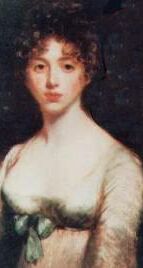
 It has been a little while since I wrote a post on the real life of Lady Caroline Lamb, so you’ll have to forgive me, I have been busy. I will continue with the story but probably slowly 🙂 just to warn you.
In my last post I told you of Caroline’s first intrigue, with a true Regency rake, who had an appalling reputation and was band from gentlemen’s clubs, Sir Godfrey Vassal Webster… But even though she had written both to her mother-in-law and her husband protesting that she would end the affair, she was still inclined towards him.
For anyone beginning to read this series of posts about Caro Lamb today, here’s the background, but for anyone who has already read it (and remembers it, as it’s been so long since I posted 😉 ) then pick up reading from where I have marked the text in bold.
I was drawn to Lady Caroline Lamb, who lived in the Regency era, because Harriette Wilson the courtesan who wrote her memoirs in 1825, mentions the Ponsonby and the Lamb family frequently. Also the story of Caroline’s affair with Lord Byron captured my imagination. Caroline was also a writer, she wrote poems, and novels in her later life. I have read Glenarvon.
Her life story and her letters sucked me further into the reality of the Regency world which is rarely found in modern-day books. Jane Austen wrote fictional, ‘country’ life as she called it, and I want to write fictional ‘Regency’ life rather than simply romance. But what I love when I discover gems in my research like Caroline’s story is sharing the real story behind my fiction here too.
Lady Caroline Lamb was born Caroline Ponsonby, on the 13th November 1785. She was the daughter of Frederick Ponsonby, Viscount Duncannon, and Henrietta (known as Harriet), the sister of the infamous Georgiana, Duchess of Devonshire.
Caroline became an official lady when her grandfather died, and her father became Earl of Bessborough earning her the honorific title ‘Lady’ and she grew up in a world of luxury, even Marie Antoinette was a family friend. Caroline was always renowned as being lively, and now it is suspected she had a condition called bipolar. As a child she earned herself a title as a ‘brat’, by such things as telling her aunt Georgiana that Edward Gibbon’s (the author of The Decline and fall of the Roman Empire) face was ‘so ugly it had frightened her puppy’.
And when she grew up Byron once described Caroline as “the cleverest most agreeable, absurd, amiable, perplexing, dangerous fascinating little being that lives now or ought to have lived 2000 years ago.”
Caroline’s affair with Godfrey Webster was supposed to have ended in April 1810 but in June she wrote to her mother-in-law begging her to allow Caroline to have a final meeting with Godfrey “If I may see him tomorrow & if you will not tell my mother the Dss of Devonshire or Frederick Ponsonby (as if any of them could talk ) what passed tonight I will be as gentle as docile as a Lamb, I will try & conquer feelings which are now too strong for my reason to command…I have faults but I am not a brute or a beast without a heart… if the 8th of June would not do the 14th shall-& if I cut my hands off I will give up writing…”
According to opinion their affair did end after this but it did not mean that Caroline suddenly became content in her marriage, instead she discovered a new way to escape it. The waltz. It was considered extremely scandalous at the time, and the women who danced it were considered scandalous, so of course Caro danced it, and, like anything else banned, what happened was a separate society of people began meeting solely to waltz. They had waltzing parties, where they just danced waltzes all night, and the Prince Regent was a part of this group of people so it was a very elite group.
Caro recorded her opinion on discovering the waltz, and those who criticized it, in a letter to her mother-in-law on the 29th May 2011
“After dinner what occurred? ruin to the character of the young & innocent – waltzing was the subject of discussion – Princess Sophy agreed with me that we had better stick to the dance of our own country – but the Duke insisted on one turn – the Band playd O mein Liebe augustein & off we went – an extra step o his Highness put me out. vainly I remonstrated round & round we turned & I never thought waltzing so criminal in my life tho’ I have always been of the opinion & still am that those who like it like it because it is doubtful – thus unco good young Women who shudder at the thought of vice like to venture to the edge of the precipice down which so many of their frail companions have been thrown – they simper over an improper Book – ride & flert as Lady Ossulstone calls it in Rotten Row…
I too am much inclined to Flert
but then tis with a Gentleman
I ride – but you ride in the dert
With all the black legs that you can –
now I do keep in Rotten Row –
Though that displeases little O –
I likewise walze & think no wrong
Lord O sees harm but I see none
for if you do not walze too long
& turn the same with every one –
How can there be the least of evil
if the Man turnd out the devil
then I will walze let who say no
For who cares much for little O –
& let her Walze & Flert with all the Courtly finikee witless things that call themselves Gentlemanlike…”
She had now truly fallen in love with waltzing, so much so that when she went out with William on the sixth anniversary of their marriage in June 1811, she stayed at a party waltzing rather than leave when he did. Again in a confession to her mother-in-law, she writes…
“William Lamb for the first time last night witnessed what he never before believed – it was our Wedding day & as he left me Walzing at 2 o’clock he reminded me of it & of the vows and protestations I had then made – & are they all changed in a few years – no believe me – I remained however till 1/2 past 5 & as I drove home my heart reproached me & tho tired to death I could not sleep…”
But in July she was again discovered to be continuing her affair with Godfrey Webster. This time her mother caught Caroline with a letter from him and drew out a confession after Caroline sought to deny it. They had been passing letters through his brother (But let us remember how many years Caroline’s mother had an affair with a young army officer for, bearing him illegitimate children – he, by the way, had now produced his first legitimate child with Caro’s relation whom he’d been married off to). Anyway what followed was another long letter of confession to her mother-in-law, and then the following morning an apology for that letter.
Caroline then made another effort to be a “Pattern wife” to William and asked him to help her learn Greek, only at the same time, she made friends with another dubious woman of Britain’s elite society, Lady Oxford, whose children were known to have been sired by several men, (a little like Caro’s hollier-than-thou mother-in-law). Lady Oxford fostered Caroline’s friendship and desire for recklessness and turned Caro’s education in Greek into a discussion on how learning Greek might excite the passion.
At this point in Caro’s life the Duke of Devonshire died, leaving her cousin, and former beau, Hart, to take on the dukedom – which meant of course that revenge could be had on his father’s long-standing mistress who’d then usurped his mother. Hart threw her out of the Devonshires’ properties. I laughed at his reply to his sister who begged him for some leniency, commenting on the fact that the Duchess did not look well, “I see she wears no rouge.”
Caroline continued her efforts be the perfect wife throughout the summer of 1811 and in October writes to her cousin Georgiana, “this House is beautiful but there are no dogs & to me that is unpleasant – Wm Lamb chases the Fox & pheasants – I ride a great deal & see much of the Neighbours – Augustus is my bosom friend…he is also Wm Lambs delight – we are united like 3 flames or 3 oaks or what you will…”
But in another letter she expressed a different opinion, “no time will ever bring me back the perfect innocence & enjoyment I once possessed nor shall I ever hear William’s name or meet his eyes without feelings of bitter reproach.”
These sentiments lead us into the next post on Caroline which will be about her meeting Lord Byron… I shan’t make any promises on when it will be posted though, I am still really busy, so to not miss it, follow my blog via email.
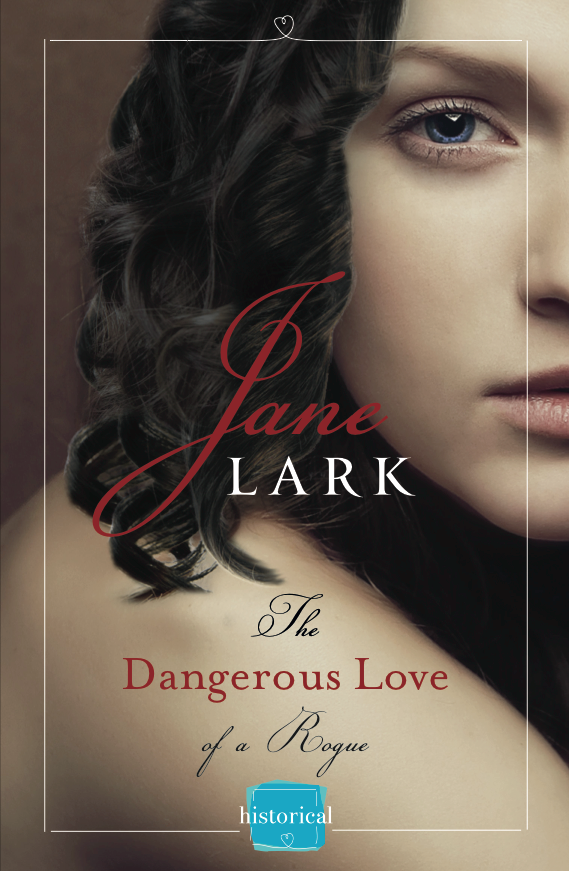
If you would like to read my historical romance story that’s inspired by Caroline’s life it’s available now The Dangerous Love of a Rogue.
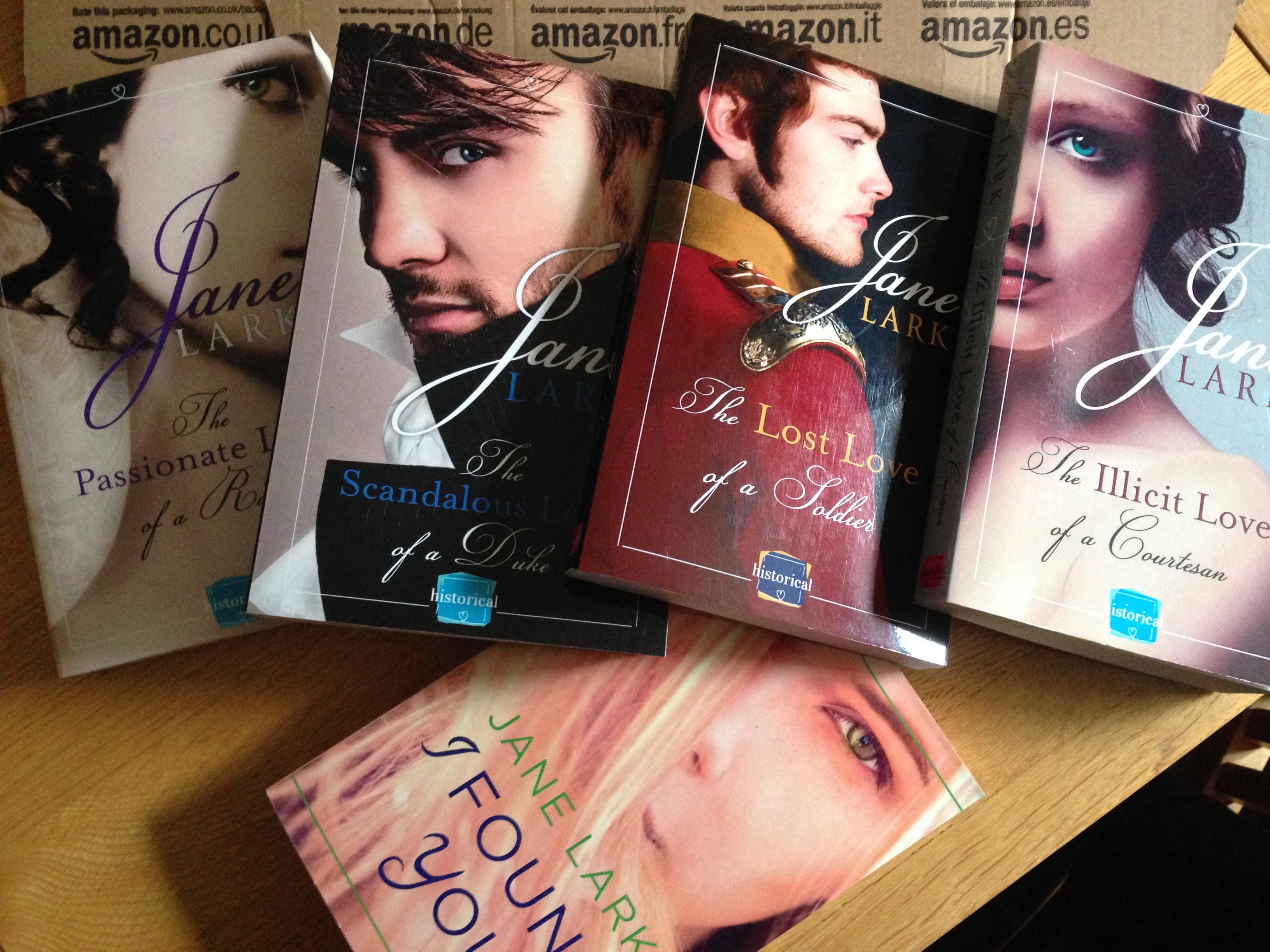
Or grab any one of my books, with free novellas and full novels in the UK from £1.20 and in the USA from $1.99
Go to the index
For
- the story of the real courtesan who inspired The Illicit Love of a Courtesan,
Jane Lark is a writer of authentic, passionate and emotional Historical and New Adult Romance stories, and the author of a No.1 bestselling Historical Romance novel in America, ‘The Illicit Love of a Courtesan’.
Click here to find out more about Jane’s books, and see Jane’s website www.janelark.co.uk to learn more about Jane. Or click ‘like’ on Jane’s Facebook page to see photo’s and learn historical facts from the Georgian, Regency and Victorian eras, which Jane publishes there. You can also follow Jane on twitter at @janelark
Jane’s books can be ordered from amazon by clicking on the covers in the sidebar, and are available from most booksellers.
 Author, Jane Lark's stories