 Having been away on holiday last week I have some aside posts I am going to intersperse between Harriette’s continuing story. I can’t wait any longer to share these facts I’ve discovered with you. So look out for more of Harriette’s story on Sunday, but today I am going to talk to you about spinning and weaving cotton…
We went to an amazing Georgian mill on holiday, Quarry Bank Mill. It was built in the late 1700s. I don’t know why, but I was really surprised to discover that the site was the family home, as well as the mill. Foolish really, of course they didn’t have cars to drive into work.
When we walked up the hill beyond the mill we walked into what was obviously a historically planted and sculpted garden, I said to my husband, this is really weird it’s like a proper garden, someone must have turned the mill into a home. But then we started seeing signs talking about what the garden had been like in the 1700’s and there was a large Georgian house to the side, which was I guess a couple of hundred yards up the hill from the mill. This was the family home.
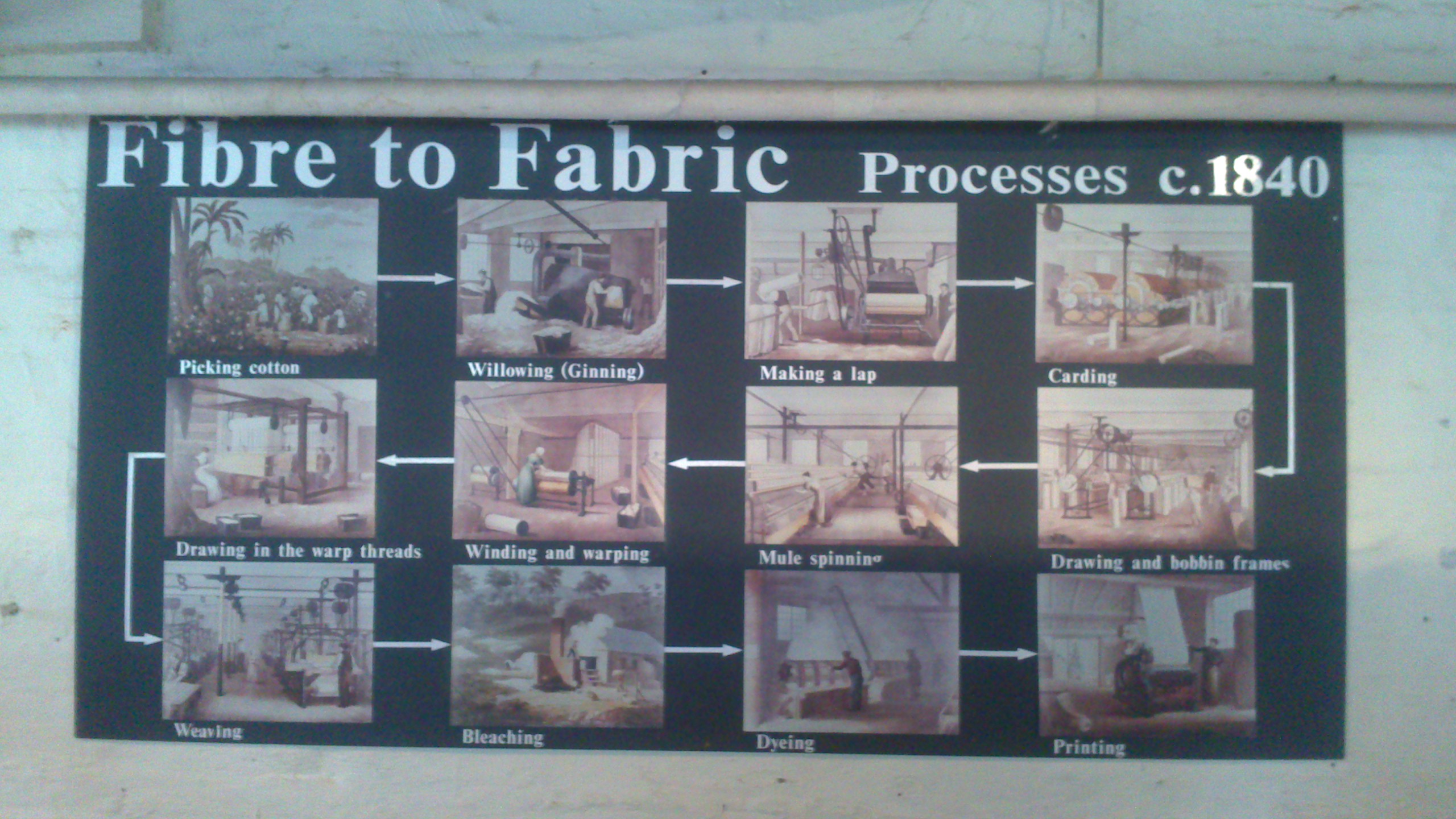
We walked around the mill, and were shown how carding, spinning and weaving worked. Here’s a board showing the process.
 But with my author’s brain, not that I’d necessarily include it in a story as I write about the upper class, but it was fascinating to be talked through family life in the early 1700s and before that, when many homes were part of the cloth making industry.
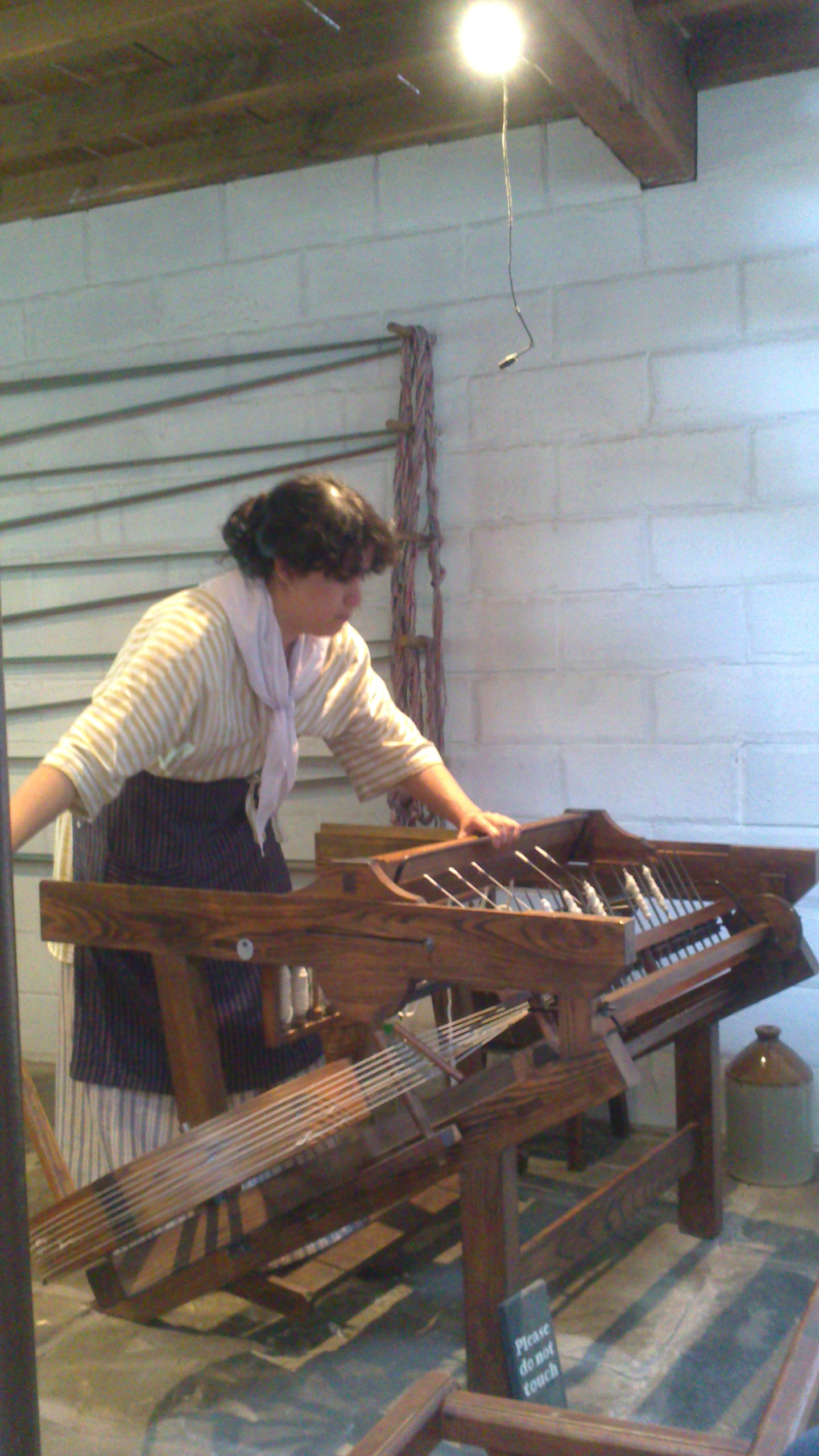
Before the days of factories weavers worked alone at home, and weavers were always men. Women did the carding and the spinning, and it took eight hours to spin what it took one hour to weave, so families wanted to keep their spinning wheel going constantly so it wasn’t just a mother’s task, but the from the age of 4-5 children, including young boys would be taught to card, separating the fibres of wool or cotton, ready for spinning, and then girls would be taught to spin from 7-8 and work on the spinning wheel in shifts to keep their fathers provided with thread for weaving – hence why women who did not marry became known as ‘Spinsters’ because they would then be left at home to keep spinning.
 Looms in the home were wide enough for one person sitting at it to throw a shuttle through and be able to catch it the other end (so a stretched out arms width), and generally men would work alone at the loom, and their loom would be passed from father to son, and yes this is another historical origin of a word ‘heirloom’. I know – I love learning all these delicious little facts. It was a fab place. But I’m not done yet…
Did you know why broad cloth is called broad cloth? Well if you don’t you’ll know now. Broad cloth was more valuable because it was wider, which gave it more versatility for use, and it was wider because it was made on a two-man loom, so one person sat one side and threw the shuttle, the other caught it.
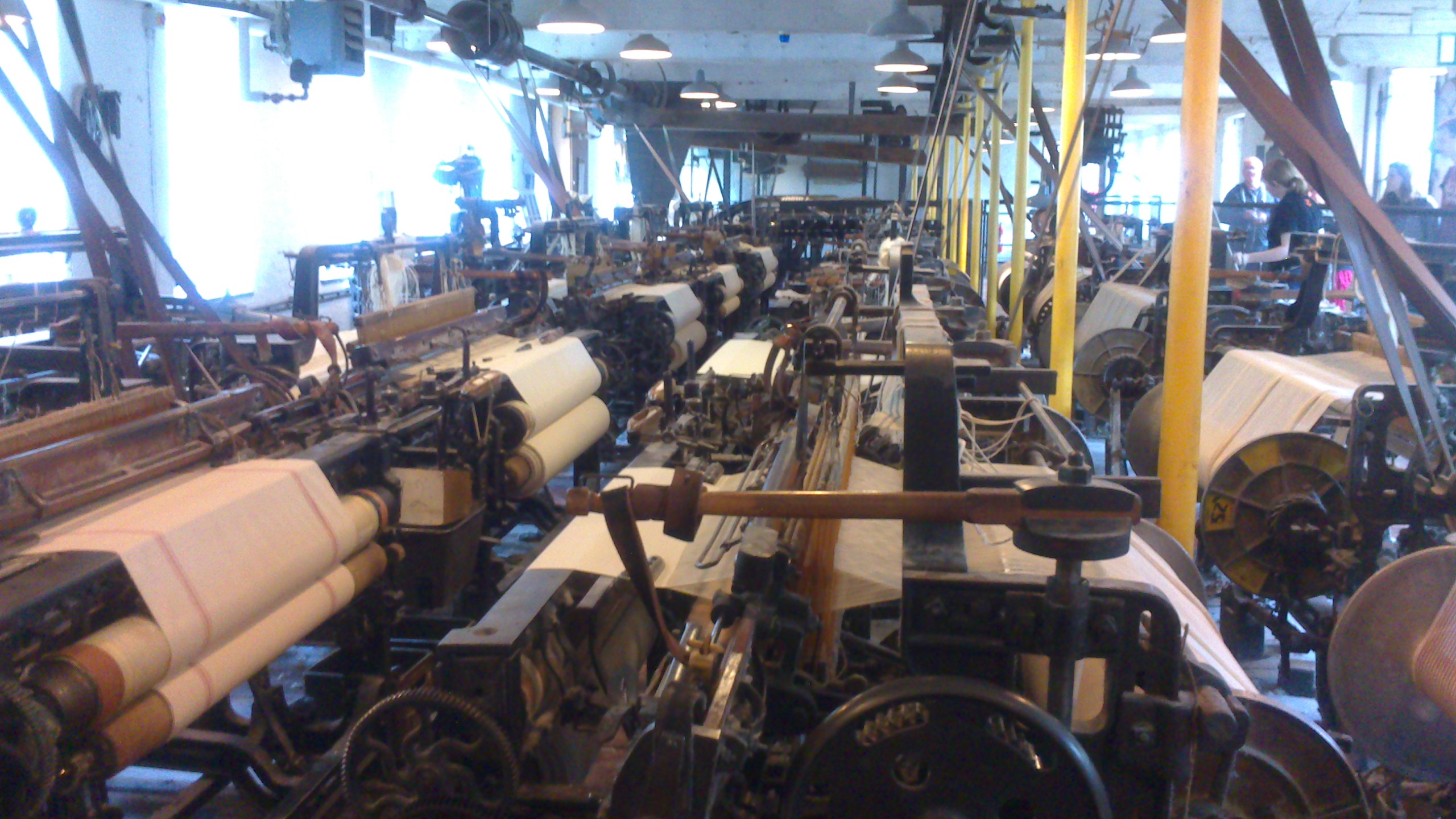 But then came the invention of the water powered looms. Which could produce far more cloth at a much greater speed, and this is what was built at Quarry Bank, a huge water powered mill to receive the cotton. I hate talking about the slave trade, it was a vile practice which creeps me out… but it was a fact, it happened, and at the time the mill was built, merchants would sail to Africa to capture slaves, take the slaves to America to farm the cotton, and then bring the cotton back to the Britain to stock the mills, and it was cotton Quarry Bank was built to process.
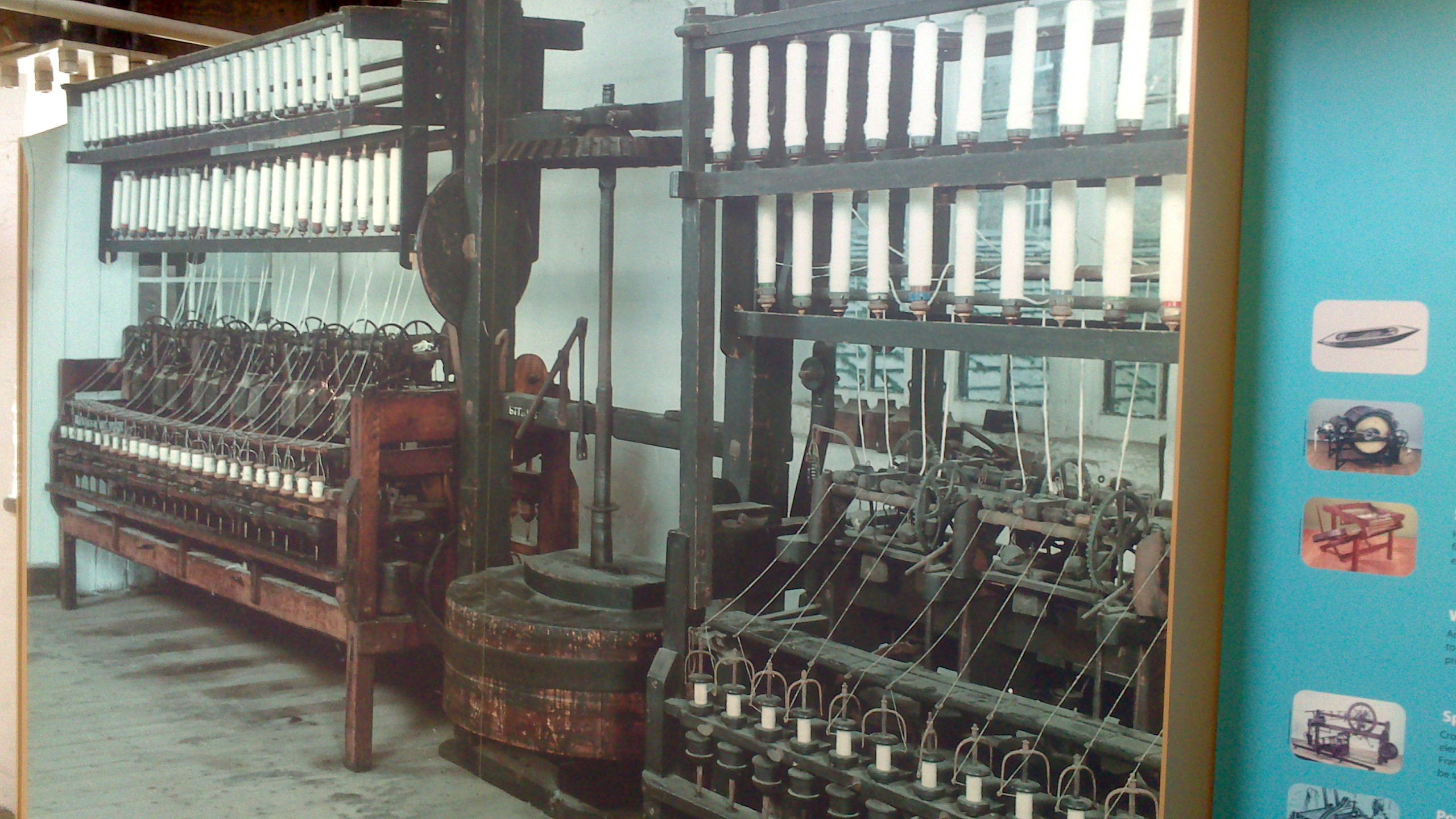
 Of course then mills were in the situation that women could not spin the cotton fast enough to stock the looms, and calls were put out urging someone to invent a spinning machine. The spinning-jenny came into life. Initially it was a small number of spindle’s and some families bought one and still worked at home.
But then giant machines were developed ones that cottage industries couldn’t keep up with and this was the point when poverty began hitting the majority of the working class in the late 1700s.
More on Quarry Bank next week, I’ve a little more to share. And more on Harriette on Sunday…
Jane Lark is a writer of authentic, passionate and emotional love stories.
See the side bar for details of Jane’s books, and Jane’s website www.janelark.co.uk to learn more about Jane. Or click ‘like’ on Jane’s Facebook page to see photo’s and learn historical facts from the Georgian, Regency and Victorian eras, which Jane publishes there. You can also follow Jane on twitter at @janelark
 Author, Jane Lark's stories