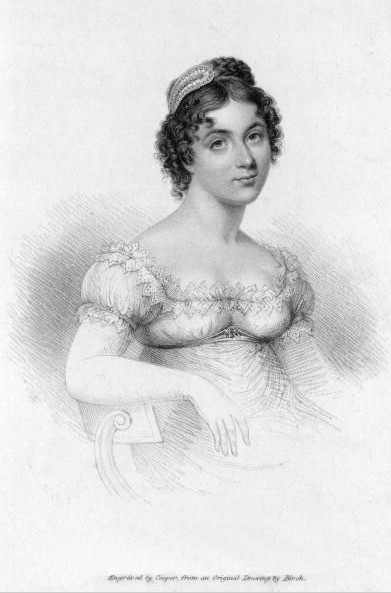
 Today I am going to start sharing some of the true stories which have inspired my first novel, Illicit Love.
In 1825 Harriette Wilson, a courtesan, published a series of stories as her memoirs in a British broad sheet paper. The Regency gentleman’s clubs were a buzz, waiting to see the next names mentioned each week. While barriers had to be set up outside the shop of her publisher, Stockdale, to hold back the disapproving mob.
Harriette was born Harriette Debochet, she chose the name Harriette Wilson as her professional name, in the same way Emma Hart, who I’ve blogged about previously, had changed her name. Unlike Emma, it isn’t known why or when Harriette changed her name.
She was one of nine surviving children. Her father was a watchmaker and her mother a stocking repairer, and both were believed to be from illegitimate origin.
Three of Harriette’s sisters also became courtesans. Amy, Fanny and Sophia (who I have written about before). So the tales I am about to begin in my blogs will include some elements from their lives too.
For a start you’ll need to understand the world of the 19th Century Courtesan. It was all about show and not just about sex. The idle rich of the upper class aspired to spending time in the company of courtesans, it was fashionable, the thing to do.
You were envied if you were linked to one of the most popular courtesans or you discovered a new unknown beauty to be admired by others.
Courtesans were also part of the competitive nature of the regency period too, gambling was a large element of the life of the idle rich and courtesans were won and lost and bartered and fought for.
So courtesans obviously aspired to be one of the most popular, and to achieve it they learnt how to play music, read widely, so they could debate, and tried to shine in personality too. They wanted to be a favoured ‘original’.
The eccentric and outspoken was admired by gentlemen who liked to consort with boxers and jockeys, and coachmen, so courtesans did not aim for placid but were quite happy to insult and mock men who courted them, and demand money for any small favour.
But this was the life of the successful courtesan, a woman had to work her way up the ladder of the rich first.
Harriette settled on her course up the ladder when she was fifteen, though she never declares how she was admitted into the trade of mistress. But she already had two older sisters working in the same profession, Amy and Fanny.
She does give us some clue though and tells us, it could have been due to her father’s severity, her own depravity, love, or the wining arts of the noble Lord she became mistress to.
This implies that she was urged and persuaded by Lord Craven, who she became the mistress of at fifteen.
She was taken under his protection, which basically means he kept her, and set up a home for her, and paid for her time, her leisure and her services. She lived in Brighton, on the Marine Parade.
She describes an odd occupation to spend the time, of him drawing pictures of cocoa trees and his fellows, as he spoke of his travels, and it sounds a little like he spoke to her as child, trying to entertain his new young mistress. She even says such conversations occurred late at night and implies they bored her silly. What led her into Lord Craven’s keeping she doesn’t say, but I think we can write off any love attachment as she very quickly realised it had been an error but knows she can’t return home as her father would not accept her back.
The way she speaks of Lord Craven suggests she liked him very little, and she states she was even more afraid of him than her father, although she says there was no particular harm in him apart from his cocoa trees. I think she was just very young.
She tells us she was not depraved enough to instantly move to someone else, but that she thought about it often, already on the path of a courtesan seeking pastures greener.
What surprised me though the first time I read Harriette’s tales was that when courtesans were with one man, even at this initial rung of the courtesan ladder, they were frequently called upon by others while living in the love nest their named protector had established for them.
I think this was all part of the social showing off. So when a man acquired a mistress in the regency period, unlike the Victorian period – when life was all about pretended morality and mistresses and parallel families were often kept secret for a life time – in the regency era, your mistress was a part of your esteem and your social world and was introduced to any male acquaintance, family or friend (as with Emma Hart who ended up marrying the uncle of her protector having been duped into being passed on to him).
It was only respectable females who were kept at a distance and in the dark.
Although I doubt they were in the dark only silent on the subject.
So Harriette speaks of visitors even when she lived in Brighton in Lord Craven’s hide away.
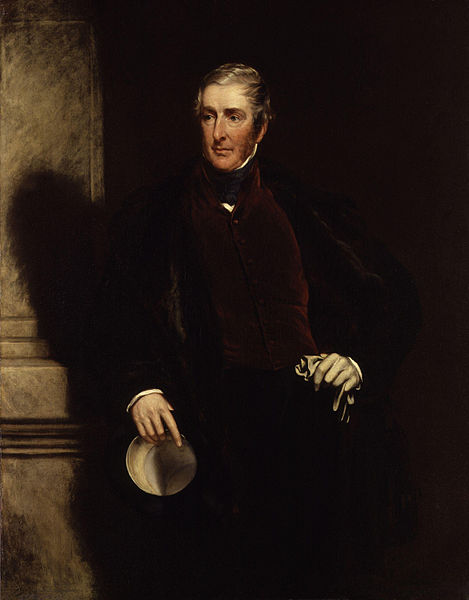 She calls the Honorable Frederick Lamb (Caro Lamb, how I’ve blogged about before’s, brother-in-law) her ‘constant visitor’, and she says that her thoughts of pastures greener were often inspired by his encouragements, which were again, constant.
She declares herself faithful to Lord Craven though, saying that she never considered deceiving him while under his roof, but she equally admits Frederick Lamb was handsome, and states that he ‘tried, with all his soul and with all his strength, to convince me that constancy to Lord Craven was the greatest nonsense in the world.’
She fancied that Frederick loved her and deeply regretted his lack of money to persuade her away from Lord Craven. (I am not so convinced having researched the oddness of the Lamb family too).
Harriette actually quotes Lord Melbourne, Frederick’s father (and Caro Lamb’s father-in-law), as telling Frederick how lucky he was to have a friend such as Lord Craven who had such a young girl with him that Frederick might share.
When Frederick tells his father, ‘Harriette will have nothing to do with me’, his father then ridicules Harriette as mad and a fool and actively tries to convince her take his son to bed.
Unhappy with Lord Craven, who she declares ‘He never once made me laugh nor said nor did anything to please me.’ Harriette set her sights much higher than Frederick Lamb though. If you were looking for pastures greener and living in Brighton why settle for a penniless Lord when there was a Prince in town.
More next week…
Jane Lark is a writer of authentic, passionate and emotional love stories.
See the side bar for details of Jane’s books, and Jane’s website www.janelark.co.uk to learn more about Jane. Or click ‘like’ on Jane’s Facebook page to see photo’s and learn historical facts from the Georgian, Regency and Victorian eras, which Jane publishes there. You can also follow Jane on twitter at @janelark


 Author, Jane Lark's stories