The history of Christmas part 3: From day to night ~ the Tudor and Cromwellian Christmases

In a Tudor household

By the time the House of Tudor took the English throne in 1485, Christmas was a big event in the calendar, and in the life of British people. Everyone was expected to stop their daily life and celebrate for the 12 days of Christmas. In 1541, Henry VIII banned all sports on Christmas Day except archery, to encourage people to focus on Christmas. In 1551 his son Edward VI, passed a law that everybody should walk to church to attend the services.

Feasting was an important part of Christmas day for every household, and with the manorial system across the country people dined on long trestle tables in the lord of the manor’s hall, or with the farmers they worked for, large gatherings were the norm. Turkeys were already in Britain, they had been brought to Europe from their native America in 1519, and sprouts appeared on record in festive cookery in 1587.

In a Cromwellian household

But then came the English Civil War, in the 1600s, commonly known as a battle between King and Parliament, it was equally a battle between moderate and radicle puritan Christians. As the Civil War progressed those that had begun the war, angered by the King’s desire to fight battles against other Puritan states while he defended Catholics and charged his people taxes to fight the wars they disagreed with, saw the tide turn. They had not begun the war because of religion, but those with radicle beliefs gradually took over Parliament, and in the end they arrested and disposed of anyone who disagreed with their extreme point of view. Over indulgences were frowned on, theatres were told to close, saints’ days were no long holidays and any form of recognition of pagan beliefs or religious images were frowned on and then finally banned by law.

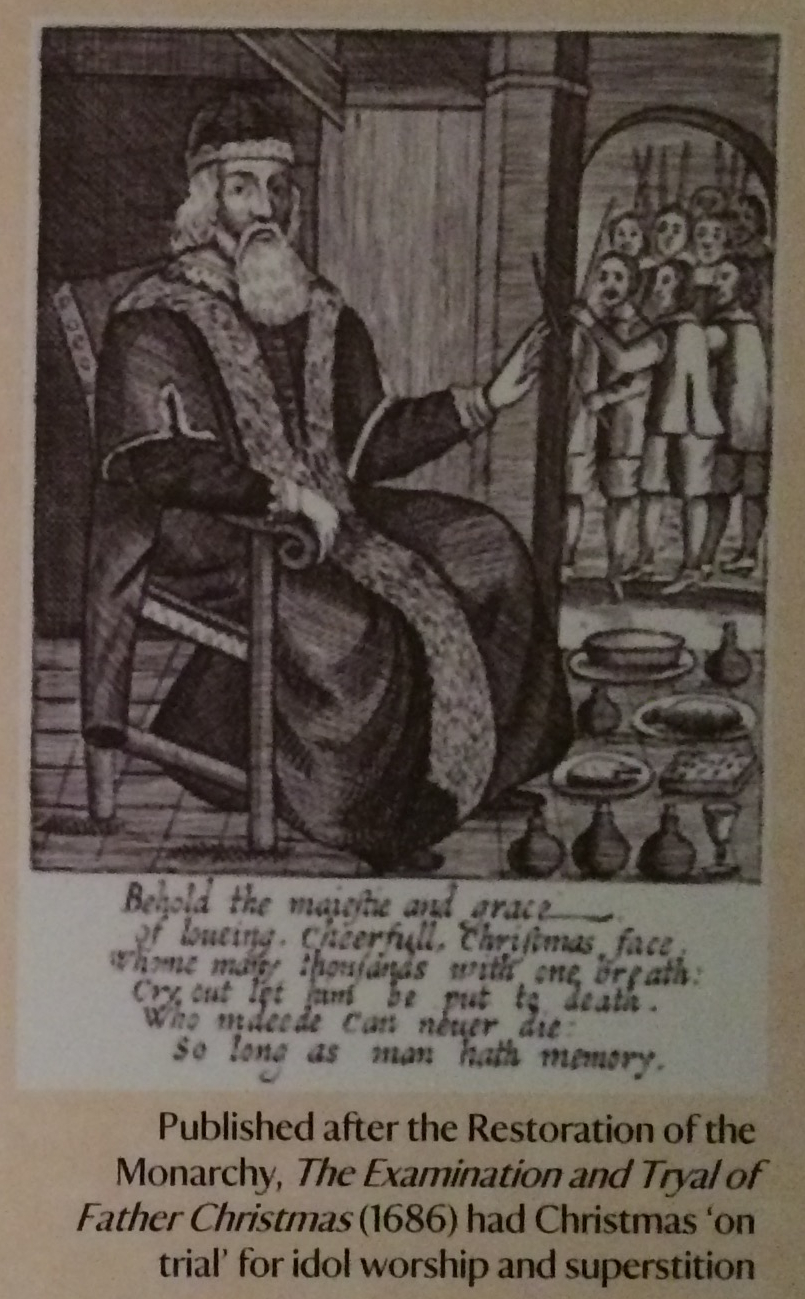
In 1644 it was Christmas’s turn to come under Cromwell’s power. Any celebration of Christmas was banned by law. Cromwell called Christmas ‘an extraeme forgetfulnesse of Christ, by giving liberty to carnall and sensual delights.’ By law, Christmas was a work day, all merchants had to open for business by law, there were no church services – unless the day fell on a Sunday. Carols were forbidden and anyone caught cooking Christmas foods or singing Carols might be fined, or worse.

When King Charles II was restored to the thrown in 1660 these laws were reverted, but even so Britain had become used to a less raucous, extreme celebration.
Sign up to receive my new newsletter here

https://www.janelark.co.uk/contact

The Whitehall Palace Banqueting House


A long time ago someone told me that under the buildings by the river Thames near to Westminster Palace was Henry VIII’s wine cellar. I always thought it was strange to have a wine cellar a distance away from Westminster. I also knew that the street called Birdcage Walk, where I used to facilitate training events a few years ago, was named Birdcage Walk because it used to be the site of James I’s bird cages. But I could never work out how that related to anything else either.

But when I visited Banqueting House in London, I discovered why. Alongside the river, just over the road from the palace of Westminster, there used to be the largest palace in the Europe, Whitehall Palace.

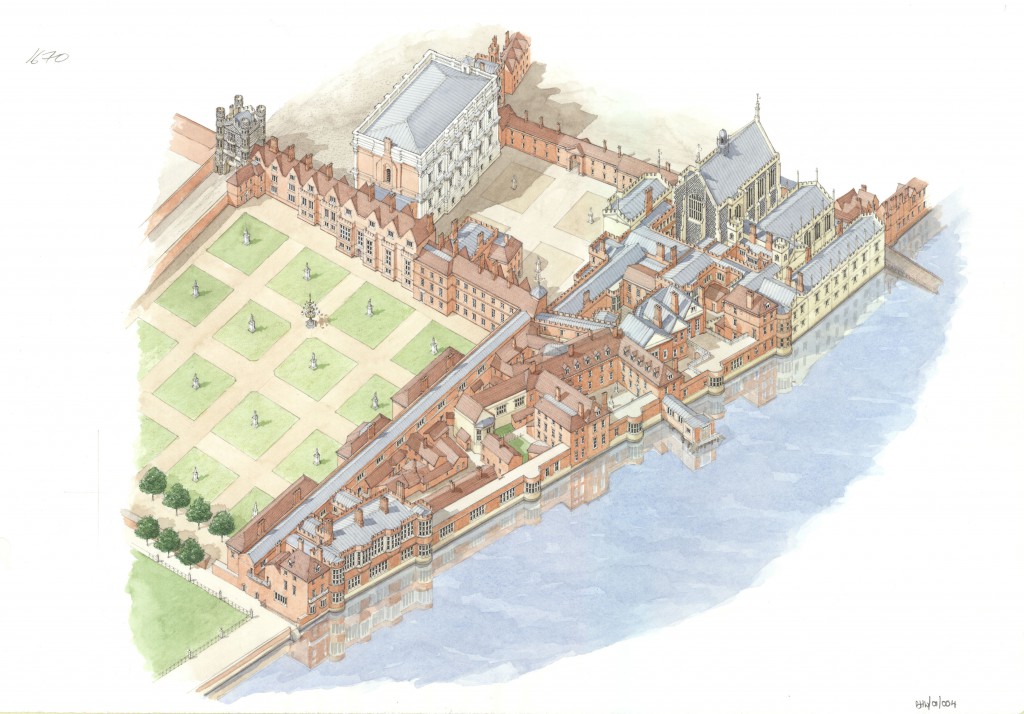
HRP-Reconstruction-1670_HRP257

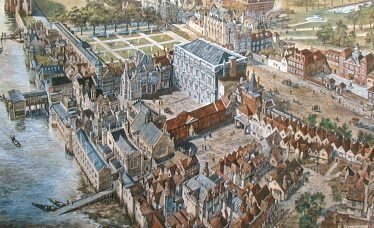
The property and land belonged to the church initially and the kings of England stayed in Westminster Palace when in the London. But in the hands of Cardinal Wolsey’s the old palace became the grandest house in London. So when Henry VIII removed the Cardinal from power, he decided to make it his home when he stayed in London. It was renovated and extended to become fit for a King and his court. The image below is an impression of the palace. You can see how easily the King could have travelled on the river from the palace.

White hall Palace

The current banqueting house was completed in 1622, commissioned by James I. He loved the fashionable masque’s that the royal family put on to impress their courtiers and had the engineer who created the moving scenery for the plays design the hall itself. It became a hall in which our royalty loved to show off; whether that was through plays that professed them to be gods and saviours of humanity, or through huge banquets to greet and impress dignitaries from foreign countries.

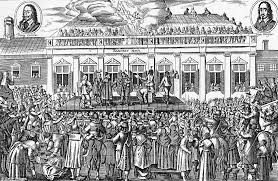
But there is a morbid tale to tell about the banqueting house too. King Charles I was lead out of Whitehall Palace through the banqueting house to a platform that had been built on scaffolding outside so that the crowds could see him. His footsteps would have rung on the broad wooden floor and echoed about the huge room. Above him, as he walked, were the paintings he’d had commissioned that portrayed both himself and his father as honoured and disciplined gods. He stepped out onto the platform through one of the hall’s windows and then his head was severed before the backdrop of the beautiful hall.


images (3) banqueting house

When the Royals were reinstated in England, King Charles II spent much of his time with his court at Whitehall. Samual Pepy’s diaries tell us about life in the palace when it was at its height. A story of life at Whitehall Palace

We don’t know about Whitehall Palace now because it was destroyed in a fire in 1698. The only part of it that survived was the banqueting house… Oh and a wine cellar obviously.

🙂 I thought this was a good little story to share while the Gunpowder period drama is on, as the programme has many scenes around Westminster and Whitehall.


The Marlow Intrigues: Perfect for lovers of period drama

The Tainted Love of a Captain #8 – The last episode in the Marlow Intrigues series

106849-fc50


The Lost Love of Soldier ~ The Prequel #1 ~ A Christmas Elopement began it all 

The Illicit Love of a Courtesan #2 

The Passionate Love of a Rake #3

The Scandalous Love of a Duke #4

The Dangerous Love of a Rogue #5

The Jealous Love of a Scoundrel #5.5

The Persuasive Love of a Libertine #5.75  now included in Jealous Love, (or free if you can persuade Amazon to price match with Kobo ebooks) 😉

The Secret Love of a Gentleman #6 

The Reckless Love of an Heir #7

Jane’s books can be ordered from most booksellers in paperback

106848-FC50

Go to the index

For

  • the story of the real courtesan who inspired  The Illicit Love of a Courtesan,
  • another free short story, about characters from book #2, A Lord’s Scandalous Love,
  • the prequel excerpts for book #3  The Scandalous Love of a Duke

Jane Lark is a writer of authentic, passionate and emotional Historical and New Adult Romance stories, and the author of a No.1 bestselling Historical Romance novel in America, ‘The Illicit Love of a Courtesan’.Click here to find out more about Jane’s books, and see Jane’s website www.janelark.co.uk to learn more about Jane. Or click  ‘like’ on Jane’s Facebook  page to see photo’s and learn historical facts from the Georgian, Regency and Victorian eras, which Jane publishes there. You can also follow Jane on twitter at @janelark