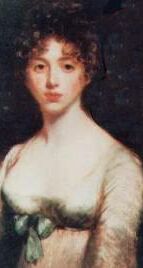
 Caroline’s and William’s son was born on the 28th of August 1807. They named him Augustus. Yet it wasn’t much after that, despite achieving what every good Regency wife ought and bearing the heir to a title a son, that people began weaving ill-rumours about Caroline. But before I speak about those for anyone starting to read this series for the first time, here’s the background to this series of posts, and as always if you have read it before just skip to the end of the italics where I have highlighted the text bold.
I was drawn to Lady Caroline Lamb, who lived in the Regency era, because Harriette Wilson the courtesan who wrote her memoirs in 1825, mentions the Ponsonby and the Lamb family frequently. Also the story of Caroline’s affair with Lord Byron captured my imagination. Caroline was also a writer, she wrote poems, and novels in her later life. I have read Glenarvon.
Her life story and her letters sucked me further into the reality of the Regency world which is rarely found in modern-day books. Jane Austen wrote fictional, ‘country’ life as she called it, and I want to write fictional ‘Regency’ life rather than simply romance. But what I love when I discover gems in my research like Caroline’s story is sharing the real story behind my fiction here too.
Lady Caroline Lamb was born Caroline Ponsonby, on the 13th November 1785. She was the daughter of Frederick Ponsonby, Viscount Duncannon, and Henrietta (known as Harriet), the sister of the infamous Georgiana, Duchess of Devonshire.
Caroline became an official lady when her grandfather died, and her father became Earl of Bessborough earning her the honorific title ‘Lady’ and she grew up in a world of luxury, even Marie Antoinette was a family friend. Caroline was always renowned as being lively, and now it is suspected she had a condition called bipolar. As a child she earned herself a title as a ‘brat’, by such things as telling her aunt Georgiana that Edward Gibbon’s (the author of The Decline and fall of the Roman Empire) face was ‘so ugly it had frightened her puppy’.
And when she grew up Byron once described Caroline as “the cleverest most agreeable, absurd, amiable, perplexing, dangerous fascinating little being that lives now or ought to have lived 2000 years ago.”
Augustus was christened at Melbourne House in October, with the Prince of Wales standing as Godfather, and here is a little unusual insight into the event, to entertain their royal guest they decided to play a game after they’d eaten. They each wrote a couple of lines of poetry, then gave it to the person seated beside them who had to add lines to it in reply.
But while Caroline’s cousin Harryo said of little Augustus ‘Caroline’s baby is really beautiful, from a degree of strength, animation and vivacity,’ William’s family were sharpening their tongues behind Caroline’s back.
Harryo later wrote to another cousin. ‘George Lamb said last night that Caroline’s child was the most frightful creature he had ever beheld. I said really angrily (for if you could see it you would really think it impossible anybody could say so but from ill-nature or jealousy), that is was quite ridiculous to pretend it. He coloured, muttered and seemed anxious Lord Melbourne (William’s father) and Lady Emily Cowper (William’s sister) should not hear us, she did. He told me afterwards that Lady Cowper had persuaded him to think so, for that when the baby was first-born they were all in admiration of it till she began sneering at it’
Another of George Lamb’s malicious tales was that Caroline had ridden out with page clothed in her particular livery before her and her nursery maids behind her and wondered why the man at the toll gate had laughed.
And it seemed that Caroline was often a favourite topic of her own family too and perhaps their views began to be coloured by William’s family’s cruel and derogatory stories and words;
Harryo wrote, ‘One hears such things of her both ways and every way when one is away from her, that I always feel an involuntary surprise to find her, as I did, at Hadley, like another, to quote Lord Bessborough and when she is quiet gentle and reasonable I am glad to see her and to believe that much of what we heard must have been exaggerated. I do not mean to say that there is not too much reason to wonder at her oddity and blame her conduct at times. Lady Elizabeth’ -The Duke of Devonshire’s mistress whom Caro had made an enemy of – ‘(who in general takes her part in attacks upon her) says she stood in a corner one day flinging cups and saucers at William’s head (a pretty pastime for him, poor man), but she says that they all worked one another up and all had a share in the blame they so plentifully heaped upon her head.’
Caroline told people later in her life that William’s violence was as bad as her own, and certainly in that period as I said a few posts back if he was not assaulting her physically he certainly was assaulting her mentally. Caro had come into their marriage a devout and deep Christian, she had been brought up to believe all the words written in the bible, but William was doing his utmost to convince her it was nonsense. Expressing how upset it made her she bought him a bible for his birthday while she was pregnant and inscribed it ‘to the Hon. William Lamb. Given to him on his birthday by Caroline Lamb who begs him to value it for her sake.’ But potentially he was physically violent towards her too.
We know for an absolute fact that William was obsessed with whipping in his later years, he wrote numerous letters to mistresses mentioning it, and so it is quiet possible that he would whip Caro behind closed doors where none of his family might see and tell tales, and certainly when the marriage was a little older and Caro a little more confident, she did tell people that his violence was as bad as hers.
Yet Caroline’s letter of 13th October 1807 still implies how much she loved William regardless of their rows, and perhaps blind to the cruel words his family whispered behind her back – she writes of another Caroline, Lady Elizabeth’s daughter, who Caroline grew up with as though she was a cousin, who is now being courted by William’s brother Frederick ‘You cannot think how every body here praises Caroline – she has not only one of the most amiable & sweetest dispositions I ever met with but her mind seem so improved her ideas enlarged & her conversation more from her own head than it used to be. trust me the Lambs are the best of Masters. They can teach everything but not to love them & Frederick even take him for better & for worse has more perfections & merits than any common man.‘ – note the not to love them means that is the one of the easiest things they can do in Regency language.
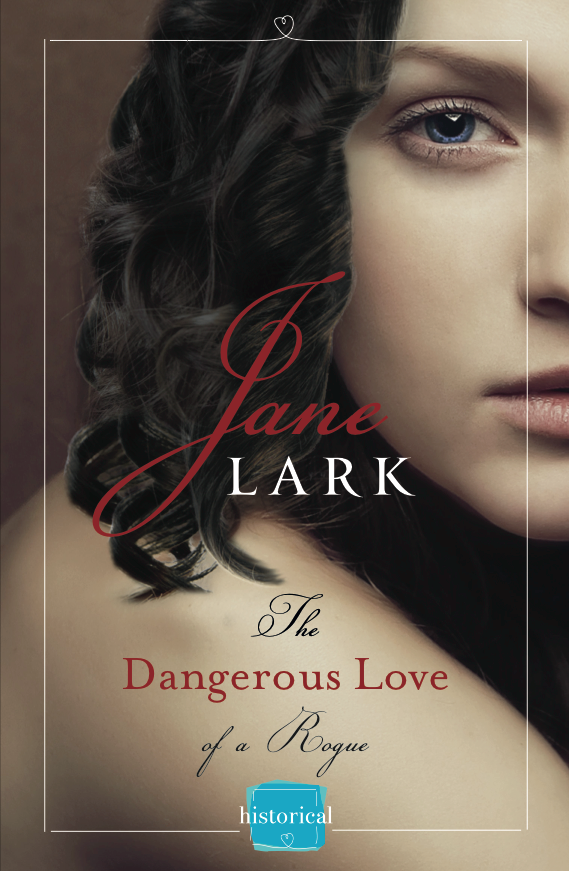 Their married life progresses in my next post – follow my blog to make sure you don’t miss it and If you would like to read my historical romance story that was inspired by Caroline’s life… it is available for pre-order The Dangerous Love of a Rogue, will be out in ebook in January and can be pre-ordered for Paperback release in March and don’t forget you can see images of my inspirations on my Jane Lark Facebook page, just scroll down and click ‘Like‘ in the link on the sidebar to follow.
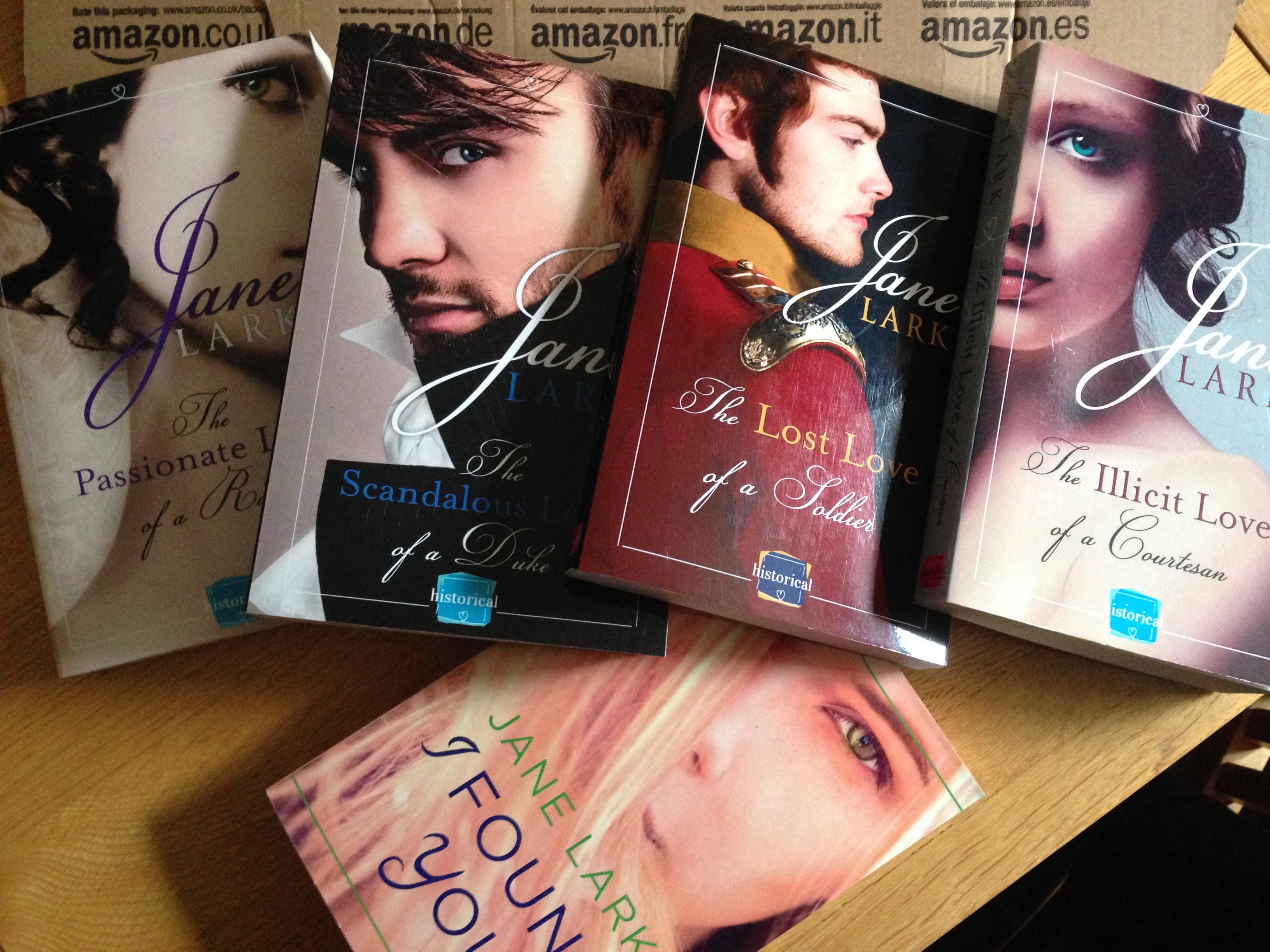
But if you can’t wait for Regency stories, then grab one of my books many of them are currently on offer in the UK from 69p and in the USA from $1.99 and there are couple of little extras for free…
Go to the index
For
- the story of the real courtesan who inspired The Illicit Love of a Courtesan,
Jane Lark is a writer of authentic, passionate and emotional Historical and New Adult Romance stories, and the author of a No.1 bestselling Historical Romance novel in America, ‘The Illicit Love of a Courtesan’.
Click here to find out more about Jane’s books, and see Jane’s website www.janelark.co.uk to learn more about Jane. Or click ‘like’ on Jane’s Facebook page to see photo’s and learn historical facts from the Georgian, Regency and Victorian eras, which Jane publishes there. You can also follow Jane on twitter at @janelark
Jane’s books can be ordered from amazon by clicking on the covers in the sidebar, and are available from most booksellers.
 Author, Jane Lark's stories