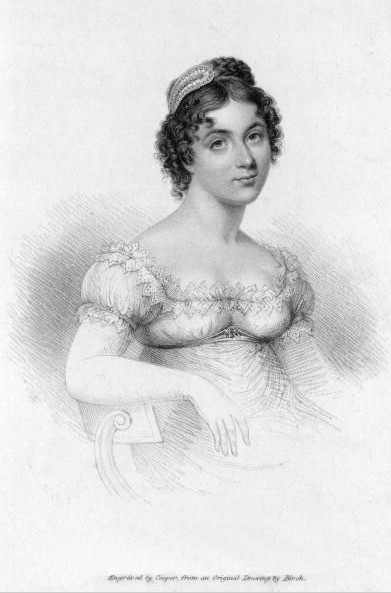
 In recent weeks I’ve been telling you about Harriette’s affair with a young heir to a dukedom, and my belief that she hoped to gain a happy ending from the relationship, in the form of a ring on her finger and financial security for the rest of her life. She frequently declares in her memoirs, that Lord Worcester constantly called her his wife, as well as treating her like his wife… But before I continue, as usual, here’s a quick recap for anyone joining this series of posts today. If you’ve read it before then skip to the end of the italics.
In 1825 Harriette Wilson, a courtesan, published a series of stories as her memoirs in a British broad sheet paper. The Regency gentleman’s clubs were a buzz, waiting to see the next names mentioned each week. While barriers had to be set up outside the shop of her publisher, Stockdale, to hold back the disapproving mob.
Harriette was born Harriette Debochet, she chose the name Harriette Wilson as her professional name, in the same way Emma Hart, who I’ve blogged about previously, had changed her name. Unlike Emma, it isn’t known why or when Harriette changed her name.
She was one of nine surviving children. Her father was a watchmaker and her mother a stocking repairer, and both were believed to be from illegitimate origin.
Three of Harriette’s sisters also became courtesans. Amy, Fanny and Sophia (who I have written about before). So the tales I am about to begin in my blogs will include some elements from their lives too.
For a start you’ll need to understand the world of the 19th Century Courtesan. It was all about show and not just about sex. The idle rich of the upper class aspired to spending time in the company of courtesans, it was fashionable, the thing to do.
You were envied if you were linked to one of the most popular courtesans or you discovered a new unknown beauty to be admired by others.
Courtesans were also part of the competitive nature of the regency period too, gambling was a large element of the life of the idle rich and courtesans were won and lost and bartered and fought for.
So courtesans obviously aspired to be one of the most popular, and to achieve it they learnt how to play music, read widely, so they could debate, and tried to shine in personality too. They wanted to be a favoured ’original’.
The eccentric and outspoken was admired by gentlemen who liked to consort with boxers and jockeys, and coachmen, so courtesans did not aim for placid but were quite happy to insult and mock men who courted them, and demand money for any small favour.

The Marquis of Wiltshire. 7th Duke of Beaufort. in later life
Harriette tells us numerous stories of Lord Worcester’s devotion through the period of their three-year engagement (which is what she called any contractual relationship she entered into). Some examples are that he would get out of bed and make their toast for breakfast himself, in the morning, rather than let a footman touch the food she was to eat; that he insisted on lacing her corset himself so that no maid hurt her by pulling it too harshly; that he took over the ordering of the house (usually a woman’s duty) including meeting with the housekeeper to agree dinner menu’s because Harriette once said she preferred not to know what she was going to eat; that he went deathly pale when she had to have a back tooth pulled and then wore it about his neck for a long while. He even refused to attend any gatherings of the gentry locally, because Harriette, of course, would not have been received, so if she could not go, then he would not go. His view was, ‘having bound myself to you for my life, for better or for worse, and with my eyes open, I feel that we two make but one… and I hate to go to any place, where you may not accompany me.’
There was one night though, when Lord Worcester’s uncle, who lived locally, had invited Lord Worcester to attend a ball in honour of his birthday, and Lord Worcester refused to go. But Harriette says she urged him to attend. Apparently Worcester’s uncle had been threatening to tell Worcester’s father about Harriette, as he was concerned they really were married. So to prevent the interference of Worcester’s father, the Duke of Beaufort, Harriette encourages the young lord to go.
He says he cannot go because he always serves her dinner himself and if he goes who will serve her? Harriette declares that he can serve her before he leaves then. But when they carry out this plan, after dinner, he was in no mood to leave her, ‘why am I to be dressed up, there, while the person for whom alone I exist, or wish to live an hour, is left in solitude… I will not go, let the consequence be what it may.’
When his angry uncle then sent a servant to fetch Worcester, Lord Worcester ran upstairs, put a nightcap on and shouted out the window that he was too ill to go, and in bed, so he did not wish to be disturbed.
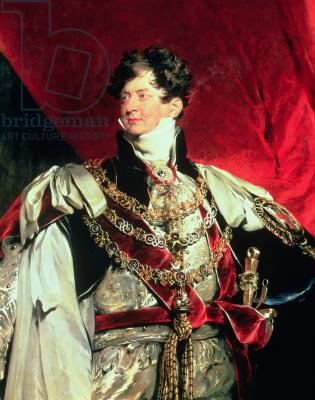 One other time though, when the invitation came from the Prince Regent, who was visiting Brighton, and at the time commanded Lord Worcester’s regiment, the 10th Hussars, Lord Worcester could not then refuse.
Harriette says, this was the first time he did leave her alone. But again he served her dinner first, then sighed for a long while before he did go, and when he returned claimed that although the music was beautiful, because Harriette could not listen to it, he’d found somewhere to hide and stuff his ears, so he could not hear it, because she could not. But the visit earned him a nightly invitation from the Prince Regent. So Lord Worcester declared that he would learn to limp, and then claim he could not attend the Prince because he was terribly lame. He spent the rest of the night then practicing his limp.
I don’t think Harriette could have asked for any greater devotion, but even then she does not speak of love he never won that from her, she speaks of gratitude, she says in response to all this attention, ‘my gratitude, which he yet believes in, because I proved it, not only in words but by all actions….’ – I can only imagine 🙂
Their story isn’t over by a long way though, more next week…
Jane Lark is a writer of authentic, passionate and emotional love stories.
See the side bar for details of Jane’s books, and Jane’s website www.janelark.co.uk to learn more about Jane. Or click ‘like’ on Jane’s Facebook page to see photo’s and learn historical facts from the Georgian, Regency and Victorian eras, which Jane publishes there. You can also follow Jane on twitter at @janelark
 Author, Jane Lark's stories