Brief Stories from the Battle of Waterloo ~ Sir Alexander Gordon

I am here in Belgium for the bicentenary commemoration of the Battle of Waterloo, and so as I gather images which support some of the stories about the battle I thought I would share them here.

Sir Alexander Gordan

Sir Alexander was the Duke of Wellington’s aide-de-camp (French for assistant in the field) in Belgium, he’d supported Wellington for months, and Wellington had become close to him. Alexander would have been privy to all of Wellington’s very valuable and sensitive knowledge about both the Allied and the French armies and leaders. They would have spent hours in each others company, living side by side, so that Alexander was always there to be called upon to write dispatches and ensure orders were passed on.
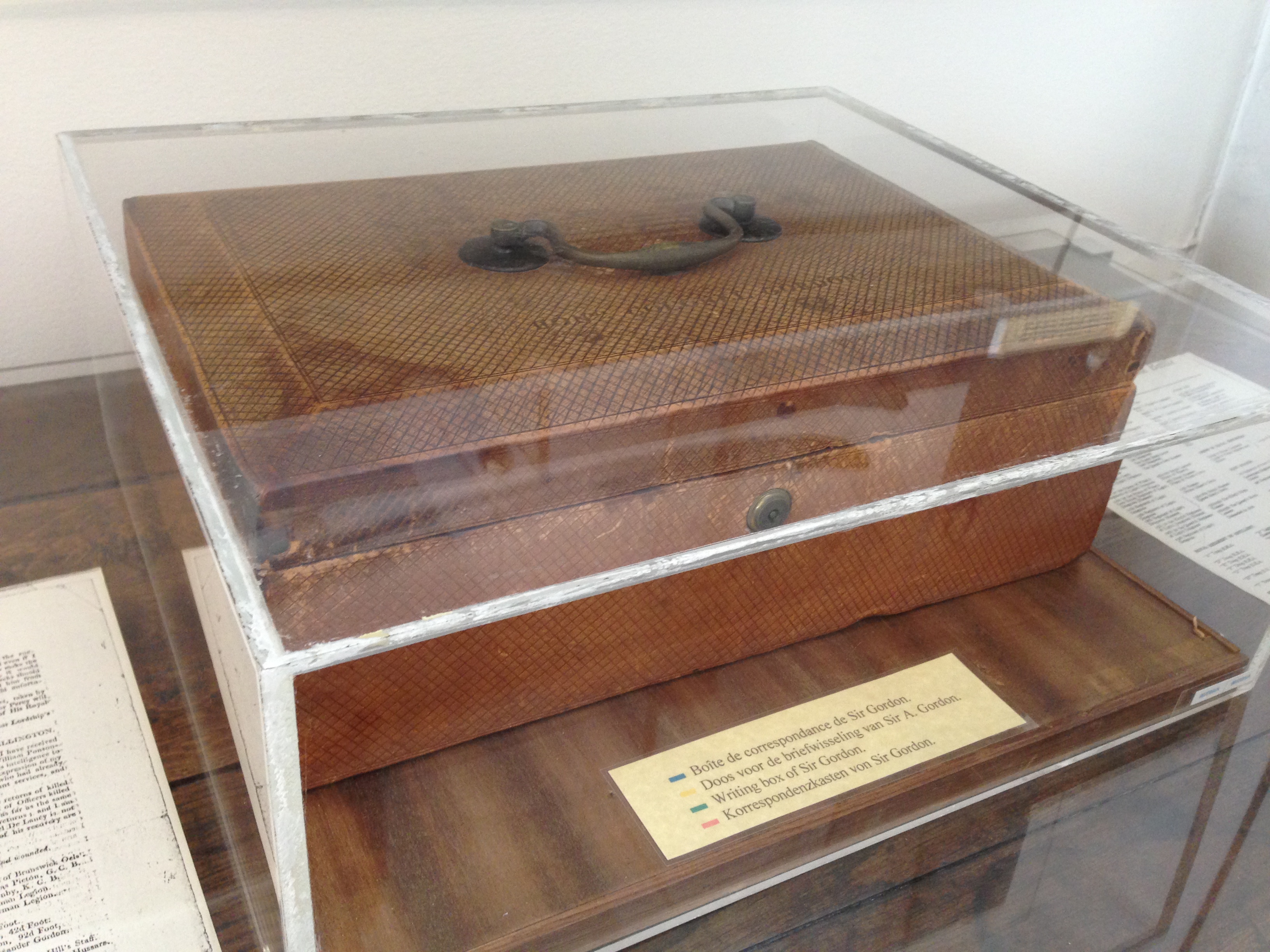
This is Sir Alexander Gordan'swriting box

This is Sir Alexander Gordan’swriting box

I recently visited the Churchill museum in London, and having worked in military colleges, I’ve had the luxury of learning a lot of the history around military leadership, I know that Churchill used the men about him as sounding boards to discuss ideas and views. I am sure Wellington would not have contained the burden of such a great issue and concern as a battle over Europe to himself, he would have shared his thoughts with men he could trust, both his plans and his fears, and his aide-de-camp would have essentially been one of those men because he was so close to Wellington.

When Sir Alexander was injured in the battle by a round shot, which took off his leg, Wellington was horrified by the injury of someone he was so close to. He had Alexander tended in his own bed in his rooms at the Inn at the Village of Waterloo which is now the museum.
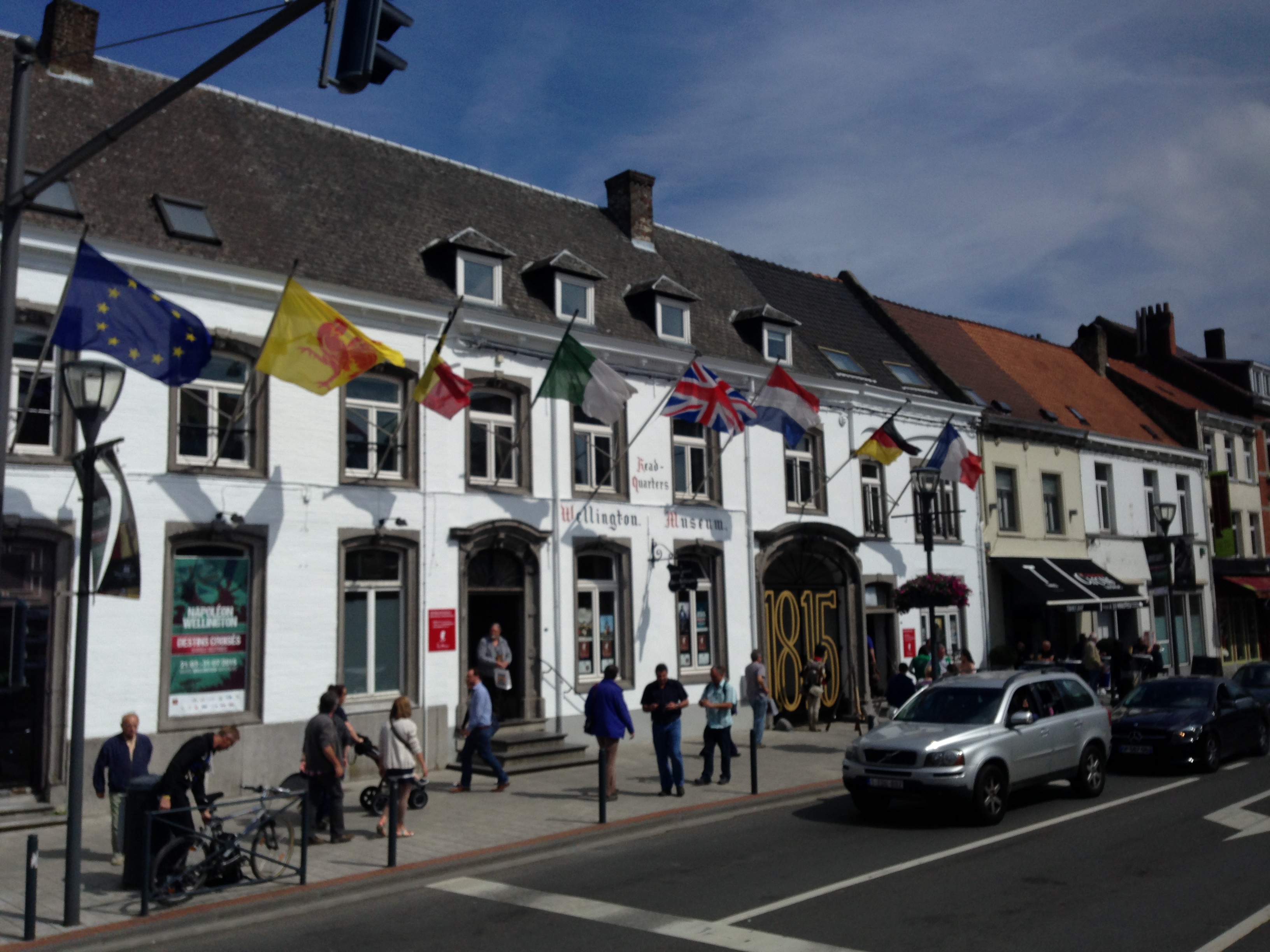
IMG_6310

He wrote to Sir Alexander’s brother himself, and a copy of the letter is in the Wellington Museum in the inn in the Village of Waterloo and it is a heartfelt letter which seeks to express both Wellington’s personal sadness and his admiration for Sir Alexander. It said that Sir Alexander gained his injury when he had ridden onto the battlefield to rally troops who were losing heart, and therefore Wellington saw him as a hero.
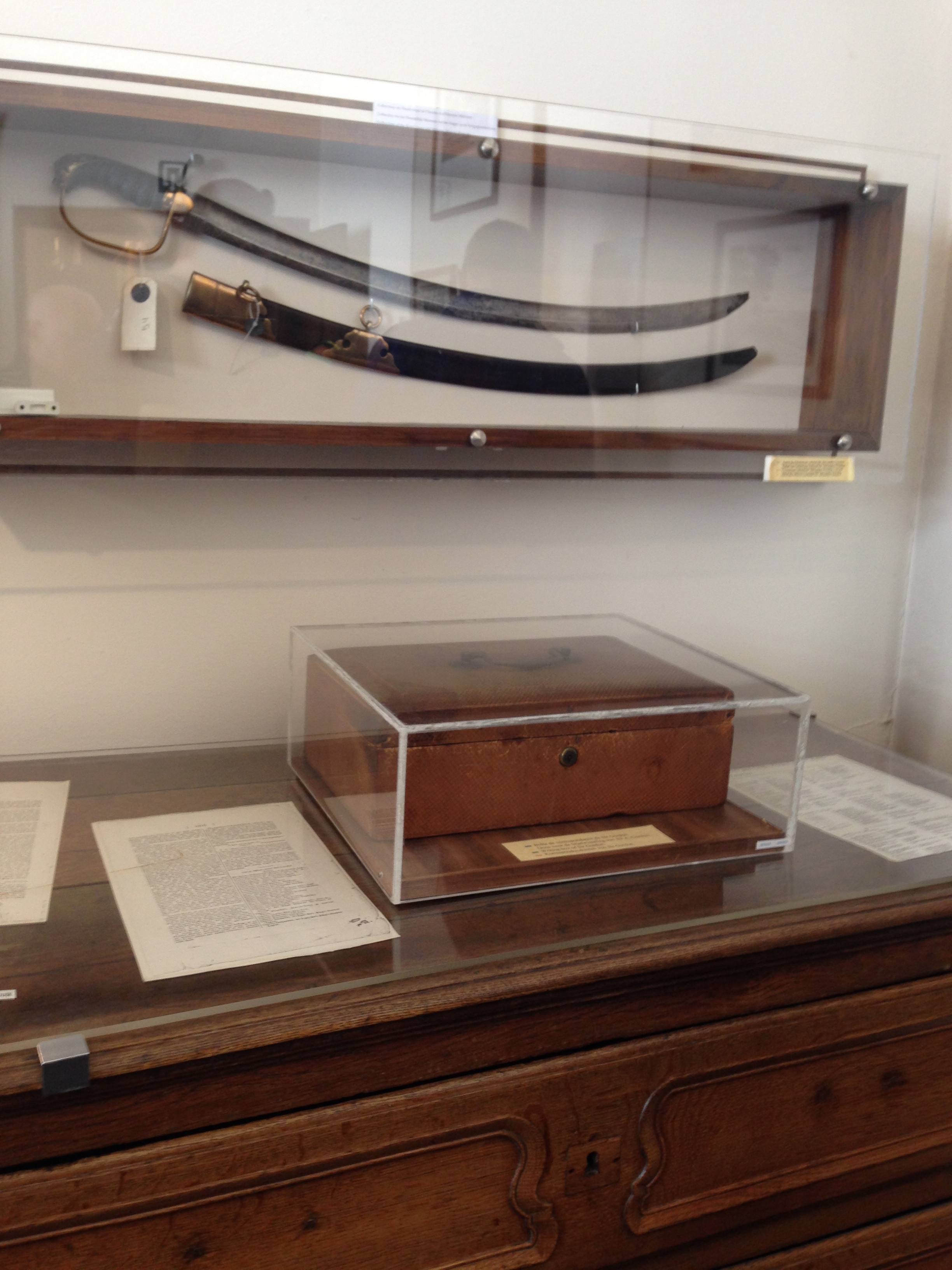
This is Sir Alexander's Saber kept in the Inn at Waterloo, now the Wellington Museum

This is Sir Alexander’s Saber kept in the Inn at Waterloo, now the Wellington Museum

Consequently, when the Evere crypt was built to commemorate the officers who died during the battle, Sir Alexander was one of the mid-level officers who was honoured, his body was lifted and reinterred within the crypt, where he lies today.

Sir Alexander Gordan's grave at Evere

Sir Alexander Gordan’s grave at Evere
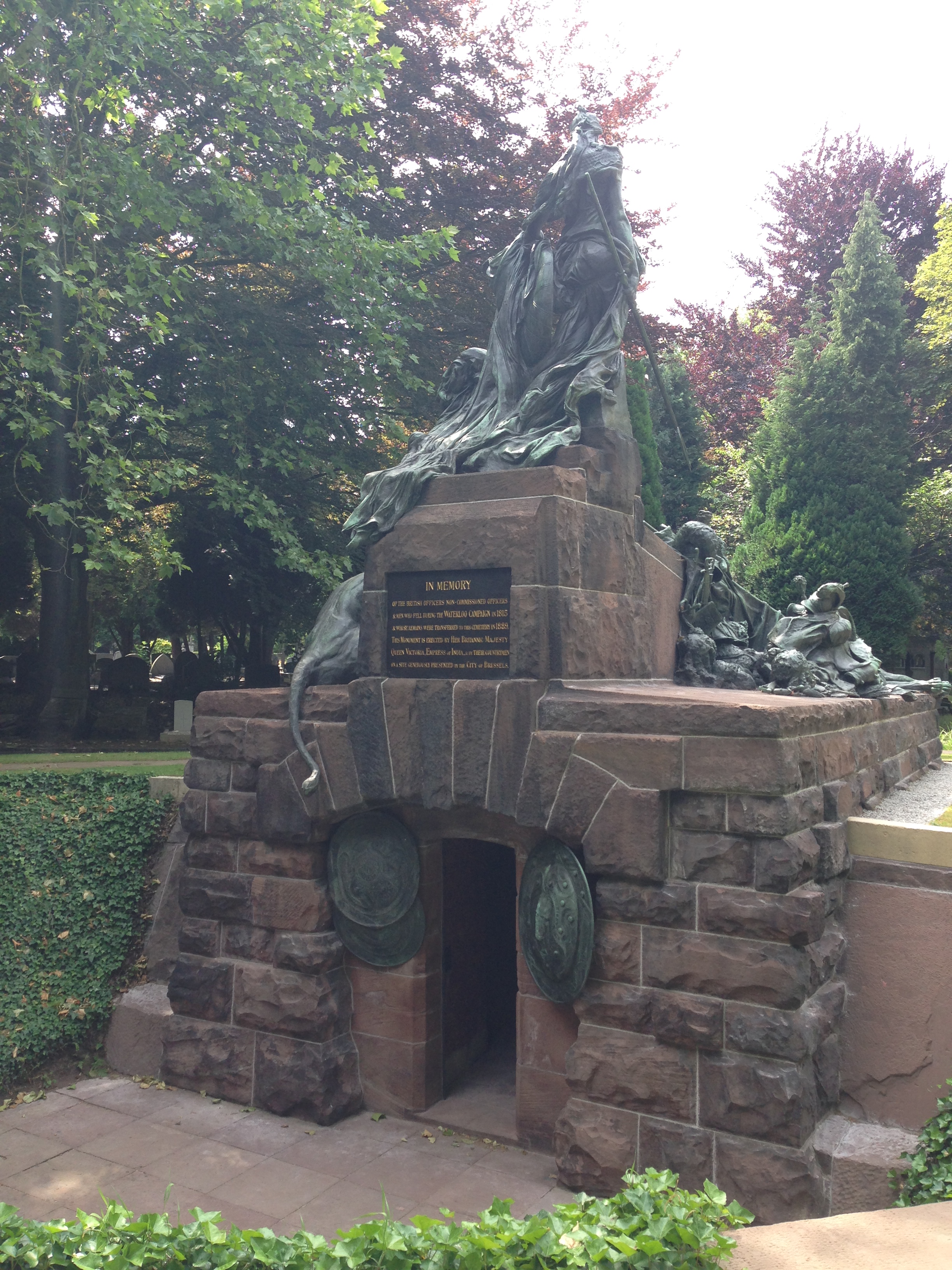
The Evere Crypt to commemorate the English officers who fought in the Battle of Waterloo

The Evere Crypt to commemorate the English officers who fought in the Battle of Waterloo

If you would like to read my fictional story set around the lead up to the Battle of Waterloo then now is the time to do it, Harper Collins have put on some amazing deals this month to commemorate the battle. In one country the deal only lasts two weeks, though, I have not put the amounts as they are different in different countries, just click on the cover of The Lost Love of a Soldier in the side bar to find out your deal.


FacebookBannerSoldier

June 18th 2015 will be 200 years since the Battle of Waterloo

Skip to the bold lettering if you’ve already read the introduction 🙂

04 The lost love of a Soldier 300dbiOn the 18th June 2015 it will be 200 years since the battle of Waterloo took place, which was fought near Brussels in Belgium. This is the setting for scenes in my novel The Lost Love of a Soldier so I want to take this chance to share some of the things which I learned while researching the story of the 52nd (Oxfordshire) Regiment of foot which my fictional character, Paul, had a place within, to commemorate the anniversary of the battle.

I picked the name of a real regiment randomly when I began writing Paul’s and Ellen’s fictional story, in The Illicit Love of a Courtesan, and chose the 52nd (Oxfordshire) Regiment of foot. So when I decided to place the characters in a prequel, which would incorporate the battle of Waterloo, I had to research the background of the 52ndand develop an understanding of what happened to them before they reached the battle. Looking up where they’d come from before the battle? How they had lived? How would they have felt during the lead up to Waterloo?

This is the true story I am sharing on my blog in the lead up to the bicentenary commemoration of the battle. Read part one and part two 

Part Three

The allied generals started to more seriously prepare following the news on June 10th. They had spies out trying to track Napoleon’s movements, but they still did not move. Their plan was that Napoleon would come to them and that they would manoeuvre him, through their positions, on to the ground where they hoped to fight. Napoleon’s plan was to catch them when they were not expecting an attack.

The Duchess of Richmond had planned a ball for the 15th June , her husband, the Duke, commanded the troops based in Brussels. When the Duchess heard the news on the 10th she asked Wellington if she should continue with the ball. He approved it. He would have known the French had spies too and he wished to make Napoleon believe they were not worried. There’s a fabulous description of the ball, written by someone who attended it; for instance they say it was not in a ballroom but in an outbuilding converted for the purpose, and the letter even describes the wallpaper and the dancing… Apparently the Scottish regiment danced jigs to entertain the others at times.

But then came the news that Napoleon had struck the far left of the Allied Forces. Wellington and his generals disappeared into a room at the Richmonds’ to work out their steps of response, and then the officers began peeling away from the ball, returning to their regiments. Before dawn the regiments camped within city and on the other side of the city were marching through Brussels.

More tourists left once the soldiers had gone as the possibility of a battle close to Brussels became certain, but many stayed.

Four long days of fighting followed, and at times the war could have been won by Napoleon, and that was when panic broke out among the remaining tourists, who fought over the horses to leave the city. The war came to its conclusion on the 18th June 1815 on the fields around Waterloo, and I say in the book that Ellen must have heard the cannon fire in the city. We live about fifteen miles from Salisbury plain but we still hear the guns when the army is practicing. It shakes our front door.

Over two hundred and fifty thousand men took part in the battle of Waterloo, in the allied forces alone, and of those twelve thousand men lost their lives. Those men changed the course of history in Europe.

I am really lucky to be going over to Belgium, to Brussels, this month to watch the commemoration, it’s expected that there will be five thousand plus reenactors and over sixty thousand people attending to watch. There’s also a new museum on the site, and some of the most well-known areas of battle are now open to the public. I shall be thinking of the 52nd and I will share my experiences on my return.

If you can’t make it to Brussels but would love to learn more and you’re in the UK, then Aspley House in London, and Wellington Arch, which are both open to the public, have displays established to commemorate Waterloo.

Follow my Facebook Jane Lark Author page (see the righthand column to ‘Like’) to make sure you see all the pictures and facts I discover on my trip to Belgium.

Check out the exceptional discounts Harper Collins have placed on The Lost Love of a Soldier during June 2015 to commemorate the Battle of Waterloo

~

ONE TIME ONLY OFFERS

click on the cover in the righthand column

FacebookBannerSoldier

The Lost Love of a Soldier

The stunning prequel to Kindle bestseller The Illicit Love of a Courtesan!

Life is for grasping and living…

Naïve and innocent, Lady Ellen Pembroke falls for a dashing young army officer. Captain Paul Harding has such an easy, enchanting smile and his blue eyes glow; vibrancy and warmth emanating from him. She is in love.

In turn, the Captain finds his attention captured by the beautiful young daughter of the Duke of Pembroke at a house party in the summer. Finding Ellen is like finding treasure on the battle field. His sanity clings to her – something beautiful to remind him that not all in the world is ugly.

Ellen is someone to fight for and someone to survive for when he is inevitably called to arms in the battle of Waterloo…