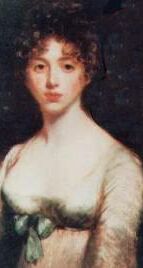
Lady Caroline Lamb’s whole disgraceful truth… Part Sixteen ~ ‘The Duchess’ Dies

CarolinelambToday we’ll pick up from the winter Caroline lost her child, when soon after her aunt Georgiana died. But before I tell you the story here is the history to this series of posts for anyone joining today and as always, if you usually follow, just skip to the text highlighted in bold.

I was drawn to Lady Caroline Lamb, who lived in the Regency era, because Harriette Wilson the courtesan who wrote her memoirs in 1825, mentions the Ponsonby and the Lamb family frequently. Also the story of Caroline’s affair with Lord Byron captured my imagination. Caroline was also a writer, she wrote poems, and novels in her later life. I have read Glenarvon.

Her life story and her letters sucked me further into the reality of the Regency world which is rarely found in modern-day books. Jane Austen wrote fictional, ‘country’ life as she called it, and I want to write fictional ‘Regency’ life rather than simply romance. But what I love when I discover gems in my research like Caroline’s story is sharing the real story behind my fiction here too.

Lady Caroline Lamb was born Caroline Ponsonby, on the 13th November 1785. She was the daughter of Frederick Ponsonby, Viscount Duncannon, and Henrietta (known as Harriet), the sister of the infamous Georgiana, Duchess of Devonshire.

Caroline became an official lady when her grandfather died, and her father became Earl of Bessborough earning her the honorific title ‘Lady’ and she grew up in a world of luxury, even Marie Antoinette was a family friend. Caroline was always renowned as being lively, and now it is suspected she had a condition called bipolar. As a child she earned herself a title as a ‘brat’, by such things as telling her aunt Georgiana that Edward Gibbon’s (the author of The Decline and fall of the Roman Empire) face was ‘so ugly it had frightened her puppy’.

And when she grew up Byron once described Caroline as “the cleverest most agreeable, absurd, amiable, perplexing, dangerous fascinating little being that lives now or ought to have lived 2000 years ago.”

Caroline had lost her first child on January 31st, and then her dear aunt Georgiana who’s life had been entwined with Caroline’s due her mother’s extremely close friendship with her sister, began experiencing severe headaches.

Georgiana had suffered ill health for many years but this time she must have felt that it was worse than ever. In February 1806 she wrote to her children and friends, as if closing off her life.

She still managed to attend court one last time, although she was jaundiced, and even then at the point of near death she was sadly juggling her debts, as she begged a £100 from her mother.

Caroline wrote a poem to her aunt.

Gentle sleep, they blessings shed-

Soothe her weary soul to rest;

Angels guard her suffering head,

Calm the troubles at her breast’.


The end came in March, though doctors had tried numerous treatments to make Georgiana well, including shaving her head and placing a blister on her scalp – which I am not sure what that means but I have read that it was a common practice for doctors to cause blisters, so that they could pierce them in the belief they were then releasing toxins from the body.

At this time of her life, Georgiana was virtually blind, and in the her last days she was too weak to speak. Harriet (Caroline’s mother) stayed beside her sister for her last three days, listening to her sister whispering unintelligible nonsense as she hallucinated. But her end was not to be at all easy, and she passed into a long period of convulsions until the end came at 3.30 in the morning on the 30th March. Harriet did not believe until the very end that Georgiana would be lost, and she described Georgiana’s death, ‘Anything so horrible, so killing, as her three days’ agony no human being ever witness’d’.

The Duchess of Devonshire, once a celebrated beauty, and a woman surrounded but debt and scandal at times in her life, who lived in a very odd sort of way for a time, with her husband’s lover, was laid out in state until Easter Sunday, and while she lay there her family leapt into motion to resolve what they called the ‘Bess Problem‘ because with Georgiana now gone it left Bess to act the full wife of the Duke, and that would be another scandal. But it was not Caroline’s mother’s generation who attacked, it was the children, who had supposedly been kept blind to the true nature of the situation, certainly between birth and marriage.

On the 4th of April, the night before the hearse was due to carry Georgiana’s body up to Chatsworth. Caroline, joined with little G and Harry O and confronted Bess, and told her in no uncertain terms it was time to go. Georgiana’s only son, and the heir to the dukedom who hated his father’s mistress then also put his voice to the cause and tapped on Lady Elizabeth’s door to tell her to go.

The Duke however was content to ignore the situation, he would not tell her to go. But Bess did concede a little and went to live with Harriet for short period.

However the letters between G and Caroline, give us the impression that Caroline became too tangled up in the battle against Bess. In April she wrote to her cousin begging forgiveness  for some argument.

I may often say little impudent speeches or speak too loud and too much but all this is for want of thought & will be corrected in a year or two I daresay – if you could see my heart I feel sure you would all love me much better & though I have a thousand faults I may say I think with truth that I never said or thought anything from ill nature or will  to any body… I hope you are now none of you angry with my manner to Lady Elizabeth Foster believe me I feel every thing about her but too strongly & yet I will add that I feel still more the greatest  compassion for her I think she has lost her best friend & I feel secure she has no other aim or plans than to live quietly with us all I know she feels any kindness very strongly & I am sure she would dislike giving pain to those who are kind to her more than to those who are otherwise…

The end of the letter does sort of hint a little though that Caroline thought G to have been kind for a purpose. 😀

More on Caroline and William next week.

 ~

Dangerous Love of a rogue from ZoeIf you would like to read my historical romance story that was inspired by Caroline’s life… it is available for pre-order The Dangerous Love of a Rogue, will be out in ebook in January and can be pre-ordered for Paperback release in March and don’t forget you can see images of my inspirations on my Jane Lark Facebook page, just scroll down and click ‘Like‘ in the link on the sidebar to follow.

But if you can’t wait for Regency stories, then grab one of my books many of them are currently on offer in the UK from 69p and in the USA from $1.99 and there are couple of little extras for free… 
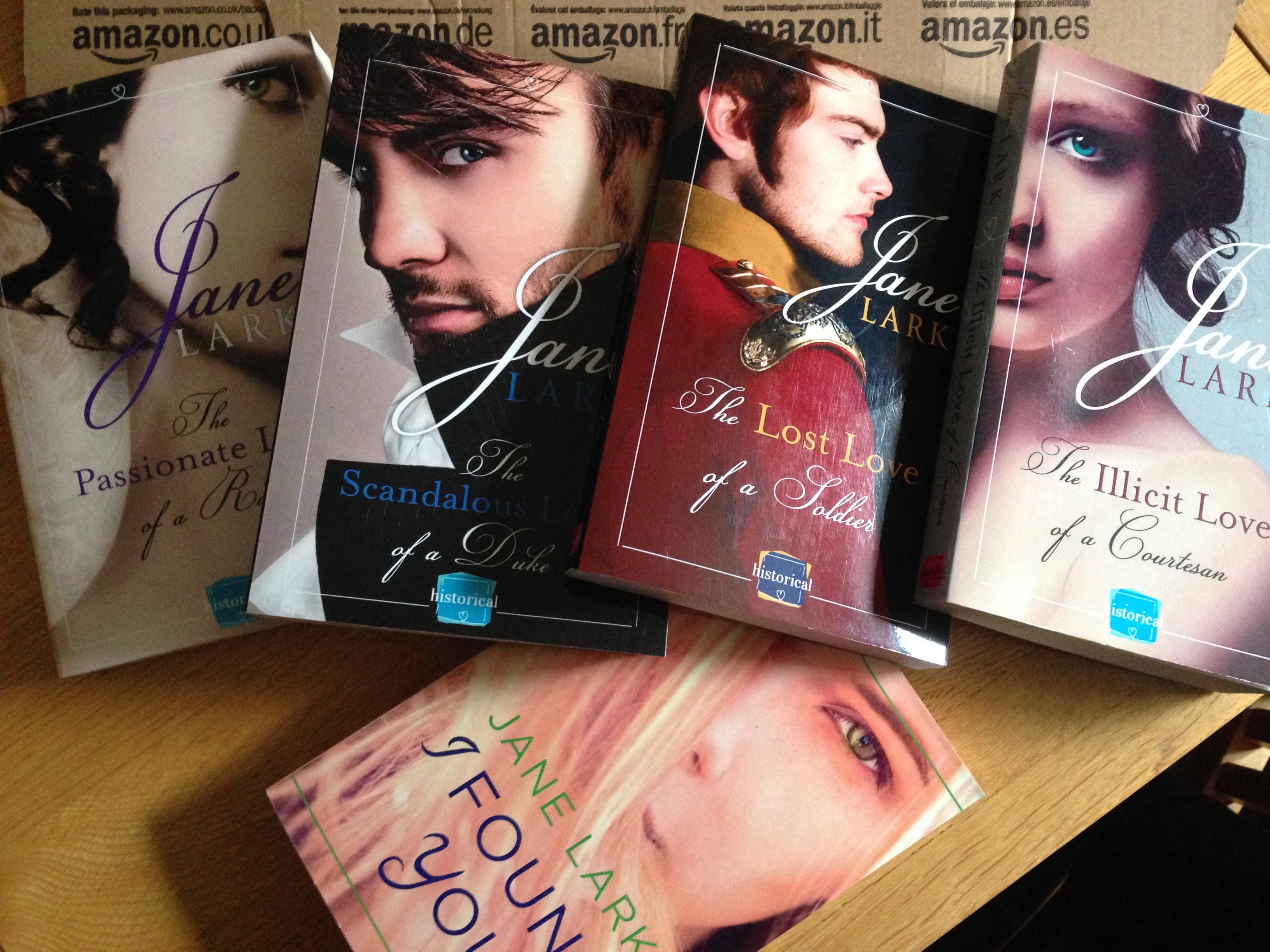
IMG_4415

Go to the index

For

  • the story of the real courtesan who inspired   The Illicit Love of a Courtesan,

Jane Lark is a writer of authentic, passionate and emotional Historical and New Adult Romance stories, and the author of a No.1 bestselling Historical Romance novel in America, ‘The Illicit Love of a Courtesan’.

Click here to find out more about Jane’s books, and see Jane’s website www.janelark.co.uk to learn more about Jane. Or click  ‘like’ on Jane’s Facebook  page to see photo’s and learn historical facts from the Georgian, Regency and Victorian eras, which Jane publishes there. You can also follow Jane on twitter at @janelark

Jane’s books can be ordered from amazon by clicking on the covers in the sidebar,  and are available from most booksellers.



Reckless in Innocence ~ A #Free Historical Romance story ~ Part Thirteen

Reckless in Innocence

for my Historical Romance readers

© Jane Lark

Publishing rights belong to Jane Lark, this should not be recreated in any form without prior consent from Jane Lark

Reckless in Innocence

Reckless in Innocence

~

Read the earlier parts 

one , two, three, four, five, six, seven, eight,nineten, eleven, twelve

~

Marcus had spent two weeks playing shadow, or rather guard dog, to Elizabeth, and it was no easy task. He was not at all amused by following the woman about and acting her fool. In general she disregarded him and unless he was actually in her parents’ narrow sitting room he did not engage her, but stood across a ballroom watching her and followed if she went outside. Or if she was driving he would ride within sight of her. It was an extremely uncomfortable role when all he wished to do was touch her, hear her, delight in her beauty and keep it to himself. Instead he was wallowing in envy and steadily killing himself watching as other men spoke to her, touched her and danced with her – knowing he had thrown something of value away.

But he would not make any other choice, he could not. Yet tonight he had given himself permission to abscond, to escape the hell on earth he’d created and he’d come to dine with Jason and Angela. But already his thoughts were flooding with fears, wondering what Elizabeth was doing, who she was speaking to.

“Angela,” Marcus bowed over the fingers of her offered hand, “I thank you for your invitation. You know I can never refuse your hospitality.”

“I’m glad. Jason was not certain you would come.” Angela kept a hold of his fingers and drew him across the hall toward the drawing room.

“He told you that we argued?” Marcus grimaced, while he willingly followed her, allowing himself to be gently led by her grip.

“Yes, but you are too close to fall out over the past. He’s dismissed it.” She spun round to face him as they reached the door, before she entered the drawing room and spoke with her eyes focused on his. “And what of your Miss Derwent?”

“She is not mine.”

“But I have heard that you follow her every where since we met her at Vauxhall.”

“To see that she has no trouble from Percy, that is all.”

“And her other suitors… I have heard that you glower at them across the halls.”

“I do not glower, Angela.”

“You are glowering now. You can be formidable when you wish. Are you certain this is not love?” Angela’s voice rank with a feminine vision of romance as she turned to progress.

“The feeling that I have is not love. The feeling that I have is guilt.” and even now it sliced at Marcus stomach. “It is my fault that Percy was drawn to her.”

“And you are certain this is all about Percy and not you?”

“Not me, Angela.” Although his guilt was far greater than he’d declare.

“But you are with her every day and evening…” Jason stood, as Marcus walked into the room, joining in the conversation he must have heard progressing. “And I believe you have been escorting the woman for a couple of weeks… in fact since our last conversation at White’s. Does that not rather resemble courting?”

“To make sure that she is safe. I do not disturb her if she is alone. Have you invited me to dinner only to press gang me?”

Angela’s eyebrows lifted at Marcus’s reply and she laid her hand on his sleeve. “Perhaps we ought to go into dinner and agree the subject of Elizabeth Derwent is barred between us tonight. You will see it for yourself anyway when the time comes.”

“See what?”

“That you have fallen in love at last.”

Marcus’s emotions simmered on a low heat. It was not love, it was guilt and envy, and he could never tell his sister-in-law and his brother why, because it was too bloody shameful. And because it would endanger Elizabeth. He did not argue again, arguing would only serve to make Angela think she was correct, instead he held his silence on the subject, as they did, throughout dinner. Then after dinner Angela made some excuse to retire early and left him in the company of Jason, who proposed a game of billiards.

Marcus accepted; he had no reason not to, and an hour or so in his brother’s company would do him good, they were best friends as much as brothers.

While they played Jason asked, “What was it like Marcus?”

Marcus sent the red ball spinning across the billiard table towards a pocket, but it struck the cushion and bounced away.

Jason continued, “To find father’s body as you did…what was it like? I have never asked. It seems to me like cowardice now, not to want to know.” Jason sounded as though he’d spent all day thinking of these words, choosing them carefully.

Marcus stood upright, and his focus went to Jason then returned to the table and their game. Picking up a piece of chalk from the edge, Marcus began to rub the tip of the cue.

Jason leaned across the table to take his next shot, sending a ball into a pocket. Marcus tallied the points as Jason aligned himself to take another shot, closing his play with a weak effort at sending a ball into a pocket at the opposite end. It rebounded off the edge of the table.

“I will never forget it,” Marcus said, watching his brother.

Jason looked up at him. Marcus leant his back against the wall, one hand gripping a glass of port and the other still holding his cue.

“I have never thought that you would. I’ve always known the weight you carry, even though I never asked to hear it. When you mentioned it the other day, I wondered if I had let you down. You shared every moment of my own pain over Angela, after all, and yet I have left you to carry this burden alone all these years.”

Jason’s gaze fell away from Marcus’s when he finished speaking as he reached for his glass, then he sipped the port.

His brother was as uncomfortable with the subject as Marcus was with the memory.

Jason was silent then, waiting on the detail he knew that Marcus was preparing to speak.

Unwillingly the memory returned, it was always there, just waiting to be let through. The image of the scene filled his head. He did not wish to recall it, but if Jason knew, then perhaps he would understand.

“It was awful. How awful is difficult to describe.” Marcus looked across the room to Jason and offered him a closed lip smile. “Father had climbed a tree, obviously with the rope in his hand. He had tied it to a branch and put a loop about his neck, then jumped and that was the moment at which I saw him, but I was too far away. I ran and when I reached him he was still warm, still twitching. I thought he was breathing. But a child of eight cannot lift a man down. I did not find him dead, Jason, I found him dying and I could not save him. I did not tell mother that. I tried to save him. I could not.”

Jason was still silent.

What could his brother say? Nothing that would erase that memory; nothing that would take away the years of guilt Marcus had endured. Guilt which Marcus knew, as a grown man, did not belong on his shoulders. How could a boy find the strength of a man to save his father’s life? But it did not matter – because he was there and he could have saved his father’s life and he had not – and he’d carried the knowledge alone for twenty years.

Nothing could heal those wounds.

He’d disregarded all the burning pain and guilt inside him, shut it out. That was the only thing he could do. But Elizabeth had brought it back. Too late he’d realised that at times a man needed a conscience to hold him back.

They both drained the port from their glasses and Jason moved to collect the decanter, offering Marcus a refill. As he filled Marcus’s glass the flicker of candles reflected in the cut glass and sent golden shards of light about the room. Jason broke the silence between them. “And you blamed mother…”

A brief, deep laugh rose in Marcus’s throat. “You did not, from your tone.”

“You made me realise the other day that we have never discussed this, you and I, and we saw things through different eyes. I would like to know your view.”

“My view should be the same as yours. The house was never free of mother’s voice shouting, nagging and complaining. Father could do nothing right for her. She never had enough; no matter what he did, it never met her needs, or achieved her impossibly high standards.”

“What were her standards, as you saw them?”

“Did she not nag you as she did me? I never worked hard enough, or was polite enough, or clever enough, or tidy enough, or fast enough. Are you saying to me that you were a saint and never had her catch your ear?”

“No. She said it all to me too, but did she tell you why?” Jason rested his buttocks against the table, laying his cue on the green felt, and Marcus followed suit. Forgetting their game, both men clutched a glass of port in one hand.

“Only that I was apparently a useless scoundrel and therefore completely unworthy as an heir to Larchfield.” Marcus followed his words with a wide grin,  it was easier to recount with amusement, but at the time each word had been like the lance of a knife.

“And I know how you responded to our mother’s testimony of your bad character. You lived up to her expectations with gusto, and as you grew older threw yourself full force into rebellion, finding fresh things every day to offend her. I have never been able to keep up with you,” Jason concluded.

Marcus’s brief laugh rose up again and then he took a swig of port.

Jason was not laughing; he was looking at him as though he wished to move heaven and earth by will alone. “She was not angry at us, Marc. Her judgements did not come from your childhood. It was father she judged. She did not want us to grow up to be the same as him. He had no money sense. When he died he was in debt to the sum of four thousand pounds. Mother had to beg the money from her brother-in-law, and she paid every penny of it back from the profits of the estate once she’d turned it about. When father was alive he never paid his bills. He did not know how to manage land, or people; he could not cope. It was over worry about the debt that he took his life, Marcus, not mother. She was left to do what he had run from, what he could not.”

“And how do you know this?” Marcus’s gaze was on the strong wine in his glass, no longer on his brother, and his tone was mocking. Jason was younger than him; he could not know the truth.

“Mother would finish her outbursts to me with the same words, you will not grow up to be like your father. I never really understood, and when she died I asked Aunt Margaret. She told me about the money Uncle William had loaned mother on father’s death.

“Do not get me wrong.” Jason lifted his hand up to hold the rash comment he must have seen on Marcus’s lips. “I am not saying that the way she spoke to us, or Father, was right. I loved her no more than you, but after her death, and hearing her story from Aunt Margaret, I began to understand, and I can remember her with some respect. She did not say those things to hurt us, I would swear it. I believe she said them because she thought that it would help us. She did the things she did to survive. She could have taken us out of school but she did not. She took on the responsibility and labour of a man, to ensure you had your inheritance. She wanted to see you able to inherit and capable of making your inheritance a success, that was all. I think she loved us.”

Love? What the hell was that? Not what it was supposed to be if it was like his mother’s. Love was a commodity he refused, because his parents love had been so false. Instead Marcus had turned his back on it, like conscience, he had turned away from them both. He had a deep affection for Jason and Angela, yes, and his aunt, but only them. Marcus swallowed his port, draining the glass and moved for a refill. “I should go. Miss Derwent will have left the Castletons’ an hour ago.” He topped up his glass and drank its contents immediately.

“She will either be safely home or not. It is too late to do anything about it now. I told you there is only one way to be certain that a woman is safe and that is to marry her.”

Marcus stopped and turned back. “Perhaps I may go to Larchfield. It has not seen a hunting party for many years. I suppose it is about time the family place saw some life. Will you and Angela accompany me? Angela may ask some friends, whoever she chooses. I will not be able to stand the place if it is silent. For now, though, I am heading for a club to find a game of hazard. Do you wish to join me?”

“I believe I shall pass, big brother. My wife is waiting. She still owes me for the decorations.”

Marcus laughed and collecting his evening coat turned to the door, then looking back at Jason who was restoring the cues to the bracket on the wall, he added, “Just one thing… ask Angela to include Miss Derwent in her invitations…”

~

To be continued…

If you cannot wait until next week for more of Jane Lark’s writing there’s plenty to read right now 😀

To read the Marlow Intrigues series, you can start anywhere, but the actual order is listed below ~ and click like to follow my Facebook Page not to miss anything…


CompleteCollecvtion_Facebook_Advertv5


The Lost Love of Soldier ~ The Prequel #1 ~ A Christmas Elopement began it all ~ The paperback would be a  lovely stocking filler 😉 

The Illicit Love of a Courtesan #1.5 

Capturing The Love of an Earl ~ A Free Novella #1.5 

The Passionate Love of a Rake #2 

The Desperate Love of a Lord ~ A second Free Novella #2.5 

The Scandalous Love of a Lord #3

The Dangerous Love of a Rogue #4


Jane’s books can be ordered from most booksellers in paperback and, yes, there are more to come  🙂 

IMG_4415

Go to the index

For

  • the story of the real courtesan who inspired                          The Illicit Love of a Courtesan,
  • another free short story, about characters from book #2,      A Lord’s Scandalous Love,
  • the prequel excerpts for book #3                                           The Scandalous Love of a Duke

Jane Lark is a writer of authentic, passionate and emotional Historical and New Adult Romance stories, and the author of a No.1 bestselling Historical Romance novel in America, ‘The Illicit Love of a Courtesan’.Click here to find out more about Jane’s books, and see Jane’s website www.janelark.co.uk to learn more about Jane. Or click  ‘like’ on Jane’s Facebook  page to see photo’s and learn historical facts from the Georgian, Regency and Victorian eras, which Jane publishes there. You can also follow Jane on twitter at @janelark