Anne Hathaway’s Cottage is another fascinating place…

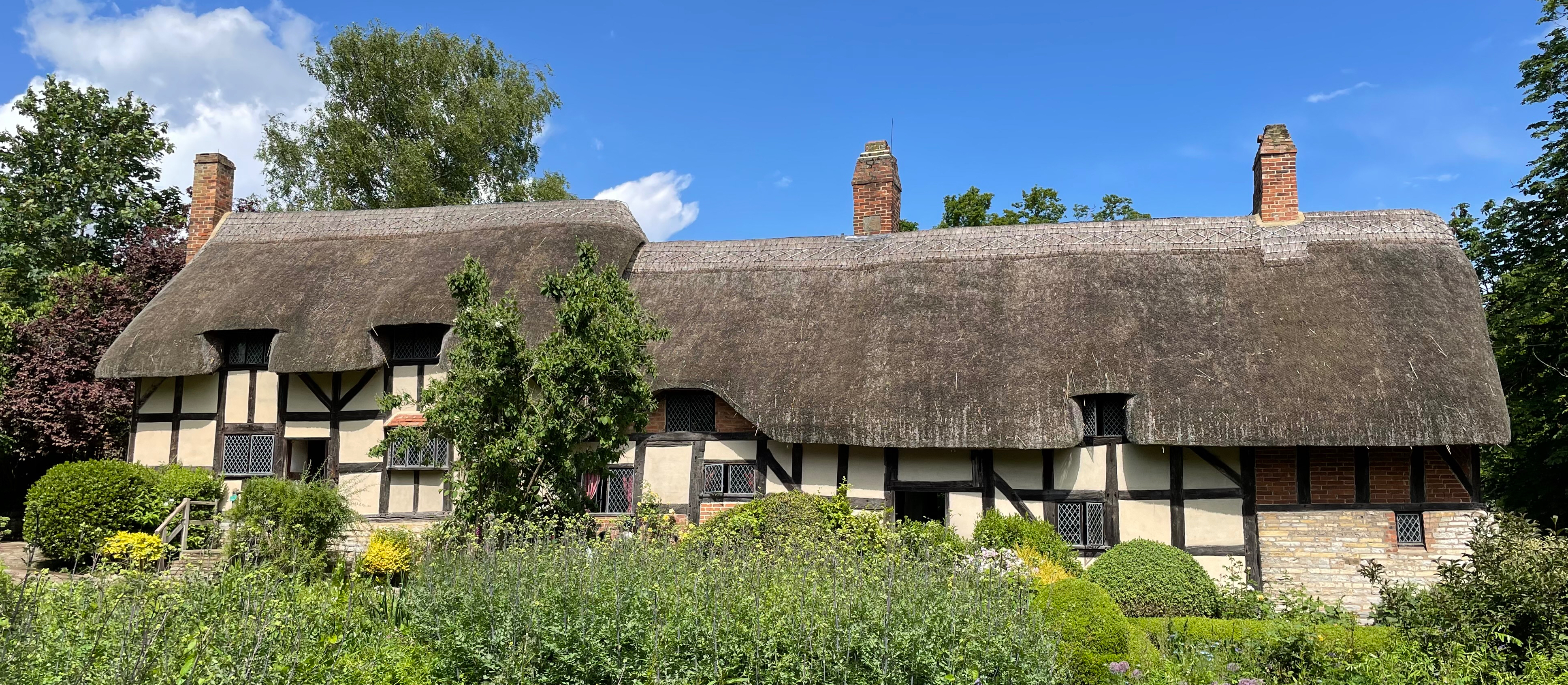
You can walk from the centre of Stratford on Avon out to Anne Hathaway’s cottage, in what was once the Hamlet of Shottery. It is a nice thing to do if you can, as it makes you realise how far William Shakespeare would have walked to court the woman who was much older than him. He had scarcely finished his schooling days in the guildhall, or perhaps they began their affair when he was still at the school. But he definitely made an effort to meet up with Anne, it was not a casual endeavour, and you can mull over of his potential feelings and intent as you walk. While most of the walk is now through housing estates the cottage itself still feels as though it’s in a village location.

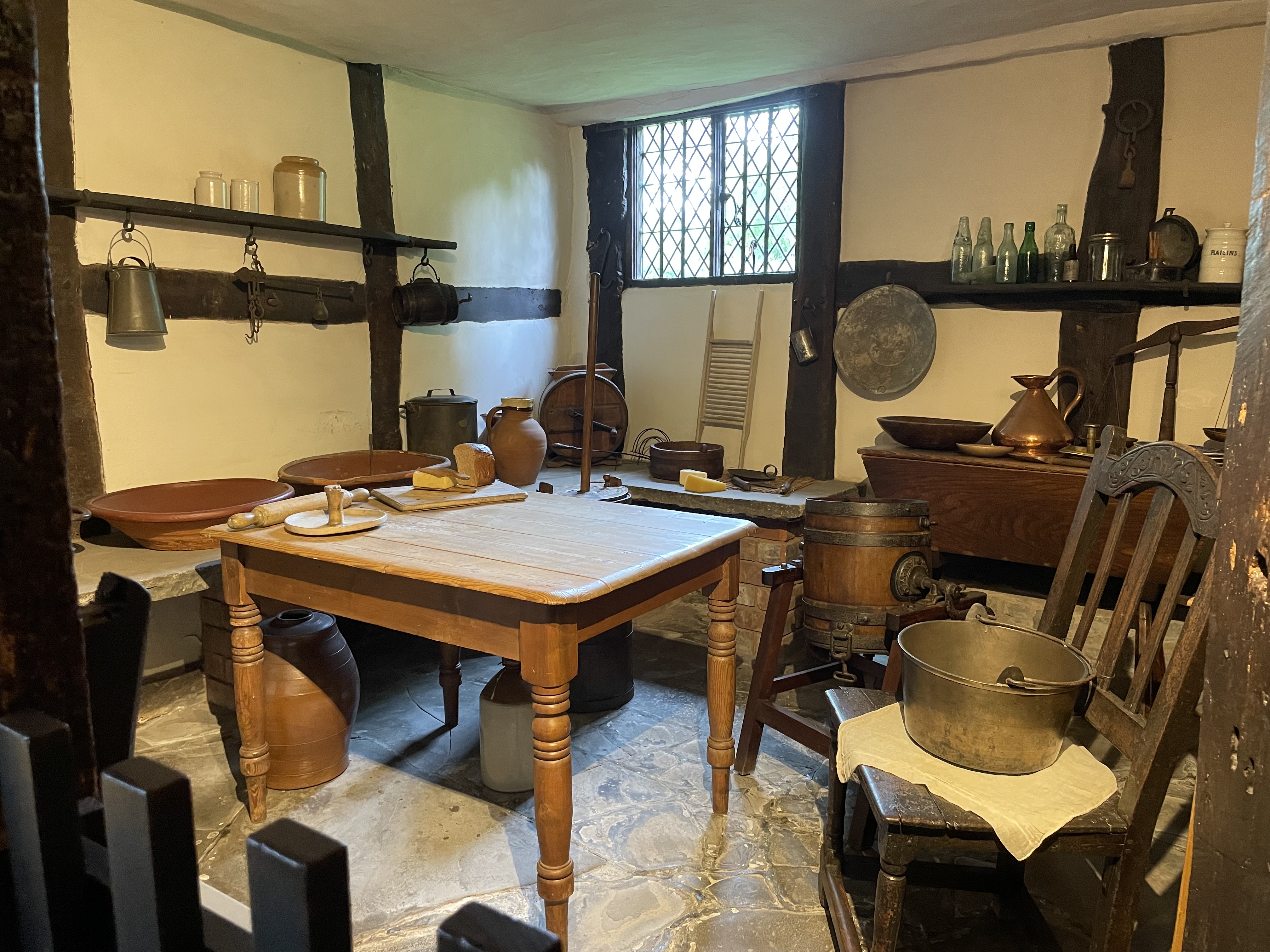
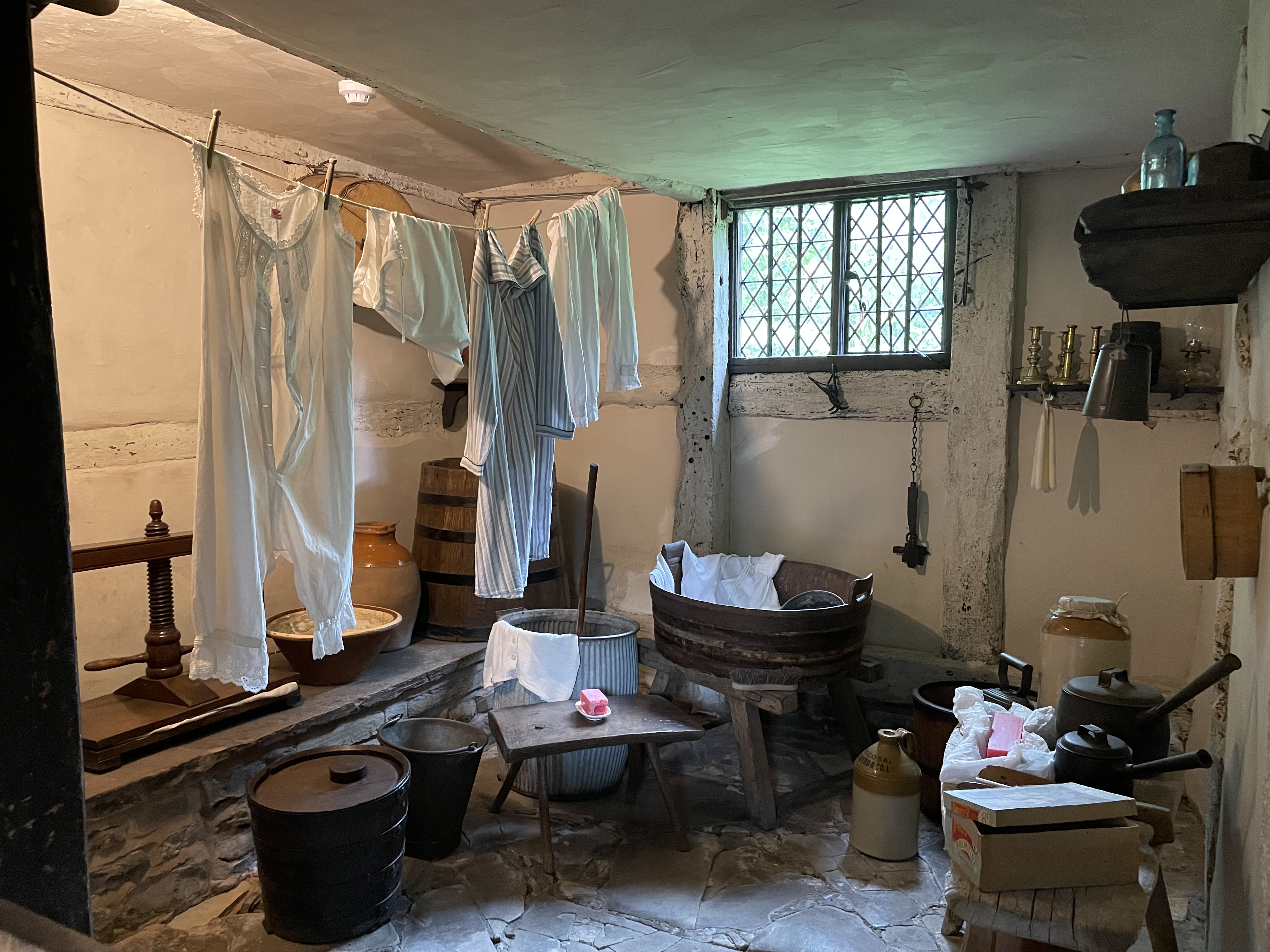
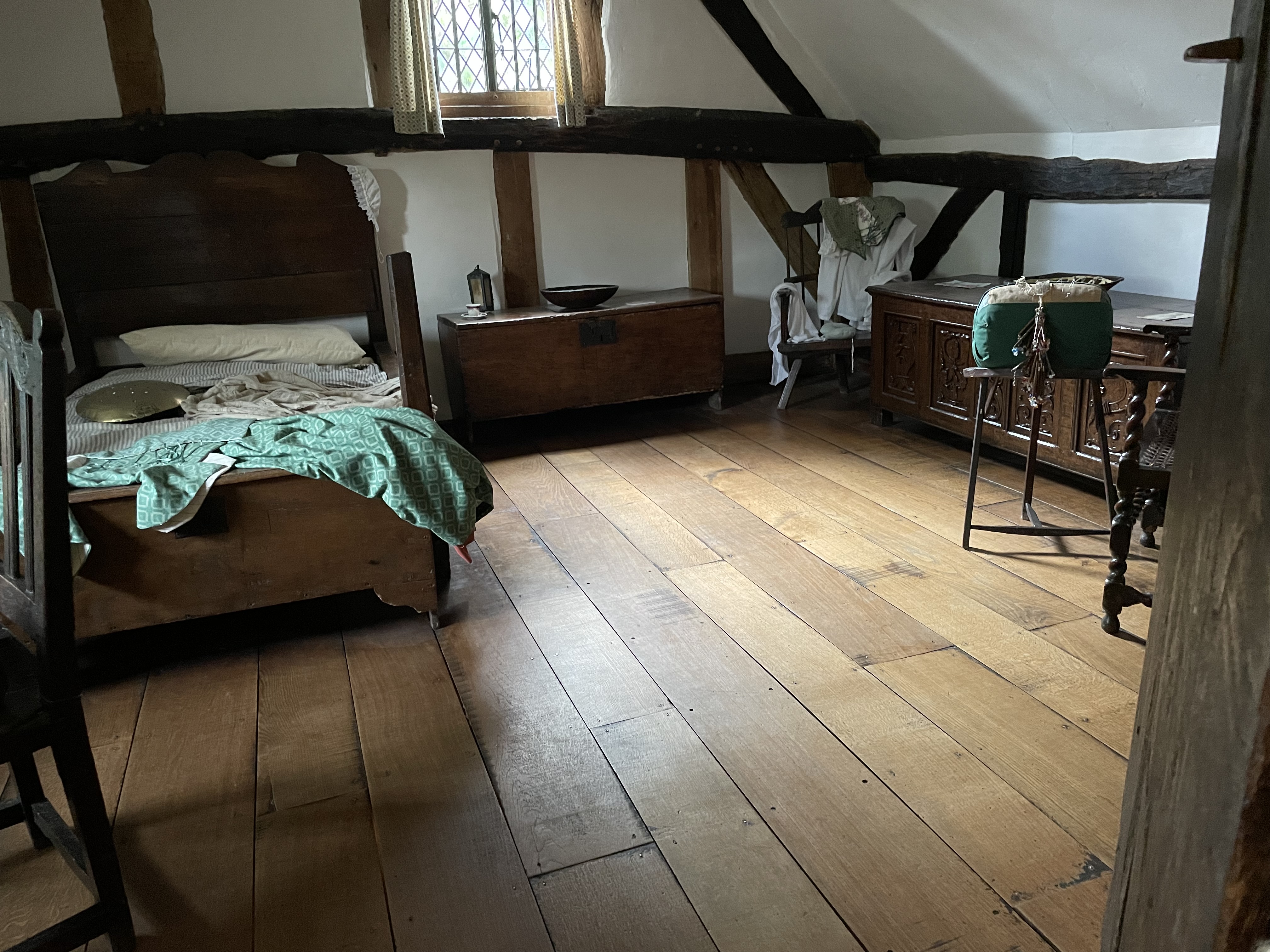
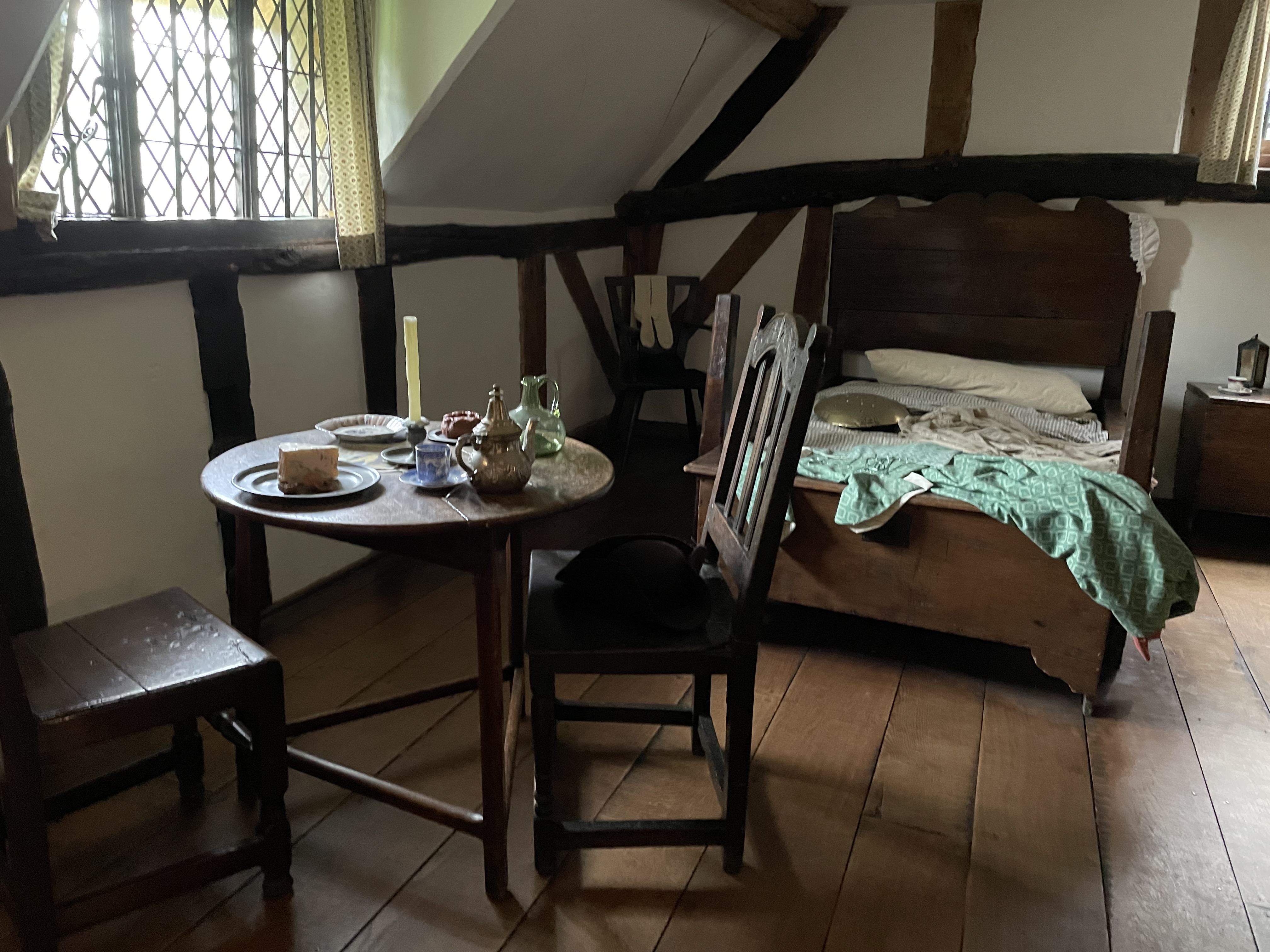
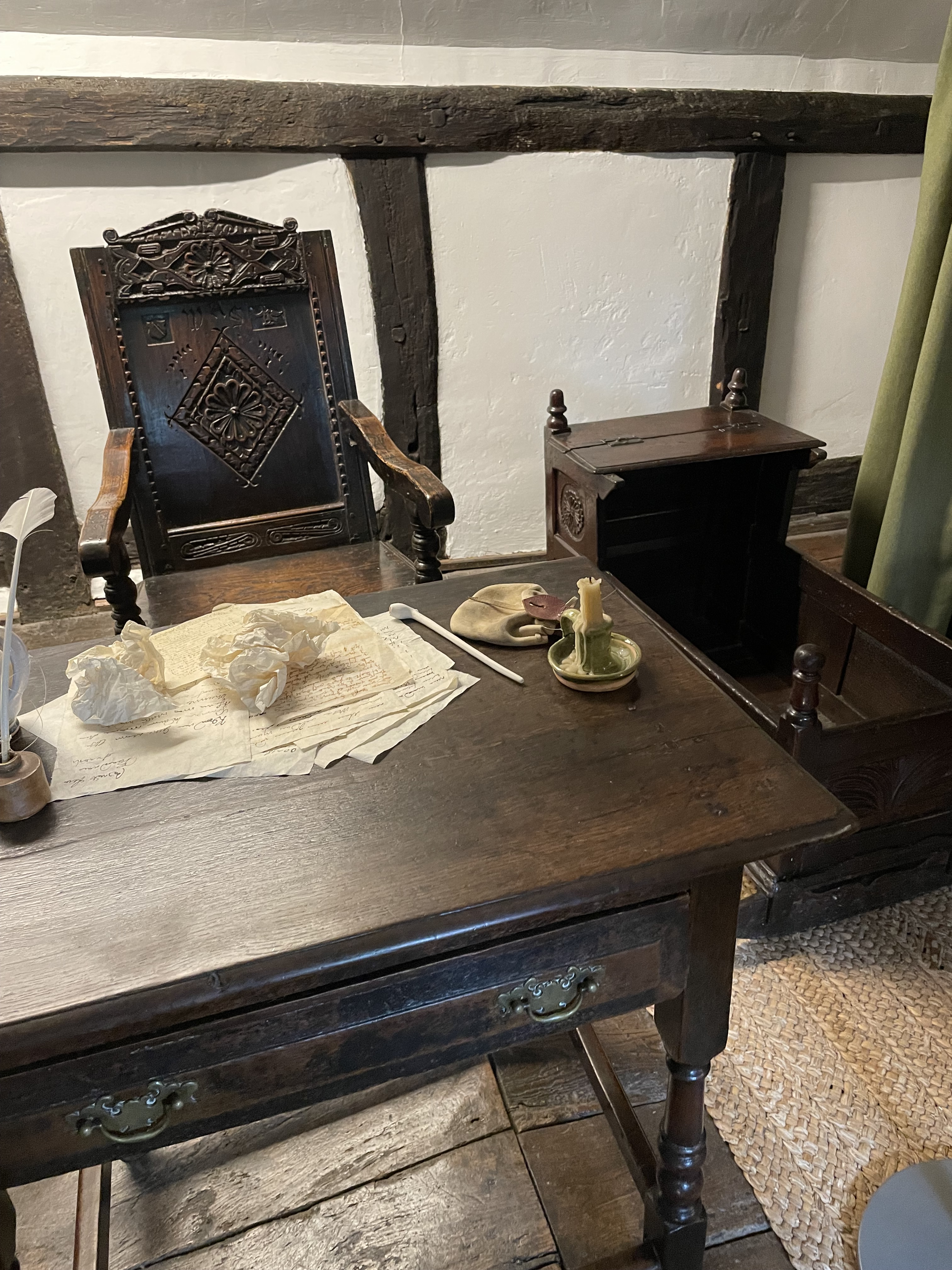
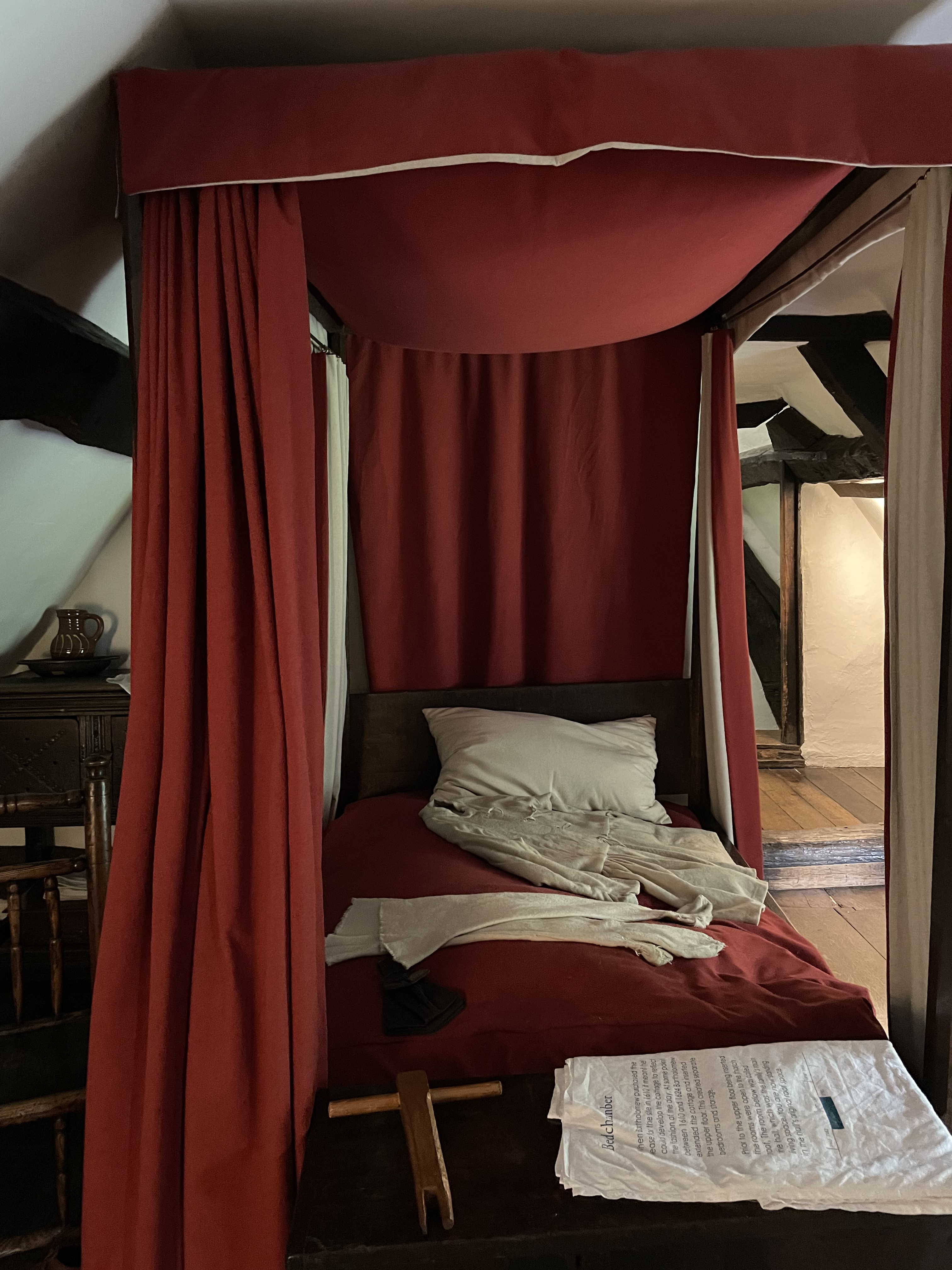
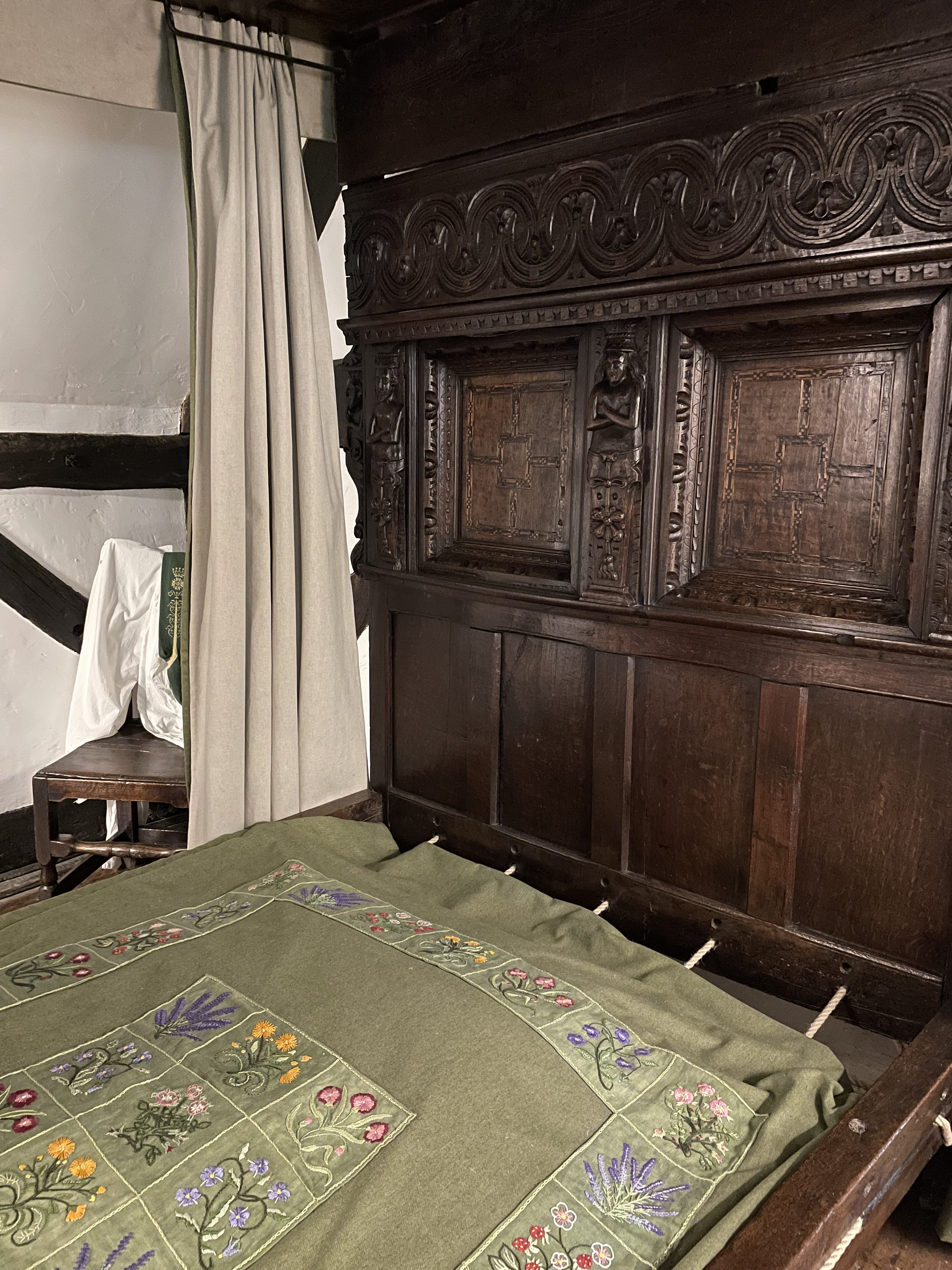
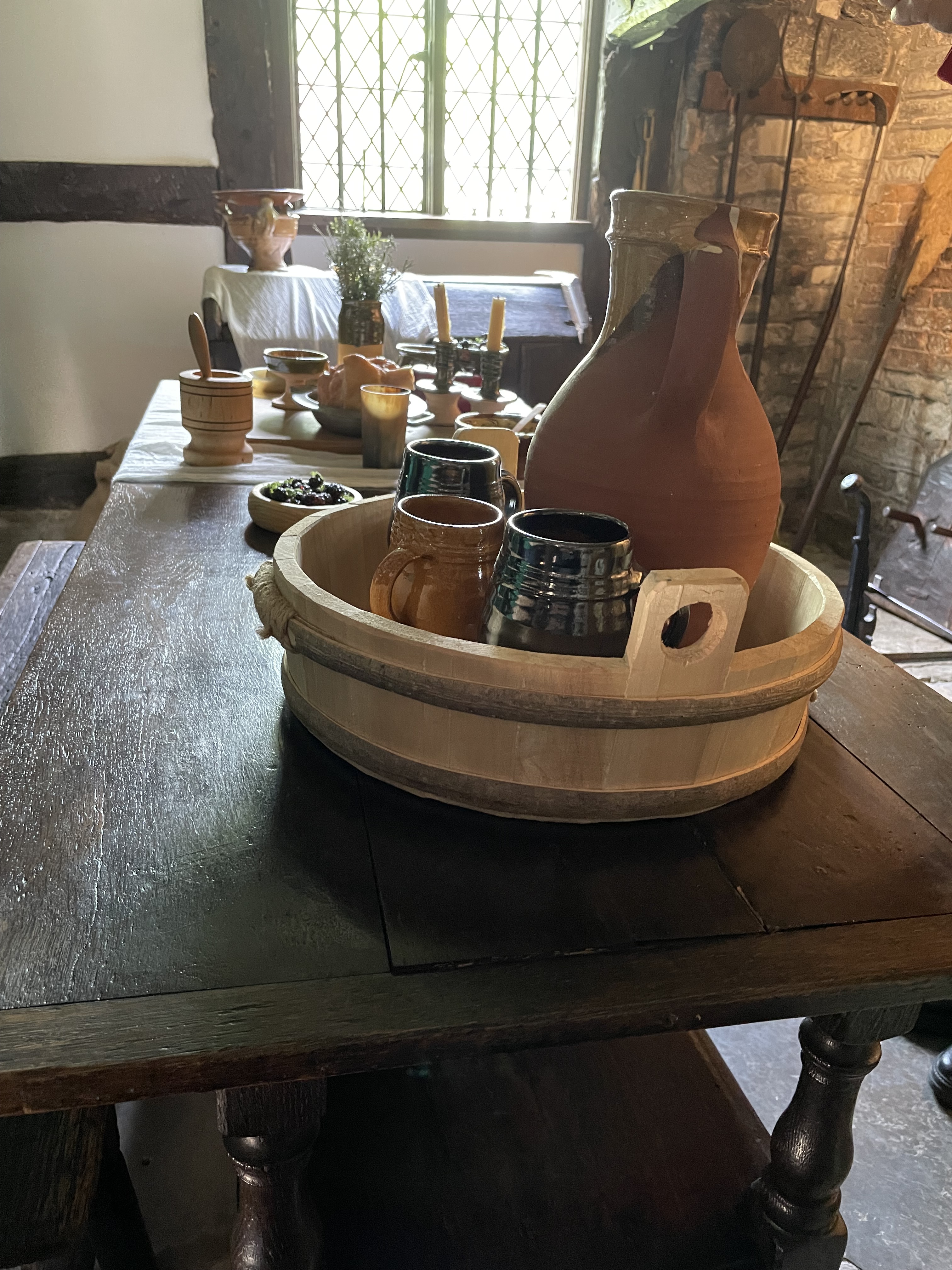
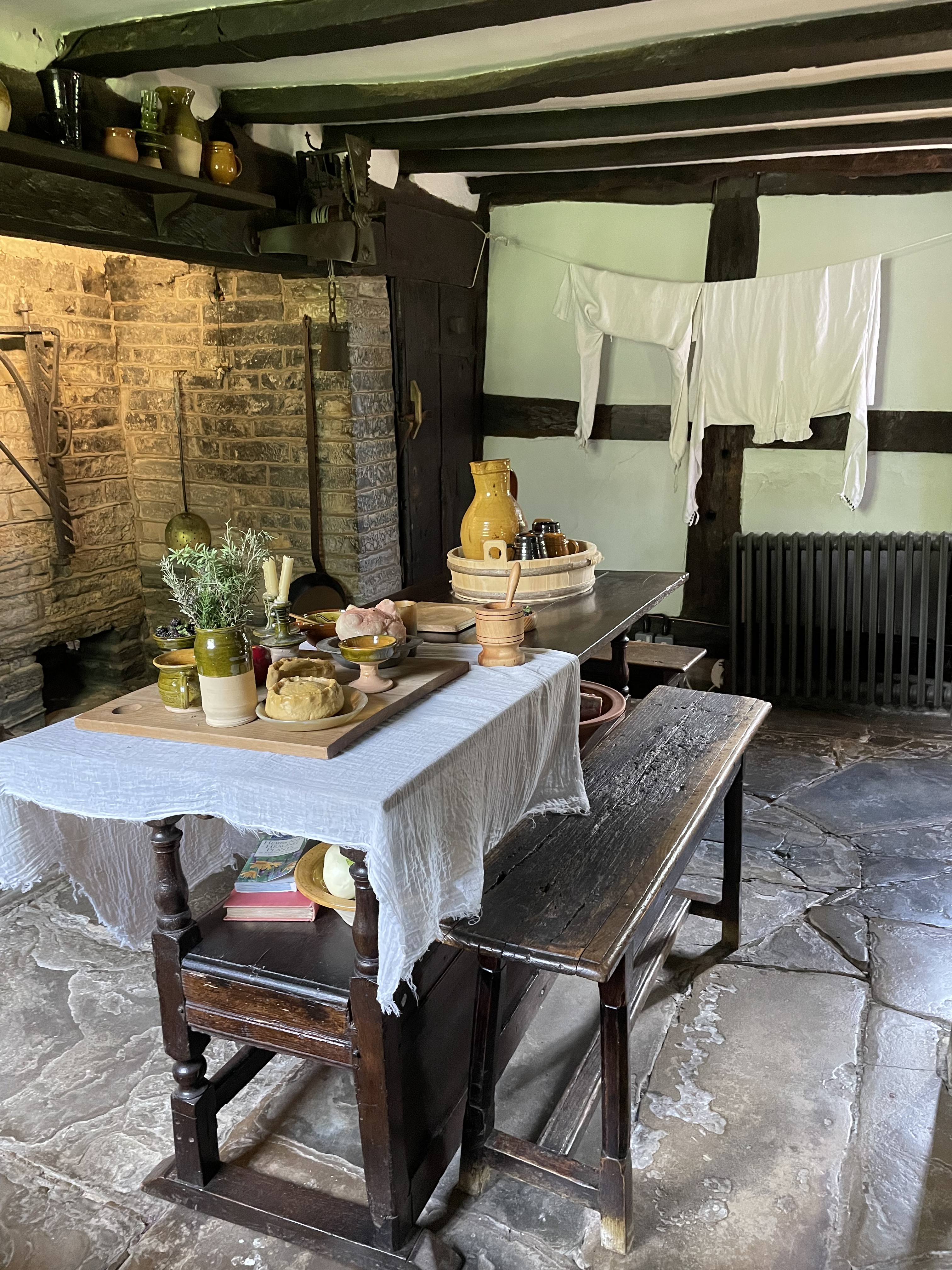
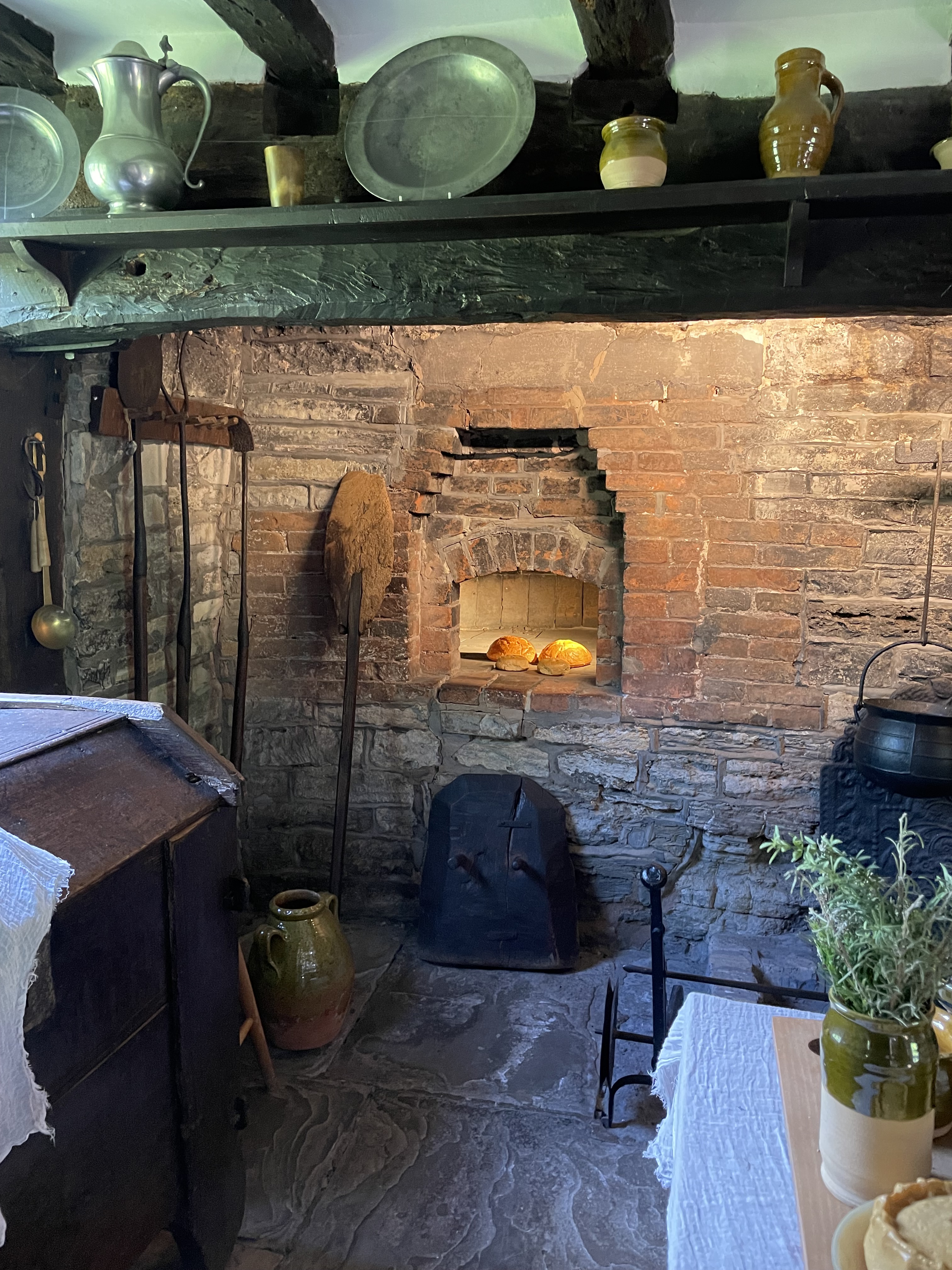
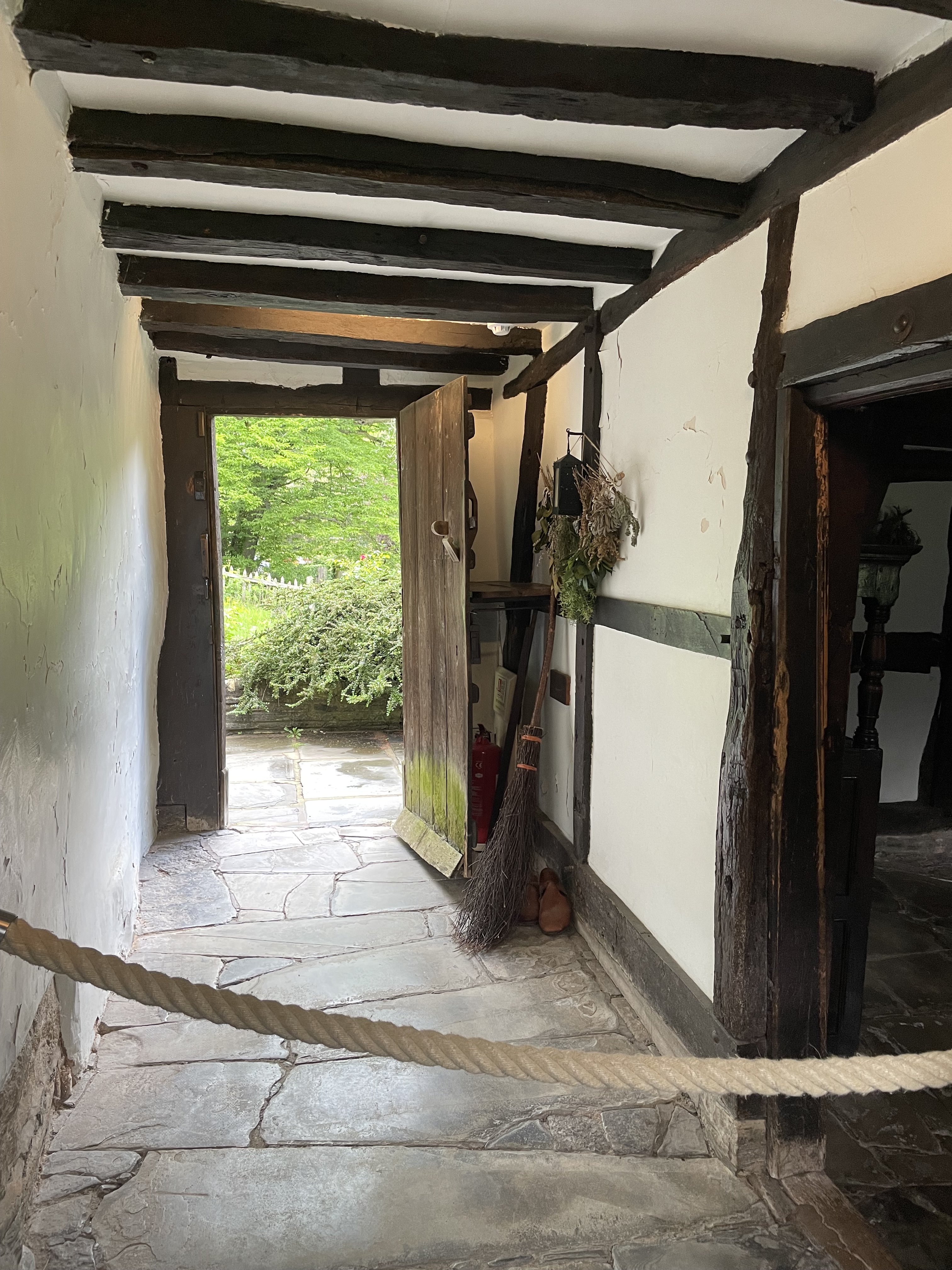
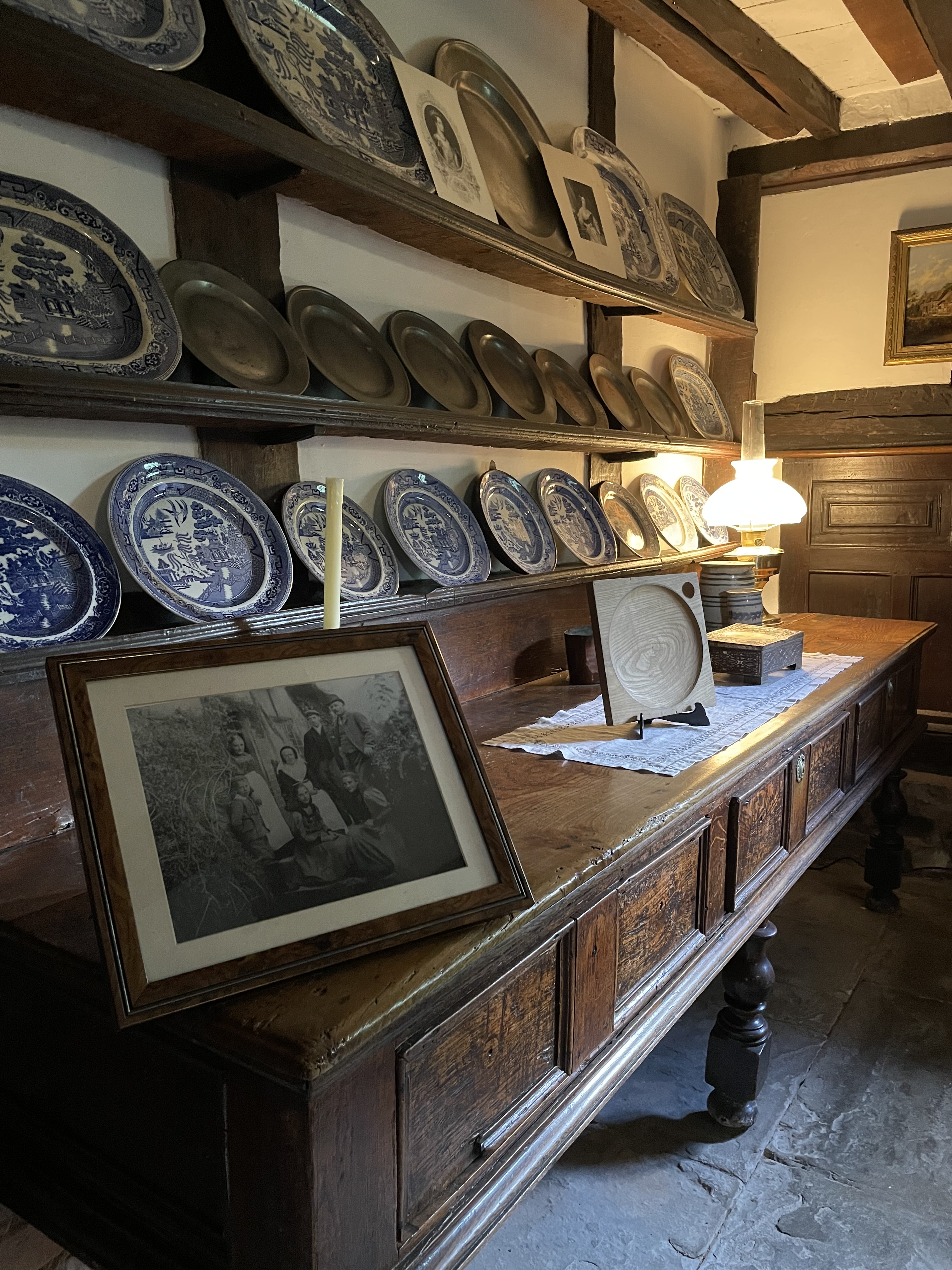
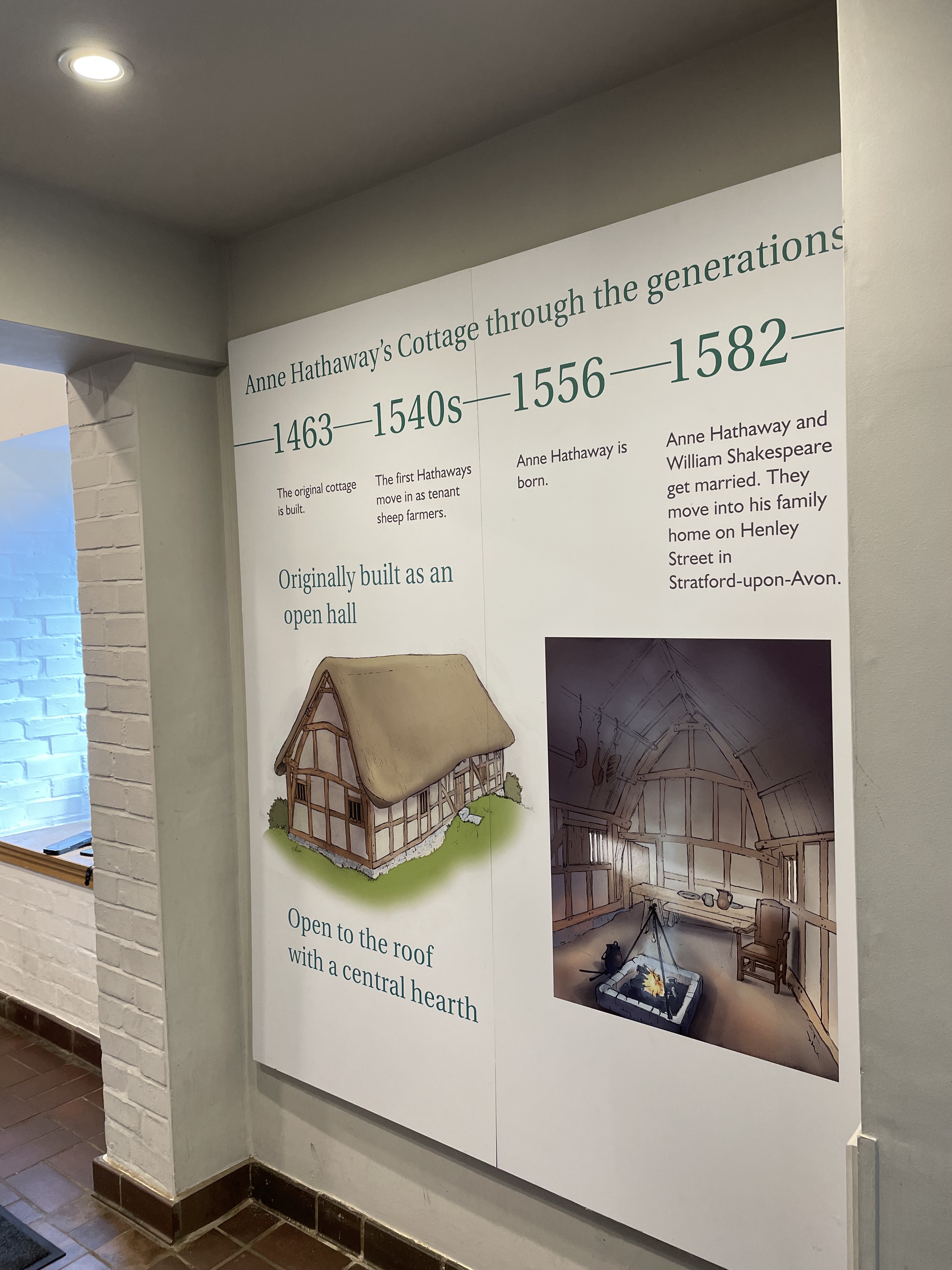
The cottage, Anne’s family home, where she was born and raised until she left when she married William, is preserved in the state it first became a tourist destination in the 18th Century. This home for sheep farmers was originally called Hewlands Farm. Its first phase was built in the 1400s, a simple long hall like dwelling that was leased to farmers by the land owner (very much like the house I live in). Unlike the guildhall in the town, this humble dwelling did not survive with many of its original features. As someone’s home it would have been updated with new fashions, and was extended as ways of living changed over the centuries. However in the 1700s they were far from modern ways of living, which means many very old structures and furniture has survived in situ.
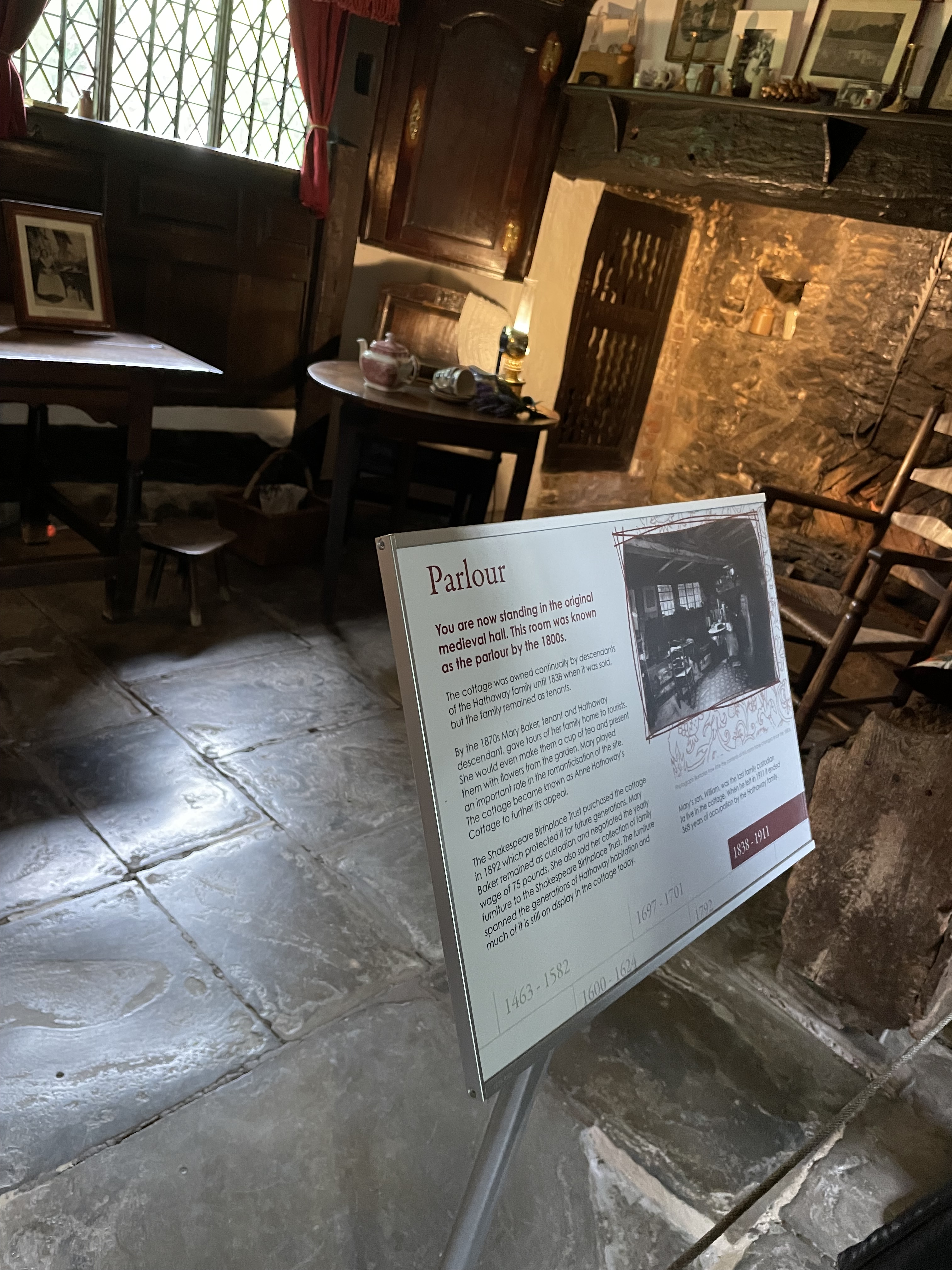
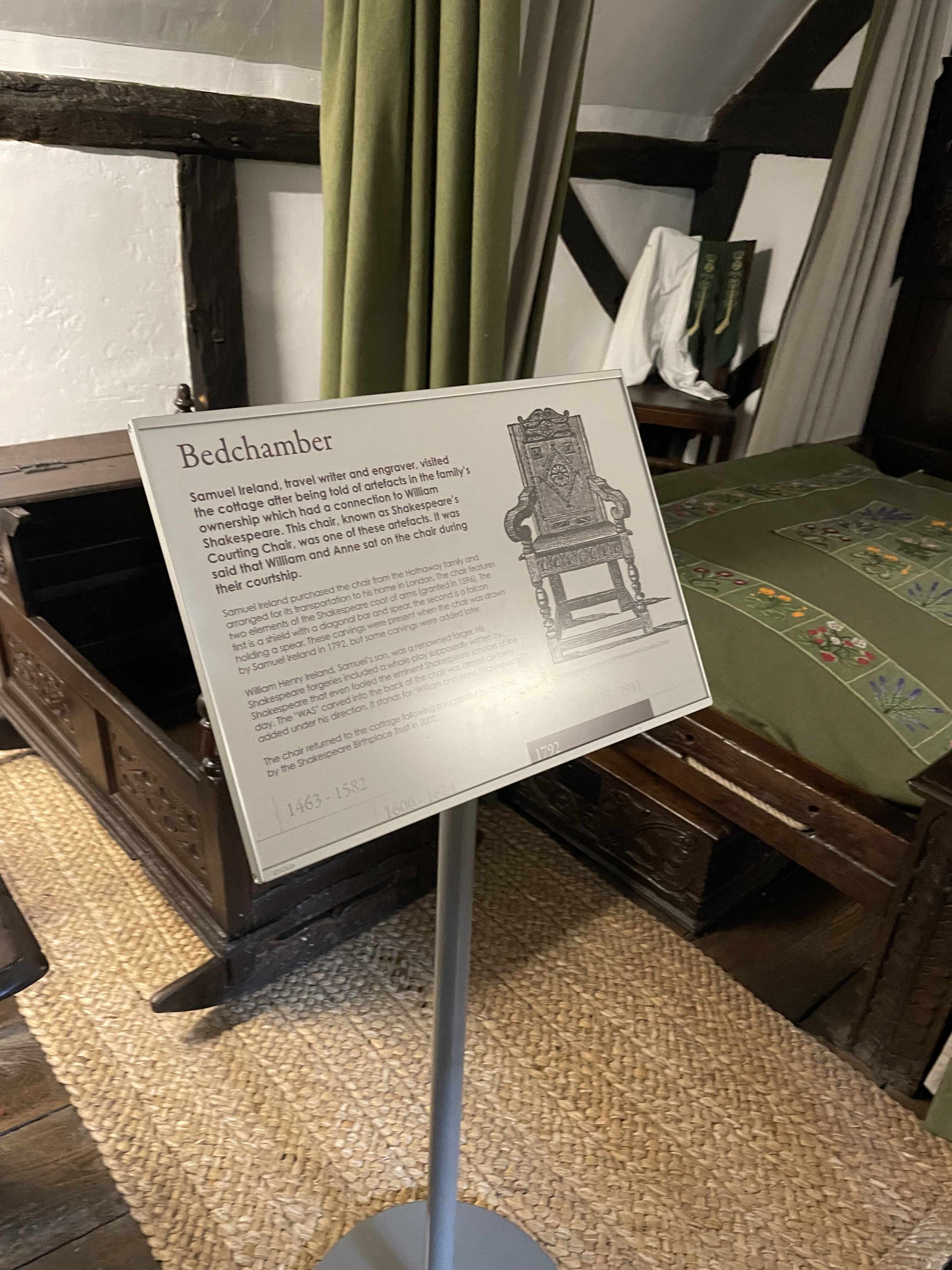
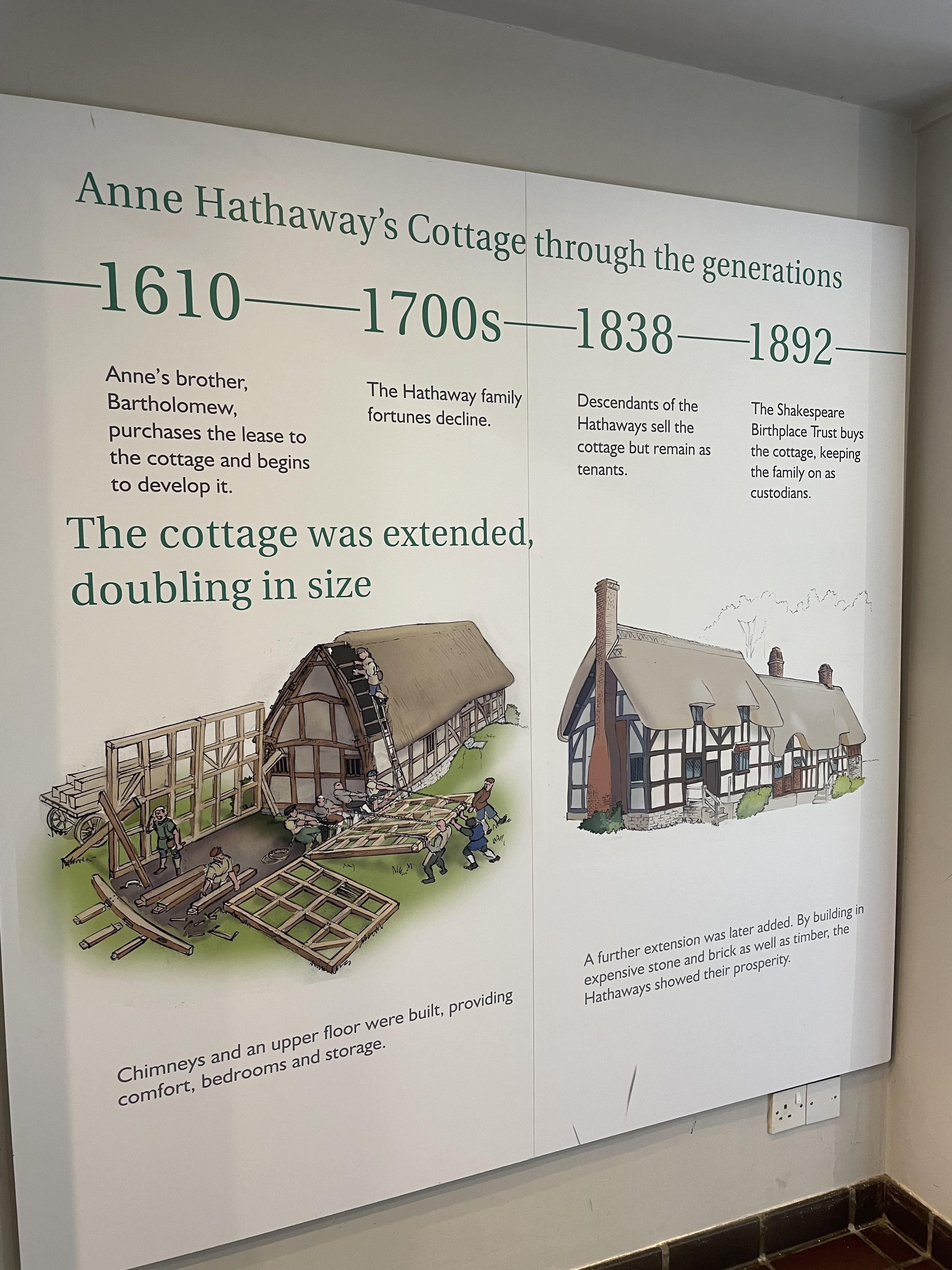
You’ll see on these boards how the cottage changed over time to look as it does now …
What I loved most about the cottage, though, was the stories the guides told, and the best story, was why this property is so well preserved.

When Stratford on Avon became a place of pilgrimage for the famous, wealthy and other literary tourists, as I explained in my blog about why we remember and celebrate William Shakespeare’s birthplace, Anne Hathaway’s descendants had fallen on hard times financially. With these travellers coming to see and touch anything that had anything to do with Shakespeare, they saw on opportunity to earn money from their deceased relative’s good fortune and opened the door of the cottage to tourists. Visitors were told tales about the love affair between Shakespeare and his then future wife Anne.
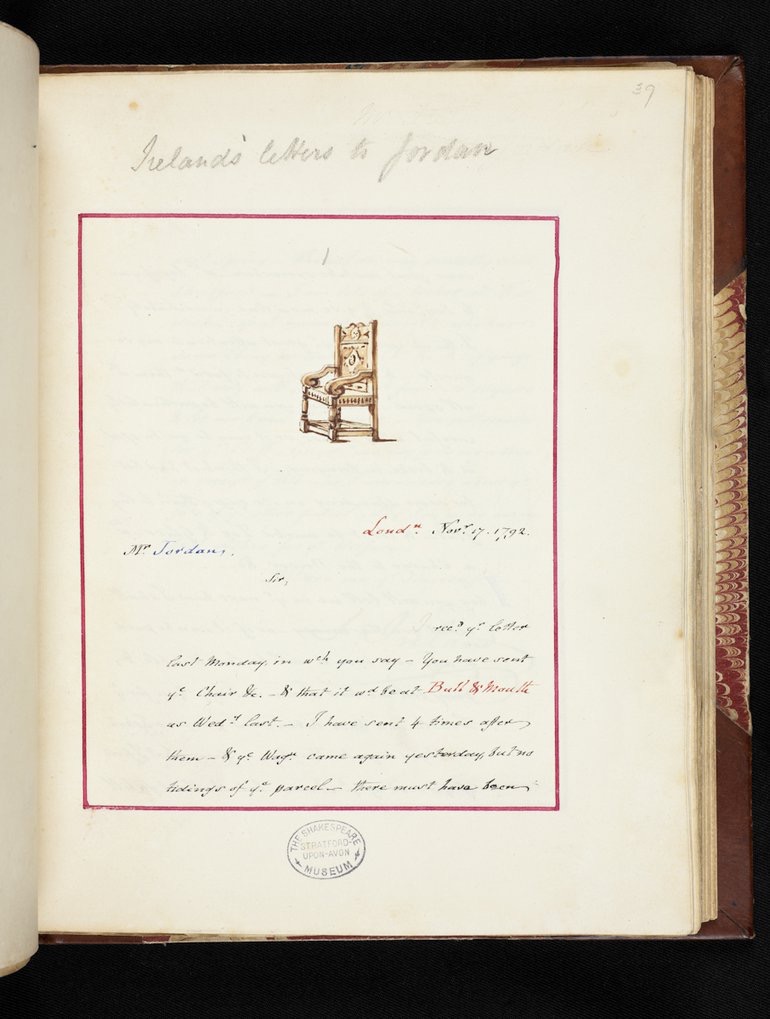
A letter from Samuel Ireland, the 18th Century author, to his friend John Jordan, explains how Susanna Taylor, nee Hathaway, had sold him the exact chair that Shakespeare had sat in to court Anne. Who knows if that ‘courting chair’ was really in the house at the time of Shakespeare. Perhaps even Susanna didn’t know if that was true or not… There were records in the house that recorded visits from many of the renowned Regency poets too. Lord Byron, Shelley, and great actors like George and David Garrick, spent hours at the cottage, visiting regularly because the setting gave them inspiration. Even though at the time it was still a simple small farm. The family were making so little the house was split into three properties so they could rent the two ends of it to others.

Then came a more wily woman. Mary Baker, Susanna’s great grand-daughter, was definitely what we would call an entrepreneur today.
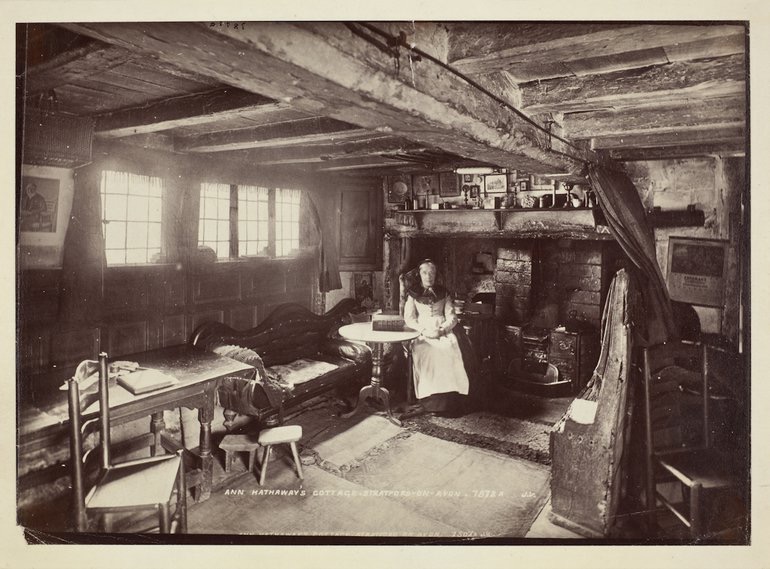
Mary saw the numbers of people visiting the buildings connected to Shakespeare’s life in the town grow, and in comparison hardly anyone would walk out to Hewlands Farm in Shottery. So she had a genius money spinner of an idea, she renamed the farm Ann Hathaway’s Cottage to make sure people would know the connection. It worked, it brought an increase in visitors. She gave them tours of her home, and told tales of William’s and Anne’s love affair, even talking through where they would have made love before their wedding.

She charged for everything – for her time, to serve tea and a ‘Shakespearean pork-pie’ in the very sport where William would have made love to his Anne, and for people to drink from the well that he would have drunk from. She gave people a gift from the garden too, picking single flowers to give to visitors to keep as a memory or send to others, again supporting the sense of romantic living.

She kept a visitors book, and even Charles Dickens and Mark Twain are recorded as visiting.

Her best story/hustle that I discovered, though, were the pieces of wood she allowed her visitors to chisel off an old oak two seater settle where she claimed William Shakespeare sat beside Anne during they’re courtship. The current managers of the property, The Shakespeare Trust, know that the settle is no where near that old. It was complete nonsense and Mary Baker knew it.

It makes me wonder what other tales she made up to con these gullible visitors. Ha! Ha!
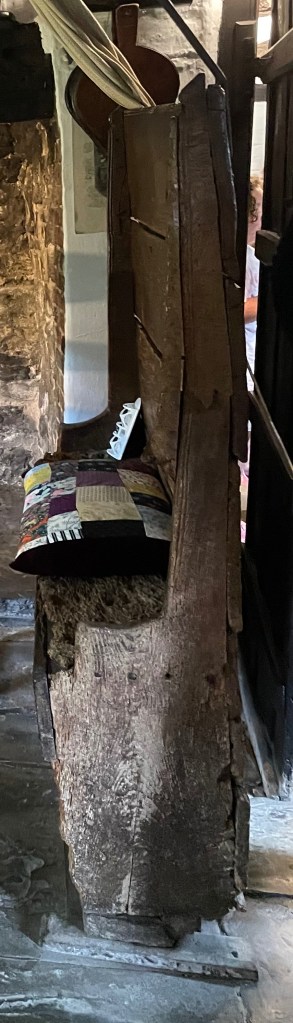
So, what is original to William Shakespeare’s days in the cottage? …

The floor! the flagstones on some of the floors, polished by so many feet, and the door frames Anne and he would have walked through.
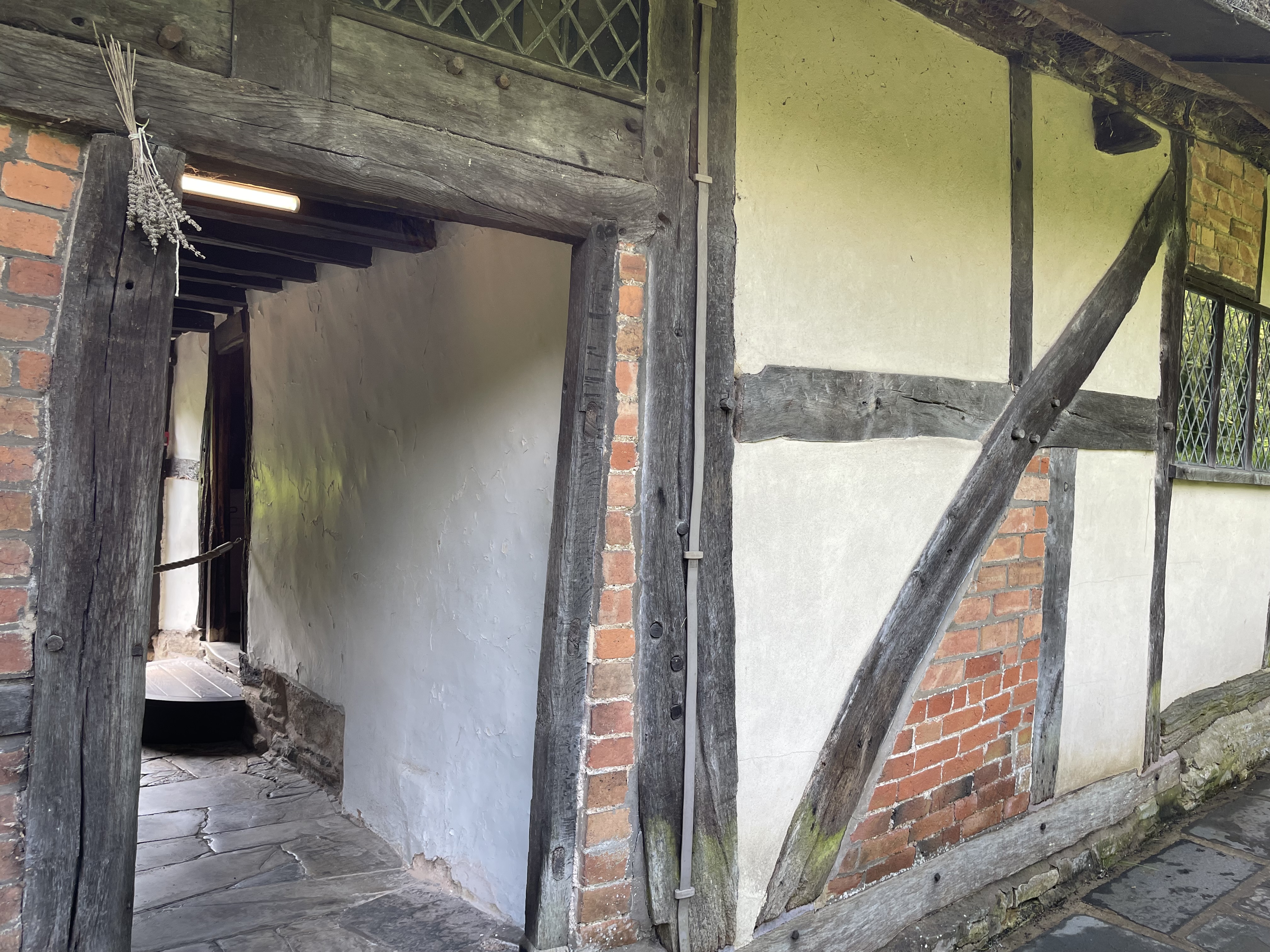
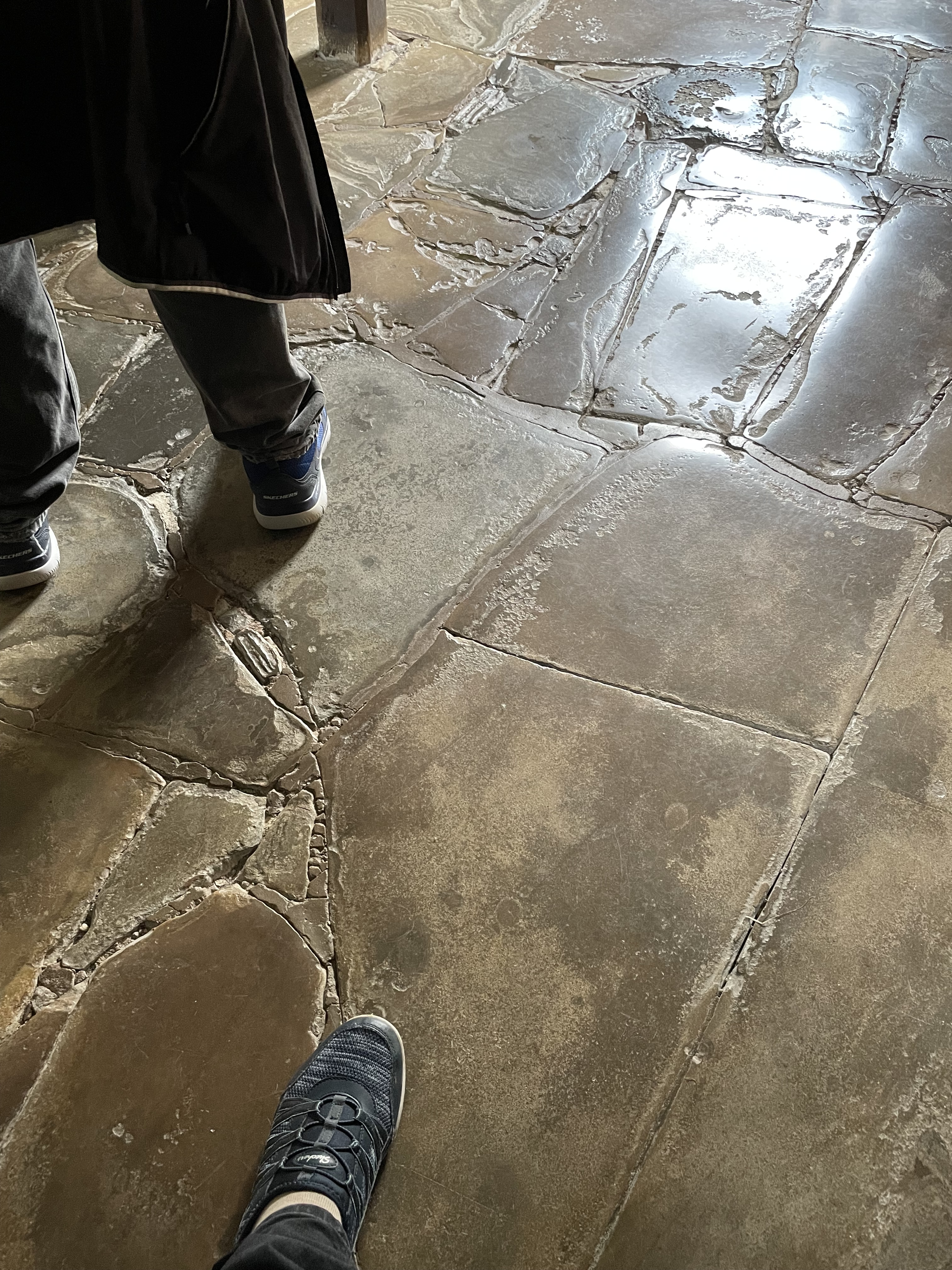
As you can tell, this is another place I would definitely recommend you visit if you go to Stratford on Avon.

One of my favourite places to visit in Stratford upon Avon isn’t managed by the Shakespeare Trust…

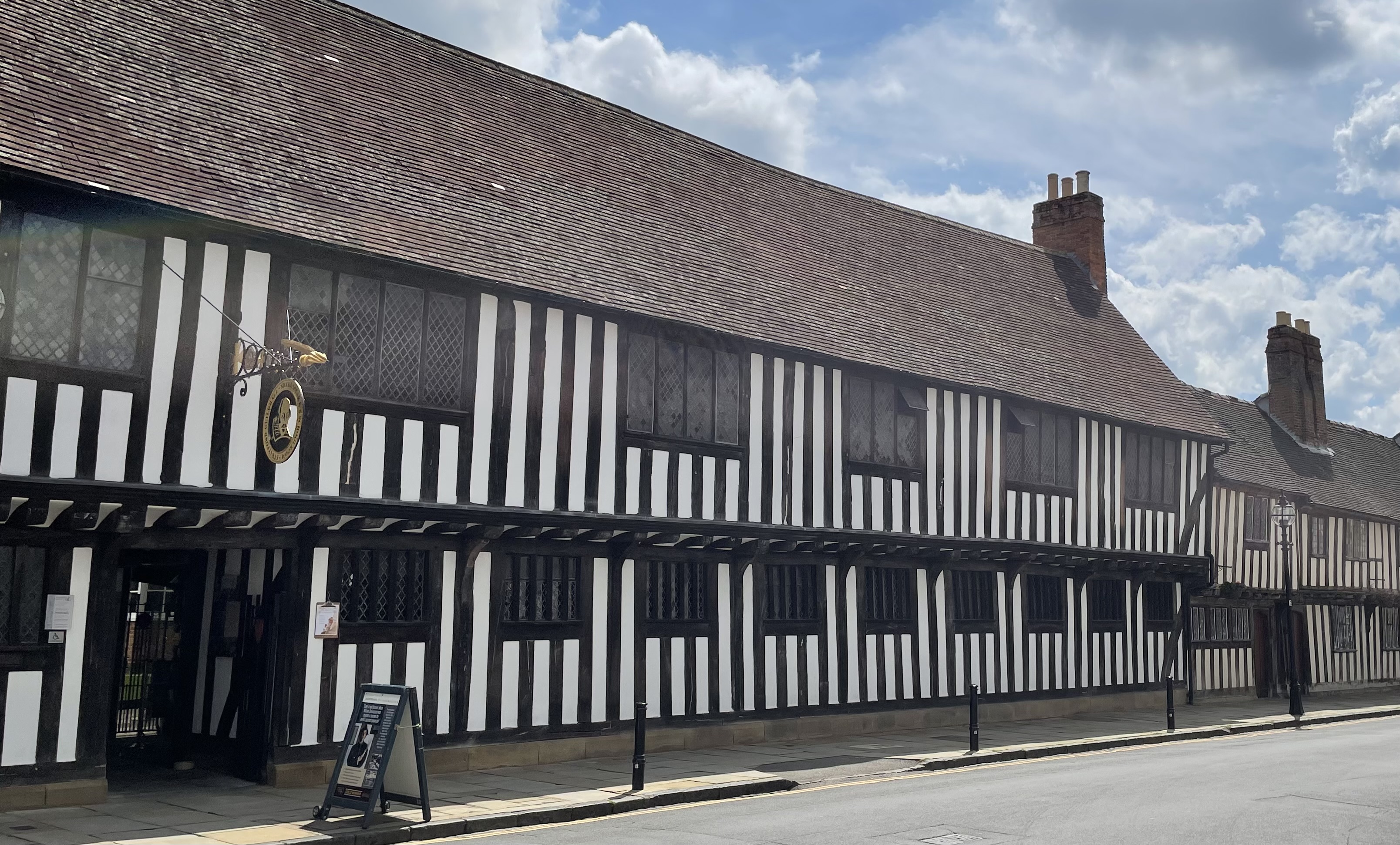
If you visit the town, I strongly recommend you look around the Guildhall where Shakespeare was schooled.

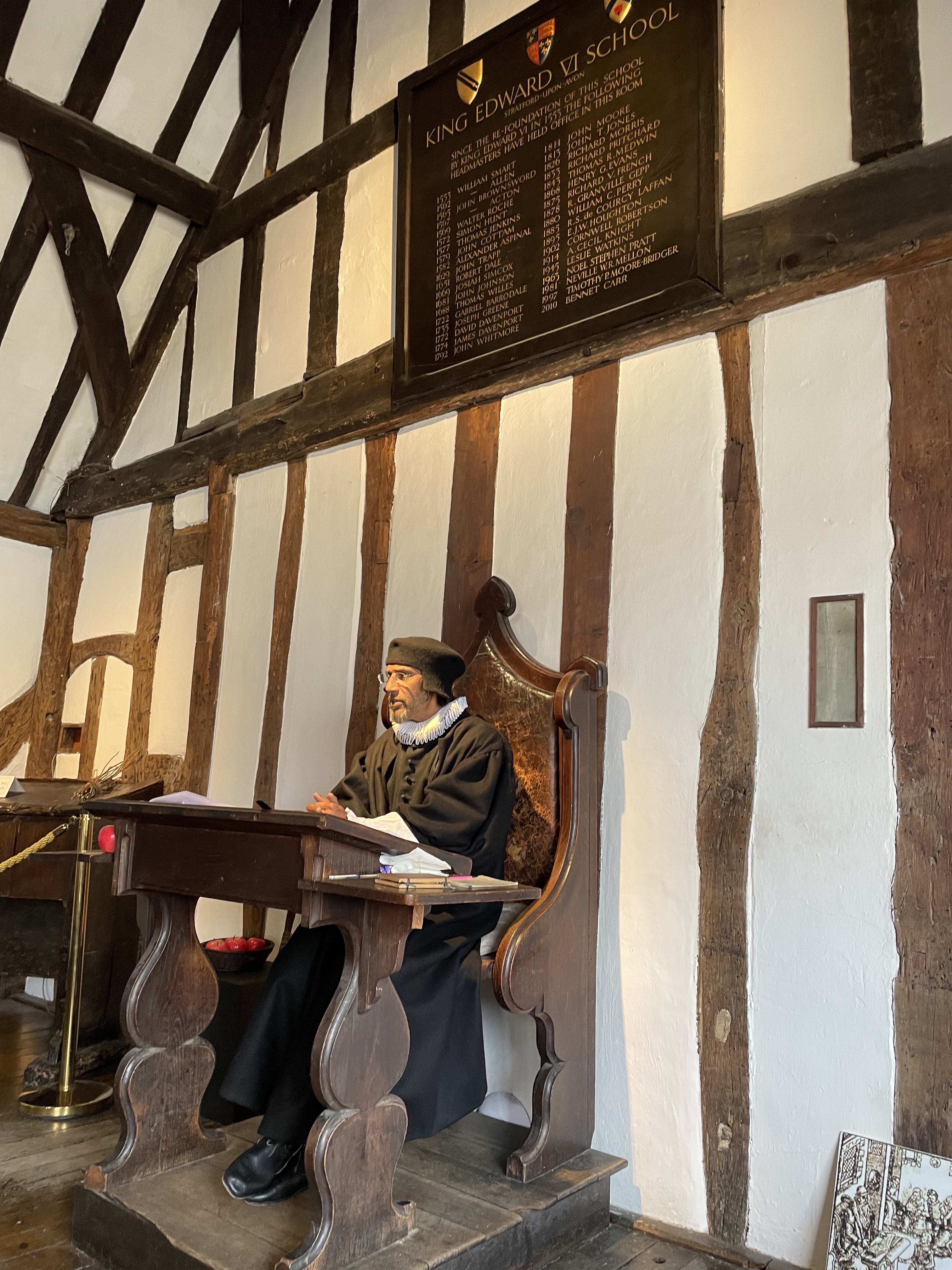
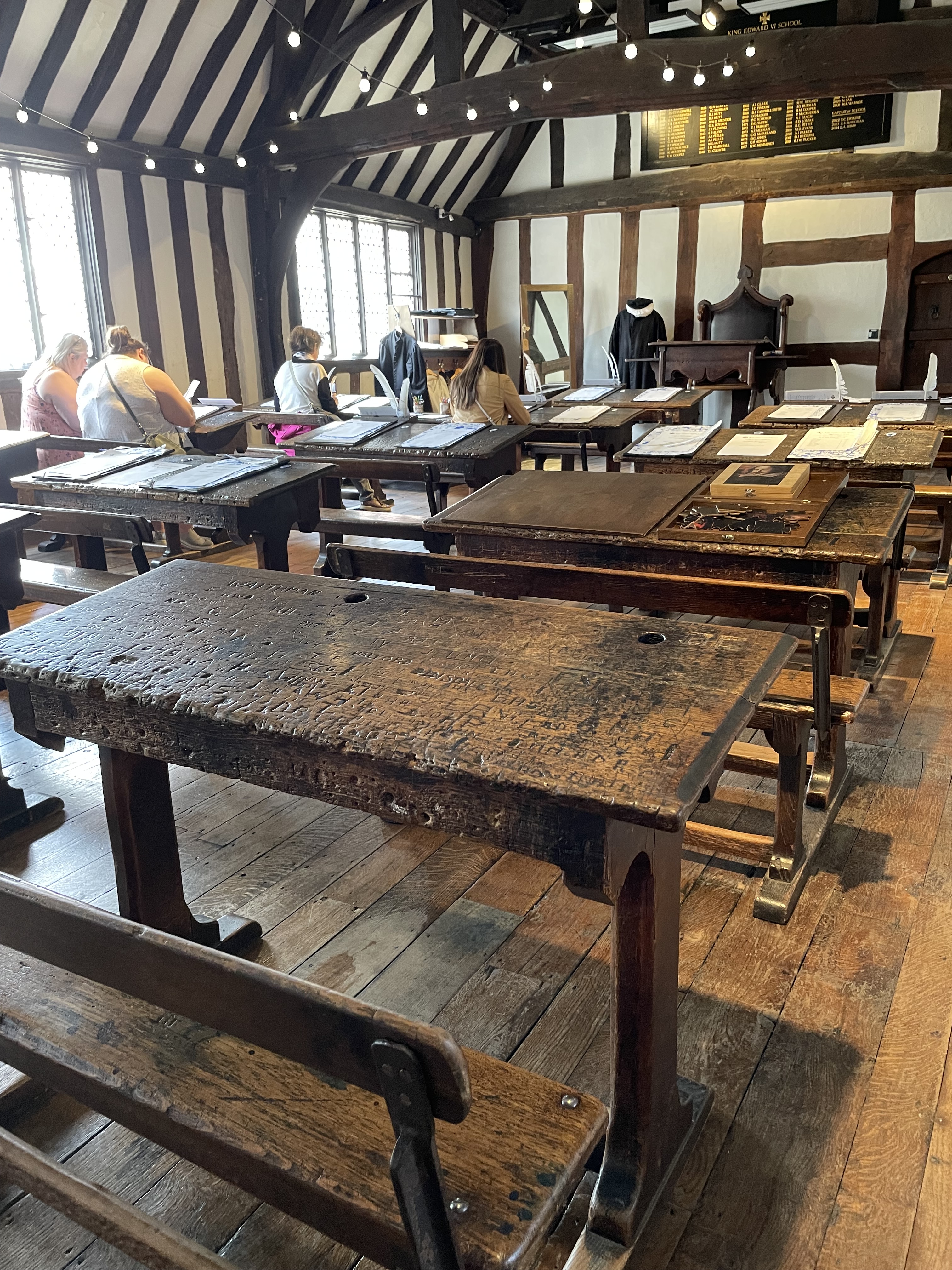
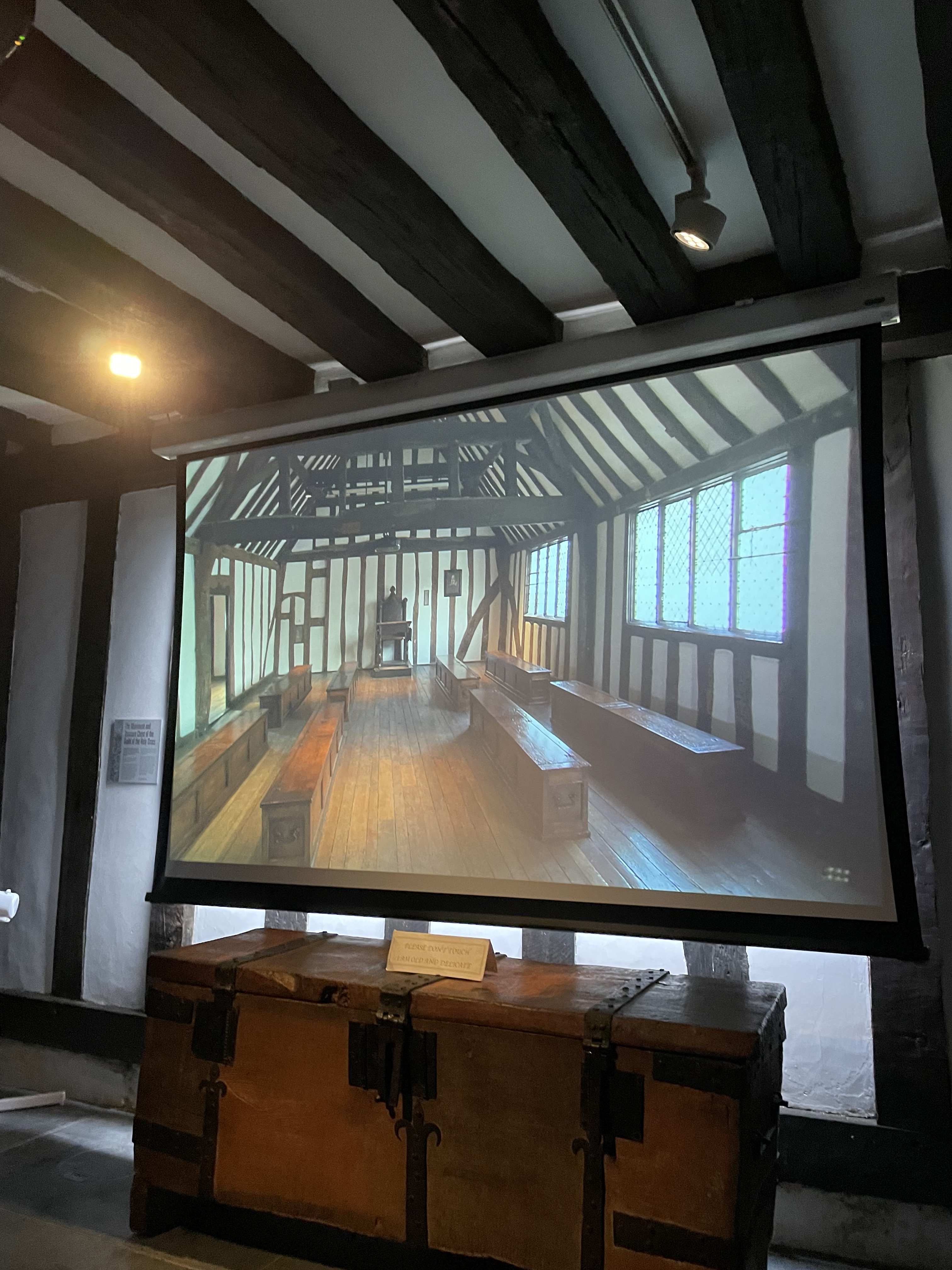
In my last post I told you that New Place, Shakespeare’s family home, is actually a relatively modern building built on the site of his house. In comparison, this building, the Guildhall, is older than Shakespeare. This building is not just maintained as a place once connected to Shakespeare but with many later alterations, its history is well preserved and holds the atmosphere of the earliest part of Shakespeare’s life. It is here that he developed his desire to write and the schoolroom and furniture and decoration in it are preserved to show how it would have been in Shakespeare’s life. You will step through the door and immediately step back in time, into a room where the young William Shakespeare would have watched actors perform plays. Then walk upstairs to the school room where he learned to write, and taught younger boys to write too.

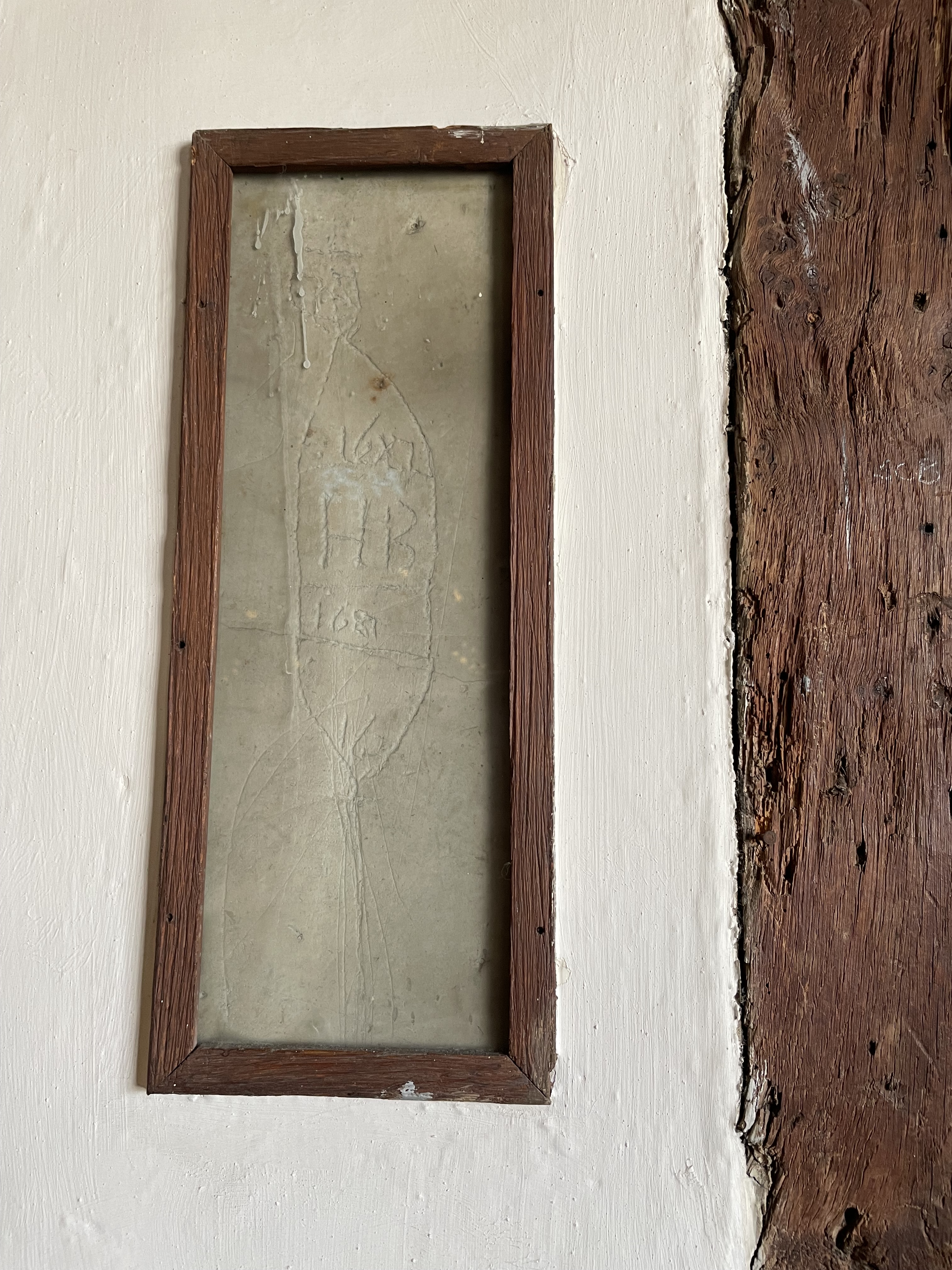
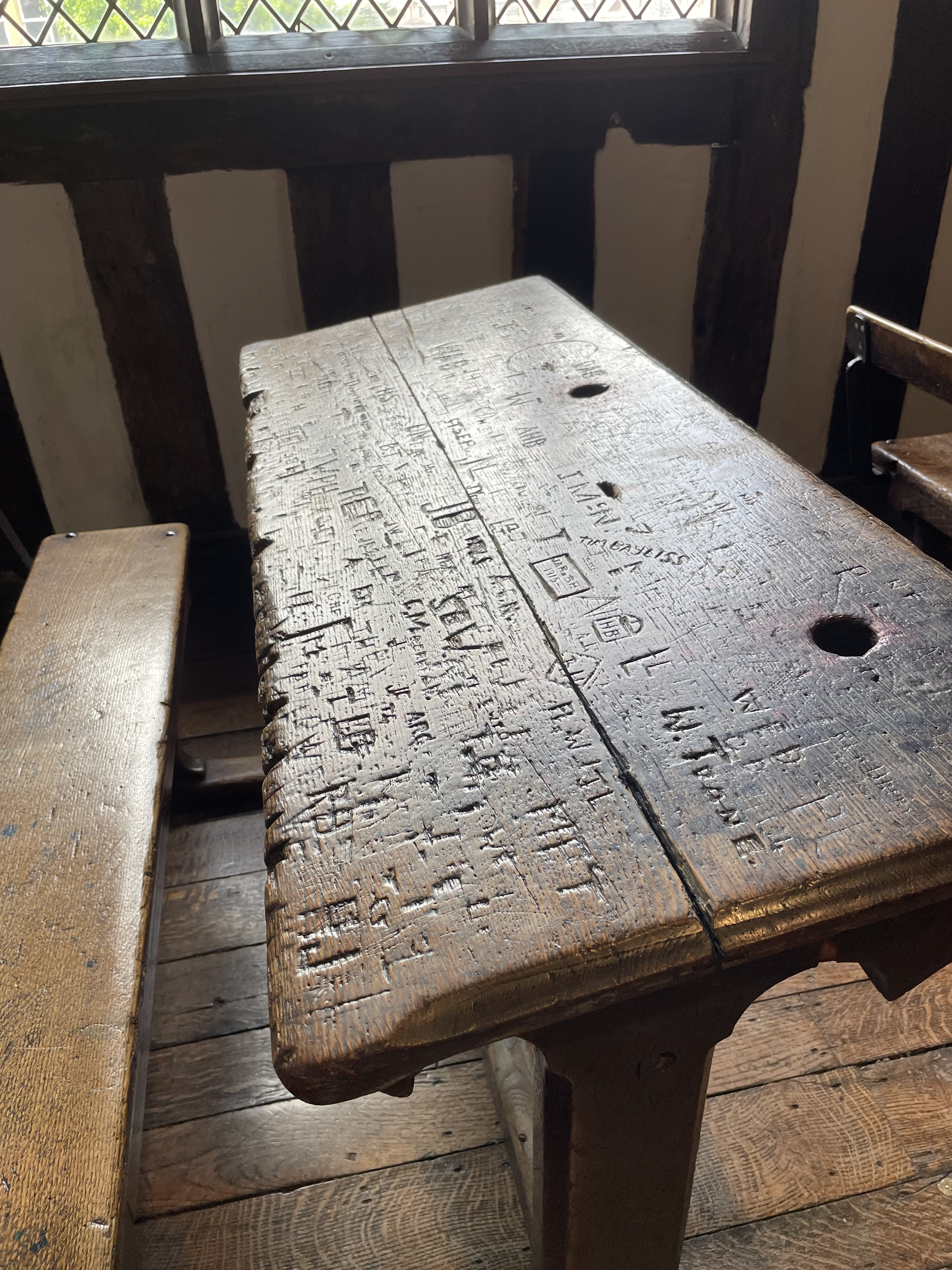
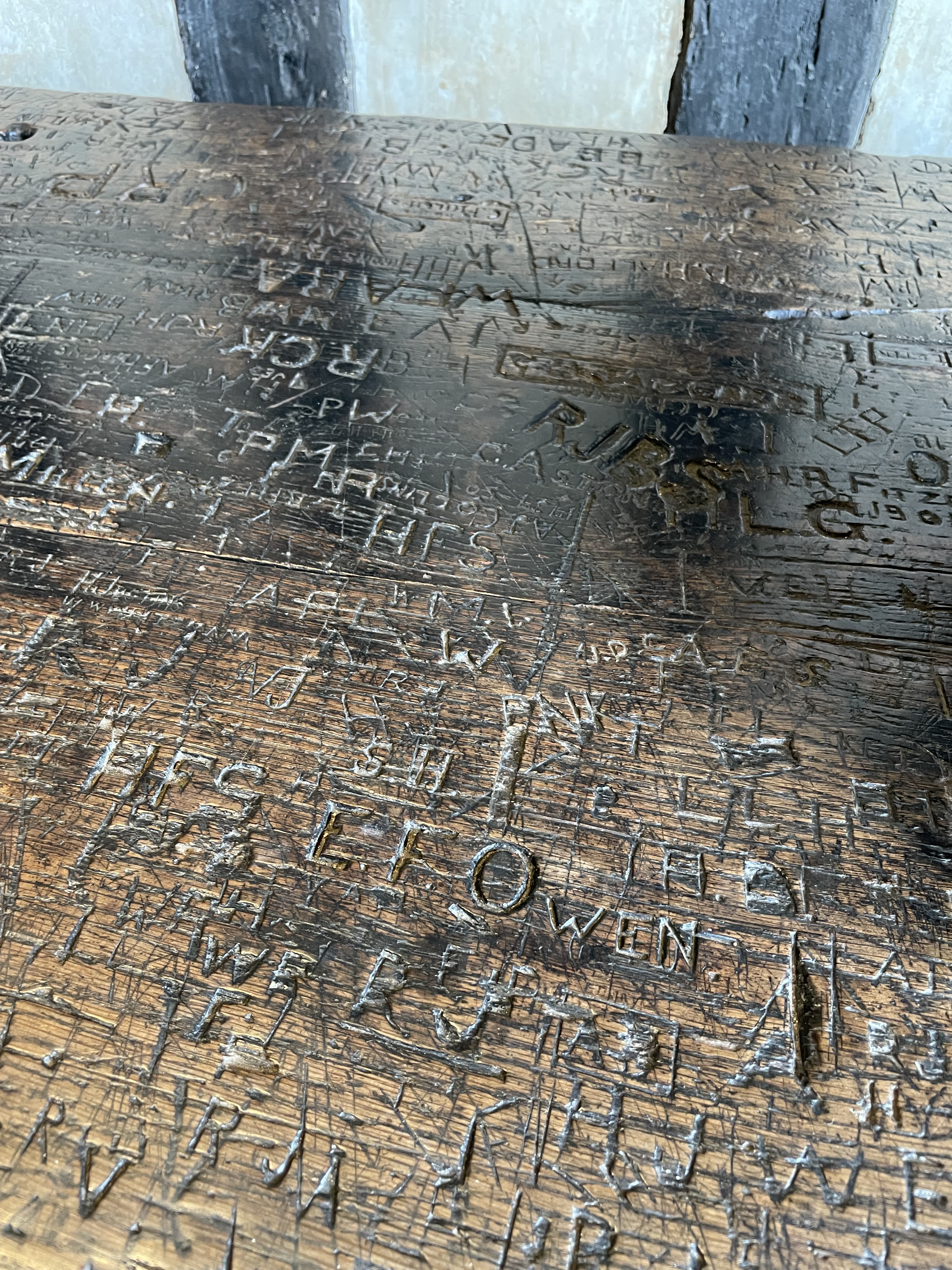
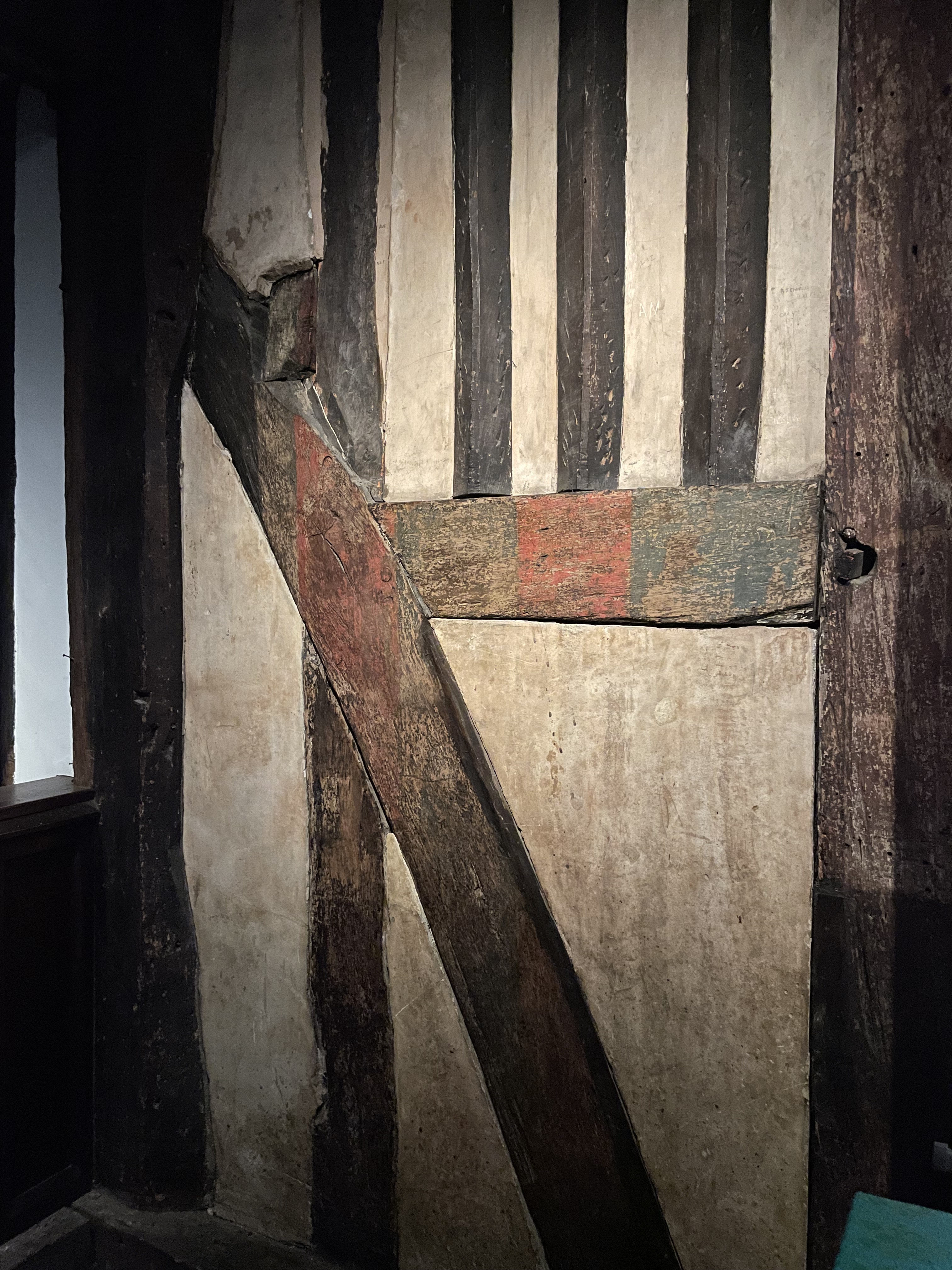
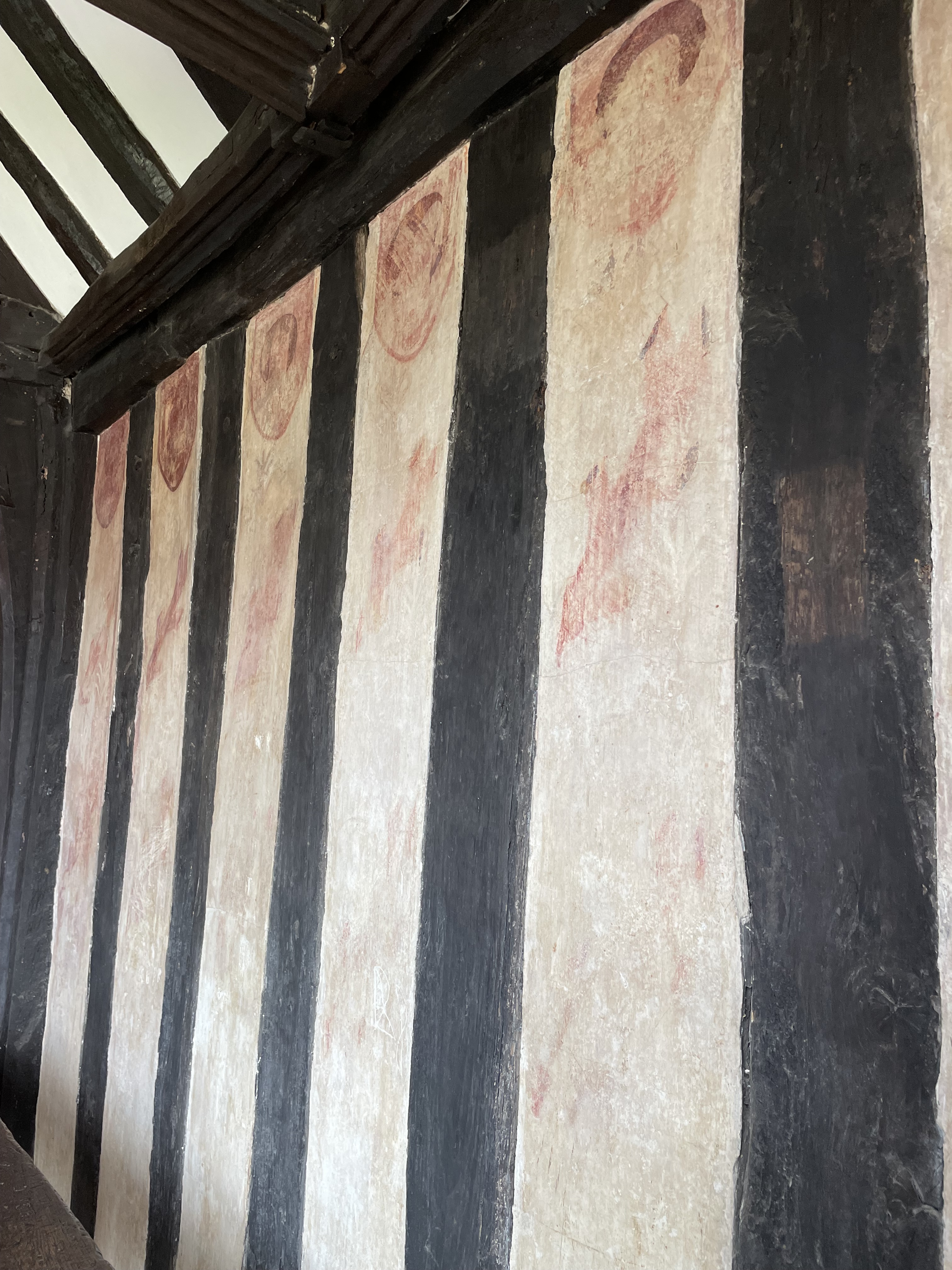
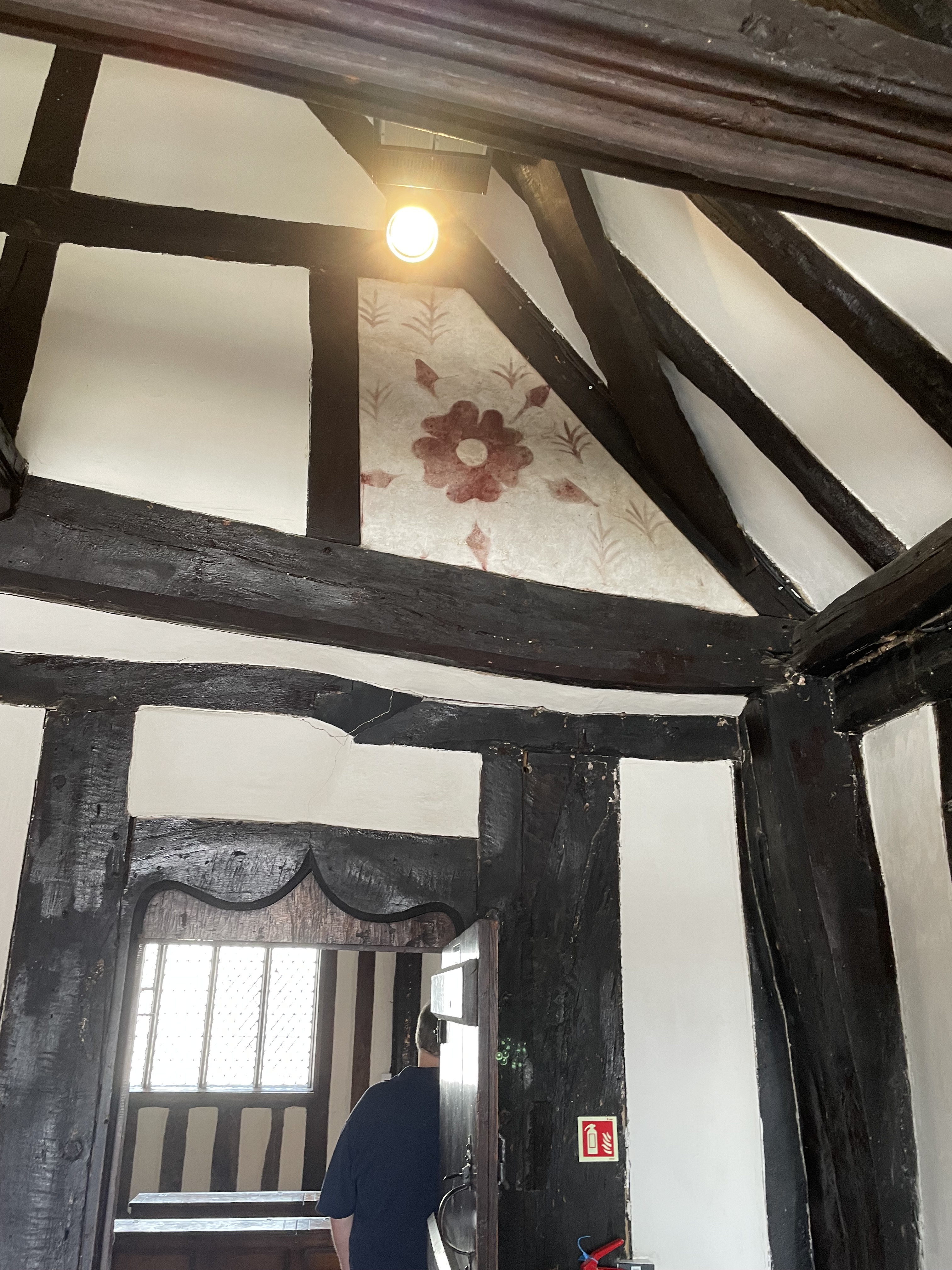
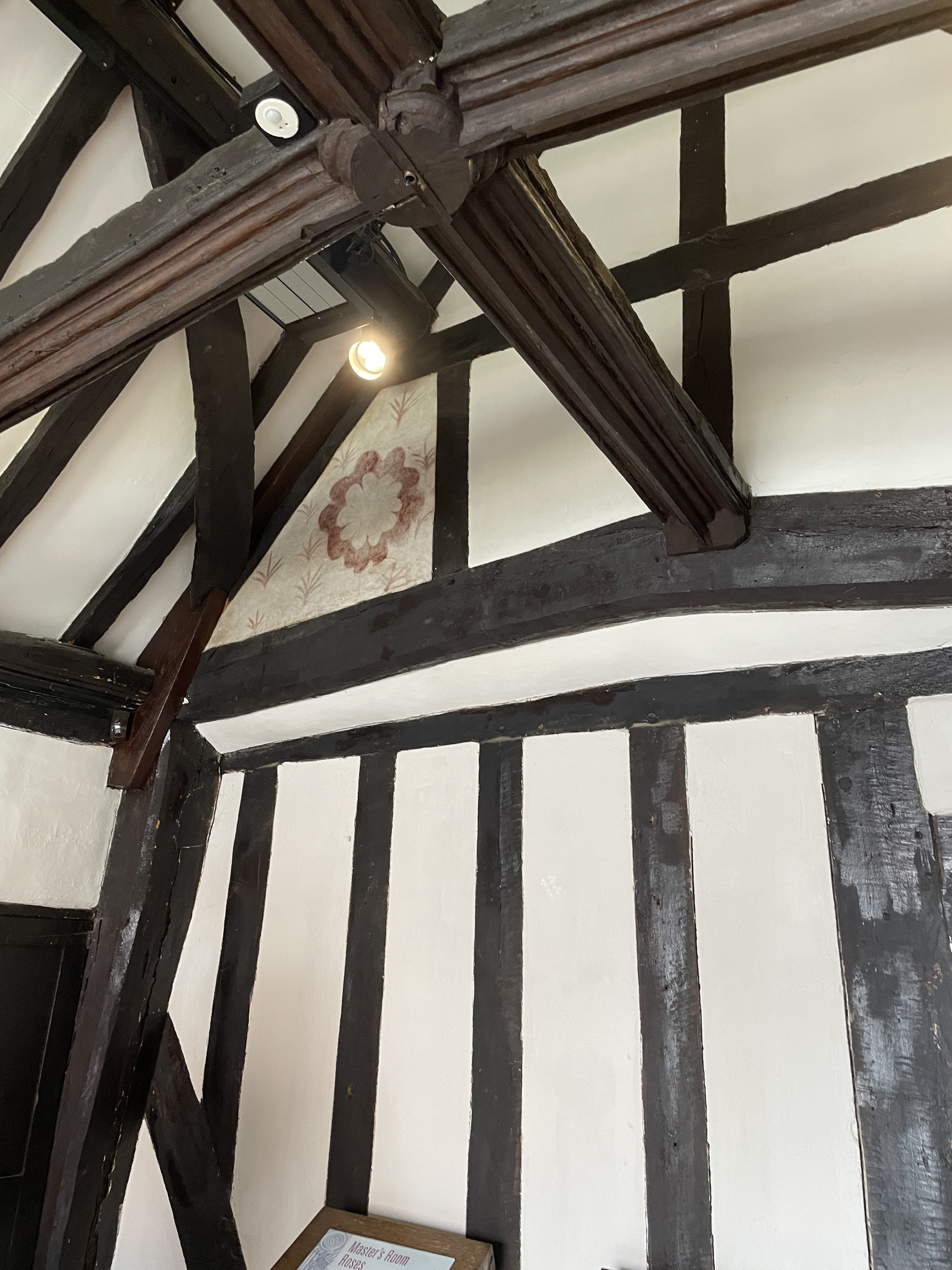
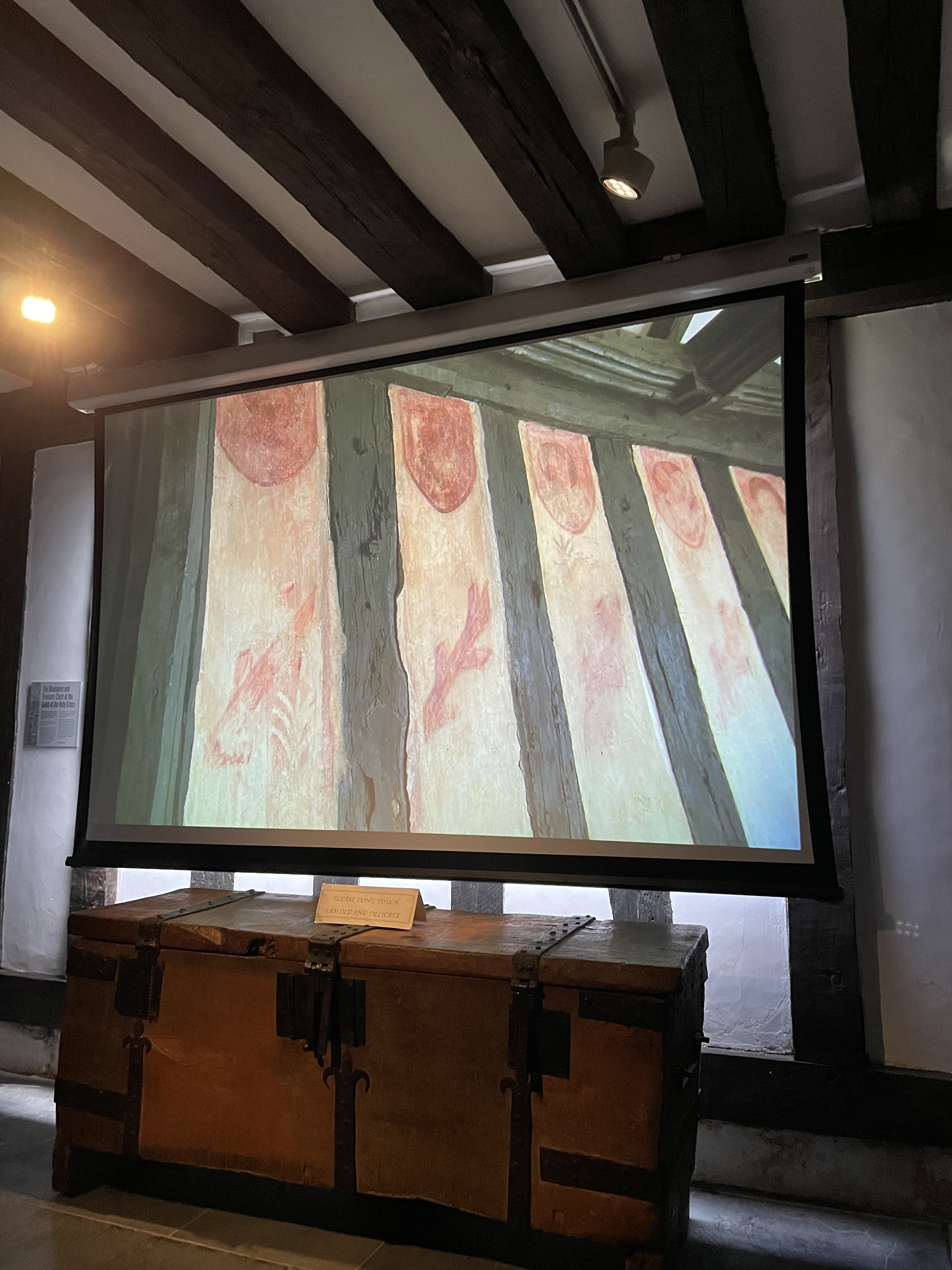
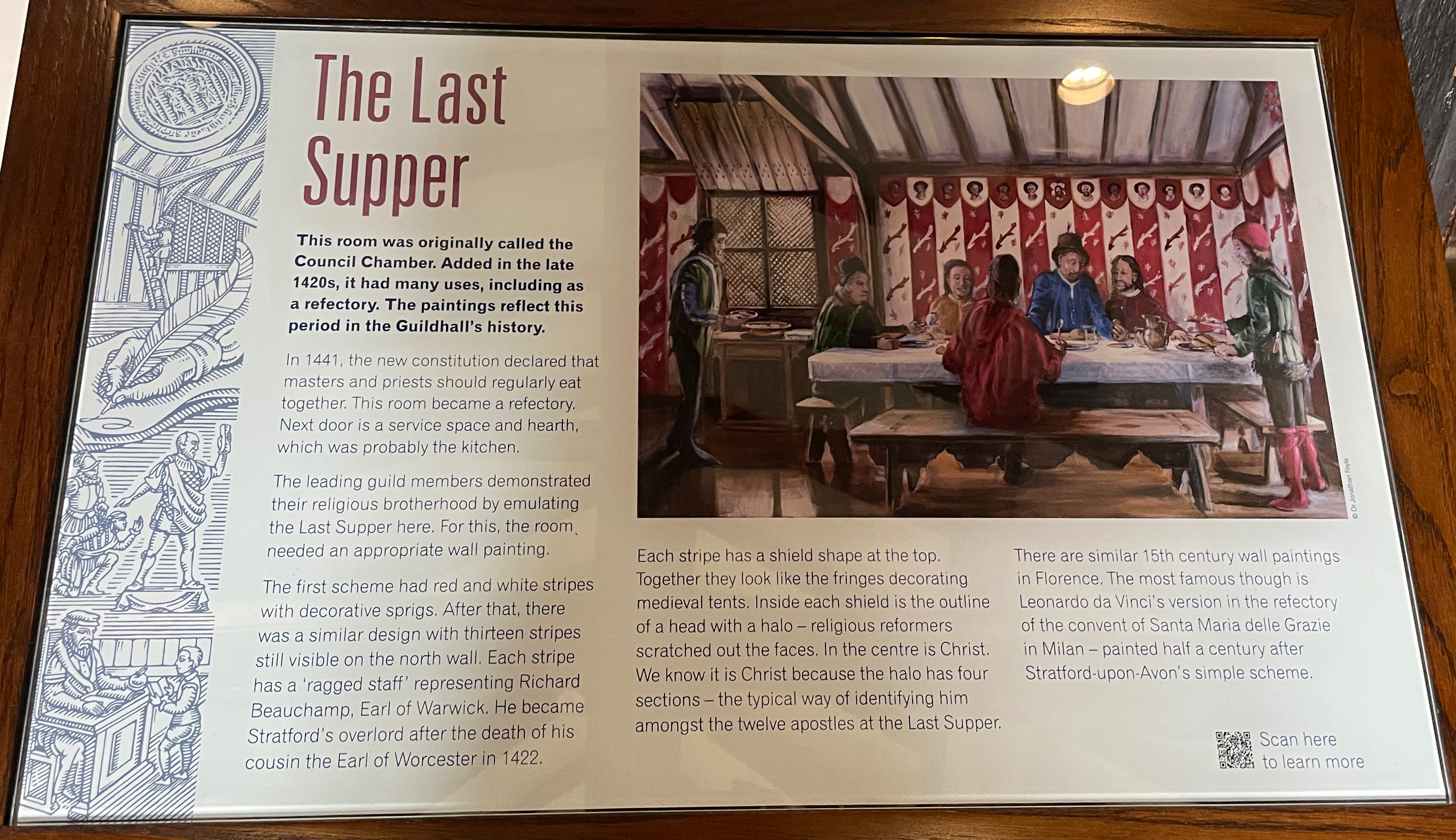
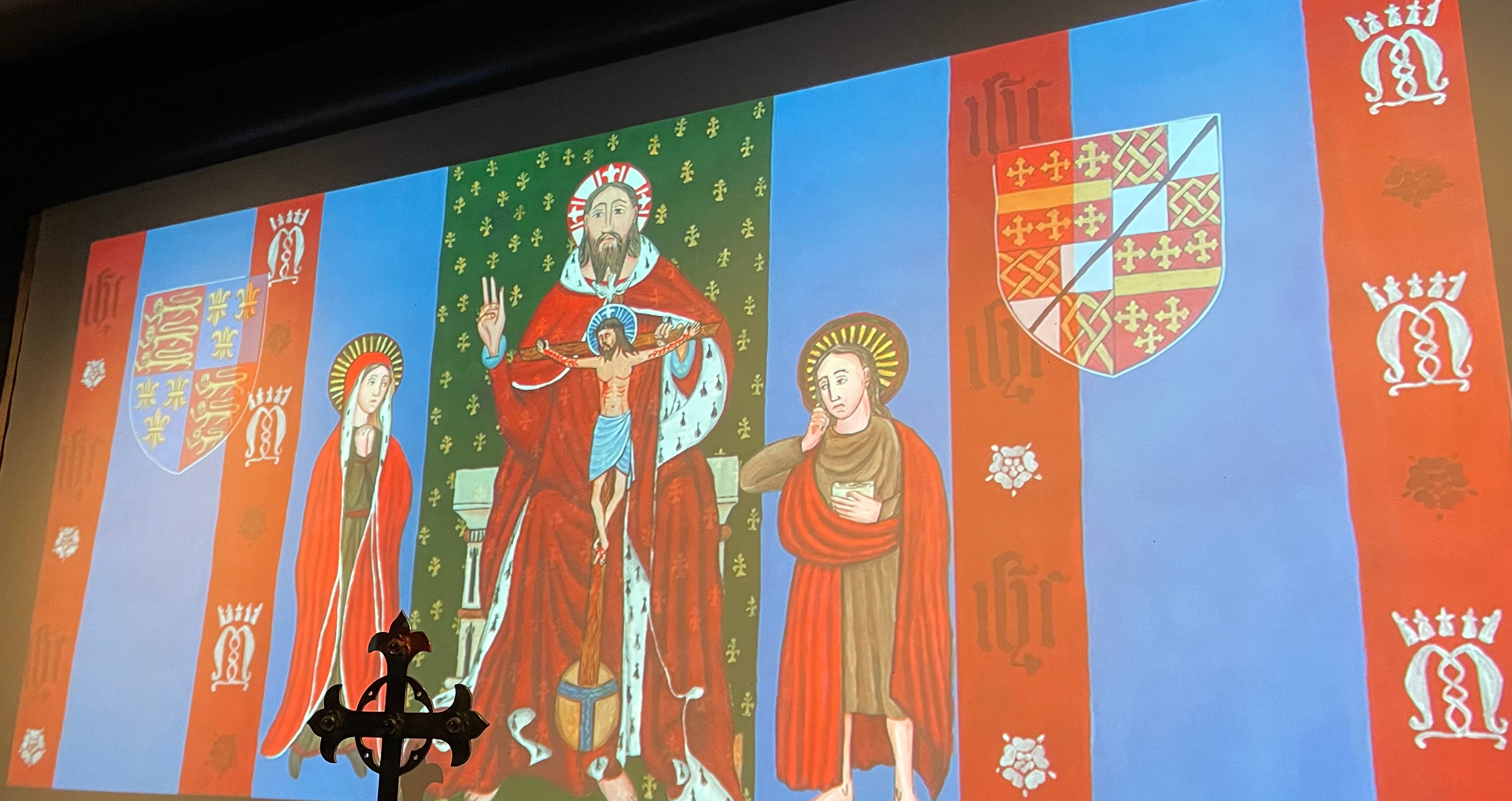
It was particularly fascinating for me, because the schoolroom in a village in Cumbria, where the poet Wordsworth studied, is the same. And, as there was in the school in the village of Hawkshead, there was graffiti everywhere. And, as you can see in the pictures below, because the guildhall and schoolroom date back to the 14th Century, at least, it was colourfully decorated. Originally every wall and wooden inset would have been brightly and beautifully painted. Now, there are some very special paintings that have survived.

So if you go to Stratford upon Avon, a visit to the Guildhall and Schoolroom is a must in my opinion!

In one of the upstairs rooms that was added onto the hall in the early 1400s, the wall paintings have survived the passing of time uncovered.

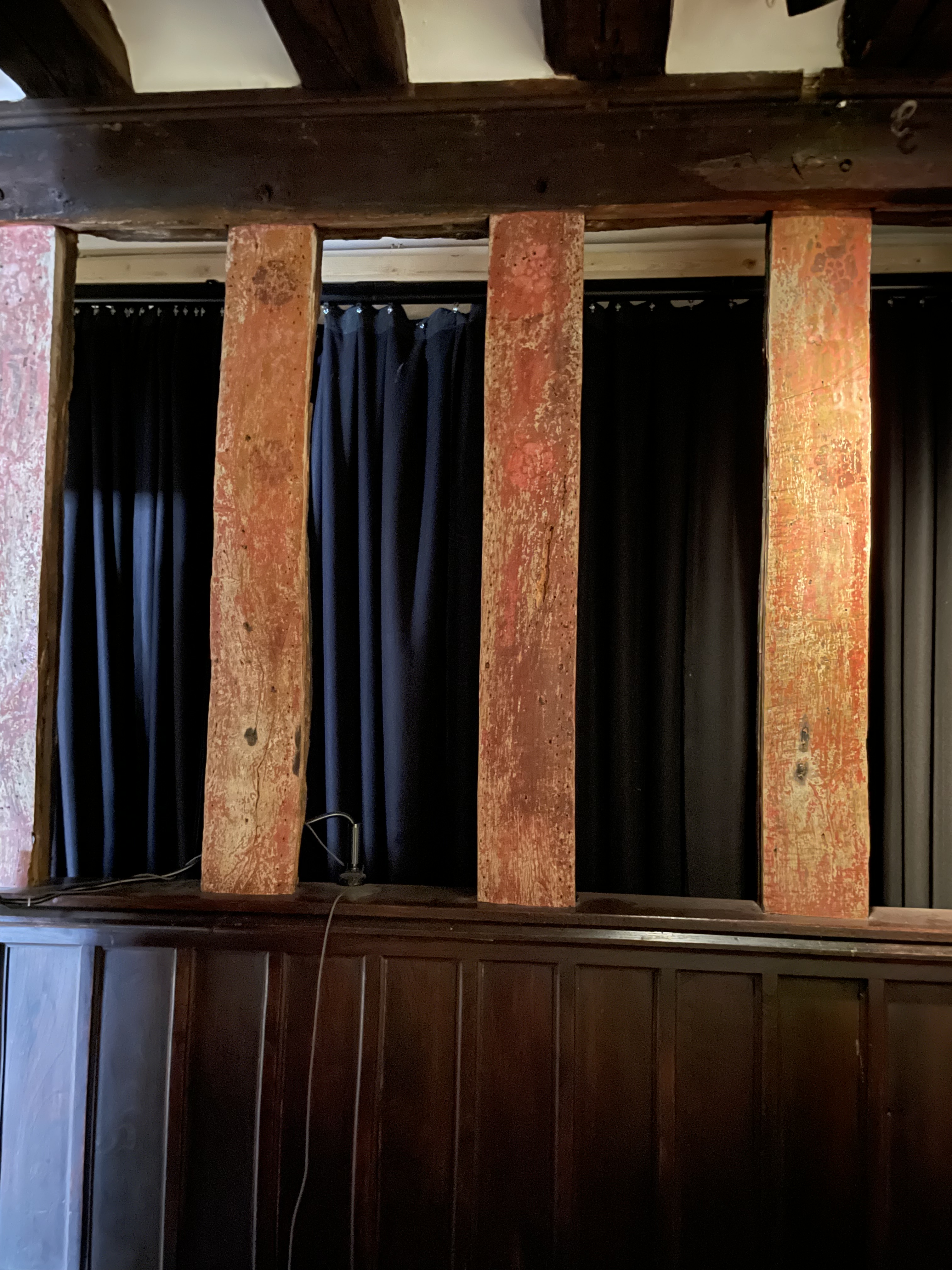
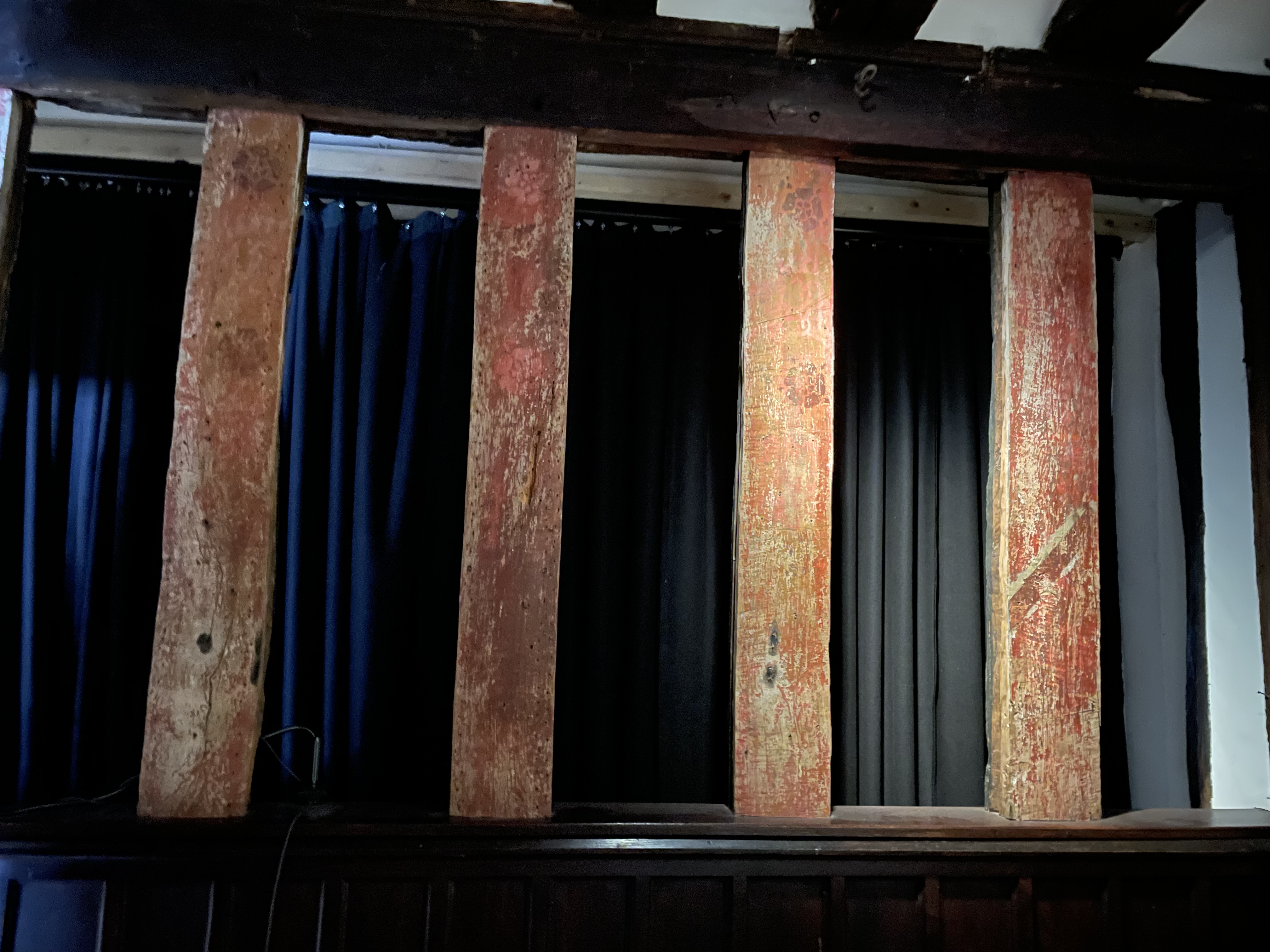
In an earlier room ~ where William Shakespeare would have sat once upon a time to watch travelling actors perform to prominent town members, including his father, before the players were permitted to perform before residents ~ a very high quality painting was found behind wooden panelling. These wall paintings are kept covered by curtains so light does not damage them.

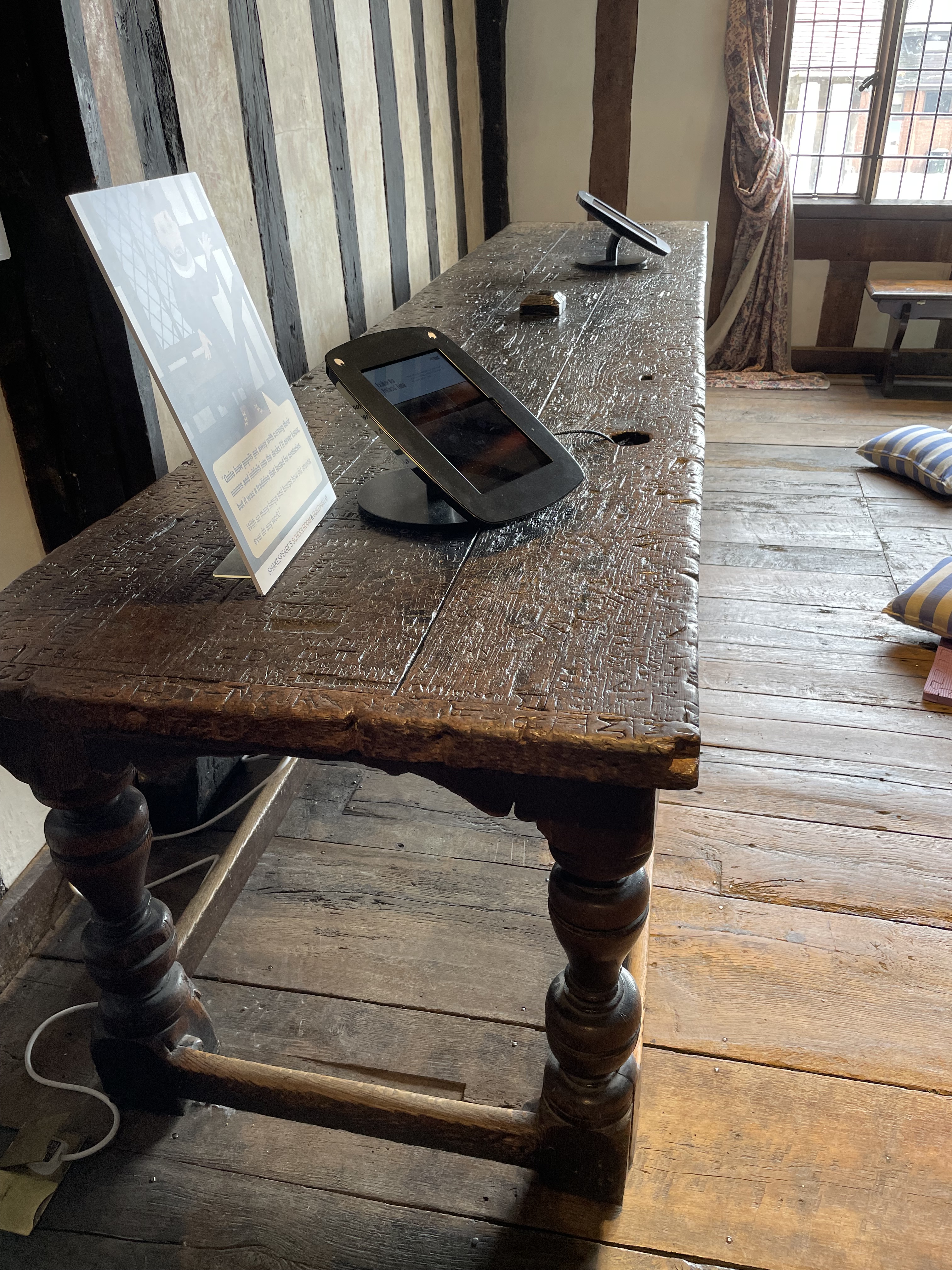
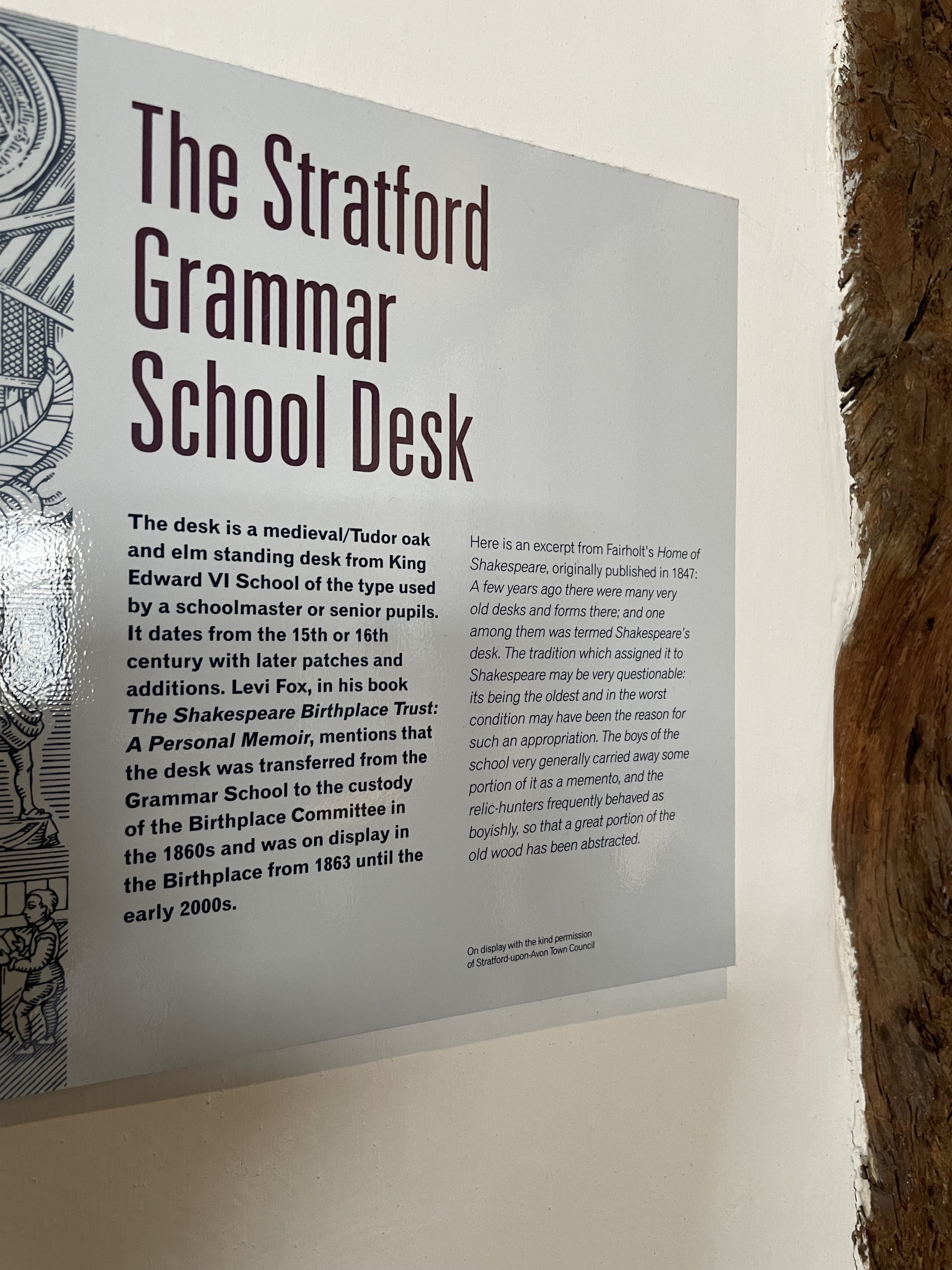
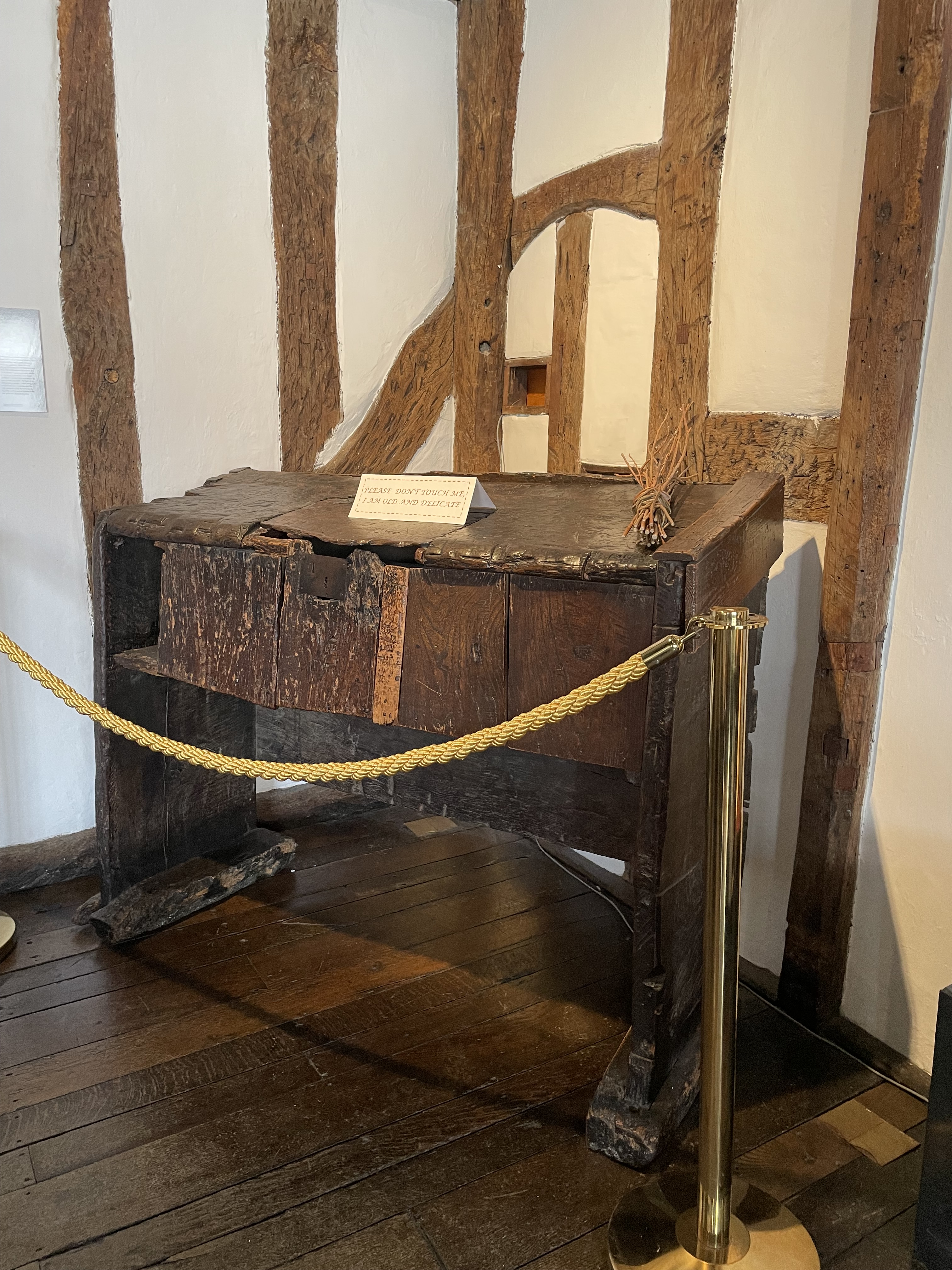
In the school room above, there is also a very old school master’s desk also dating back to as early as possibly the 1400s.

My earlier blog on the reason that more buildings in Stratford upon Avon survived the eras of Georgian makeovers explains why I think this building has managed to hold onto all of its history, however, why is such a significant place here in the first place?

Guilds were formed by men to network, they were ‘associations’ of craftsmen and merchants who came together to pool time, knowledge and money, to extend their economic interests, establish protection and provide both physical and spiritual aid for all involved. In times where people feared God, they worked with the local clergy and would have supported the poor to ensure the guild members were successful in the after life as well as in this life.

They were also, often, men who wanted to work their way up in society. These were working men not nobles, they may even have been born into poor families. Their status came from the money they earned, and therefore they were men with entrepreneurial minds, clever men who wanted to show people what they had, and could, achieve/d. What better way then, than to build beautiful buildings, to show both the towns people and the nobles that they were the wealthiest among them and that their word should be respected.

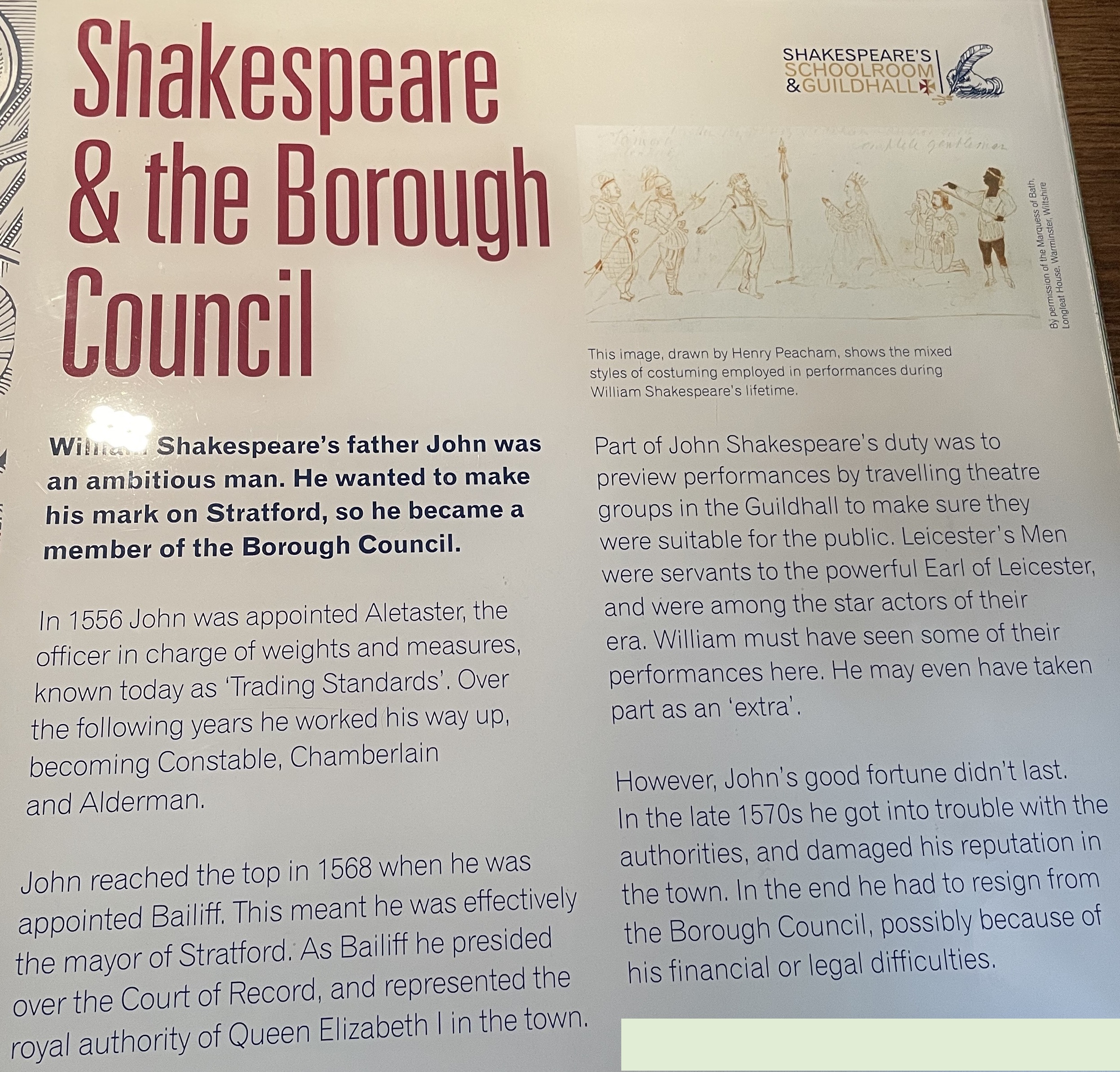
These guildhalls were where these like minded successful men met, and by the time of William Shakespeare these men had become a Borough Council with official duties metered out from Queen Elizabeth. Shakespeare’s father was one of these men! Read the panel in the image below to find out about his role.

These men wanted people to feel indebted to them, not only to respect them, but to be in awe of them and afraid of them in the way people might fear the wrath of God. So the guild members helped to educate people, to support other working people to be successful. They would have created the school in this building to teach the eldest son to read, write and complete accounts. His capabilities would have helped his whole family by him being able to earn more. The guilds did also support the poor in a borough, they might feed families who fell on hard times and provide accommodation.

Guilds helped some small towns grow into industrial centres or become well known markets for produce people travelled for miles to sell or buy. Yet, in other places, even in villages, you’ll notice an old hall, and realise it must have belonged to a guild that tried to make something of a small town and didn’t succeed.

It’s a very rare opportunity, though, to find a guildhall that you can look around that has been so unaltered through time.

The Guild Hall in Stratford on Avon is a beautiful place… Go if you like history and can get there!