The history of Christmas part 4: The Christmas traditions we know today

Christmas became more of a celebratory event again in the flamboyant eras of the Georgians and the Regency period of the 1800s. Like the Romans, who they idolised, they knew how to throw a party and they were far enough away in time from the English Civil War that they dared to show off wealth and openly behave with abandon. Christmas was again celebrated with parties, singing, gift-giving, and for the wealthy with balls and masquerades. I have written about one such event held at Kingston Lacy that was captured beautifully in a letter from the hostess. Read the story of a Georgian Christmas ball on this link.

Queen Charlotte put up trees in the royal household in the 1780s, but few people knew. So, at that time, ordinary people continued to bring in evergreen bows into the house rather than trees. It was the published image of Queen Victoria and Prince Rupert standing about a tree with their children in 1848 that changed the British tradition. Just like today, people craved what the Royals had, the Royal couple set the fashion across the British empire.

‘That pretty German toy, a Christmas tree,’ Charles Dickens

At the time, Christmas was as Charles Dickens describes it in his novels – there were family feasts with goose, pork or beef and rich dried fruit puddings on most Christmas tables. St Nicholas was a healthy young man, in a green robe with white fur, as depicted as the ghost of Christmas Present in 1843, below.

Presents were common and introduced in the form of charitable and kind behaviour. Servants lined up to receive their Christmas gifts, and on Boxing Day, apprentices received the tips that had been paid into their wooden boxes throughout the year.

As trees were brought indoors the gifts given to family and friends moved beneath the tree, the scenes we know as Christmas today began to form.

The first Christmas card was printed in 1843. Sir Henry Cole invented the idea of the Christmas card. He printed a card so that he did not have to write to everyone wishing them well at that time of year. He quickly realised the potential as others liked the idea and would find them useful, and he began selling them for a shilling per card.

In the Victorian industrial era, the numbers in the middleclass were rising and many homes began to look like this on Christmas day.

Sign up to receive my new newsletter here

https://www.janelark.co.uk/contact

The history of Christmas part 3: From day to night ~ the Tudor and Cromwellian Christmases

In a Tudor household

By the time the House of Tudor took the English throne in 1485, Christmas was a big event in the calendar, and in the life of British people. Everyone was expected to stop their daily life and celebrate for the 12 days of Christmas. In 1541, Henry VIII banned all sports on Christmas Day except archery, to encourage people to focus on Christmas. In 1551 his son Edward VI, passed a law that everybody should walk to church to attend the services.

Feasting was an important part of Christmas day for every household, and with the manorial system across the country people dined on long trestle tables in the lord of the manor’s hall, or with the farmers they worked for, large gatherings were the norm. Turkeys were already in Britain, they had been brought to Europe from their native America in 1519, and sprouts appeared on record in festive cookery in 1587.

In a Cromwellian household

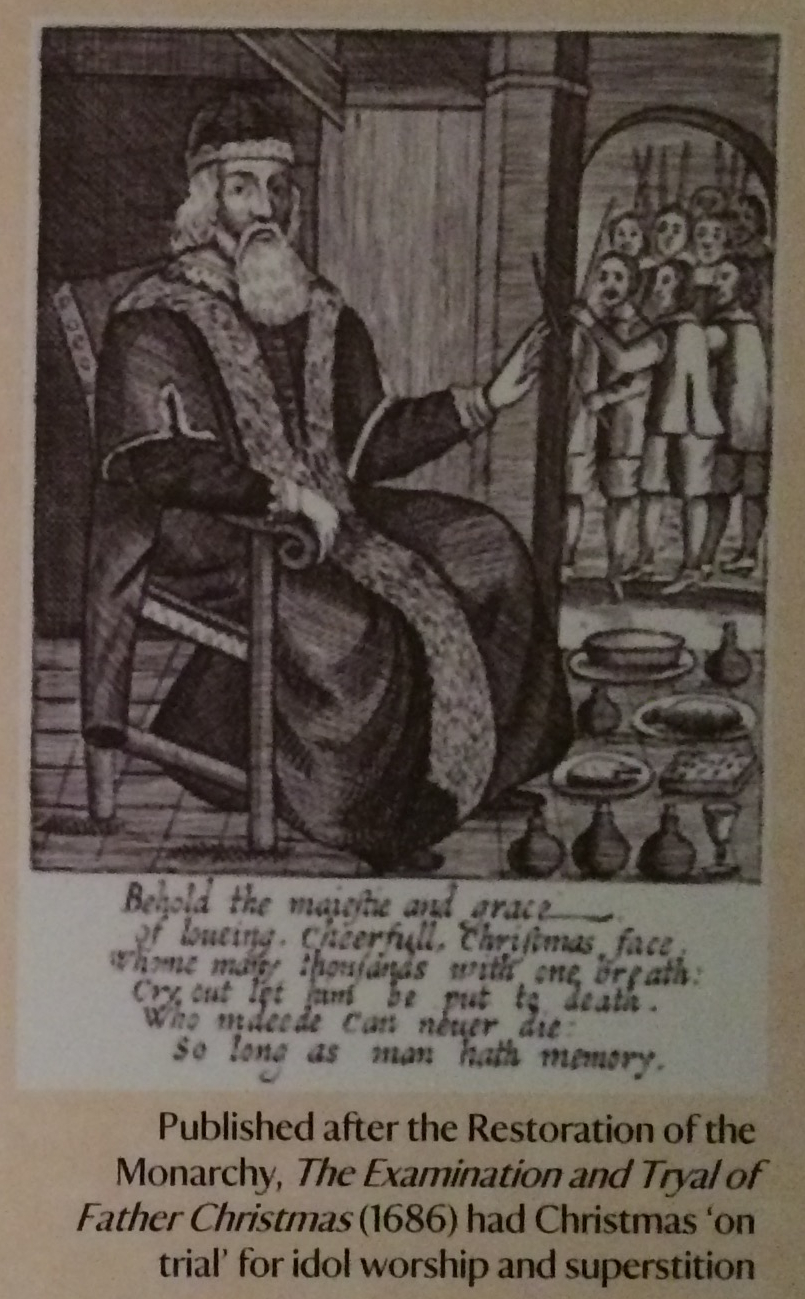
But then came the English Civil War, in the 1600s, commonly known as a battle between King and Parliament, it was equally a battle between moderate and radicle puritan Christians. As the Civil War progressed those that had begun the war, angered by the King’s desire to fight battles against other Puritan states while he defended Catholics and charged his people taxes to fight the wars they disagreed with, saw the tide turn. They had not begun the war because of religion, but those with radicle beliefs gradually took over Parliament, and in the end they arrested and disposed of anyone who disagreed with their extreme point of view. Over indulgences were frowned on, theatres were told to close, saints’ days were no long holidays and any form of recognition of pagan beliefs or religious images were frowned on and then finally banned by law.

In 1644 it was Christmas’s turn to come under Cromwell’s power. Any celebration of Christmas was banned by law. Cromwell called Christmas ‘an extraeme forgetfulnesse of Christ, by giving liberty to carnall and sensual delights.’ By law, Christmas was a work day, all merchants had to open for business by law, there were no church services – unless the day fell on a Sunday. Carols were forbidden and anyone caught cooking Christmas foods or singing Carols might be fined, or worse.

When King Charles II was restored to the thrown in 1660 these laws were reverted, but even so Britain had become used to a less raucous, extreme celebration.
Sign up to receive my new newsletter here

https://www.janelark.co.uk/contact