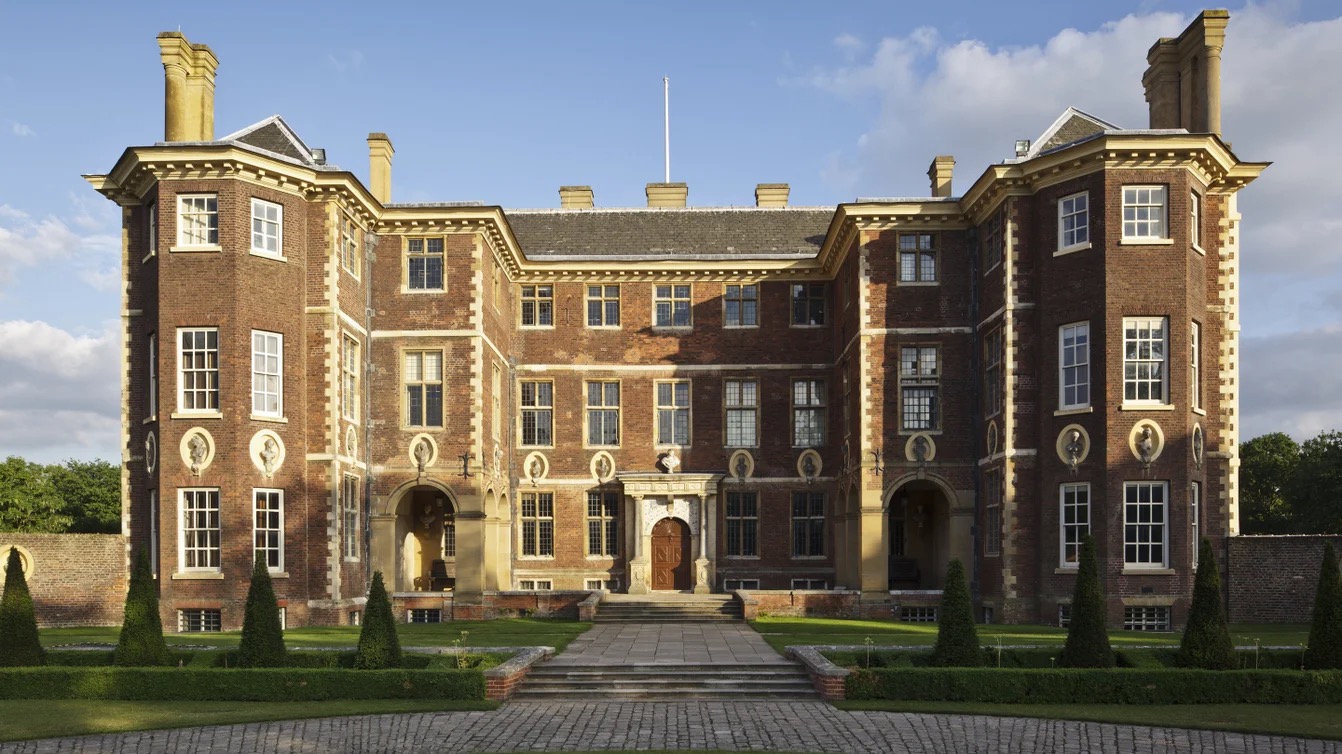
The palace that became a house

I’ve been meaning to post this little story for over a year and not found time, but now I have time! So here you are. Before you read on, though, it might be worth stepping back to read my post about Kew Palace that was a house initially rented and then bought from a silk merchant and turned into a palace.

This story flows from that of Kew Palace because when I stayed in Kew last year to explore both the palace and gardens – which I have now fallen in love with and already visited once more since – on the way home I decided to visit another period property that was open to the public, Ham House. Only to discover that Ham House had been owned by the Royal family until 1600s, and in an odd opposing point was given to courtiers by Charles I. It would have made a much smarter home for The Royal House of Hanover had they returned to this house rather than moving in basically next door.

Ham House and Kew Palace are literally ten minutes apart by car, so isn’t it odd that one Royal, Charles I, rented out his property on this area of the bank of the Thames and then the Hanovers, George II, came along and rented the estate almost next door.

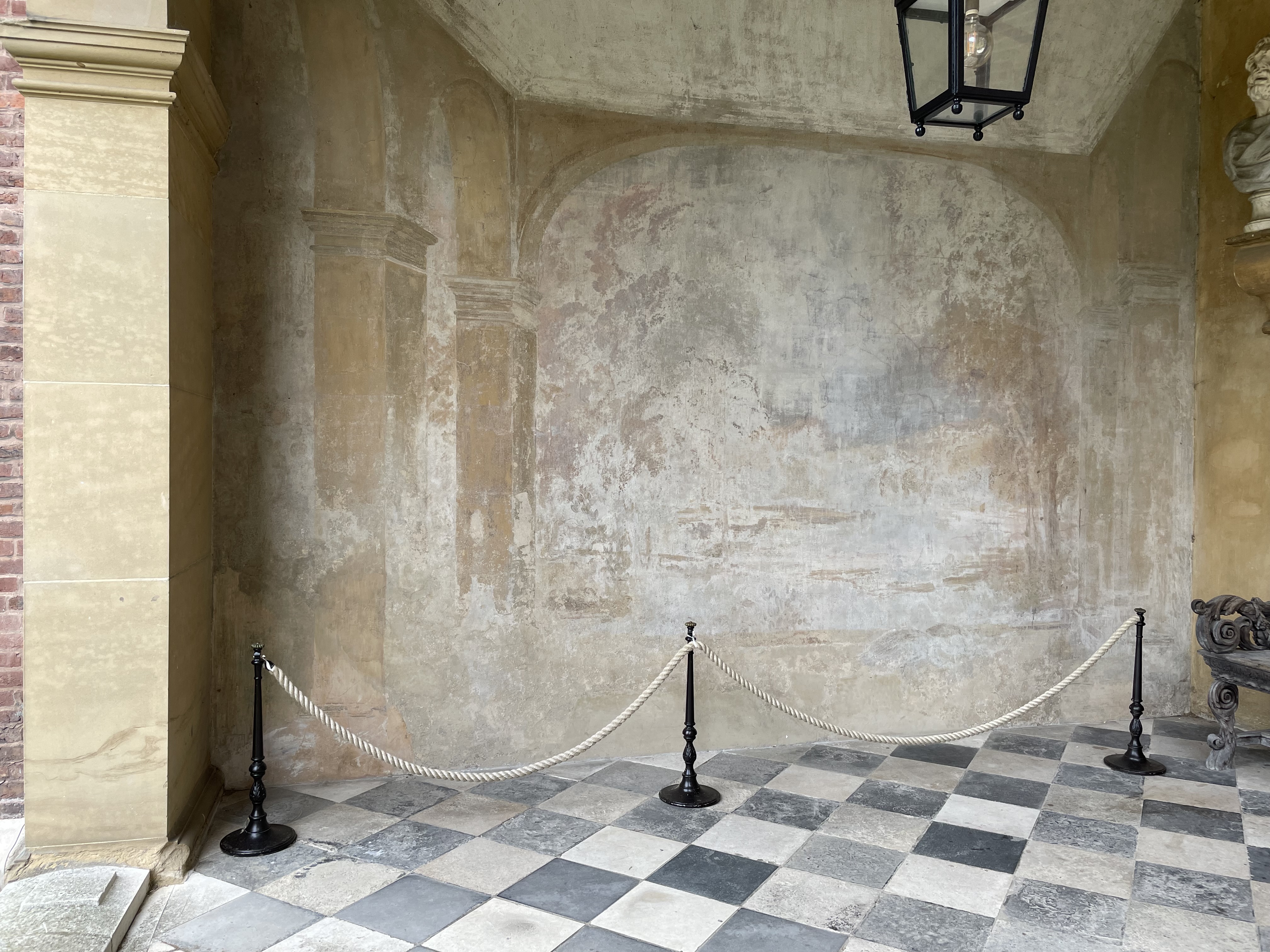
One of the things I found so charming about Kew was that it was such a humble place for a palace, and they had even toned decoration down from the former 17th century decoration. As I said in the Kew post, in areas not in the family spaces open to the public, there’s a wall painting that indicates a smarter but still not that grand decoration before it became a palace.

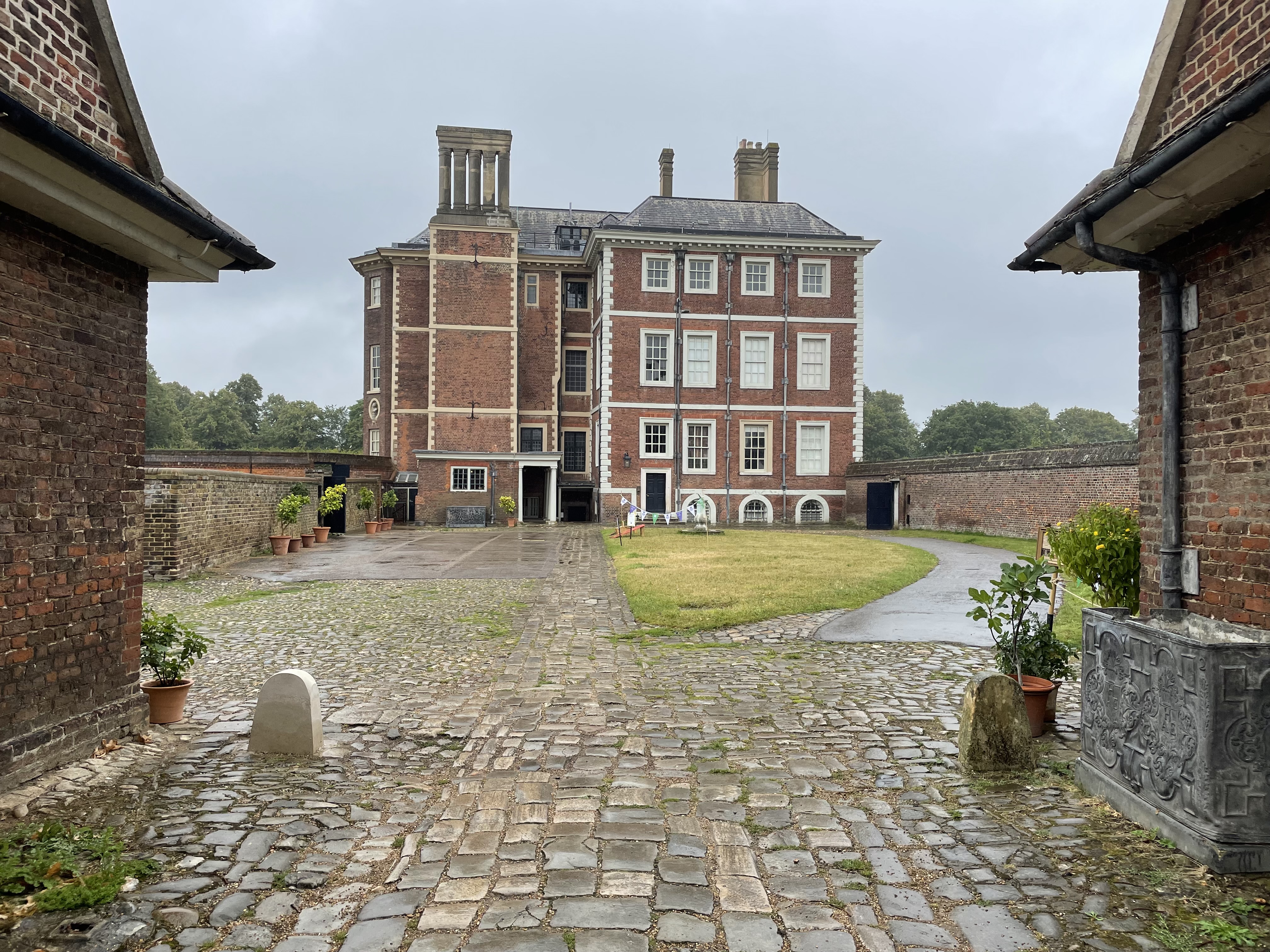
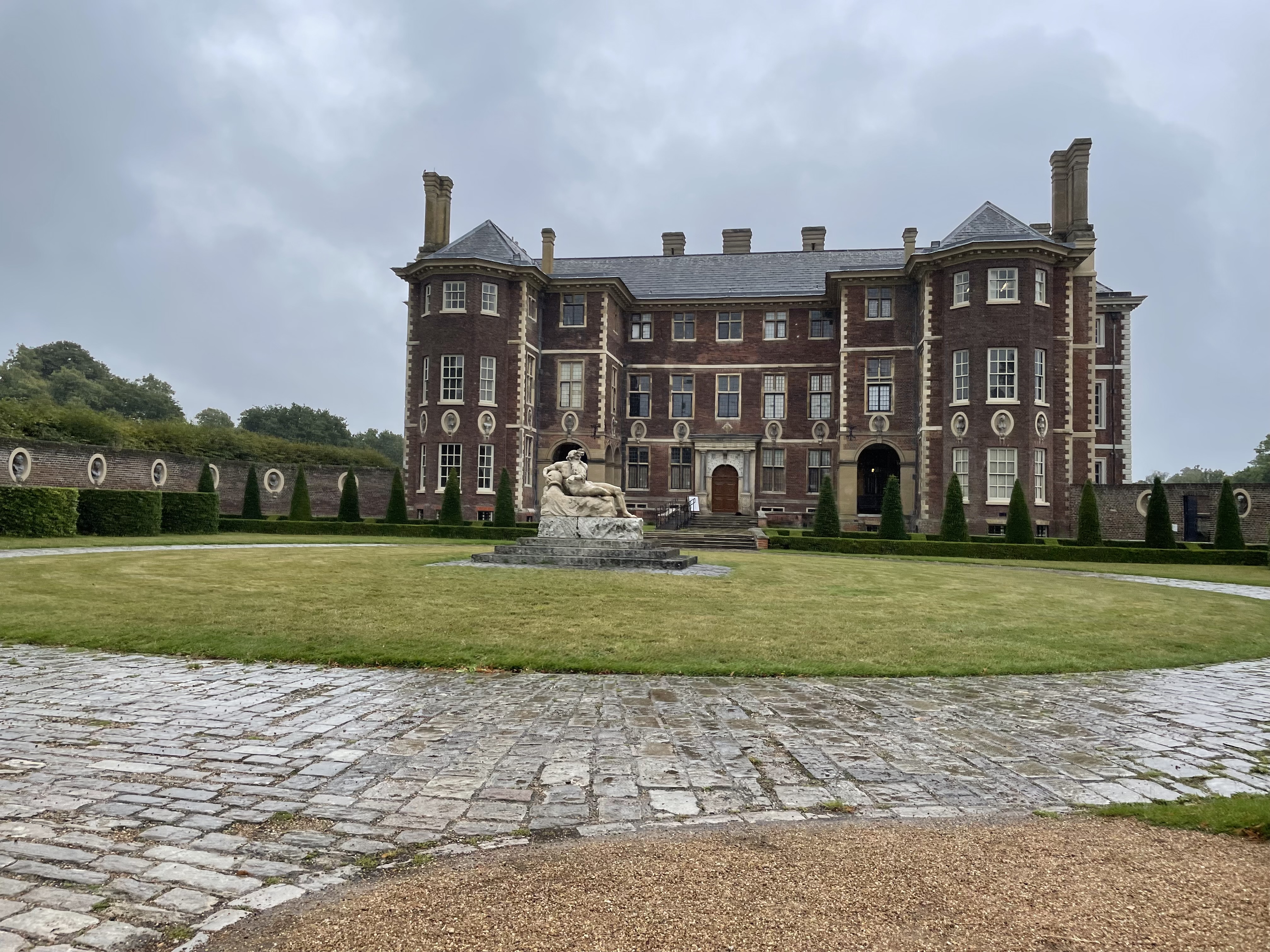
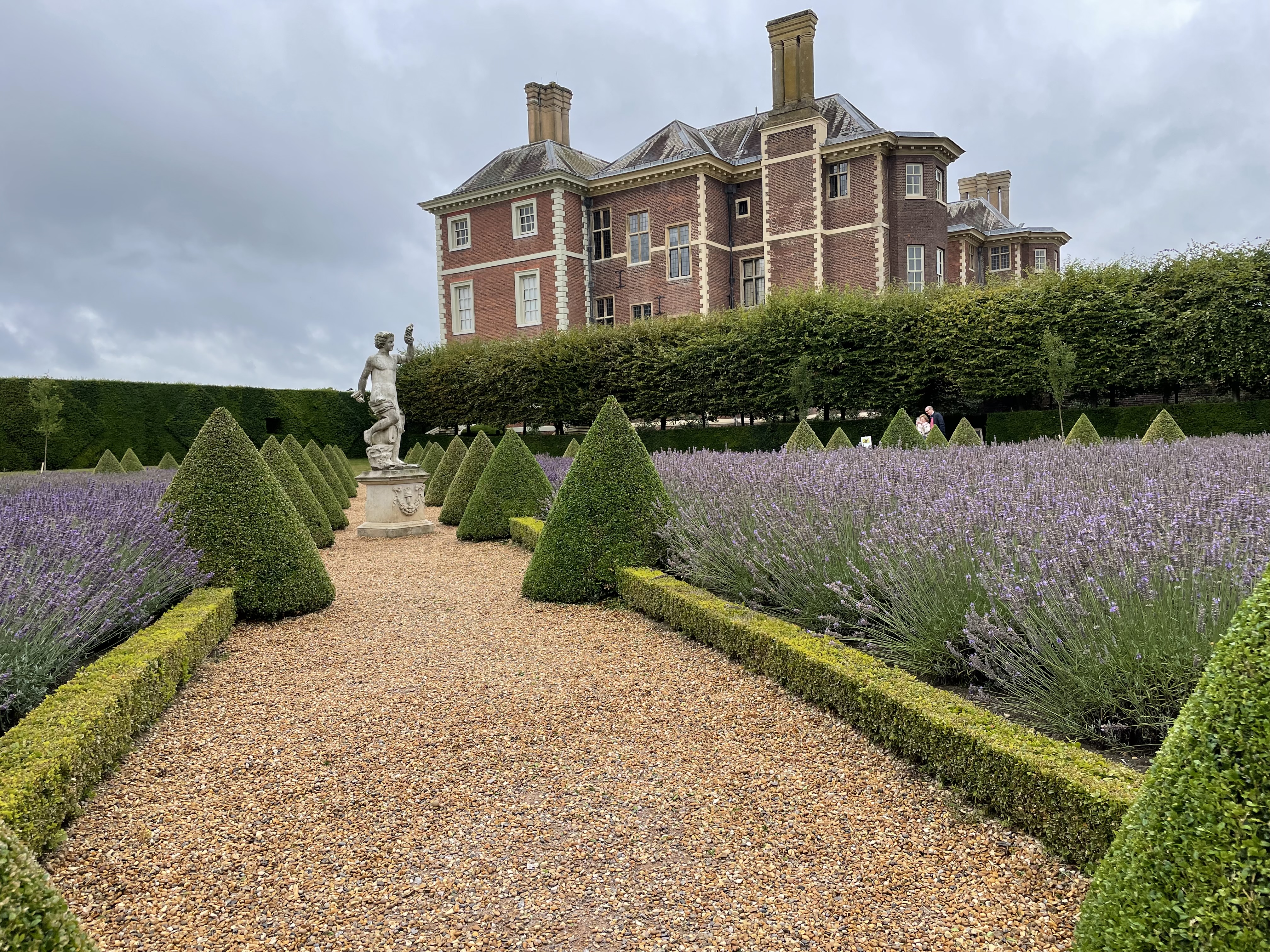
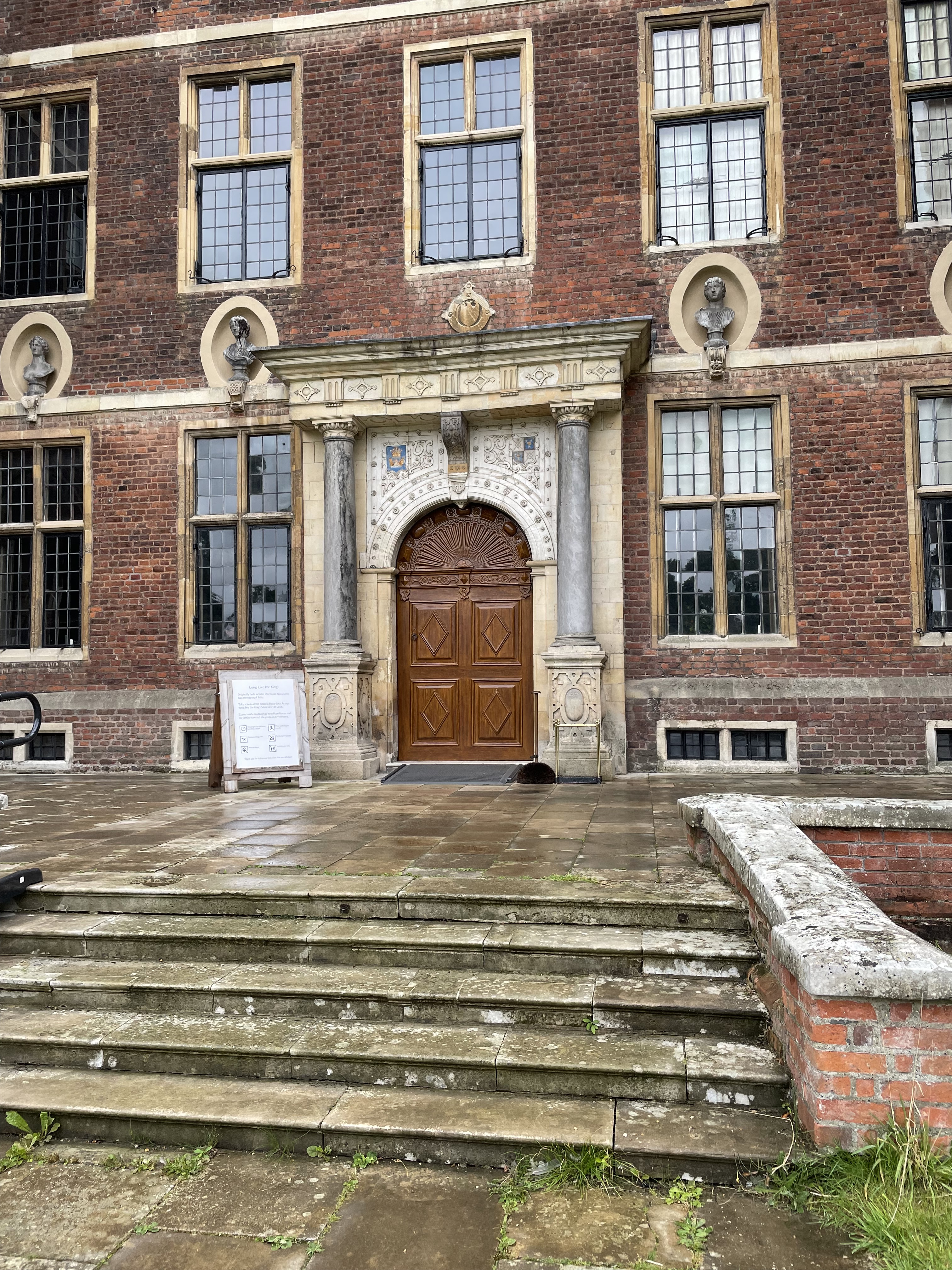
And then I walked up to through the gates of Ham House… This is what I had expected to see inside Kew Palace.

Ham House is palatial.
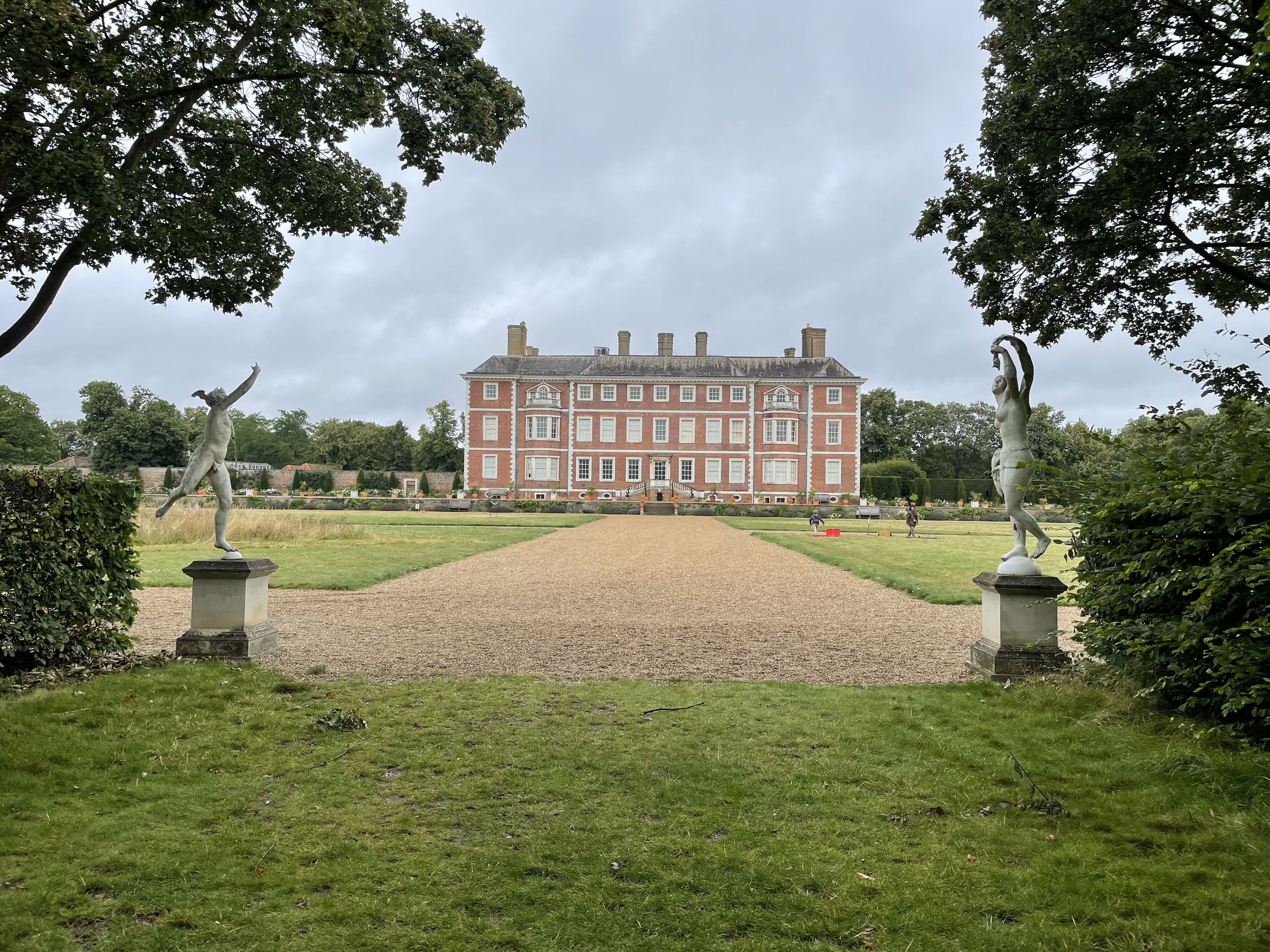
William Murray who was given Ham House was a very close friend of Charles I from childhood onwards. It was in 1626 when Charles I was aged 25, that he gave his friend William Ham House and the surrounding lands. The property had only been built in 1610. It sits just along the river Thames from Hampton Court as well as Kew, and as travelling by boat was often the quickest option at the time it would have made it easy for the King to reach his friend from Hampton Court or from the old Palace at Whitehall (that no longer exists) in London.

William and his wife Catherine, then spent a lot of money decorating the house, and much of the decoration they commissioned and the items they bought 400 years ago are still adorning Ham House today.

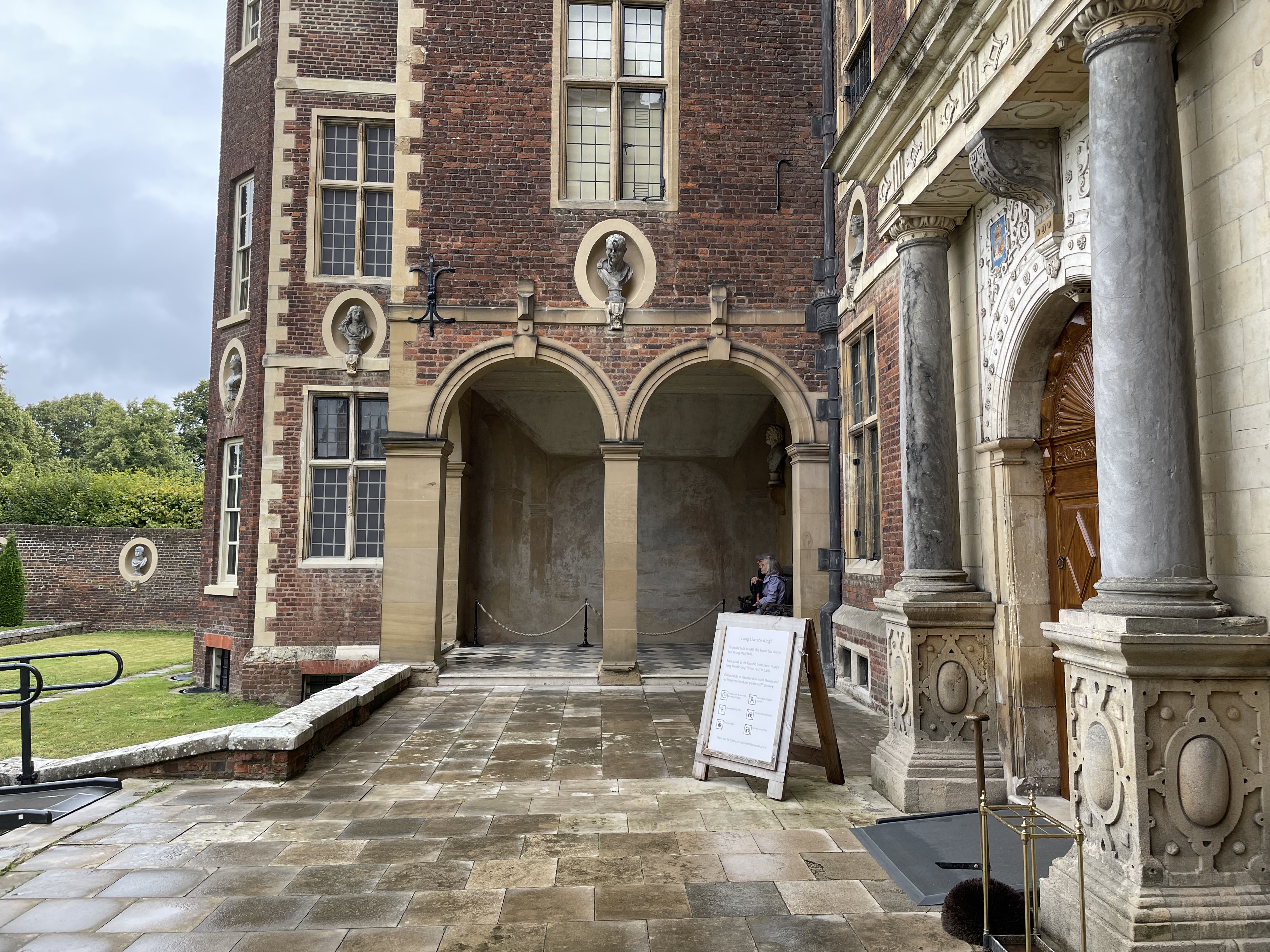
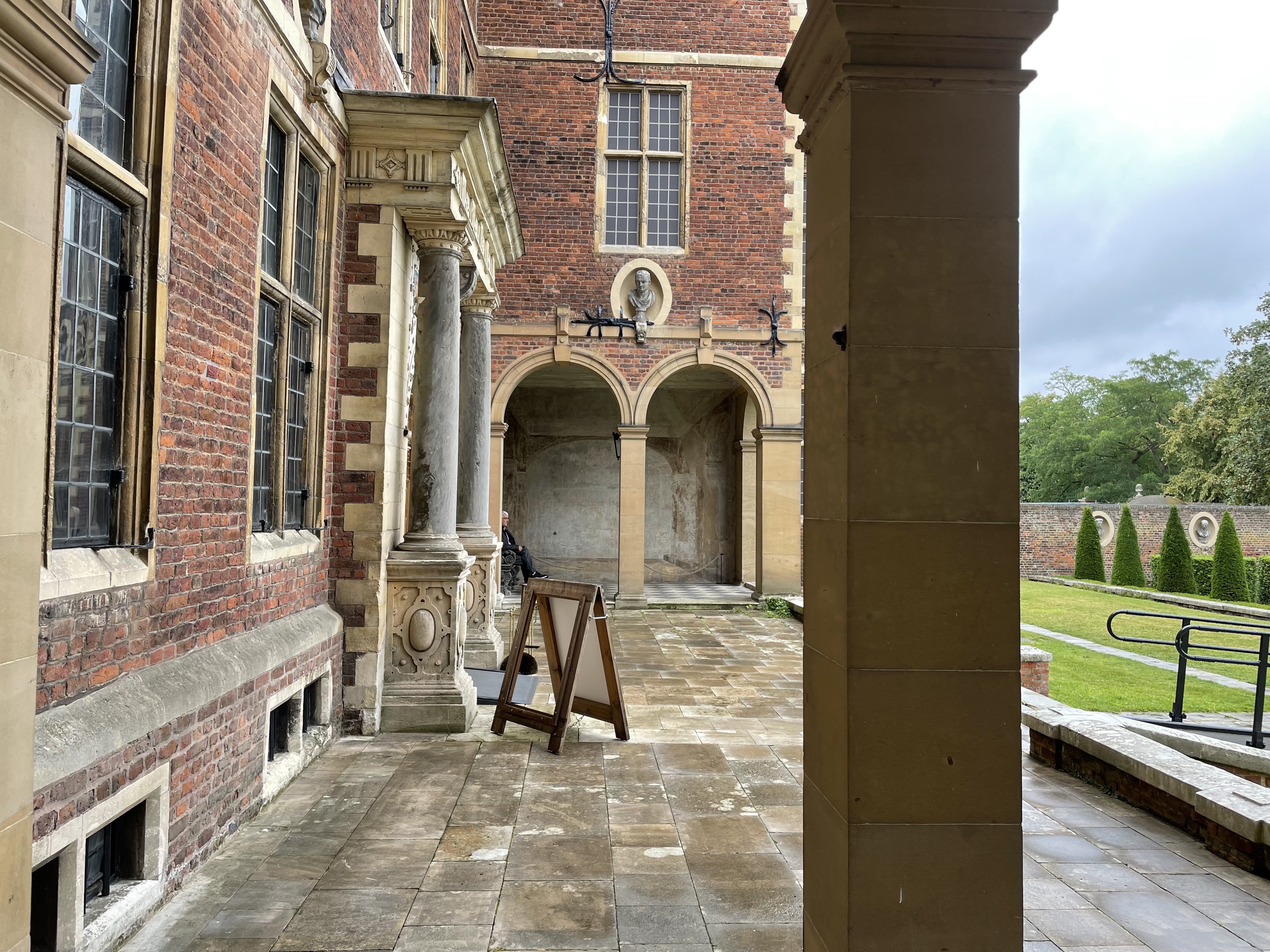
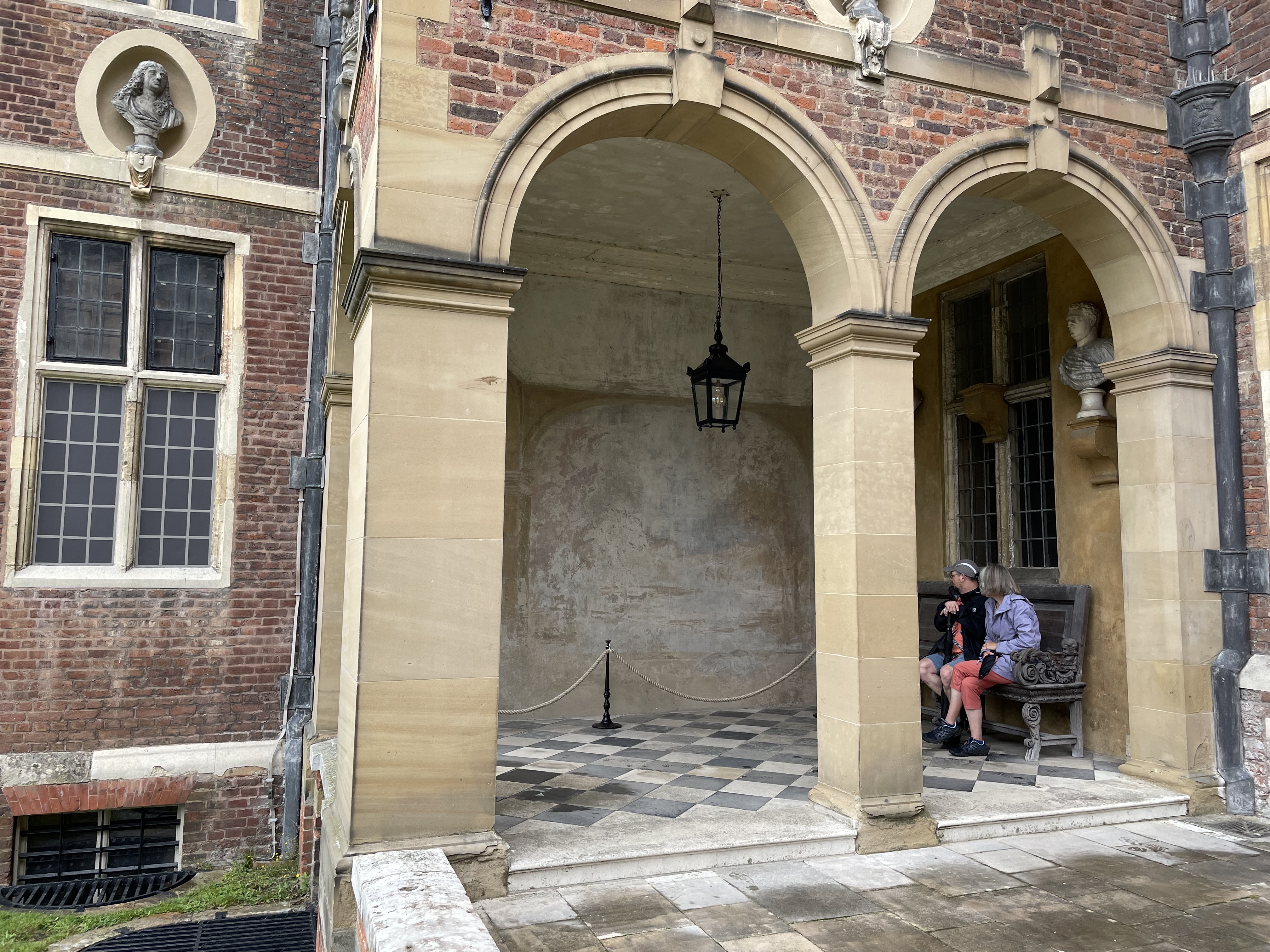
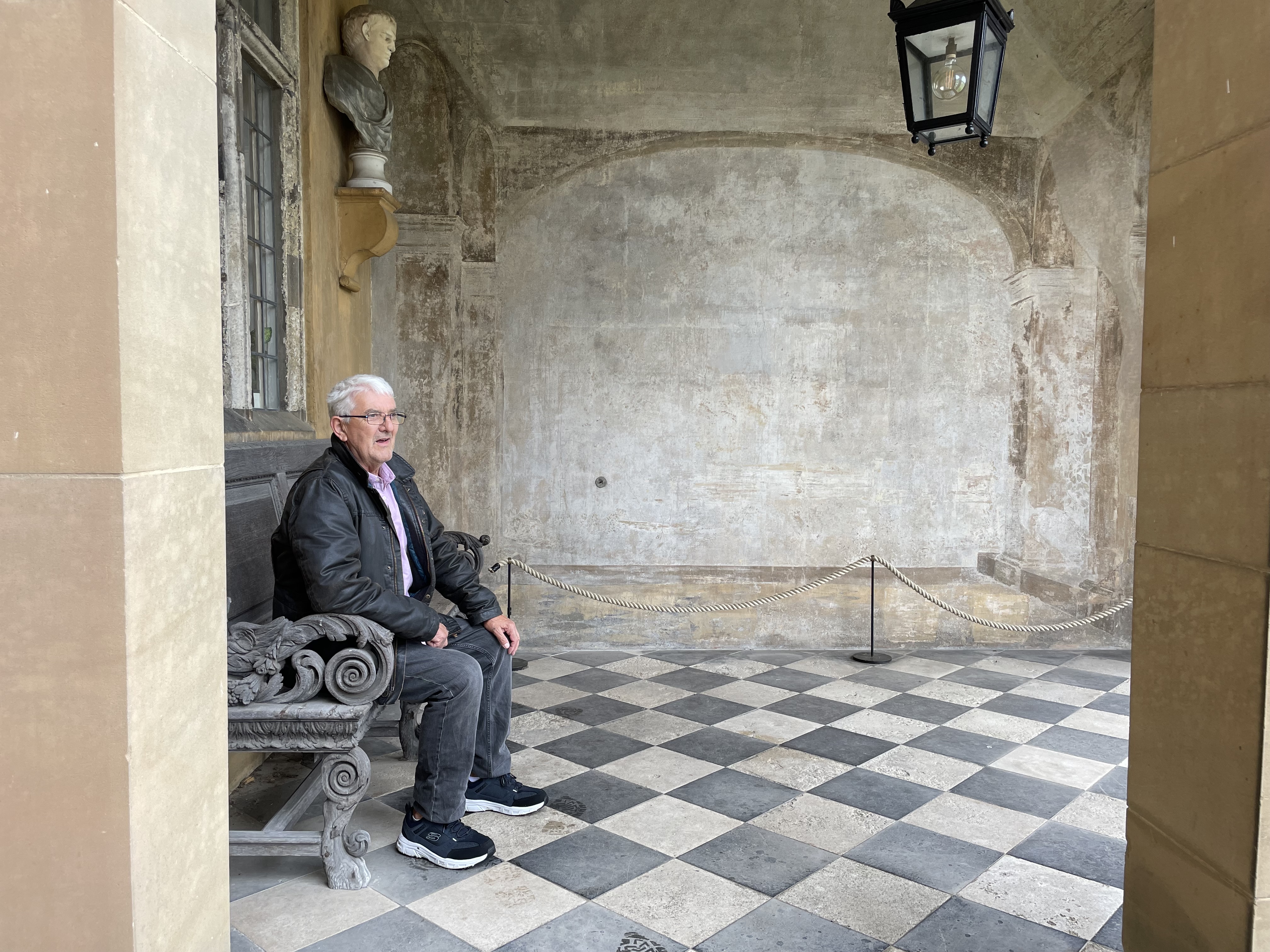
Even as I waited in the porch for the house to open for the day, I noticed the art work on the plaster in the porches. Murals that sought to create views within the porches. The fashions were to paint every space possible until the 1700s – inside and outside.
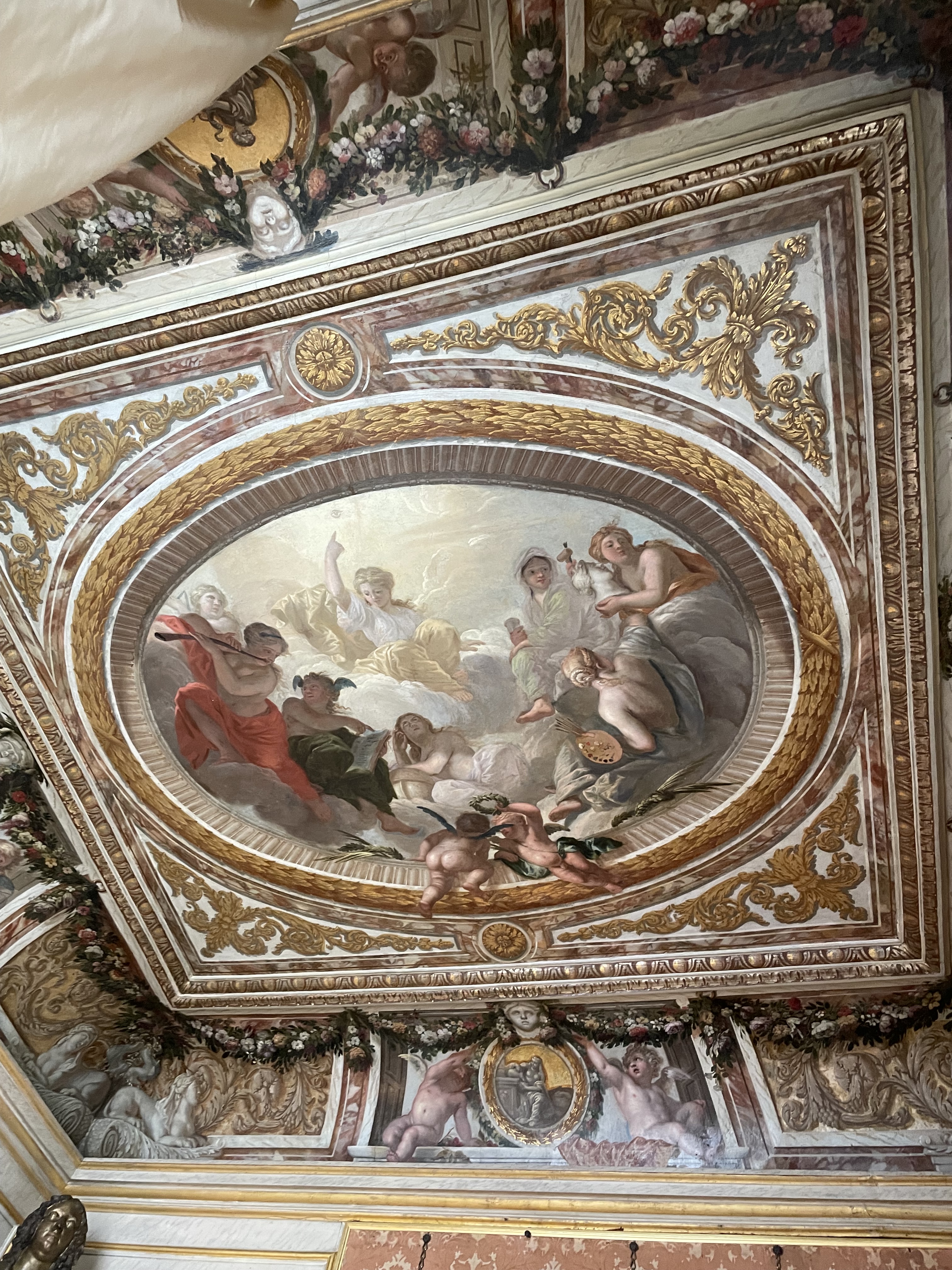
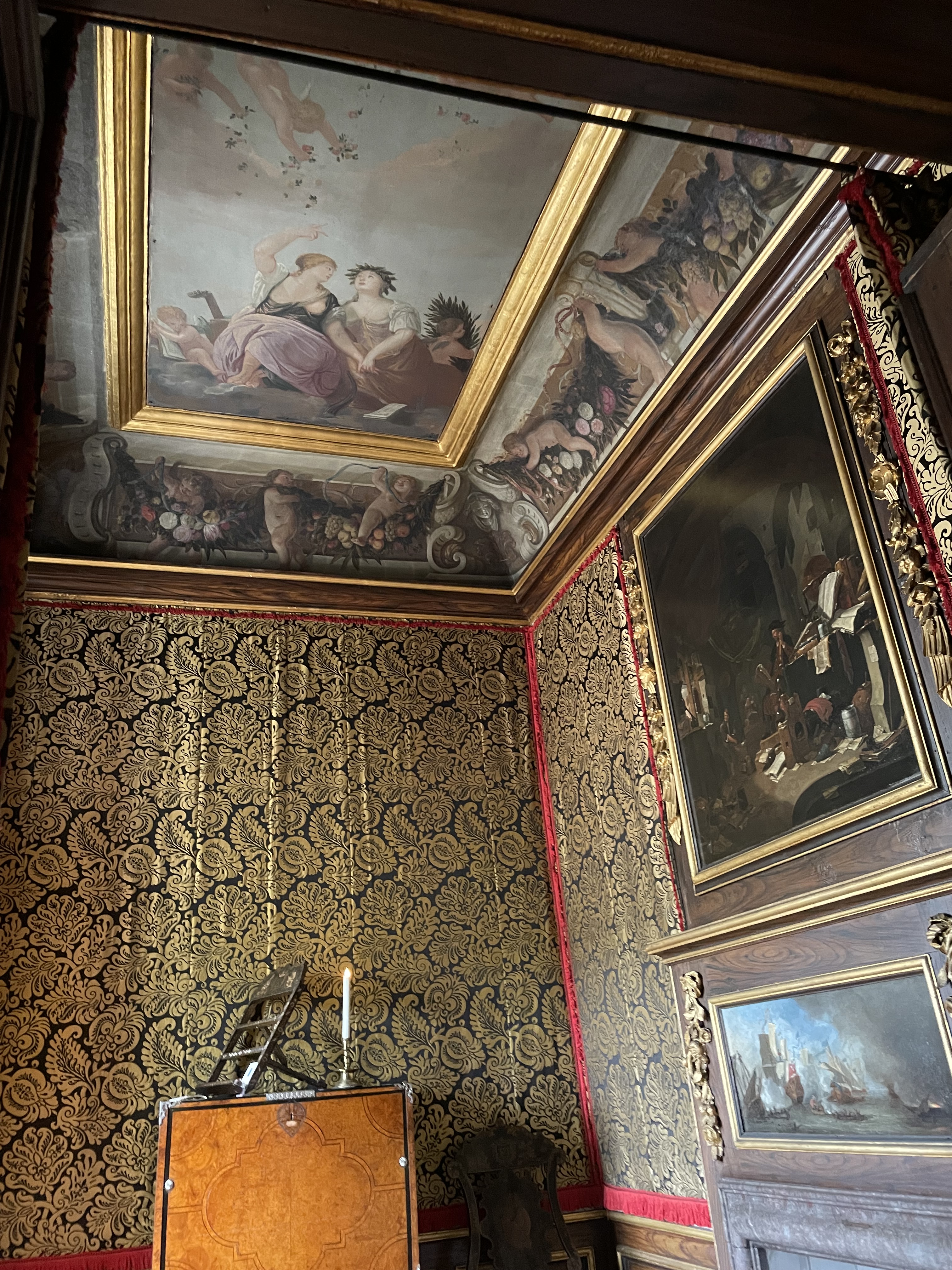
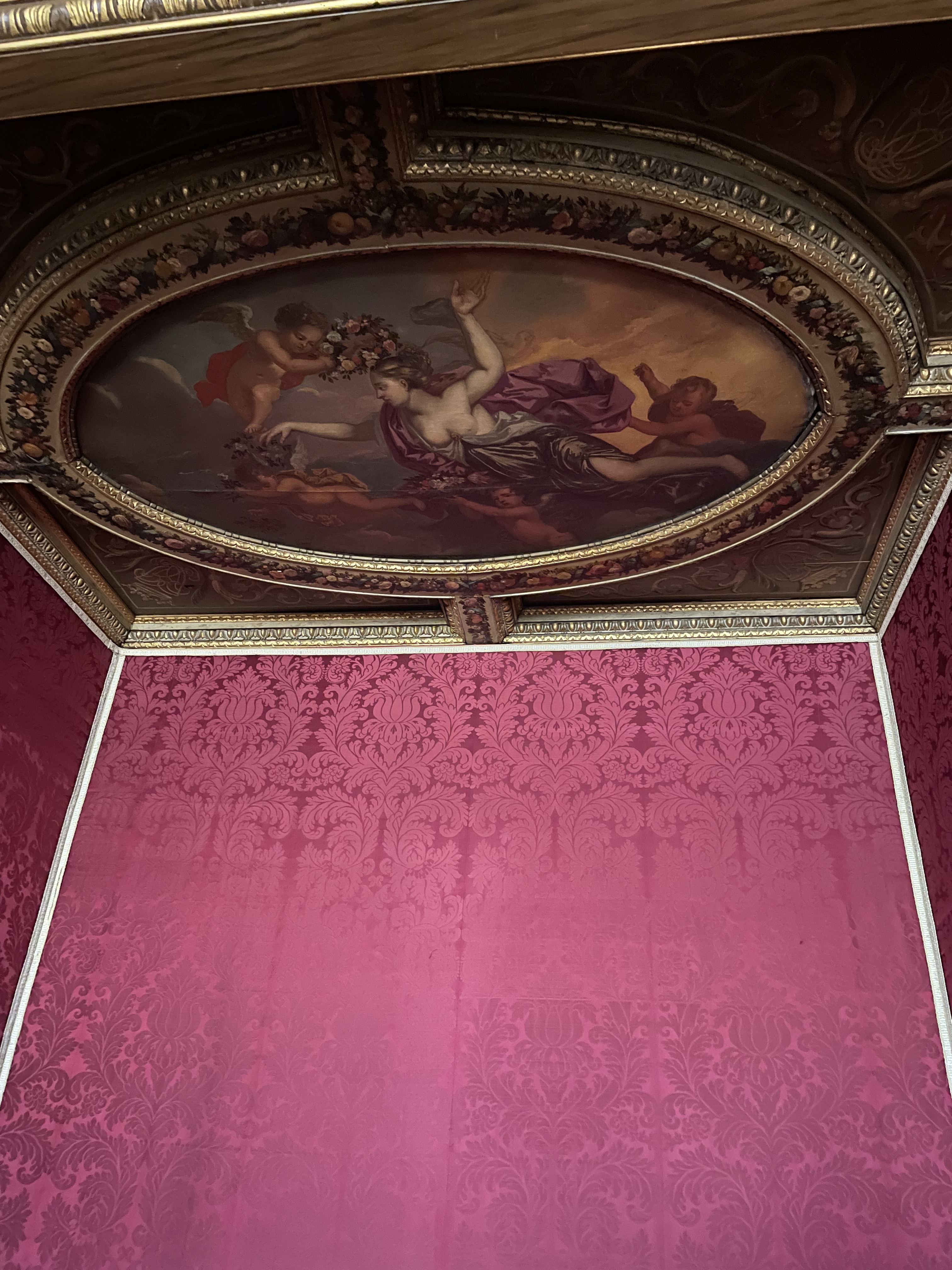
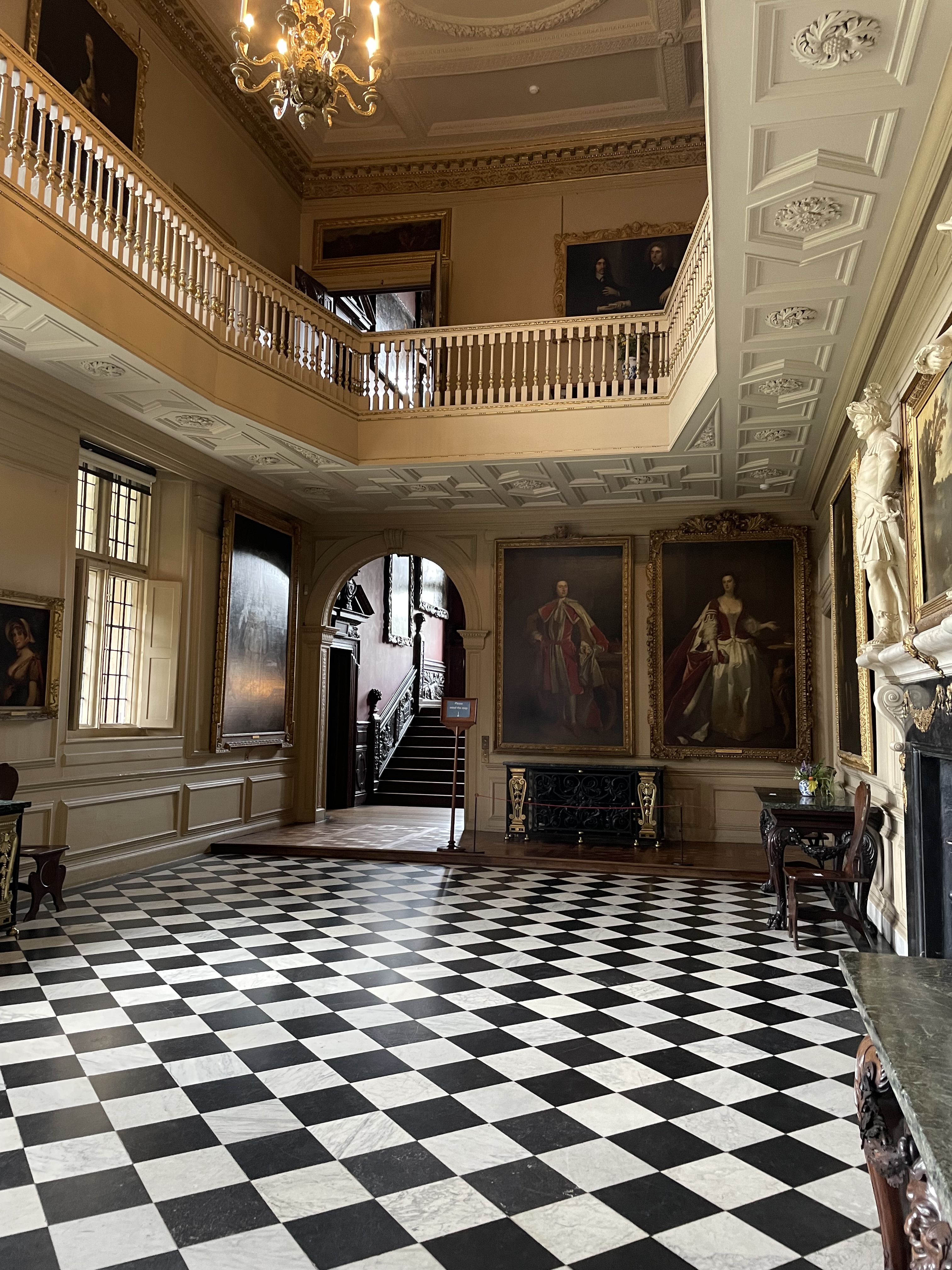
Then I walked into the hall, and saw the ceiling and wall paintings that were as good as any painting you would hang on a wall. This was a space you could imagine a royal family living in.
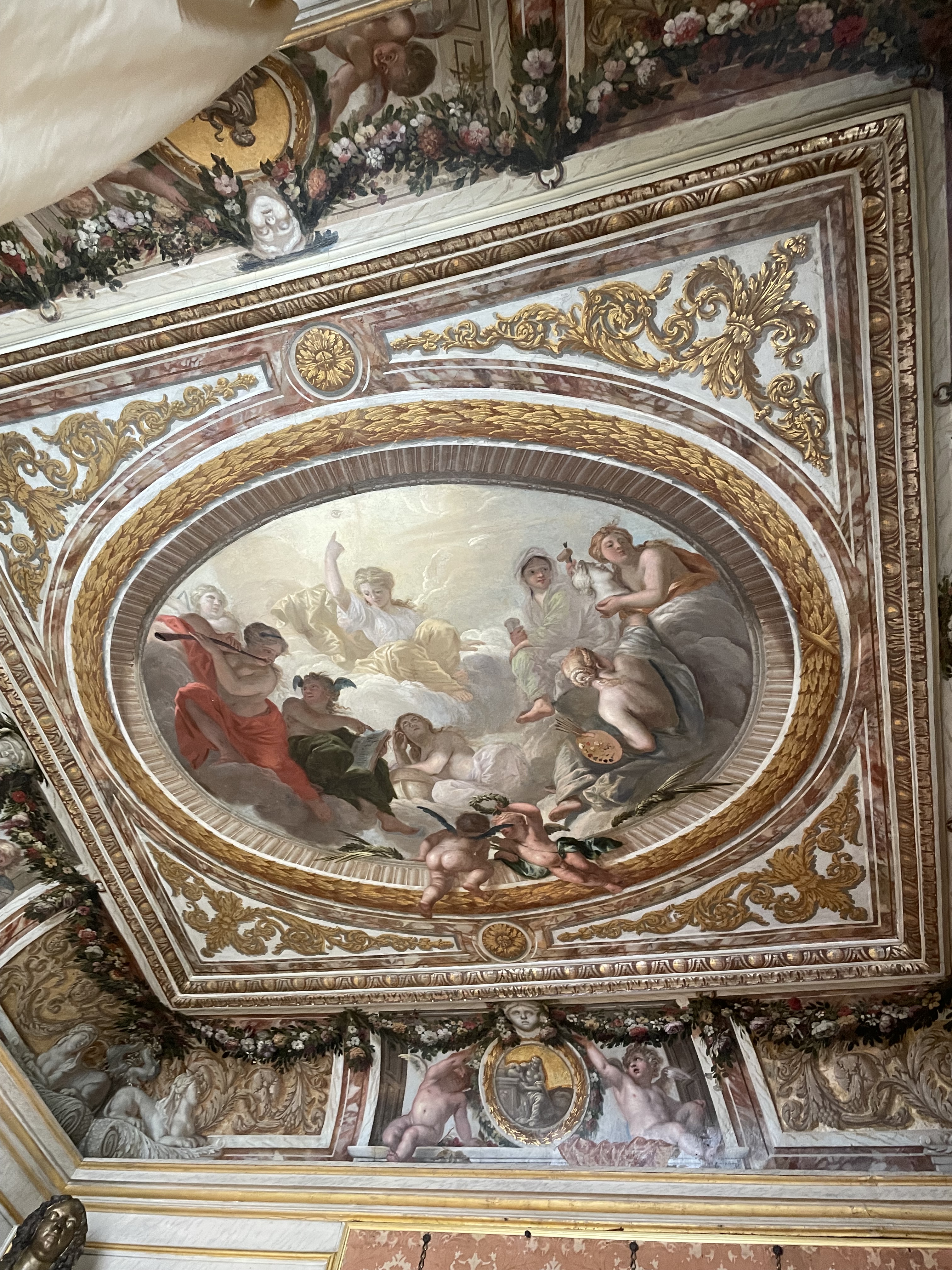
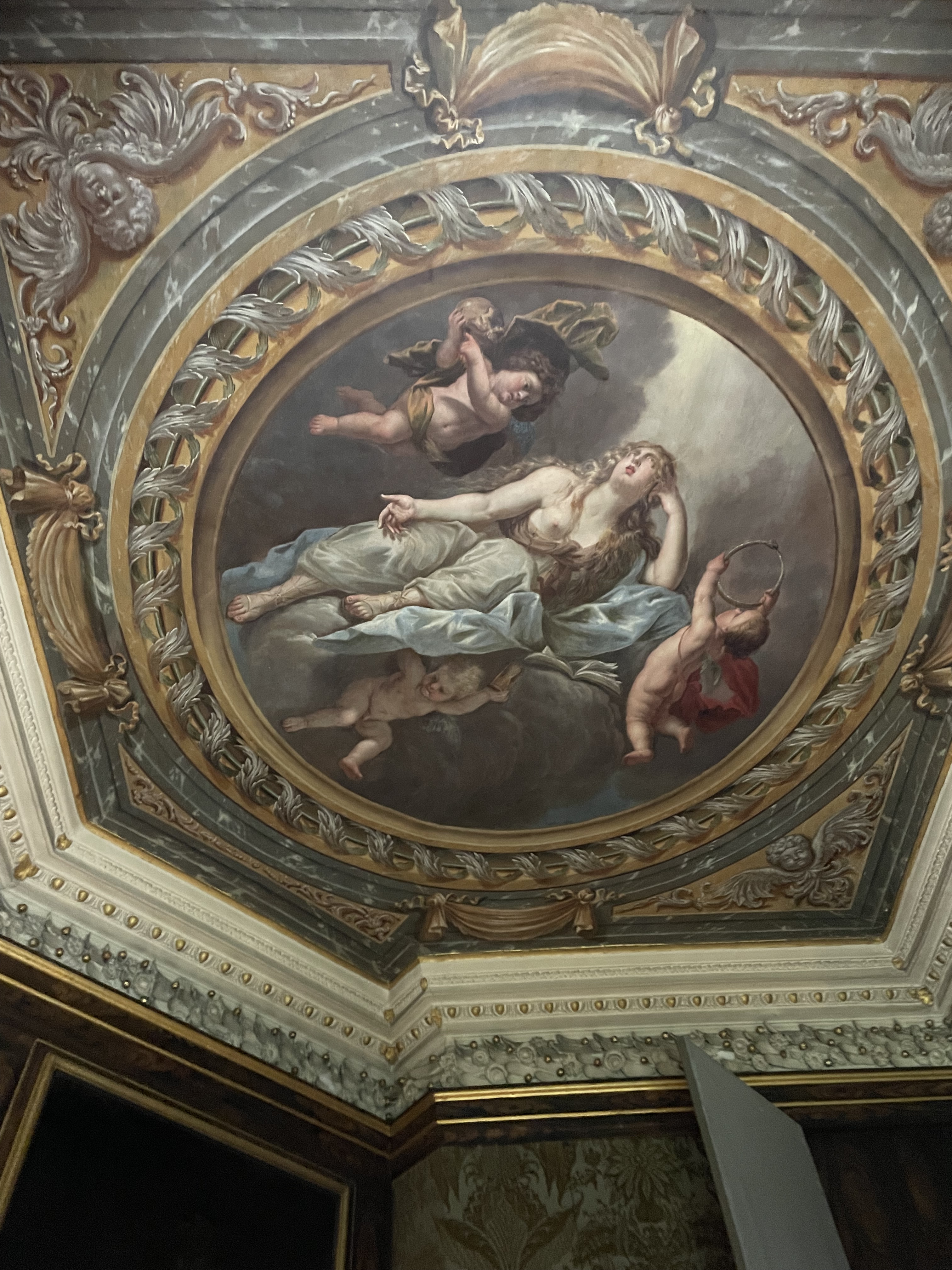
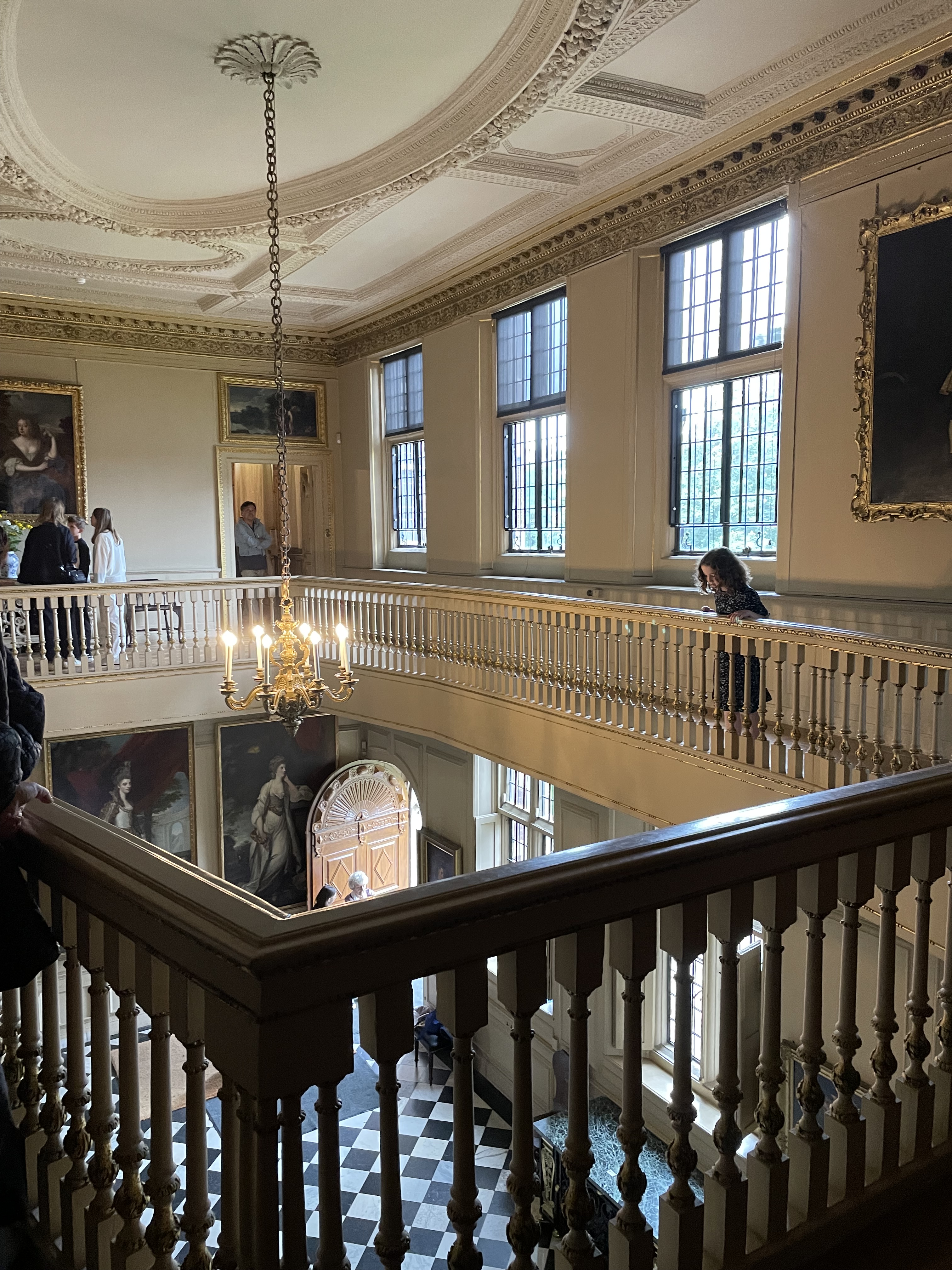
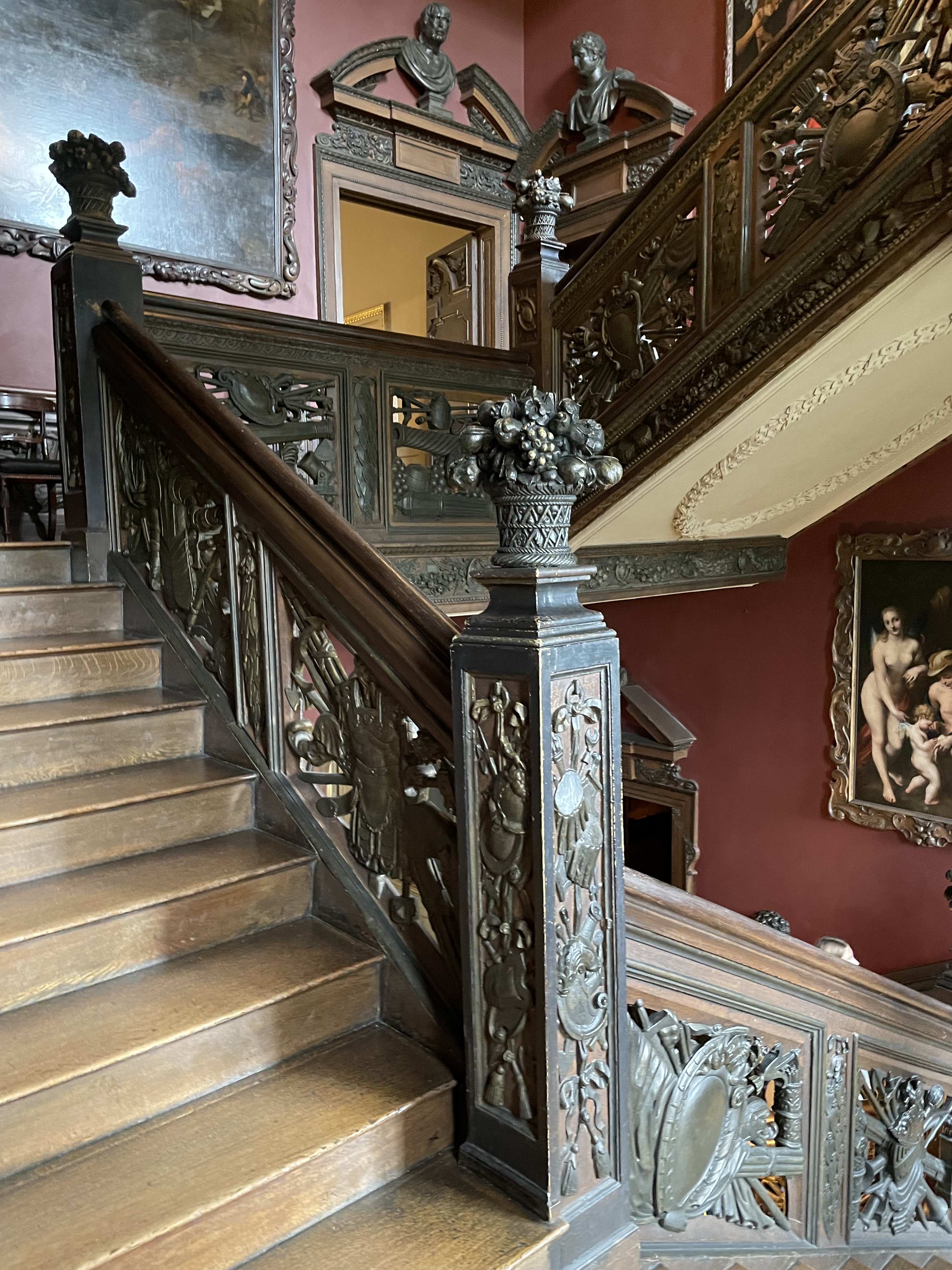
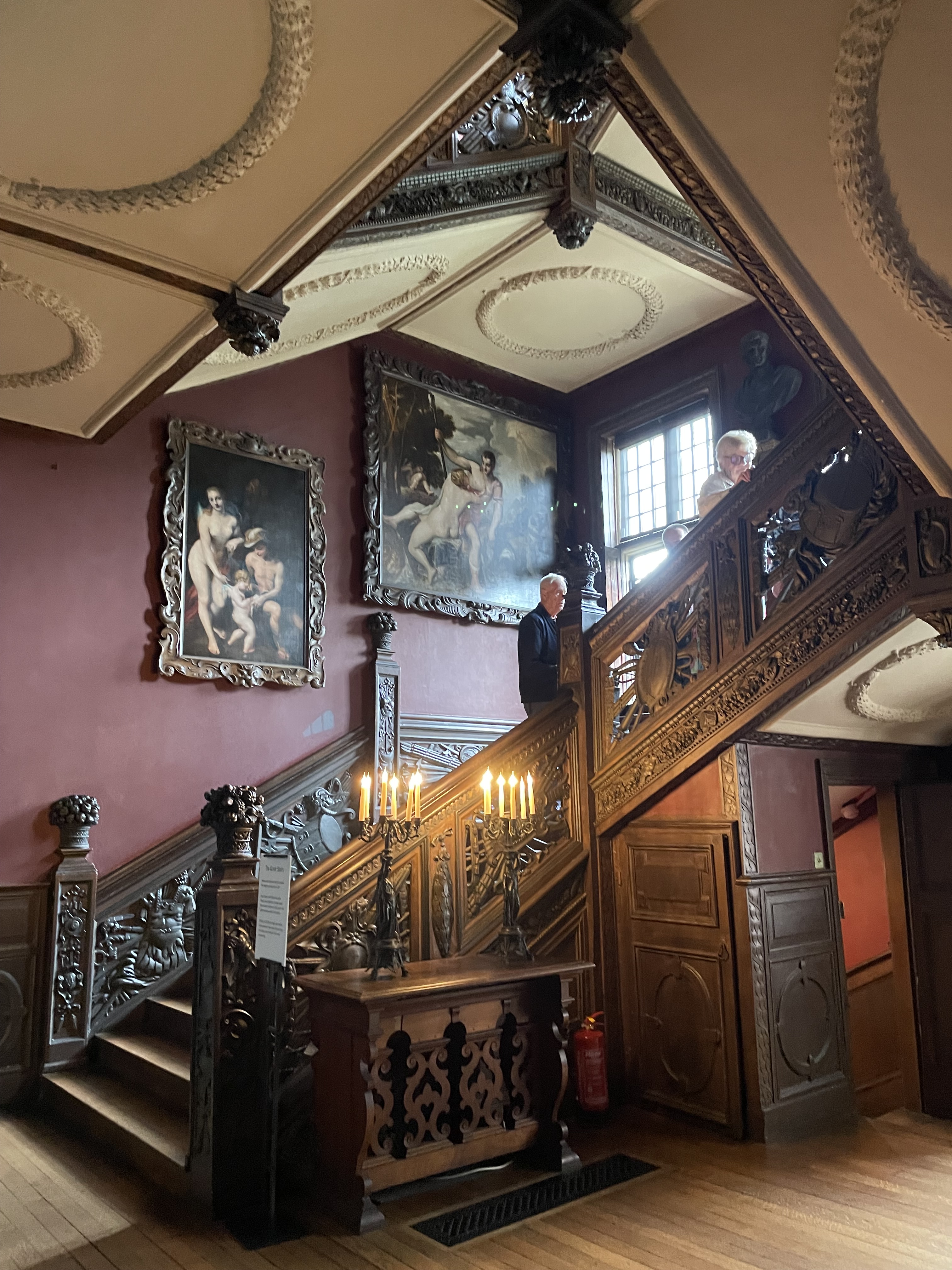
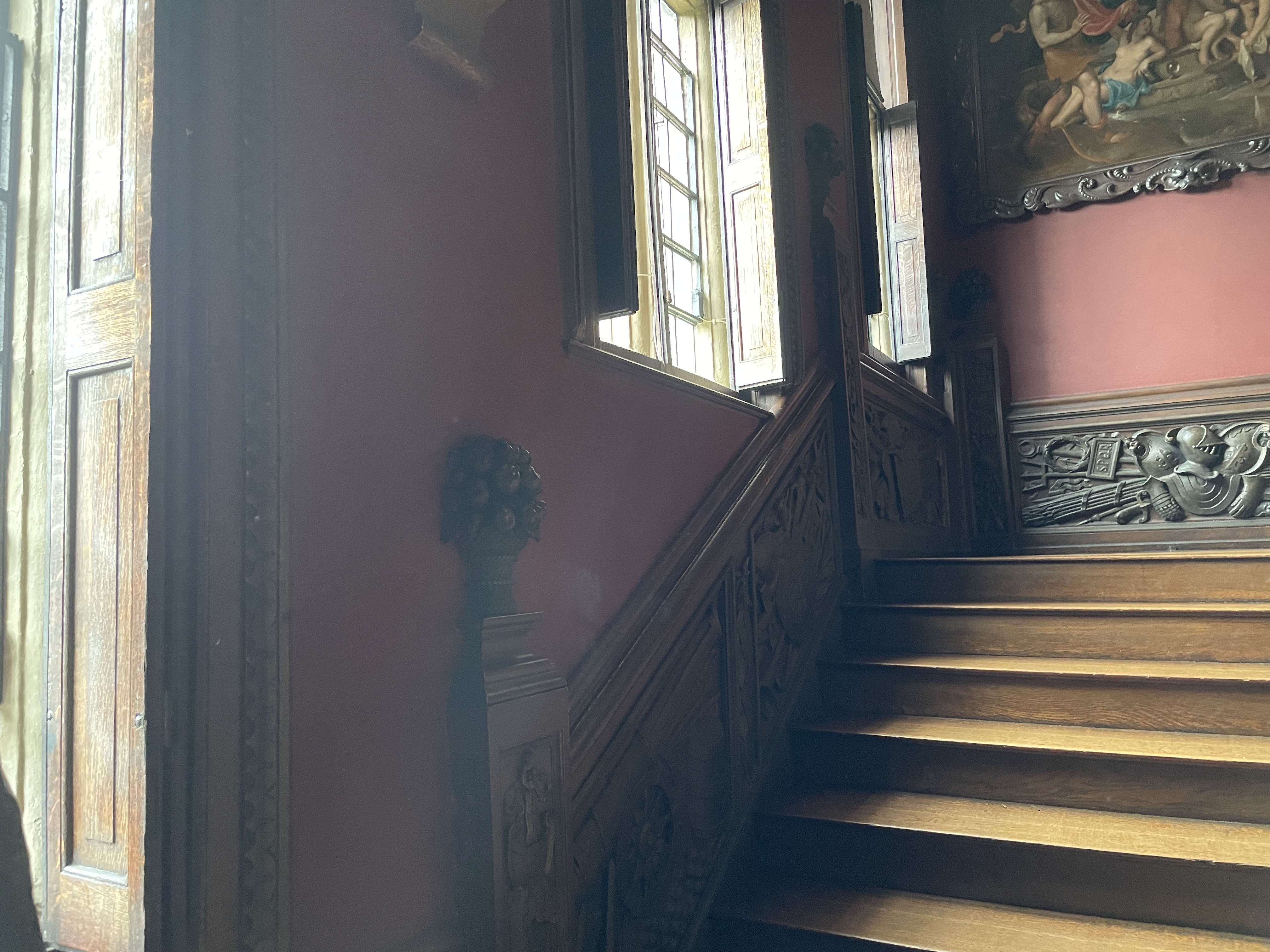
Ham House is a fantastic time capsule of pre English Civil War times. With the sort of decoration I expected to find inside Kew Palace, with plenty of gilding. It also made me smile when I saw the staircase was a wooden version of the one that had been painted onto the wall to save money in the behind the scenes spaces in Kew Palace.

The Ham House staircase
The remnant of the wall aspect of the staircase in kew Palace before it became a palace
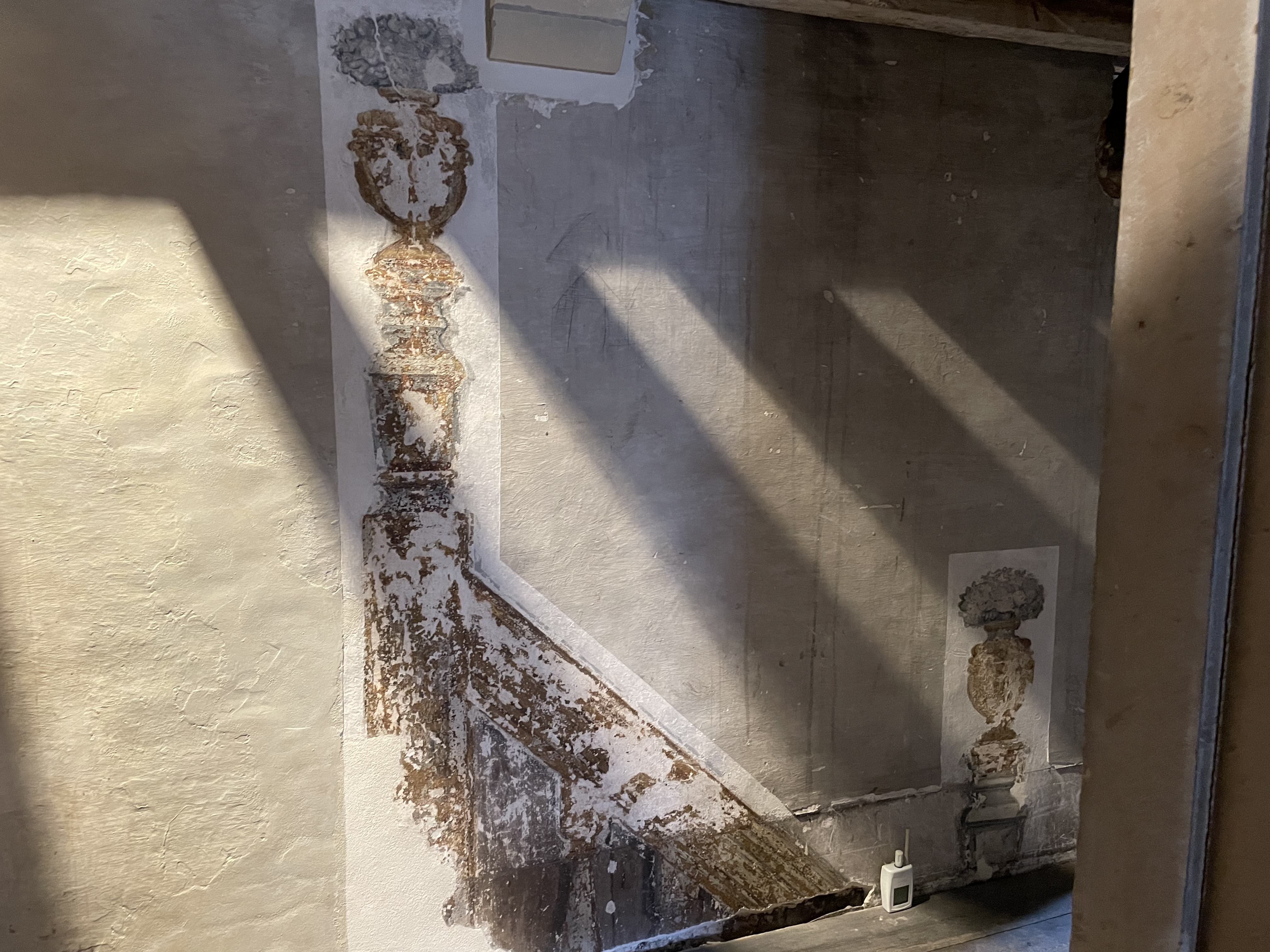
This makes me wonder if the silk merchant who owned Kew Palace before the Royal Family, had this painted decoration done to match his grander neighbours’ actual staircase.

What a fantastic gem of a house, though, and such a surprise settled in between Kew and Hampton Court. My mind was spinning with imaging how life flowed along that little stretch of the river Thames in the 15th-19th Centuries. So many stories in there… One day I’l write at least one story about this fascinating period. I did have one particularly good idea but I will keep that to myself. 😉
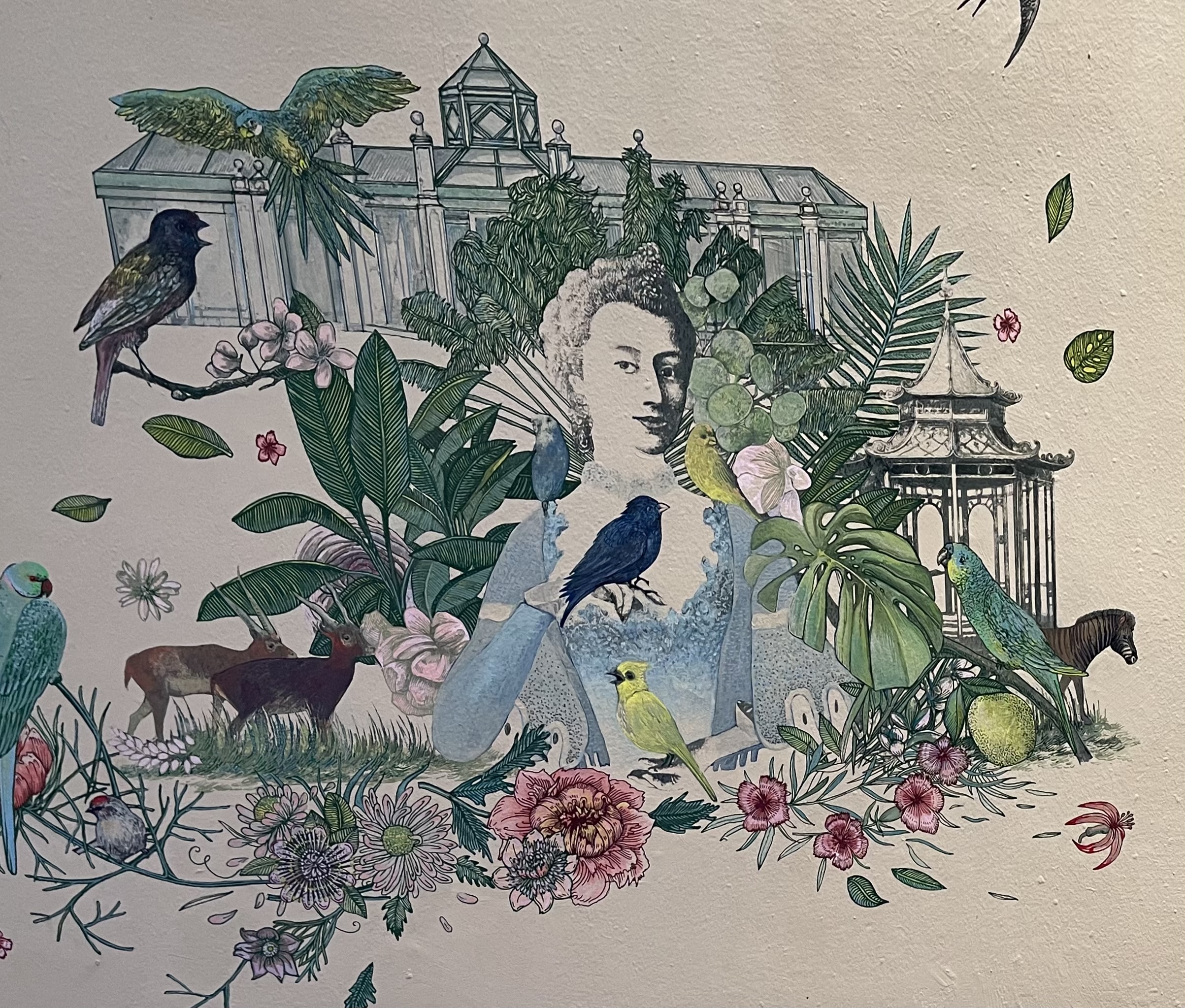
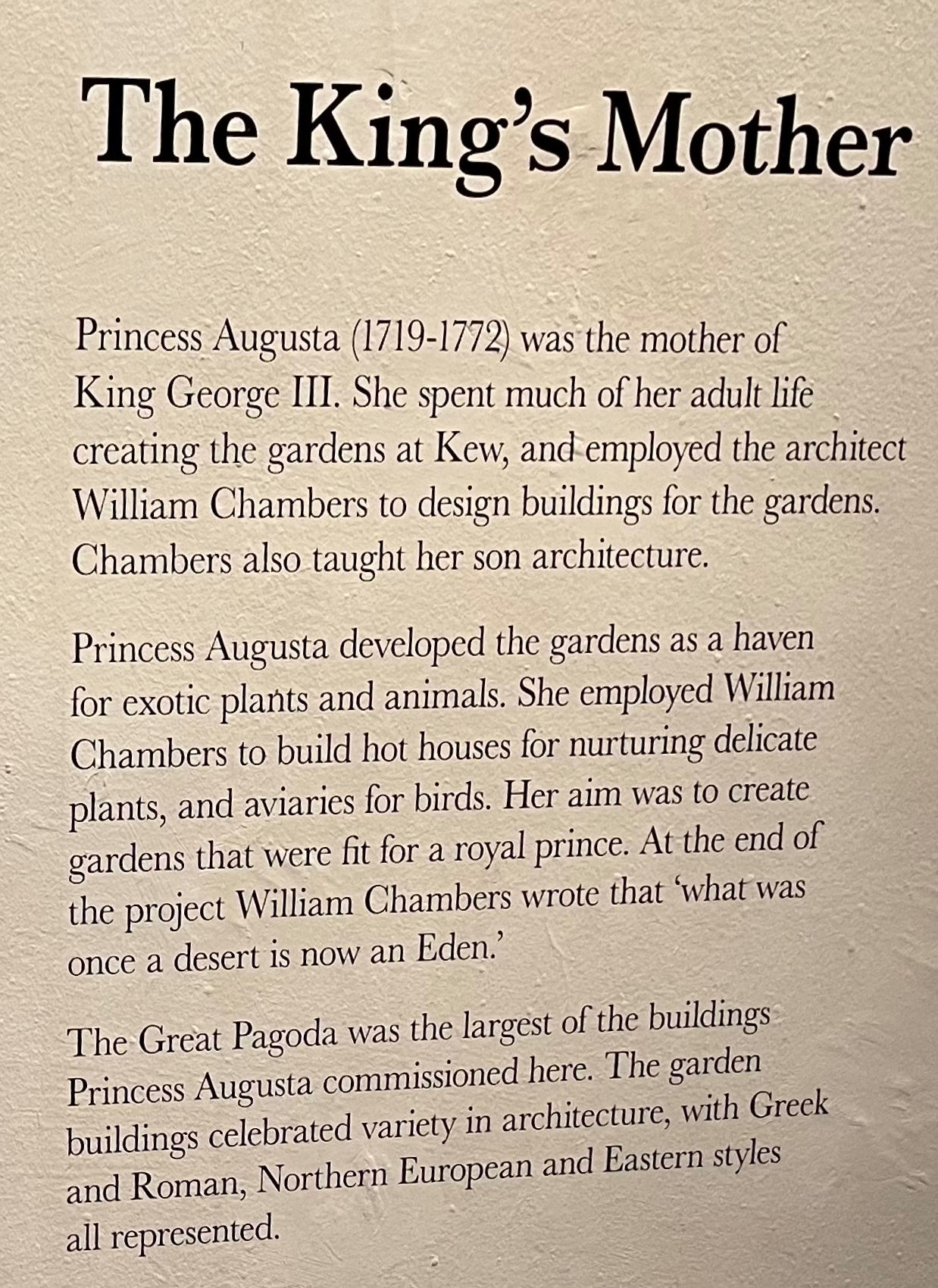
Before Queen Charlotte there was Princess Augusta (1719-1772)

In the 1700s knowledge was power. In a world where literacy was still rare, learning was something to be respected, and therefore anyone who needed to be respected had to be able to talk with a perspective of knowledge. A king, of course, then, must have enough knowledge to ensure they could stand out amongst other knowledgable people, so their wealthy and powerful courtiers would serve them out of respect and loyalty.

A king also needed knowledge to ensure they would not be fooled or tricked by others who were hungry for power. There were new challenges in the 1700s too, because the world had opened up for wealthy young men to travel, explore, and see the achievements of the world’s cultures for themselves. This immediately put princes at a disadvantage because travel was still dangerous, and in a volatile time for uprisings it was far more of a risk for the heir to the throne to travel.

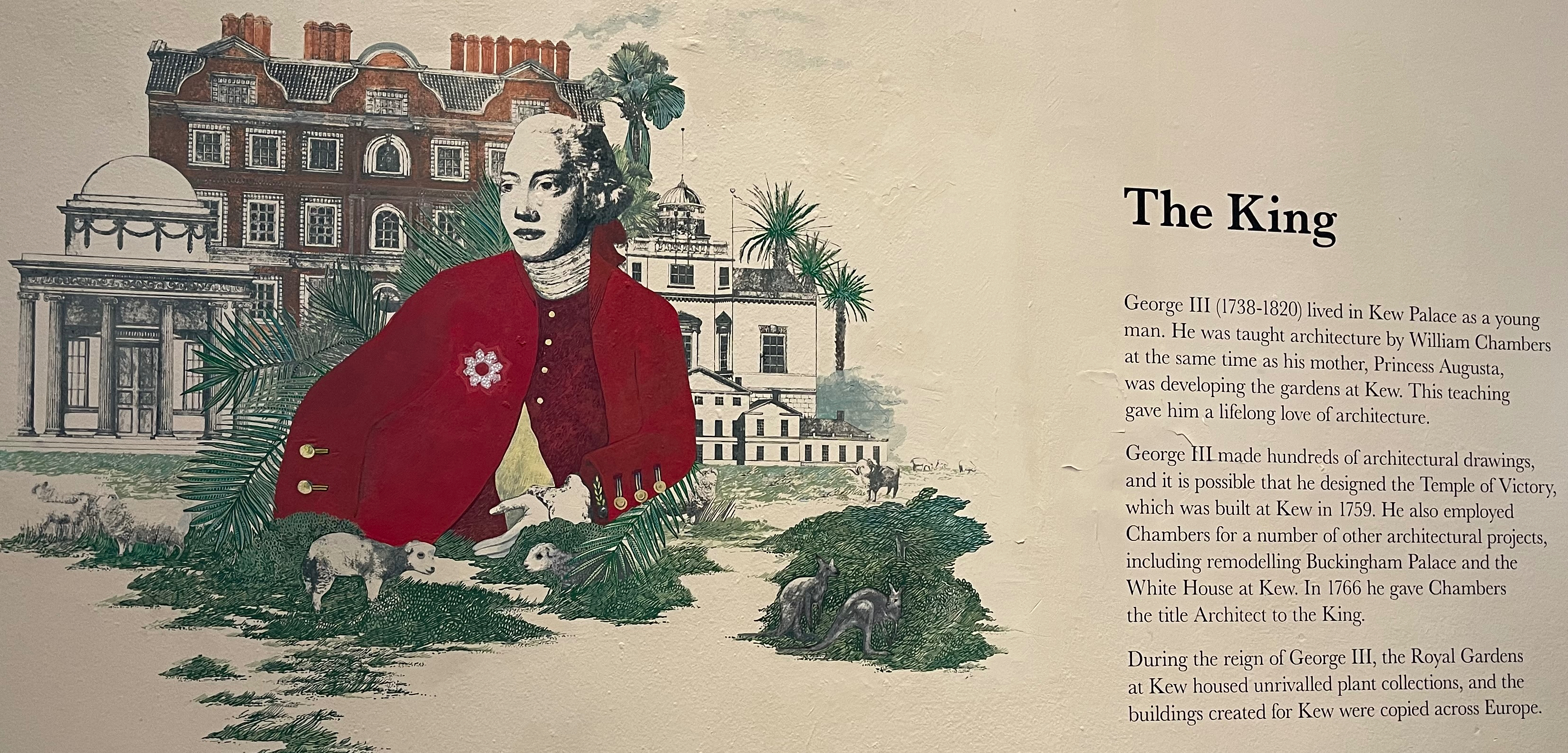
King George III’s mother, Princess Augusta, realised this and created a space King George III could experience and learn. She wanted her son to succeed when he became king. The White House that was at the time the palace used at Kew, on the edge of the Thames, then outside London, was where the princes were tutored, so, to enable George’s learning Princess Augusta redesigned the gardens.

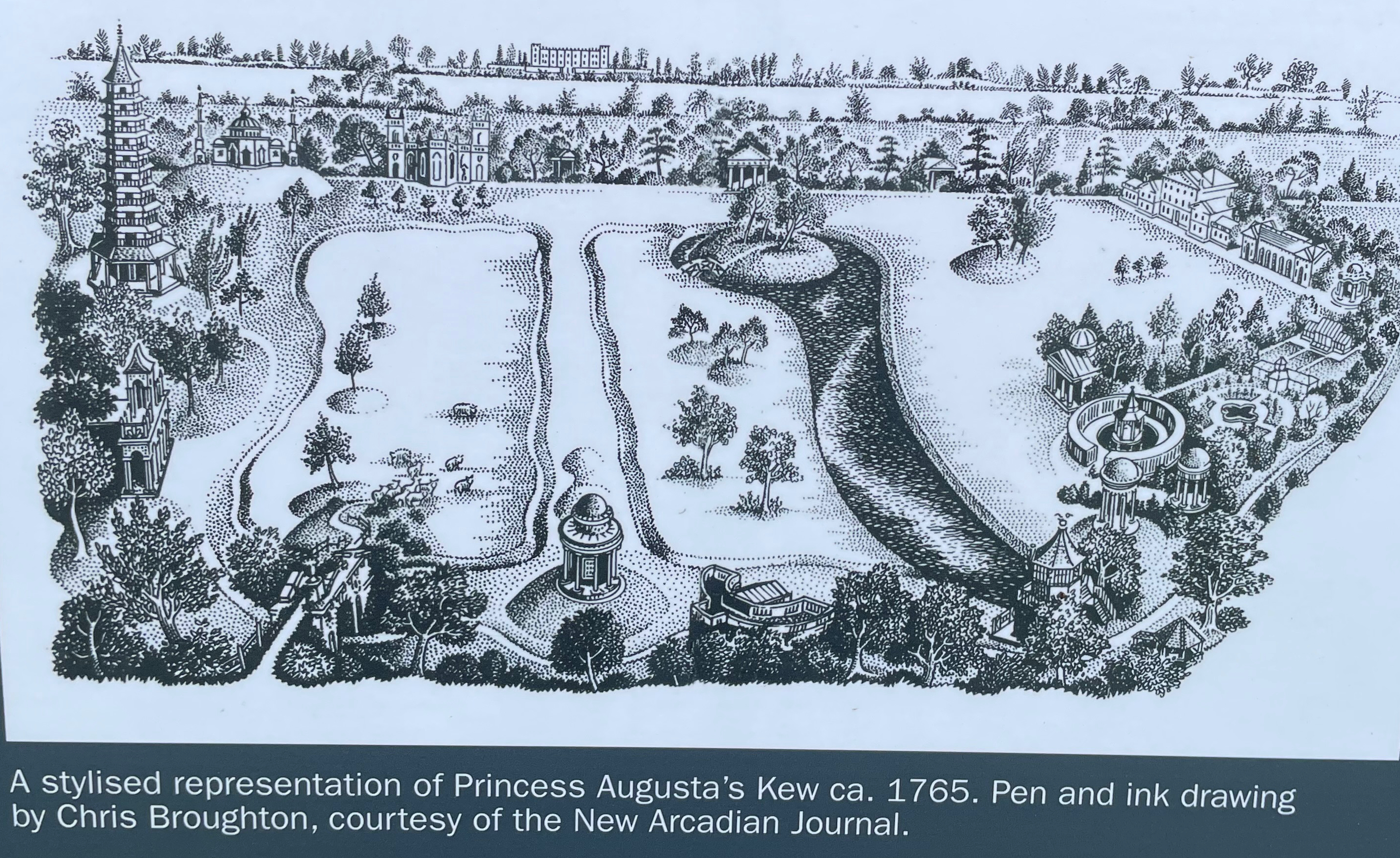
Below is the garden she planned for her son with designers and architects who sought to recreate the experiences of the world outside the palace gardens.

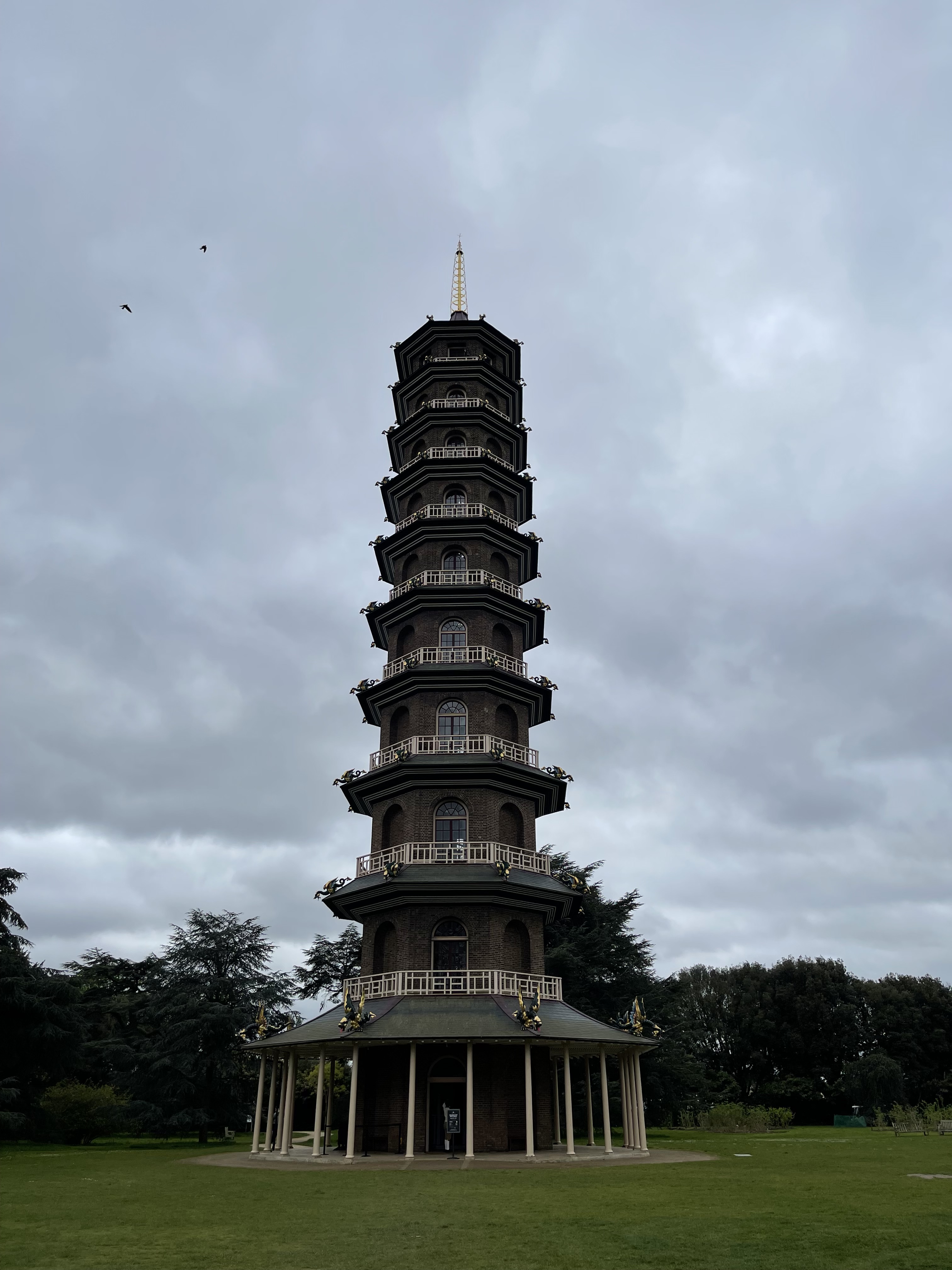
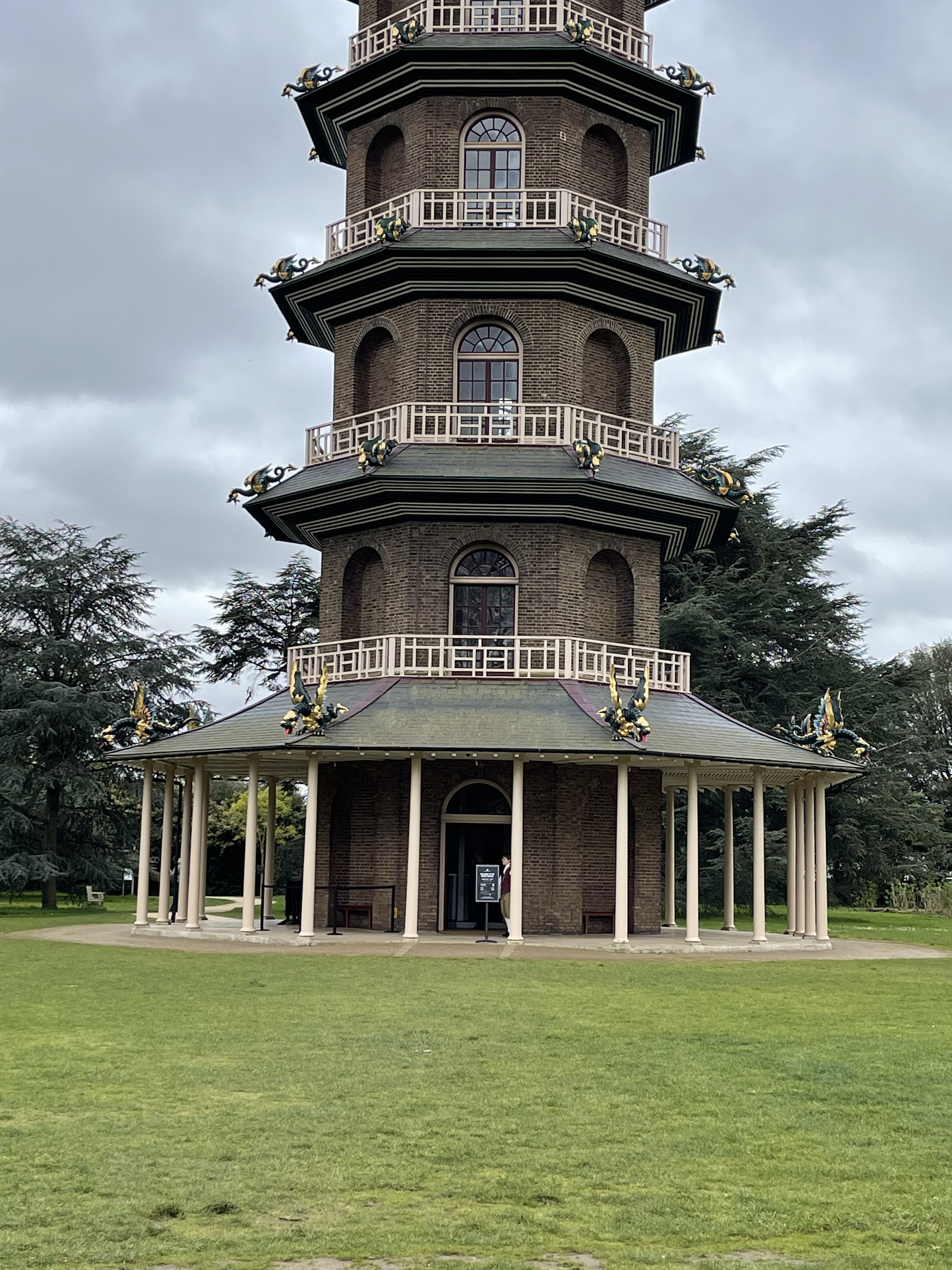
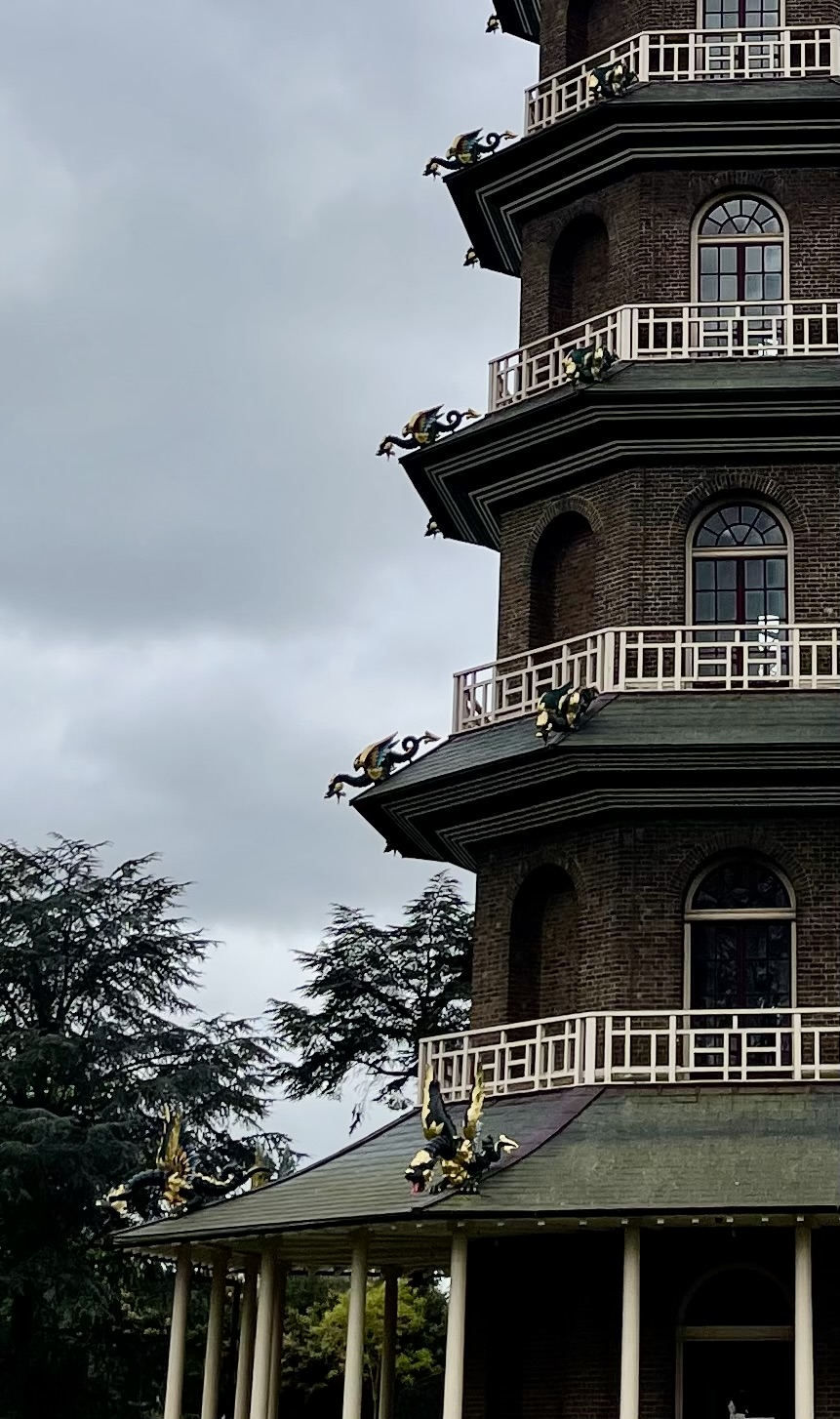
The image above, however, does not really express the spectacle of the gardens in the 1700s. Some of the folly buildings have gone, but the tall, dramatic, Chinese style Pagoda on the left in the above image has recently been refurbished, and this alone shows just how much was invested into creating a stunning landscape for young George to explore and expand his understanding of the world outside the palace. The Pagoda is thought to be the tallest building in the country at the time it was built, and George III would have studied and watched how this was built.

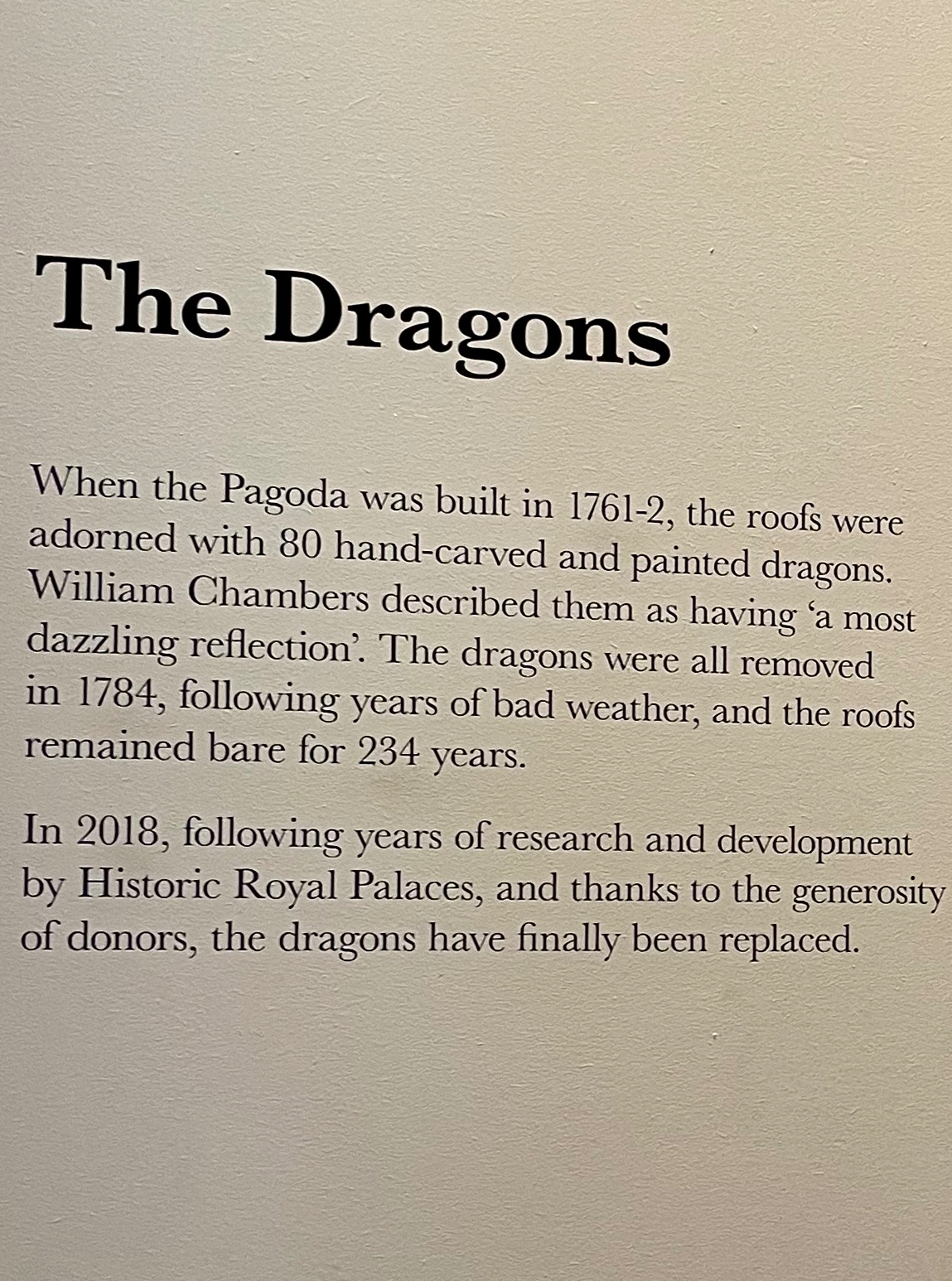
The Images below are of the Pagoda as it is now. I hope from these pictures you can see how grand this is and therefore how much the Princess invested into her son’s garden and the development of his knowledge and experience.

To give you an idea of the size of the Pagoda, someone is standing in the circular porch, there is also a video about the restoration available here . (You can click on the images below to view them in full).

When I saw this amazing Pagoda built in a Chinese style in the palace gardens at Kew, I thought of the Chinese inspired interiors of the Royal Pavilion in Brighton. The Royal Pavilion in Brighton was built for George III’s son and heir, Queen Charlotte’s eldest son. The Regent who became King George IV. The Royal Pavilion looks like an Indian Palace on the outside but is dressed like a Chinese palace inside with gold dragons holding up chandeliers and curtains. You can see inside the Royal Pavilion here on the museum website. My mind connected the two buildings because George IV did not get on well with his father and I can imagine him wanting to make something even more impressive than the Pagoda. Or perhaps, as a boy King George IV would have lived amongst his grandmother’s follies too and perhaps he held on to fond memories of the Pagoda from his childhood. King George IV was an obsessive collector of foreign artefacts.

King George III was well known for his interest and knowledge in botany, he was nicknamed ‘the farmer’ because of his involvement in the practical management of his royal land estates. It’s commonly known he returned to Kew when he became mentally ill because Kew palace and its gardens were a comfort to him. He loved Kew, and from this perspective, of an Eden created especially for him by his mother, I can understand why.

The layout of the garden at Kew has changed since the 1700s, but the garden is now The Royal Botanic Gardens, which is a wonderful legacy of Princess Augustus’s desire to teach her son. What she started is still a place of learning that’s now accessible to everyone.

Copyright for the images of information boards belongs to Kew Gardens.