The tale of Kitty Hunter – another of my stories of scandalous women

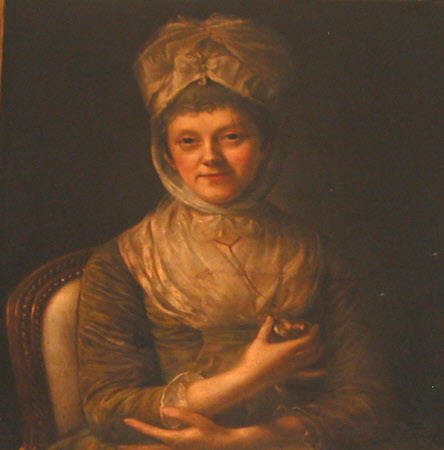
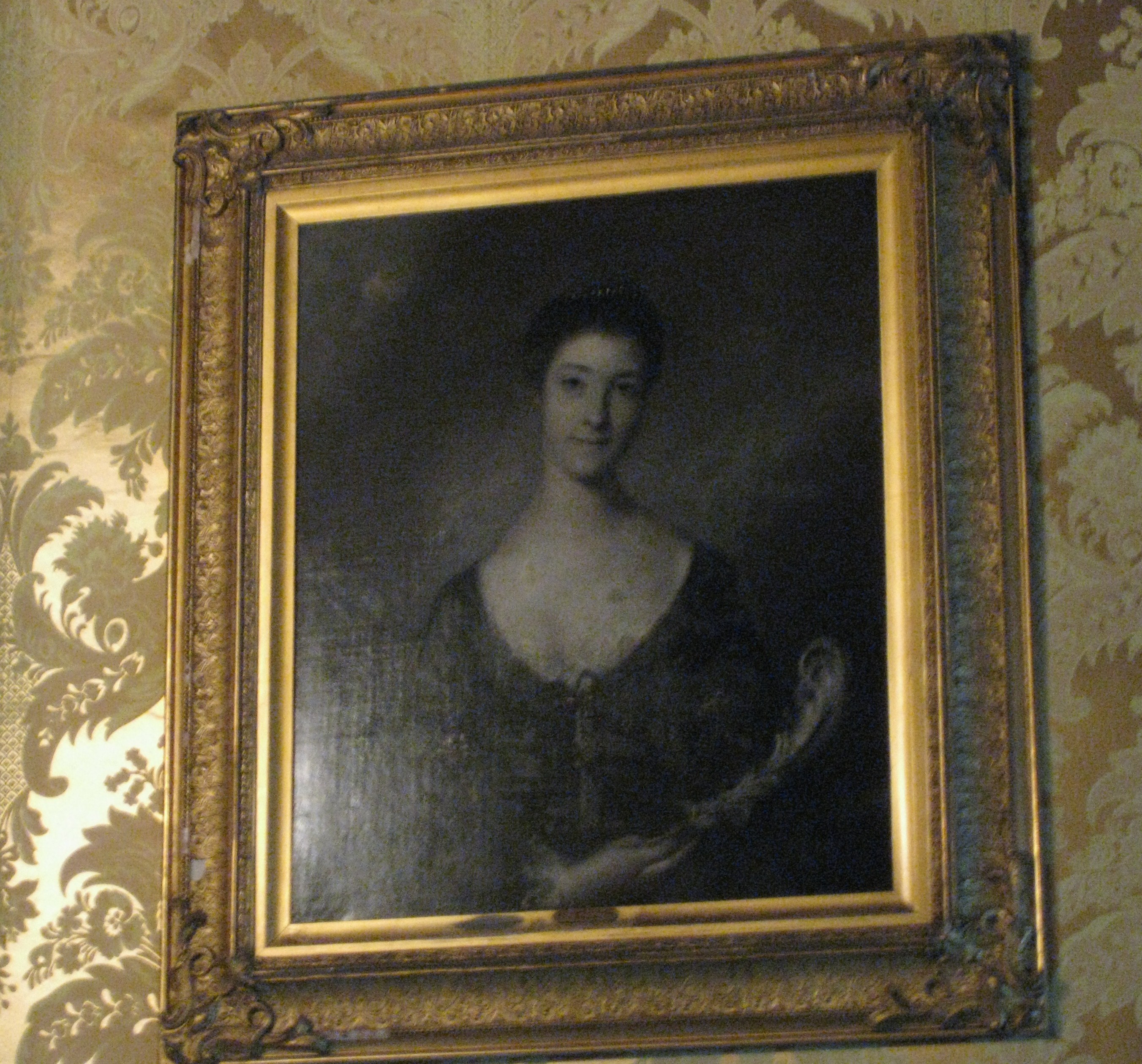
The picture of Kitty Hunter I saw at Longleat House

I was walking about Longleat House a couple of weeks ago, when I saw this picture. It was not particularly obvious. It was hung above a door in one of the rooms in the house and unless you turned and looked back you wouldn’t notice it.

I always look at the portraits in historic houses because they give me ideas for clothing and hairstyles and a sense of potential characters for my writing. Some portraits just scream a tale to be told.

There is one of a very sly looking chap at Stoneleigh Abbey, he’s from the 19th Century and has a moustache and a wicked twinkle in his eyes. None of the guides there have ever been able to tell me who he is, but he looks awfully like a Mr Wickham. However…

When I looked up at this picture I had that sense that this woman had a story to be told. I don’t know why. There was just something in the way she was holding her head and smiling, all confidence and come hither. I looked at the list of portraits I held in my hand which were left in each room and scanned through the list, but the name of the woman in this portrait wasn’t on it. So I turned to the guide who was sitting in the room and asked, “Who is that?”

“Kitty Hunter, the mistress of the Duke of Pembroke,” he answered.

Well now of course my interest was piqued, especially as Pembroke is a name I have borrowed for a character in my book. So then I had to discover her scandalous story.

Here it is…
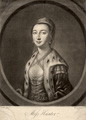
Kitty Hunter

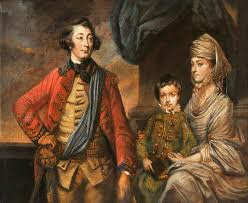
Catherine (Kitty) Hunter was the daughter of Thomas Orby Hunter, an Admiralty Lord, so very respectable, or should have been, had she not run off with the Earl of Pembroke.

At the end of this blog are elements of transcripts of letters, written by Horace Walpole at the time. These tell the story and express the horror, excitement and gossip which spun around London high society when the elopement occurred.

The couple did not decide to have a discreet affair. In Horace Walpole’s letters he describes witnesses to the intrigue (the 18th Century word for affair) at a ball on the Wednesday evening, as though it was plainly obvious to the whole room what was going on. I can just imagine the twenty-eight year old Earl of Pembroke eyeing the twenty-two year old Kitty with a lustful look while she batted her eyelids and flirted, not doubt outrageously, if it drew so much attention.

Henry Herbert, 10th Earl of Pembroke

Can you picture him leaning in close and perhaps touching a little too much and a little too openly. Maybe they were laughing and drawing the eyes of the whole room as they danced. Certainly they must have spent considerable time with one another for their interest in one another to have been noted so particularly, in a period where only two dances were supposed to be allowed to any one man in a night.

The elopement followed the next night, so at some point in the hours they had been flirting at the Middleton ball, they had arranged the details of their elopement.

The Earl is noted in Walpole’s letters below to have arrived home, having arranged for his wife to have plenty of company that night, with a bundle containing a disguise.

He ate in his rooms, and then donned the disguise of a sailor and black wig and apparently he and Kitty then left on a packet boat for France.

Other accounts say that the Earl’s family sent a man to find them and bring them back again, but having offered for his wife to join them (Shelley style), the Earl merely disappeared to France again with Kitty.

Walpole joked in one letter; ‘As Pembroke as horseman by most is accounted/ Tis not strange that his Lordship a [Kitty] Hunter has mounted’

When Kitty returned to England at the end of their whirlwind six month affair in November 1762, she was pregnant with his child.

Henry, the Earl of Pembroke stayed abroad and was reappointed to his commission as a General (and was rumoured to elope with another woman whom he ran away with on her wedding day).

Kitty’s and Pembroke’s child was named Augustus Retnuh Reebkomp – Retnuh an anagram of Hunter – Reebkomp an anagram of Pembroke.

The Earl arrived in England a few months behind her in the February of the following year and made peace with his wife in the March, paying Kitty off. He did continue to support and favour the child though who was brought up in Pembroke’s home for most of his life. Reebkomp did cause further arguments between Pembroke and his wife though. Especially when Pembroke attempted to have Reebkomp appointed in the army as a lieutenant under the name Augustus Herbert. Lady Pembroke immediately ensured Reebkomp kept his own surname, she did not wish him having his father’s family name which belonged to her own son. However Reebkomp was later renamed Montgomery.

Kitty must have had quite a character. I would guess she was fun-loving and not a woman to hold back. I should imagine she spoke animatedly and never cared about causing offence. I only make these assumptions because of the words Walpole recorded that the Earl of Pembroke wrote when he left his wife, he’d said he was bored with her ‘goodness and sweetness’. I assume then, Kitty was neither good nor sweet, and as the Earl also recorded in his letters, to tell everyone he was going, that he had ‘long tried in vain to make is wife hate and dislike him’ I am also assuming that Kitty must have been able to hold her own against such a man.It must have been fun and exciting to set everyone’s tongues wagging at the Middleton’s ball, while plotting to elope, you can just see that look of expectation in the eyes of her portrait which I saw at Longleat.

They fled at night in darkness, in disguise and on a boat, to go abroad. Well what could have felt more romantic and exhilarating than that?

I would also assume it was her character Pembroke fell for, as Walpole comments on how beautiful Pembroke’s wife was, more beautiful than Kitty. (although if you continue reading Walpole’s letters there are several further comments on Lady Pembroke’s presence at parties, and her beauty, so Walpole obviously had an eye for her himself.)

Augustus Hervey later Lord Bristol

Kitty cannot have disliked the life of a courtesan. Soon after her affair with Lord Pembroke ended she took a new lover, Augustus Hervey, later 3rd Lord Bristol – this was probably the point her son by the Earl of Pembroke, was taken into his father’s house. She certainly did not need to take on a new lover for financial support as the Earl of Pembroke had settled and annual annuity on her to support her – which was a common practice when men of good birth set aside a lover.

There is not so much known about her affair with Hervey except it produced another child, a boy, named Augustus for his father. A miniature of the child, painted by Gainsborough, is at Ickworth House.

Alured Clarke, Kitty’s Husband

Kitty was one of my luckier scandalous women. She found contentment in later life. She married Field Marshal, Sir Alfred Clarke in 1770.

Horace Walpole wrote at the time of Kitty’s elopement with the Earl of Pembroke, on February, 22nd, 1762;

In all your reading, true or false, have you ever heard of a young Earl, married to the most beautiful woman in the world, a Lord of the Bedchamber, a general officer, and with a great estate, quitting everything, resigning wife and world, and embarking for life in a pacquet-boat with a Miss? I fear your connexions will but too readily lead you to the name of the peer; it is Henry Earl of Pembroke, the nymph ‘Kitty Hunter.’ The town and Lady Pembroke were but too much witnesses to this intrigue, last Wednesday at a great ball at Lord Middleton’s. On Thursday they decamped. However, that the writer of their romance, or I, as he is a Noble Author, might not want materials,’ the Earl has left a bushel of letters behind him; to his mother, to Lord Bute, to Lord Ligonier, (the two last to resign his employments) and to Mr Stopford, whom he acquits of all privity to his design. In none he justifies himself, unless there is a justification, that having long tried in vain to make is wife hate and dislike him, he had no way left but this, and it is to be hoped he will succeed; and then it may not be the worst event that could have happened to her. You must easily conceive the hubbub such an exploit must occasion. With ghosts, elopements, abortive motions…

Kitty Hunter after she married Lord Clarke

Later in the letter Walpole jokes that ‘no soul could have read a line’ in some books ‘unless I had changed the title page, and called them,The Loves of the Earl of Pembroke and Miss Hunter’ obviously society in London had been a buzz with gossip about the story.

Horace Walpole was so moved by the story he told it to another friend in a letter, in which he declared;

Lord Pembroke – Earl, Lord of the Bechamber, Major General, possessed of ten thousand pounds a-year, Master of Wilton, husband of one of the most beautiful creatures of England, father of an only son, and himself but eight-and-twenty to enjoy this assemblage of all good fortune – is gone off with Miss Hunter, daughter to one of the Lords of the Admiralty, a handsome girl with a fine person, but silly and in no degree lovely as his own wife, who has the face of a Madonna, and, with all the modesty of that idea is dotingly fond of him… it is not yet known whither this foolish guilty couple have bent their course; but you may imagine the distress of the Earl’s family, and the resentment of the house of Marlborough, who doat on their sister… but did ever one hear of an Earl running away from himself?

On February 25th, Walpole then said;

No News yet of the Runaways… but all that comes out antecedent to the escape is more and more extraordinary and absurd. The day of the elopement he had invited his wife’s family to and other folk to dinner with her, but said he must himself dine at a tavern; but he dined privately in his own dressing-room, put on a sailor’s habit, and black wig, that he had brought home with him in a bundle, and threatened the servants he would murder them if they mentioned it to his wife. He left a letter for her, which the Duke of Marlborough was afraid to deliver to her, and opened. It desired she would not write to him as it would make him completely mad. He desire the King would preserve his rank of Major-General, as some time or the other he may serve again.’

He concludes their story with a note in a later letter dated, March, 29th, 1763;

Lord and Lady Pembroke are reconciled, and live again together. Mr Hunter would have taken his daughter Kitty too but upon condition she should give back her settlement to Lord Pembroke and her child : she replied nobly, that she did not trouble herself about fortune, and would willingly depend on her father; but for her child she had nothing left to do but take care of that, and would not part with it; so she keeps both, and I suppose will soon have her lover again too, for my Lady Pembroke’s beauty is not glutinous…

Jane Lark is a writer of authentic, passionate and emotional love stories.

See the side bar for details of Jane’s books, and Jane’s website www.janelark.co.uk to learn more about Jane. Or click  ‘like’ on Jane’s Facebook  page to see photo’s and learn historical facts from the Georgian, Regency and Victorian eras, which Jane publishes there. You can also follow Jane on twitter at @janelark
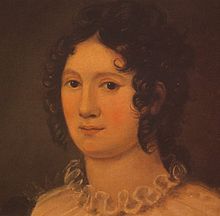
My Scandalous woman today is Claire (Jane) Clairmont – Byron’s mistress and Mary Shelley’s (who wrote Frankenstein) stepsister

Jane (later Claire)Clairmont

Well, my title has kind of given away what made Claire scandalous, but there was far more than her affair with Lord Byron, the infamous poet and seducer. So let’s begin at the beginning.

I mentioned Claire last week, when I told her other stepsister’s, Fanny Imlay’s, sad story.

Claire was born, Jane Clairmont, and grew up being called Jane.

Claire was three when her mother, Mary Jane Vial Clairmont, married, Mary’s father, William Godwin, and Claire was the youngest of the girls, but only eight months younger than her stepsister, Mary Godwin (later Shelley).

If you didn’t read my blog last week, then for your benefit, Claire also had a second stepsister, who was Fanny Imlay as mentioned above, a half-brother, and a half-brother who was born from the marriage between Claire’s and Mary’s parents.

Like Fanny, Claire had conspicuous beginnings, she was illegitimate. Her father is now known to be Sir John Lethbridge of Sandhill Park. Her mother had hidden both Claire’s and her brother’s illegitimacy, changing their surnames to Clairmont and moving away from the locality she grew up in. Perhaps Claire never even knew she was illegitimate.

The relationship between Claire’s mother and her stepfather was known to be volatile, to say the least. Both were intelligent and outspoken, and frequently argued, and Claire’s mother never held back on her opinions and openly favoured her children over Mary and Fanny.

In his younger days William Godwin had been politically active and preached anarchy, when Claire was growing up though he wrote and published children’s books with Claire’s mother.

Through her mother’s preference for her, for a while Claire was able to attend boarding school without the other girls, and she learned to speak French fluently and is known to have spoken other languages in later life. So clearly she had inherited her mother’s intelligence.

But Claire was caught up in the Regency whirl of romance in the 1800’s when she fell into the orbit of the poet Shelley. Shelley respected Claire’s stepfather’s views on anarchy, and he preached free-love.

Oh you thought that was invented in the 60’s? No. It’s just in the 60’s women could then cease falling pregnant as a consequence.

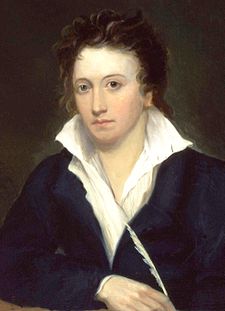
Percy Shelley

In the early 1800s Shelley, preached communal living, and spoke of the rights of women to choose their lovers and instigate affairs. (Mary’s and Fanny’s mother had written on the subject of the freedom of women, which was another reason why Shelley had sought the family out only to make friends with the three girls).

Can you imagine Claire and Mary, who knew Shelley from the age of fifteen, sitting in their small family parlour, watching and listening to Shelley speaking to their older sister, Fanny, avidly engaged, as he discussed his beliefs and debated with Fanny on her mother’s writing. Let’s remember Shelley was a celebrity of the time and famous for his romantic poems and gothic tales at this early stage in his life.

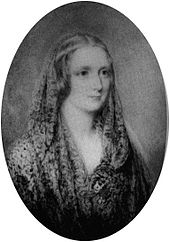
When Fanny was sent away by her father, perhaps because William Godwin feared an affair, Shelley turned his quixotic (love that word, it means dreamy, imaginable, romantic) attentions on Mary.

But intelligent, exuberant Claire was not to be set aside. She was not to be cut off from this beautiful exciting world which she had only just begun picturing.

Mary Godwin later Shelley

Each generation thinks it invents ways of life, but if you have followed my blogs for a while you’ll know my abiding theory is that people now are exactly as people have been all the way back through history, it is only our environments and the rules about us which have changed. People did and thought the same things back then as we do now.

Claire was a groupie, wrapt up in Shelley’s ideal, of course she was not about to let herself be excluded, she’d do anything to be kept in the loop. So she took on the role of co-conspirator when Mary and Shelley’s affair began, encouraging and supporting their budding love, enjoying and revelling in the intrigue.

When Shelley then planned to run away with Mary, leaving his wife and children, whom he’d already separated from, behind, Claire ensured she was a part of the plan.

They left the country, leaving Fanny, who’d thought herself loved by Shelley, behind and excluded, still banished in Wales.

Claire’s mother followed them, not necessarily to urge Shelley and Mary to come back, Shelley was paying William Godwin money after all and helping to support him and keep his increasing debts at bay, but she desperately wanted to save her own daughter from such disgrace.

In true rebellious teenager style, Claire was not to be persuaded. She had an exciting life ahead of her with beautiful horizons of a romantic dashing life, in which she would become notable, famous and remembered. Why would she go back?

Her mother returned from Calais without Claire, but then she had walked the path of mistress, she must have known what Claire was getting herself into, and if Claire did know her origins, then she would have had a strong argument not to be persuaded. Her mother could hardly judge.

She, Mary and Shelley then progressed on a tour of the war-torn continent. It was not a time for travel, there were food and accommodation shortages, and they mention in their journals walking through villages burned to the ground. But Shelley ‘and his two wives’ fancied themselves in a romantic novel and read and wrote their way through Europe. You can still read their Journals of the time.

Claire clearly had a fanciful imagination but lacked the family talent for writing. A clue as to the state of her imagination and her involvement in romantic notions was what she wrote in her journal when reading King Lear, ‘What shall poor Cordelia do – Love & be silent’ and ‘Oh this is true – Real Love will never show itself to the eye of broad day – it courts the secret glades

Mmm, I wonder if she was in fact speaking of her own affection for Shelley. Despite rumour saying he slept with both girls, and Claire actively imagining herself, and proudly believing herself, the third in their free love relationship. There is no evidence there was anything beyond friendship between Shelley and Claire. However comments such as this and something I’ll mention later do sort of imply there was something.

It was during this time that Claire, changed her name from Jane Clairmont to Claire, which she considered more romantic, she had tried Clara first.

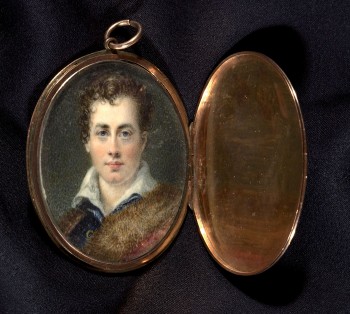
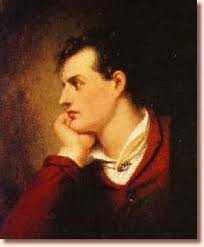
Lord Byron

When Shelley and Mary returned to England, Claire continued to live with her stepsister and her stepsister’s lover, supported by Shelley and revelling in the infamous indecency of their relationship.

But living in her sister’s and Shelley’s shadows perhaps began to gall. Or maybe she no longer liked playing second fiddle to her sister and wished to have pride of place with someone. So she sought to snare a poet for herself and shamelessly threw herself at Lord Byron.

By then eighteen, Claire wrote to him daily, initially asking for his advice on becoming an actress or a writer, and then gradually becoming more and more blatant in her interest and her offers.

At the beginning she proclaimed that when she saw him she only wished to sit on a stool at his feet – human instinct – exactly the same in the 1800s as 2012 -(I’ll talk far more about this in my new book blog at some point). Then later she told him he only need accept ‘that which it has long been the passionate wish of my heart to give you’.  The little Groupie.

Byron

Byron did indeed eventually accept, but like her mother there was a consequence for Claire, who still imagined herself in love and hoped for far more than Byron gave.

She was nothing to him, Claire was not her sister, Mary.

Claire had possibly hoped to win Byron’s undying love. She only earned his almost immediate desertion.

Her affair with Byron occurred in his last months in England, at the time scandal raged about him. He’d declared himself depressed and Claire was probably only a moment’s entertainment to take his mind from his woes. Soon after their affair began he left the country for Europe in self-imposed exile.

But still enthused by romantic fiction and blissful illusions of excitement and grandeur Claire refused to be separated from him and urged Shelley to follow, Shelley was after all of a similar mind to Byron, a political revolutionary. So once again Claire, Mary and Shelley set off for the continent.

We can only guess whether or not Claire knew she was carrying Byron’s child at the time, but if she did not know already, she learned the truth on her travels, as did Mary and Shelley. By this time Mary had already born Shelley’s illegitimate child.

Byron had made it clear to Claire he had no further interest in her before he’d left England, but he was a man who inspired fixation (more on that in later blogs). He knew how to charm women (huh-hum and potentially men).  Scandal and desperation followed him like a plague.

Byron recorded his opinion on the subject of Claire and her presence in Europe in a letter dated 20, January 1817;

‘You know, and I believe, saw once that odd-headed girl, who introduced herself to me shortly before I left England, but you do not know, that I found her with Shelley and her sister at Geneva. I never loved her nor pretended to love her, but a man is a man, and if a girl of eighteen comes prancing to you at all hours of the night, there is but one way, the suite of all this is that she was with child, and returned to England to assist in peopling that desolate island. This comes of “putting it about” (as Jackson calls it) and be damned to it, and thus people come into the world.’

Now do you see what I mean about people being the same then as now. Could that not have been written yesterday, apart from the structure of the language. The thought is the same.

I bet you assumed the phrase ‘putting it about’ recently invented, as you did free love.

Well poor old misguided Claire, had, put it about, as Byron so bluntly described, and despite taking her to his bed again to end her endurance in persuasion, he still then turned her away once more.

To set this in context it was in this period that Shelley and Byron, Mary and Claire, concocted awful gothic stories for entertainment to terrify one another, and it was in this period the idea of Frankenstein was born in Mary’s head.

When Claire’s cast for Byron failed again, Shelley brought her home to England to birth the child. He smuggled her back into the country in secrecy and hid her away in Bath, seeking to keep the pregnancy quiet. He had his own battles to fight and needed no further scandal linked to him at the time.

It was during Claire’s pregnancy that Fanny, her eldest stepsister committed suicide, as I spoke of last week.

Shelley’s wife also committed suicide within two months.

He must have thought himself heavily burdened at the time.

Heaven knows what Claire thought now facing the consequences of the pleasure of free love. In later life she was known to say her affair with Byron had ‘given her only a few minutes of pleasure but a lifetime of trouble’.

Allegra Byron

When the child was born, with Shelley deeply in debt, as was Claire’s stepfather, and Mary and Shelley married, the trio set off abroad again, taking Byron’s daughter, Allegra, with them. They thought the child would have a better life with her father, although Claire probably also still hoped that she too might have a future with Byron. She did not.

All through her pregnancy Claire had continued to seek Byron’s attention and affections, writing to him frequently without any recognition and when she caught up with him on the continent, he initially refused to have anything to do with the child. But eventually Claire, or perhaps Shelley, persuaded Byron to take Allegra. It meant though that Claire must cut herself off from her daughter and cease her obsessive pursuit of Byron. It was the condition by which he took the child––that Claire leave him alone. (Yes there were stalkers in the 1800s too).

Claire consented, though afterwards she was horrified by Byron’s ill-treatment of Allegra, I doubt he felt any affection for the daughter his brief liaison with Claire had created. He packed Allegra off to a house he didn’t live in, to be brought up by servants, and later had her placed in a convent where she died at the age of five. Claire had seen her daughter a couple of times but not for two years at the point Byron admitted her to the convent. Claire had sought to plot to steal her away from the convent but Shelley would not agree to the plan and she did not feel able to do it alone.

Here is a link to a copy of the letter Claire wrote to Byron when he told her he was putting Allegra in a convent.

http://shelleysghost.bodleian.ox.ac.uk/?location_id=63#Transcript

And here a link of Byron’s reply, refusing to communicate with Claire.

http://shelleysghost.bodleian.ox.ac.uk/?location_id=64#Transcript

Also another link to a letter written by Allegra to her mother, click on the transcript tab for the content of the letter.

http://shelleysghost.bodleian.ox.ac.uk/?location_id=65

After her affair with Byron, Claire remained with Shelley and Mary until Shelley’s death.

Whether or not there was anything between Shelley and Mary physically who knows? But there were rumours that Claire bore Shelley a child, which Byron publicly believed and he had spent time with the three of them.

We learnt in my last blog that Shelley was quite capable of subterfuge when he covered up Fanny’s death so the scandal would not reflect on him. Did he therefore do the same in Naples in 1818. He is known to have registered the birth of a child on the 27th December, the mother’s name was given as an Italian woman. The child was immediately placed in foster care in the city at the time and although Mary denied any possibility of the child being Claire’s, Claire was known to have been ill within hours of the child being registered. Perhaps? Certainly Shelley left Claire a generous sum in his will. For favours rendered?

That child also died, left behind in Naples, the child only reached the age of one.

In a letter on the link  below, there his a rather odd plea from Shelley, who was at the time again in the company of Byron, claiming to Mary that if she has heard that anything has occurred between himself and Claire, it is not true. (Me thinks the man doth protest too much).

http://shelleysghost.bodleian.ox.ac.uk/?location_id=66#Transcript

As Claire grew older though, after such bitter experiences and such public rejection from Byron, her desire for men waned. After Shelley’s death, Claire separated from Mary and lived more peacefully adopting the life of a governess and companion in a number of positions, with various families who treated her well.

When she wrote to her sister, Mary, of men she joked about their interest, but expressed little return affection, joking once that two men had commented on her disdain, and that therefore she might shock them and fall for them both at once. At one point in letters she mentioned an idea to write a story expressing the ‘erroneous opinions’ about male and female relationships, planning to cite the beliefs of both Byron and Shelley. Clearly she was no longer blinded by her youthful infatuation for romantic poets and their free love principles.

Still Claire, unlike many of my stories of scandalous women, had a happier ending, out living most of Byron’s and Shelley’s set and living a contented, more simple and peaceful life, less scandalous and more inconspicuous certainly.

She died at the age of eighty.

I have not read Mary’s Journal, I am going to, and next week I’ll tell Mary’s story. I love these juicy real life tales. Sad though when you think of the person who endured this life in reality. Clearly Claire found some happiness in the end but I suspect her youthful rebellion left her bitter and injured emotionally.

The Marlow Intrigues

Discover hours of period drama (2)


The Lost Love of Soldier ~ The Prequel

The Illicit Love of a Courtesan  

The Passionate Love of a Rake

The Scandalous Love of a Duke

The Dangerous Love of a Rogue 

The Secret Love of a Gentleman  

The Reckless Love of an Heir 

The Tainted Love of a Captain 

Jane’s books can be ordered from booksellers in ebook or paperback