A Lord’s Desperate Love Part Nine ~ A Historical Romance Story

A Lord’s Desperate Love

A Historical Romance Story

Part One

Part Two

Part Three

Part Four

Part Five

Part Six

Part Seven

Part Eight

Part Nine

Violet watched Geoff take off his hat and put it on a table in the hall. Then he took off his gloves too and dropped them on top of it.

She’d told Janet to leave the house for an hour or two. The maid had looked at Violet and then glanced at Geoff with a question in her eyes before disappearing. Violet’s reputation in this village would be shredded. This was not London. People would not turn a blind eye to such things. The gossip would spread within hours. She was entertaining a man alone – and when it was a man of Geoff’s quality, well.

She did not offer him tea, she did not wish him to stay, she had only proposed they come here to take their argument off the street so others might not hear him rail and swear at her.

Her heart lurched as he began unbuttoning his greatcoat. He had such long-fingered, masculine hands.

When she had seen him standing there with the sun behind him, placing him in silhouette, her heart had burst with joy and love, and an overwhelming sensation of recognition. Her heart knew and wanted him. She’d never felt like this before. And now, as he started stripping off his outdoor coat, she was intensely aware of the body she knew beneath his clothes too.

He’d said, I love you? “You are not staying,” she whispered as he slipped the third button free. Her body and her heart might want him, but her head had more common sense. There was the child.

“I am not going,” he answered with a brutal depth. “You are not throwing me out, Vi. You’ll have to find someone to do it physically if you wish to. I am not moving.”

Oh Lord. “Geoffrey…” Her heart raced. What did, I love you, mean anyway? Did it change anything between them? How could it though?

“Geoffrey, what, Violet? What is going on?”

She turned and walked into the parlour leaving him in the stone-flagged hallway. She had no way to make him go. When she turned back she saw him slip off his coat and turn to hang it on a peg near the door, as though he belonged here. He did not. But he had become a constant presence back in London and her body ached to step into his arms.

Her chin tilted up, when he turned again and entered the parlour.

“Why the blacks, Vi? Has someone died? I didn’t think you had any family left…” His words ran dry and he looked at her blankly for a moment then his gaze flashed hard and sharp. “Mayer was you maiden name wasn’t it? Your father’s name?”

He clearly knew more about her than she’d told him. She’d never spoken of her childhood to him. He was aristocracy and she had come from a family who had made their money from sugar plantations in the colonies. It was another reason he would not wish to marry her and not something she cared to discuss publicly, but there were those who remembered. Those who he had obviously been talking to behind her back. But had he been talking because he cared, or because he was prying…

“Did someone die?”

She didn’t know how to answer and so she did not, just stared at him.

“Let me take your cloak?”

He moved forwards. She stepped back, struggling to find the persona of the merry widow and some way to put Geoff off.

“Violet? What is going on?”

She turned away from him, her fingers trembling as they lifted to untie the ribbons of her bonnet. She did not answer because she could not think of anything to say – except the truth. Yet the truth would not do. She dared not tell. Her child. Their child. Was too precious to risk. It was so unlike her to feel confused. It had been a rule of hers to never let a man close enough to hurt her – but Geoff. I love you.

“Violet, speak to me for God’s sake.” His hand gripped her shoulder and turned her back. “I have been through hell. You vanished from London without a word. I visited every damned entertainment searching for you, for three nights, like an idiot. You were not there. Then when I finally call on you because I realised you were not looking for me, I discovered you gone. I have threatened your solicitor and throttled poor Selford. Then you lead me on this damned trail! I have stopped at every toll to find you, and stalked inns and agents in Bath.” He took a breath. “Violet, I don’t understand. Is this a game? Was I amusement? Because it was far more than that to me, and I thought, well… I thought it was bloody mutual.”

She opened her mouth but no words came. His beautiful hazel eyes shone like gold in the autumn sunlight pouring through the window.

“Let me take your bonnet.”

“No.” She stepped back as his hand lifted, her head tilting sideward, then slipped the bonnet off herself. It dangled by its ribbons from her hand for a moment as she took a breath, before letting her bonnet fall into an empty chair.

“Damn it, Violet!”

She found her voice at last and her words erupted with the confidence she’d oozed in London. “Must you keep swearing, Geoff.” But she did not feel confident here.

“Swearing? If you wish for swearing…” The next expletive was obscene, and certainly one a man should not use before a lady.

A blush burned her cheeks. Why must he be so obtuse?

~

A Lord’s Desperate Love is the  story of two of the secondary characters from the 2nd book in the Marlow Intrigues Series

~ ‘The Passionate Love of a Rake’.

The true story of a courtesan, who inspired The Illicit Love of a Courtesan, which I’ve been telling every Sunday, will continue alongside this, and if you fancy more reading, the 3rd book in the Marlow Intrigues series, John’s story, is out on 3rd April click on his cover in the side bar to pre-order. My lovely, moody, arrogant, fractured-golden-hearted Duke! Plus – so much going on – I Found you is reduced to $1.99 from $7 in the USA until 31st March (it is £2.99 in the UK)

Jane Lark is a writer of authentic, passionate and emotional Historical and New Adult Romance stories, and the author of a No.1 bestselling Historical Romance novel in America, ‘The Illicit Love of a Courtesan’.

Click here to find out more about Jane’s books, and see Jane’s website www.janelark.co.uk to learn more about Jane. Or click  ‘like’ on Jane’s Facebook  page to see photo’s and learn historical facts from the Georgian, Regency and Victorian eras, which Jane publishes there. You can also follow Jane on twitter at @janelark
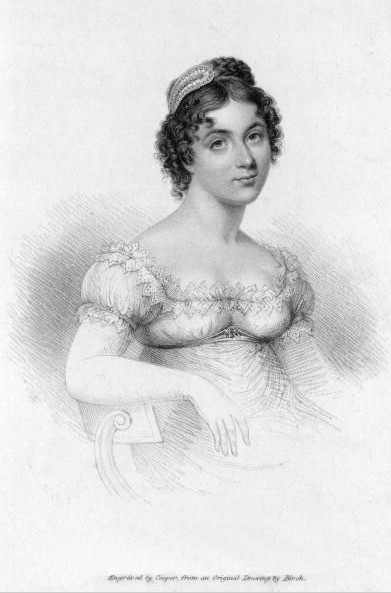
Harriette’s country retreat – including a trip to Regency Lyme Regis

Harriette_Wilson00I left you last week with Harriette scuttling off to a country retreat to avoid the temptation of town, and prove her constancy to poor young Lord Worcester, who was off to fight in the Peninsular war.

So let me begin this week’s post in Harriette’s words ‘In about two weeks after my arrival in this village, my reader may imagine me sitting at a little rural thatched window, in that beautiful country, addressing the following long letter to my sister Fanny.

But before I share with you what she wrote to her sister, here’s the usual recap of the background to this series of posts for anyone joining today, as usual if you have read it before skip to the end of the italics.

In 1825 Harriette Wilson, a courtesan, published a series of stories as her memoirs in a British broad sheet paper. The Regency gentleman’s clubs were a buzz, waiting to see the next names mentioned each week. While barriers had to be set up outside the shop of her publisher, Stockdale, to hold back the disapproving mob.

Harriette was born Harriette Debochet, she chose the name Harriette Wilson as her professional name, in the same way Emma Hart, who I’ve blogged about previously, had changed her name. Unlike Emma, it isn’t known why or when Harriette changed her name.

She was one of nine surviving children. Her father was a watchmaker and her mother a stocking repairer, and both were believed to be from illegitimate origin.

Three of Harriette’s sisters also became courtesans. Amy, Fanny and Sophia (who I have written about before). So the tales I am about to begin in my blogs will include some elements from their lives too.

For a start you’ll need to understand the world of the 19th Century Courtesan. It was all about show and not just about sex. The idle rich of the upper class aspired to spending time in the company of courtesans, it was fashionable, the thing to do.

You were envied if you were linked to one of the most popular courtesans or you discovered a new unknown beauty to be admired by others.

Courtesans were also part of the competitive nature of the regency period too, gambling was a large element of the life of the idle rich and courtesans were won and lost and bartered and fought for.

So courtesans obviously aspired to be one of the most popular, and to achieve it they learnt how to play music, read widely, so they could debate, and tried to shine in personality too. They wanted to be a favoured ’original’.

The eccentric and outspoken was admired by gentlemen who liked to consort with boxers and jockeys, and coachmen, so courtesans did not aim for placid but were quite happy to insult and mock men who courted them, and demand money for any small favour.

Harriette tells Fanny, in her letter, that she’s only just recovered from two full nights passed in a mail-coach, and that she wishes something romantic had occurred on route, they (she and her maid) ‘were neither ravished, upset, or thrown into a pond just as a lovely youth happened to be passing by.’ To save them, dashing young hero style – I presume 😉

Then she tells Fanny her first night was spent at the pot-house (inn) in the village, where she was offered the only room left, ‘containing two small, neat, white beds… The staircase was a ladder, or rather a ladder was the staircase. We will not be particular.’

Harriette was woken at daybreak by sunlight because there were no curtains covering the window, and in answer to her endurance she says, ‘I am sorry, really, for the most noble Marquis of Worcester! But the fact is, my very first thoughts on awakening, and my most sincere regrets, were for the miles which now separated me from poor little beautiful Meyler. In short having done everything right towards Worcester, I loved him much less for that very reason.’

Harriette then goes on in her letter to describe a fascinating trip to Lyme Regis, giving us another great insight into real Regency life.

Lyme Regis is a sort of Brighton in miniature, all bustle and confusion, assembly-rooms, donkey-riding, raffling, etc. etc. It was a sixpence per night to attend the assemblies, and much cheaper if paid by the season. We went to a little inn and dined. From the window, I was much amused to see the number of smart old maids that were tripping down the streets, in turbans or artificial flowers twinned about their wigs, on the light fantastic toe, to the six-penny assembly rooms, at five in the evening! They were pleasantly situated near the sea, and as we walked past their windows, we saw them all drinking tea and playing cards.’ – I will admit in a little aside – when I read Harriette’s memoirs I am frequently surprised by words she uses that I wouldn’t have expected to see in the 1800s, the light fantastic toe – tripping the light fantastic? Ooo, who would have thought?

Having visited Lyme Regis though and saying ‘I hate, and always did hate, anything like London in miniature!’ Harriette set out to find somewhere to stay in the little village of Charmouth.  ‘Next morning at a little after seven the gay and fashionable Harriette Wilson was to be seen strolling about the little village of Charmouth, as though it had been her native place, and she had never heard tell of the pomps and vanities of this very wicked world, or the sinful lusts of the flesh, etc.’

Well you can imagine in a small village full of working people there were no properties or even rooms to let, but Harriette tells her sister Fanny, that while walking about the village she caught the eye of a young woman through a window and decided to go and ask if she knew of anywhere to rent. But when she spoke to the young woman, they instantly liked one another, and then the young woman went to speak to her widowed mother to ask if Harriette and her maid might stay with them. Harriette grasped at the chance for a quiet residence, ‘as I, determined to act with the strictest propriety, and conform to the established rules of the family, to be regular at church, too, for the sake of example, I conceived that it was certainly not incumbent on me to turn king’s evidence against myself, as to my former irregularities, or, as my friend Miss Higgins would say, little peccadilloes.’

But I will leave you now, as Harriette closes her letter to Fanny, wondering as I am sure Fanny did, whether or not Harriette would succeed in her commitment to strictest propriety and resist any urge to seek more entertaining pursuits than strolling about the village or sitting at a window writing letters….

Jane Lark is a writer of authentic, passionate and emotional Historical and New Adult Romance stories.

See the side bar for details of Jane’s books, and Jane’s website www.janelark.co.uk to learn more about Jane. Or click  ‘like’ on Jane’s Facebook  page to see photo’s and learn historical facts from the Georgian, Regency and Victorian eras, which Jane publishes there. You can also follow Jane on twitter at @janelark