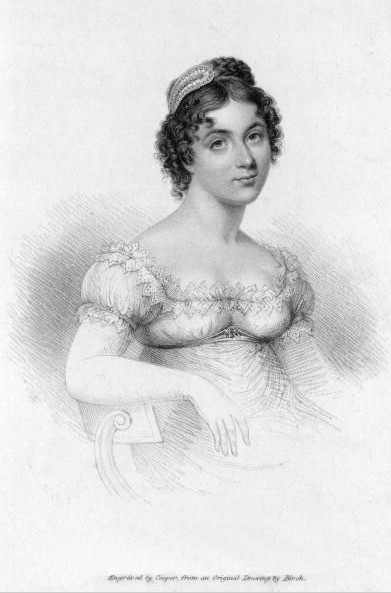
 When Harriette’s memoirs reach this stage of her life, I start hearing a bitter anger between her words, as though she’s become really unhappy with her lot in life. It is also a little poignant that during telling this piece of her story she includes a long aside, reflecting back on the past and her former popularity when she was the height of regency fashion.
But before I tell you the beginning of the end for Harriette’s affair with Lord Worcester, let me do the quick recap for anyone joining this series of posts today. If you’ve read it as usual skip to the end of the italics.
In 1825 Harriette Wilson, a courtesan, published a series of stories as her memoirs in a British broad sheet paper. The Regency gentleman’s clubs were a buzz, waiting to see the next names mentioned each week. While barriers had to be set up outside the shop of her publisher, Stockdale, to hold back the disapproving mob.
Harriette was born Harriette Debochet, she chose the name Harriette Wilson as her professional name, in the same way Emma Hart, who I’ve blogged about previously, had changed her name. Unlike Emma, it isn’t known why or when Harriette changed her name.
She was one of nine surviving children. Her father was a watchmaker and her mother a stocking repairer, and both were believed to be from illegitimate origin.
Three of Harriette’s sisters also became courtesans. Amy, Fanny and Sophia (who I have written about before). So the tales I am about to begin in my blogs will include some elements from their lives too.
For a start you’ll need to understand the world of the 19th Century Courtesan. It was all about show and not just about sex. The idle rich of the upper class aspired to spending time in the company of courtesans, it was fashionable, the thing to do.
You were envied if you were linked to one of the most popular courtesans or you discovered a new unknown beauty to be admired by others.
Courtesans were also part of the competitive nature of the regency period too, gambling was a large element of the life of the idle rich and courtesans were won and lost and bartered and fought for.
So courtesans obviously aspired to be one of the most popular, and to achieve it they learnt how to play music, read widely, so they could debate, and tried to shine in personality too. They wanted to be a favoured ’original’.
The eccentric and outspoken was admired by gentlemen who liked to consort with boxers and jockeys, and coachmen, so courtesans did not aim for placid but were quite happy to insult and mock men who courted them, and demand money for any small favour.

The Marquis of Worcester. 7th Duke of Beaufort. in later life
Well poor Lord Worcester had been ordered home, as his parents had lost any level of tolerance for the debauchery of their son. I believe they were terrified of him actually marrying Harriette and ending up with a courtesan as a future duchess. However Harriette says he still wrote to her daily, and told her in his letters he believed he had lost his parents, as they wanted nothing to do with him, and yet they would not let him go, but kept him in his room. He said he would just walk out but his mother was ill, and his father claimed she was near death. But he could not stand to be without Harriette, he could neither sleep nor eat without her. So he begged her to come to Oxford in disguise and he would sneak out while his father thought him asleep and meet her at midnight.
Harriette says ‘were I to give my readers these letters, in Worcester’s own expressions, there would be no end to them, since every other word was angel! or adored wife, or beautiful sweet Harriette, or darling sweetest! sweetest darling! dearest dear, dear dearest, etc. so perhaps they will prefer taking all these sweets at once, that I may proceed quietly…’ (you’ve gotta love the girl and her sarcasm).
Before travelling to Oxford, Harriette tells us she visited her sister in her new costume of a country maid, wearing blue stockings, thick shoes, a coloured gown, a blue check apron and a coloured neck-handkerchief, along with a cloth cap and bright cherry coloured ribbons, along with her fare to Oxford tied in another handkerchief. Her sister and her friend Julia did not recognise her at first, but then found her costume, including her red cloak, highly amusing.
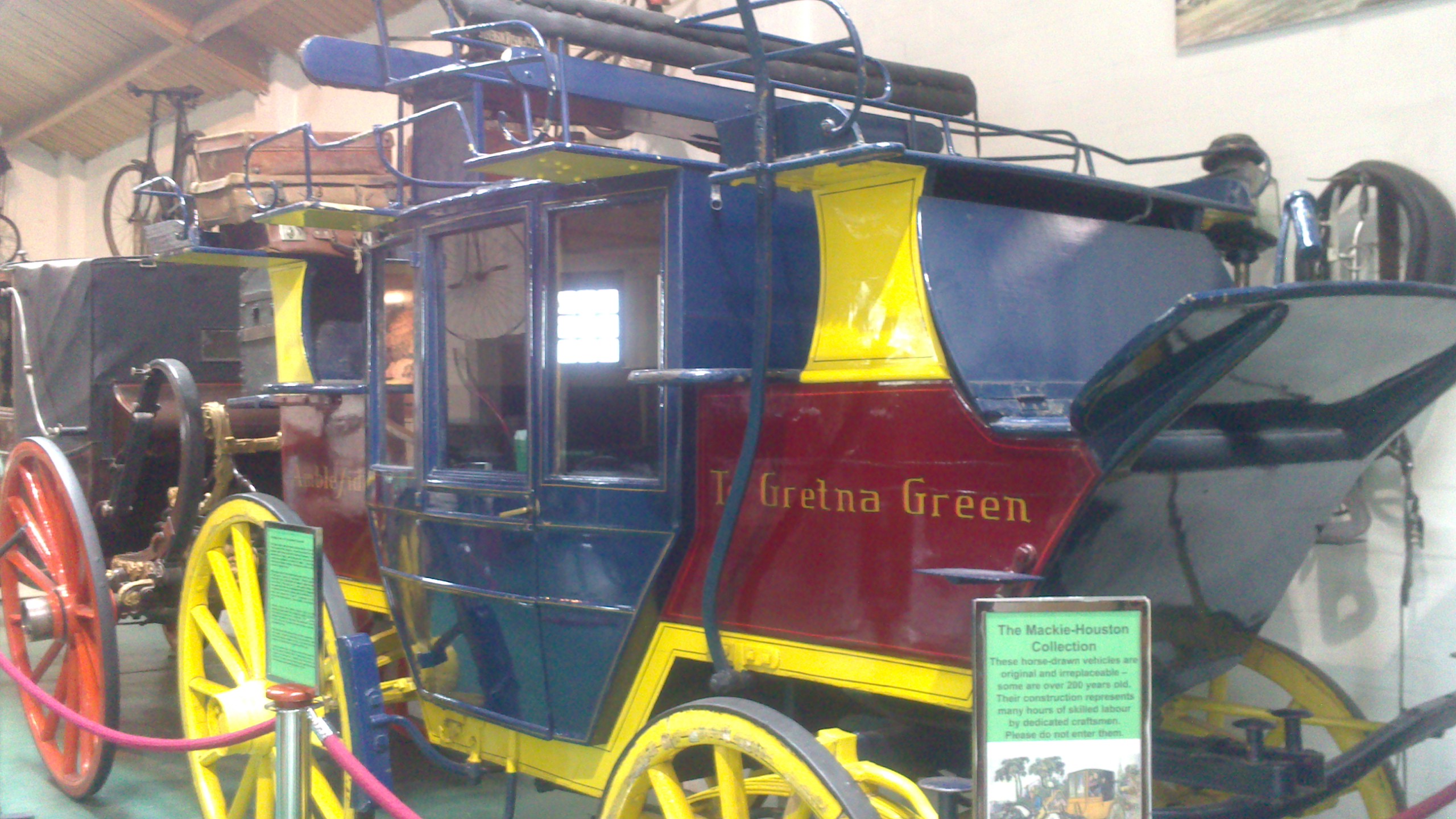
A 19th Century stage-coach
And now, as last week we had a wonderful description of an inn, we have a fabulous description of her journey on a stage-coach, which she said was being loaded at the door of the Green Man and Still. ‘You’re not apt to be sick, are my dear?’ a man, Harriette describes as ‘fat-faced’, and ‘merry-looking’ with a red handkerchief tied about his chin (perhaps to avoid unwanted smells or germs) asked as she boarded. She claims he and a woman she thought to be his wife had already claimed the two best seats. ‘Because, my dear, you see, many people can’t ride backwards; and there’s Mrs Hodson, my wife, as one of them.’ Harriette assured him she did not suffer, while his wife sharply put him right for using the term, my dear, to Harriette.
Outside the carriage Harriette describes a woman in a green habit, complaining about her travelling basket being thrown in the boot, and asking for it back, because she did not trust that it would be handled with any care. The merry-looking gentleman replied to her insistence ‘Come, come Ma’am, your thingumbobs will be quite safe. Don’t keep three inside passengers waiting, at a nonplus, for these trifles!’
The lady took offence at her items being called trifles, and Harriette says she turned to a French man who carried a unmberella, a book of drawings, and English dictionary, and a microscope, and urged the man by name to help her get her baggage out of the boot. But the coachman refused her urging and said he must be gone. So the couple climbed in.
The last traveller was a poor looking man who ran and climbed into the carriage at the last moment, then proceeded to pat perspiration from his brow with a handkerchief, while Mrs Hodson looked at him with dismay and moved her ‘Lavender-coloured silk dress close’ to avoid contamination.
Harriette describes the clothing of the French man too, a ‘dashing threadbare green coat, with a velvet collar; and his shirt collar was so fine, and so embroidered, and so fringed with rags, that I think he must have purchased it out of the Marquis of Lorne’s cast warderobe.’ He turned out to be a wig maker, and Mr Hodson a shoe maker, and Harriettee recounts an odd conversation between the two of them and the poor Irishman who had boarded last, about unpaid for shoes, and the quality of wig making in Ireland.
But she claims to have remained silent as they travelled, and when they stopped at the inns on the way to refresh the French man read his books, while the woman in the habit also kept silent.
When they reached the Crown Inn at Oxford, Lord Worcester was already waiting, ‘large as life’ and Harriette says she was so well disguised when she touched his arm he pushed her off, and it was only when she spoke that he recognised her, ‘Mr Dobbins, don’t you recognize your dear, Mrs Dobbins.’ (Dobbins being the name he had told her they would use at the inn).
“Good God, my love!” … Lord Worcester handed me upstairs, all joy, and rapture, and trembling anxiety lest I catch cold… In less than a quarter of an hour, thanks to his good care, I was in a warm bed, and an excellent supper was served by the side of it, with good claret, fruit, coffee and everything we could possibly require.’
She says they talked all night because they had so much to say. And now, finally Harriette reveals that actually although she had been denying it for a long while the idea of marriage was a possibility she might accept. Perhaps because now, she must have realised that if she didn’t marry him now, the end was likely to come soon, and she would lose the chance of the greatest coup, her perfect happy ending. Imagine the credibility and notoriety she would gain by becoming a duchess. It would give her security for life, when the fame she gathered in her immoral way of life was drawing to a close.
‘Worcester declared that he looked forward to no hope nor rest, until we should be really married.
I entreated him to consider all the inconveniences of such a match. ‘Your father will never forgive you remember!’
‘That I will deeply regret… but I must and will choose my own partner for life. You and I have passed weeks, months, years, together, without having had a single quarrel. This is proof positive, at least, that our tempers harmonize perfectly together, and I conceive that harmony of temper between man and wife is the first and greatest blessing of a wedded state.’
Harriette agreed with him, and they then began discussing how the might travel up to Scotland on the mail, and Lord Worcester said she could wear the pretty dress she’d come in disguise in, and he would take his coachman to as a witness. Then they joked over what the coachman would wear, a white suit with a nosegay.
She told him they need not travel to Gretna in search of a dirty blacksmith. When he asked how else they might marry before he was of age, she answered that a vicar in London said he would do it by special licence if Worcester would agree to him spending the first not of their marriage with Harriette. She then says she was only joking with him all along (I still doubt that – and in fact I think this was partly written to Lord Worcester, who I am sure she knew would read her memoirs, to tell him she had never wished to marry him). Especially as she goes on to profess for four lines every reason she has not to wish to marry him, denying any ambition – (our Harriette?)
They parted at nine am, but Lord Worcester refused to let her travel back on the stage-coach and hired a ‘hack-chaise’ for her to travel alone. Sadly this caused greater problems, because when she was only a mile outside of Oxford she past one of Lord Worcester uncle on the road, who probably though it odd that a woman dressed as a servant was travelling alone and looked hard at her. Harriette covered her face, but even so when she had returned to town, she received a letter from Lord Worcester who said she had been recognised. Though he claimed not to have seen her, and had no knowledge of her whereabouts…
Their story turns even more interesting next, but I’ll save that for next week… 🙂
Jane Lark is a writer of authentic, passionate and emotional love stories.
See the side bar for details of Jane’s books, and Jane’s website www.janelark.co.uk to learn more about Jane. Or click ‘like’ on Jane’s Facebook page to see photo’s and learn historical facts from the Georgian, Regency and Victorian eras, which Jane publishes there. You can also follow Jane on twitter at @janelark

