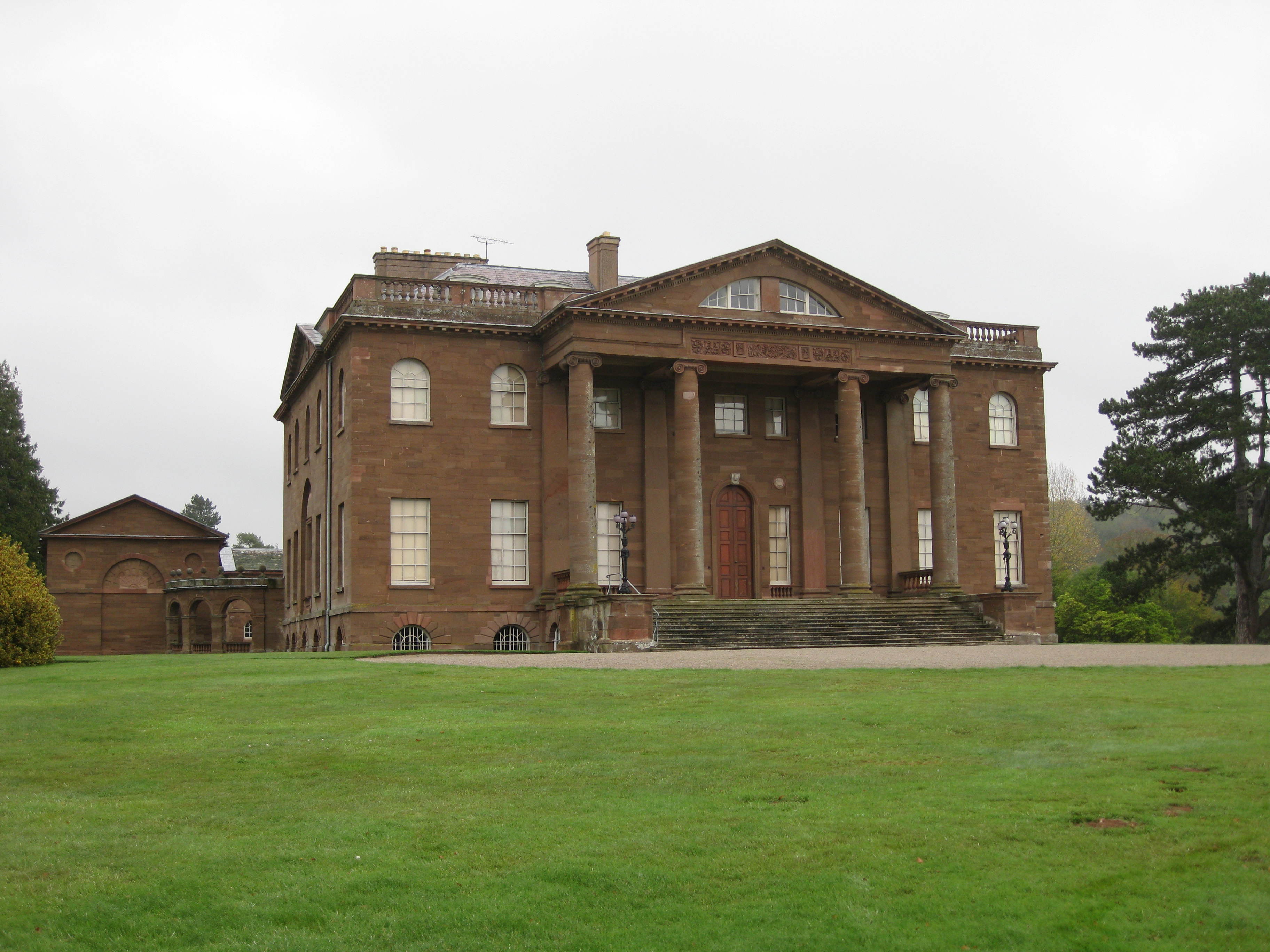
At Berrington Hall, situated in north Herefordshire, the best family story…

 is that of the 7th Lord Rodney.

Berrington was built in 1775 by Thomas Harley, a banker and Government contractor, and is another beautiful Georgian Neo-classical mansion.

One thing which particularly makes it stand out is the red sandstone it’s built in.

Thomas Harley, with no male heir, made an influential marriage for his daughter into an impoverished aristocratic family, the Rodney’s.

Admiral Rodney was a well known seaman of the era and had achieved some fame during naval battles.   http://en.wikipedia.org/wiki/George_Brydges_Rodney,_1st_Baron_Rodney . However his financial affairs were in a poor state, to the point he fled the country in 1775 to avoid debtors. He already had a connection with the banker Thomas Harley and actively encouraged his son using these words in a letter dated September 1780,

‘When you see Mr Harley, who is a very old Acquaintance, remember me to him and, my dear George, if your Heart is touched by either of his daughters, indulge the flame…’

Thomas Harley’s eldest daughter and heir Anne, and Admiral Rodney’s son George were married in April 1781 and thus the Rodney line at Berrington Hall commenced.

The 7th Lord Rodney was the end of that line however.

There are numerous stories descending from the 7th Lord Rodney if you take the house tour. He was definitely a real life rake and profligate, he lost all his money to gambling mostly on the turf – horse racing – and ravaged poor Berrington house.

A butler found him one day with a crowbar trying to remove a fireplace.

He sold everything it was possible to sell and when the library’s books were all sold, he made it into a billiard room. This was then the only room which survived with fixtures and fittings intact.

My guess would be he did not like to strip it, when he would need to convince guests he might be playing with that he had enough money left to pay any gambling debts he might incur in the game if he lost.

Of course his hope would be he would not lose.

He lost the house in its entirety in 1901, and his wife through divorce the following year.

The house then passed on to another family who had made their fortune through trade, the Cawleys.


Jane Lark is a writer of authentic, passionate and emotional love stories.

See the side bar for details of Jane’s books and Jane’s website www.janelark.co.uk to learn more about Jane. Or click  ‘like’ on Jane’s Facebook  page to see photo’s and learn historical facts from the Georgian, Regency and Victorian eras, which Jane publishes there. You can also follow Jane on twitter at @janelark
Lancelot ‘Capability’ Brown

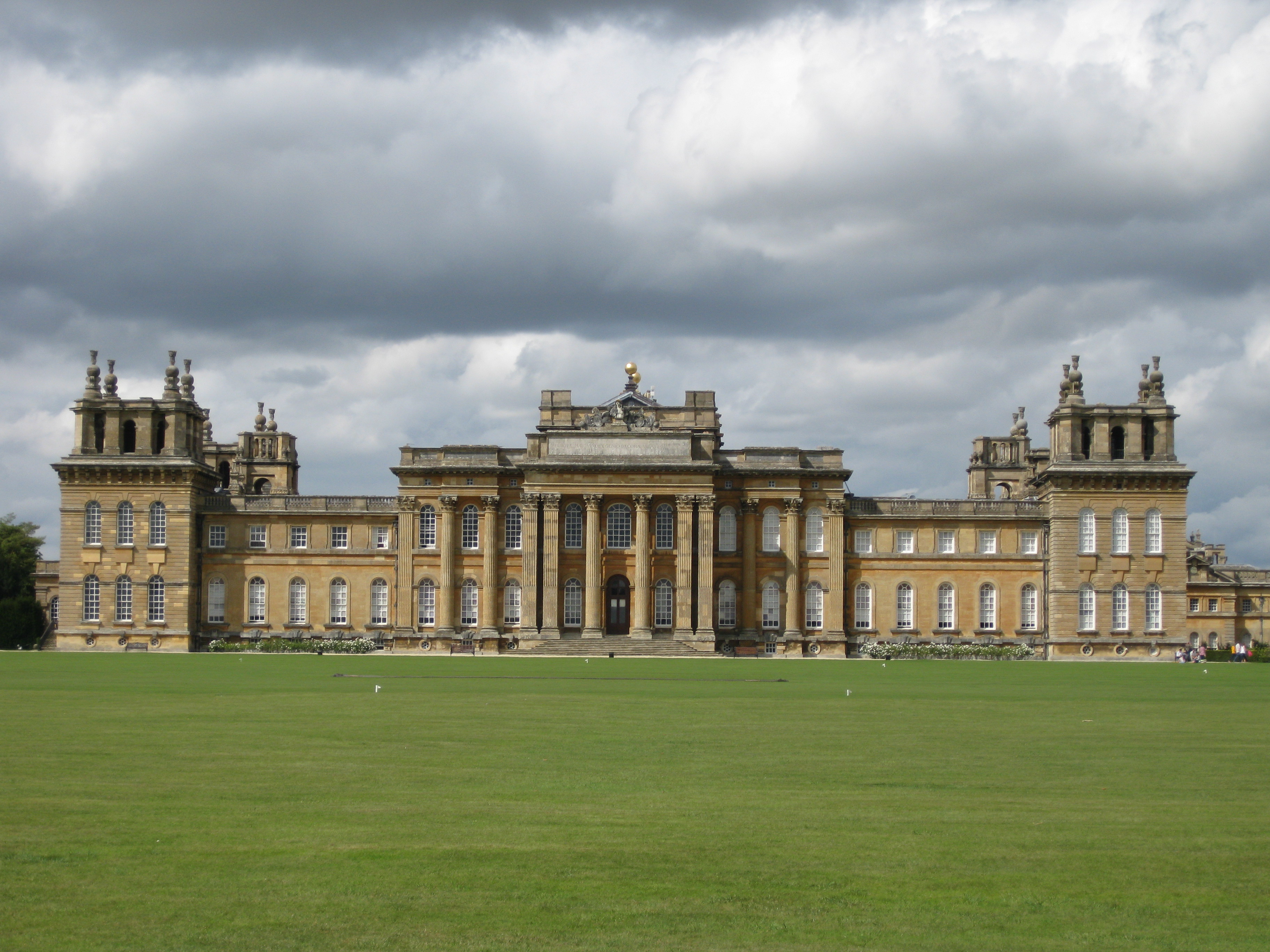
Lancelot ‘Capability’ Brown was a landscape gardener in the 1800s. He is the man known for changing the fashion from formal gardens constructed in the Georgian era and earlier than this, in the style of Versailles, to a more natural looking, picturesque style. These gardens were made to look like paintings, and the idea came from a desire to recreate landscape pictures that people painted on the Grand Tour of Europe. They wanted to capture views in more than paint–in nature. But although appearing natural they are anything but. This week I visited Blenheim Palace, near Oxford. This garden is a good example of Capability Brown’s work.

Incidentally Capability was his nickname, because when he came to look at a garden and consider taking the work on he was said to view its capability.

The things that made a garden capable of change were things like, whether a garden had a natural water path, a spring or a river. Capability was a genius but not a God, he could not create a lake from nothing. For instance Blenheim’s huge lake was formed by damming a small river. The lake took 10 years to dig out and one year to fill. You sill see in the photograph it looks natural but from the level of work you can tell how unnatural it is. The Bridge was there before the lake and when Capability flooded the land about it, half the bridge was lost beneath the lake.  There is also a picture of Capabilities dam, which has recently been reinforced to prevent the risk of flooding and sadly therefore spoiled. But Capability landscaped areas, like this, added surprise for the Regency families strolling these grounds, stimulating the ears with sound before the cascade from the dam came into view. My favourite landscaped gardens are those where a river is made to grow wider and meander across an open garden, beautiful examples of this are the river before Sherborne Estate near Cirencester, the house is not open but the landscaped river is still on view from the road. Stoneleigh Abbey is another perfect picture, across the river that meanders in front of the house the bank slopes down and sheep and cows graze on the other side, like a Turner painting.  The third example I would give of this is in a flat landscaped garden near Warwick, Coughton Court, from the ground the view is less impressive but from the higher position of the house it’s a perfect country view.


Jane Lark is a writer of authentic, passionate and emotional love stories.

See the side bar for details of Jane’s books and Jane’s website www.janelark.co.uk to learn more about Jane. Or click  ‘like’ on Jane’s Facebook  page to see photo’s and learn historical facts from the Georgian, Regency and Victorian eras, which Jane publishes there. You can also follow Jane on twitter at @janelark

This slideshow requires JavaScript.