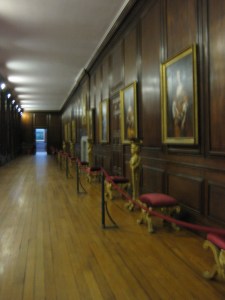
 We went to Hampton Court last week. Viewing the different centuries of apartments there was fascinating and several stories came through of court life, but one I found particularly inspiring was the story of two sets of portraits, which were paintings of the Queen’s ladies in waiting. The first set was commissioned by King Charles II. These portraits are quite erotic for the era. Displayed in a long gallery, they include one of his mistresses. They were painted by Sir Peter Lely. I could only stand and wonder at the tales of intrigue behind these portraits.
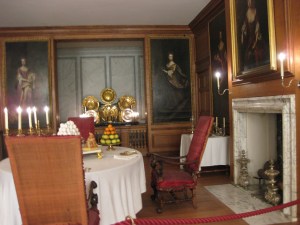
Even more interesting though is that a generation later King William II’s wife, Queen Mary II, commissioned a similar set painted by Sir Godfrey Kneller, these were on display in the Dinning room, and knowing there are still, let me say, questions, hanging over King William II sexuality, it is quite thought-provoking that he dined amidst these pictures even after Queen Mary’s death.
This link takes you to the Wikipedia page which gives you details on the ladies in each portrait. http://en.wikipedia.org/wiki/Hampton_Court_Beauties
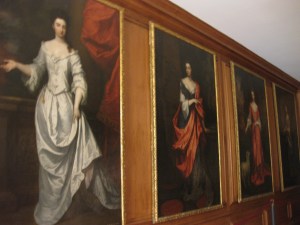
Brilliant, I do love these delicious tales, sometimes real life is better than imagination. According to Wikipedia two of the Hampton Court Beauties were married to the bastard sons of King Charles II, and one had a secret marriage. The Windsor Beauty who was Kings Charles II’s mistress is Barbara Palmer, 1st Duchess of Cleveland. She bore King Charles II five children as his mistress. There is also a beautiful tale about Elizabeth, Countess de Grammont, who had an agreement with a French Count who’d promised her marriage but then planned to leave England without her, her brother’s followed him and brought him back, she did leave with him after this.
Jane Lark is a writer of authentic, passionate and emotional love stories.
See the side bar for details of Jane’s books and Jane’s website www.janelark.co.uk to learn more about Jane. Or click ‘like’ on Jane’s Facebook page to see photo’s and learn historical facts from the Georgian, Regency and Victorian eras, which Jane publishes there. You can also follow Jane on twitter at @janelark
 Author, Jane Lark's stories