 I find them fascinating, again it’s my imagination which draws me.
I like picturing who has been near the trees in their life time, through generations and generations of people.
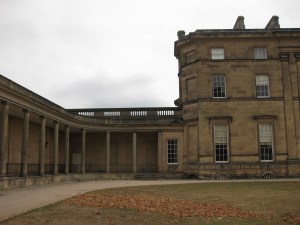
For instance at Stourhead in Stourton, Wiltshire, along the drive to the Georgian House, are trees which started growing in the Medieval period.
Every time I walk up the drive I imagine a group of knights thundering past me on horseback, tack and armour jangling. I love it.

 My addiction for old trees is a regular joke between myself and my daughter. She teases me for going on about them, so when I go out without her I take pictures of the trees I spot and text them to her, to make her laugh.
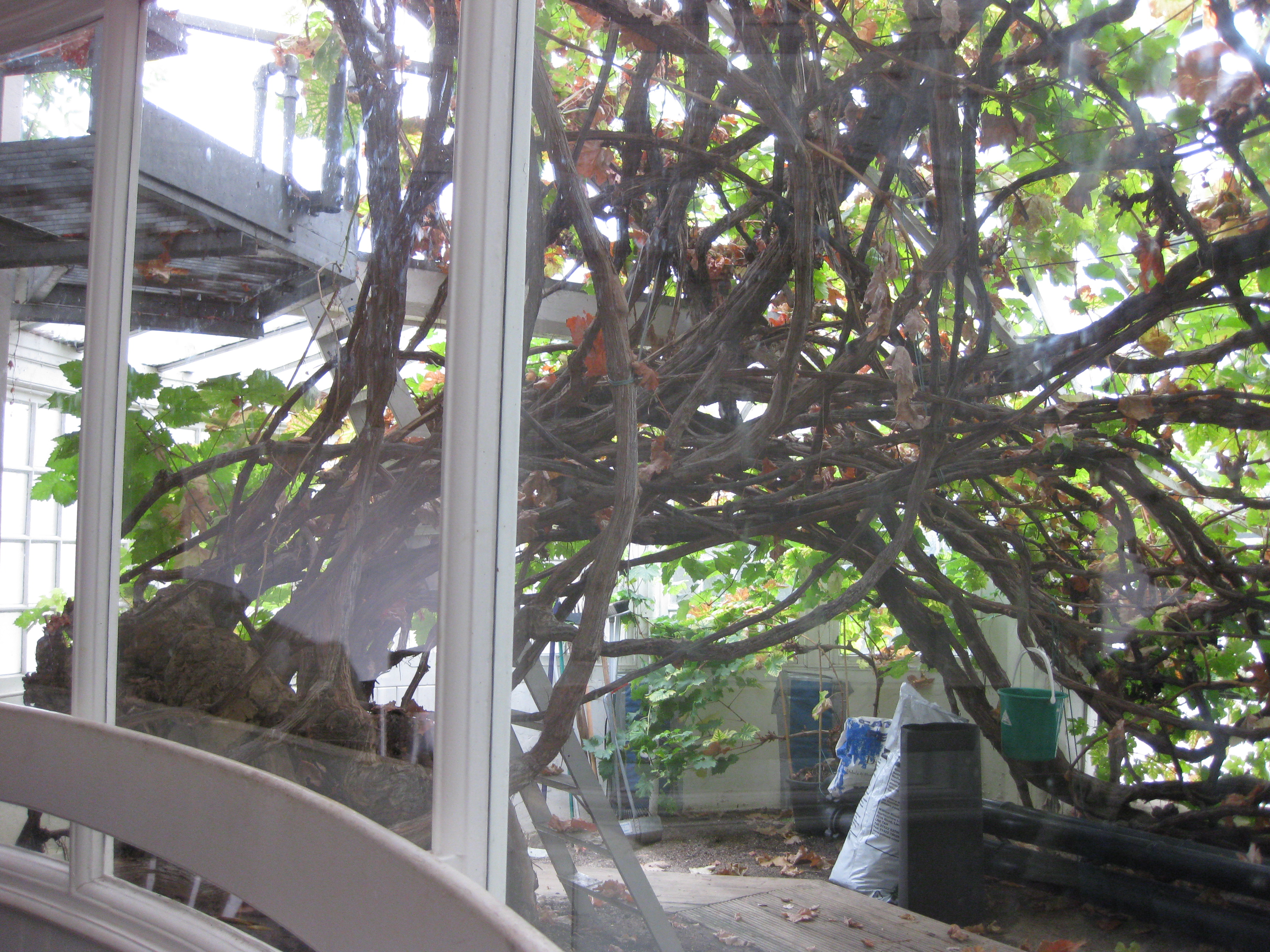
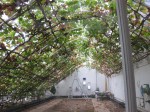
Recently though I found a real gem at Hampton Court Palace. The belief is, it was planted by Lancelot ‘Capability’ Brown in 1769. It is a grape-vine, in a hothouse, in the Georgian gardens.

If it was planted by Capability Brown, it’s over 240 years old. Its base is 4 meters round and its longest rod is 120 meters. It’s stunning. Well I thought it was anyway.
To preserve the vine, the area beyond the greenhouse is left unplanted because the vine is so large it drains a huge amount of nutrition from the earth.

Another old tree I spotted at Hampton Court Palace appeared to be a Quince. It was planted near the vine, right up against the Palace. I imagine it is just as old as the vine, if not older. When I saw it I could picture the Queens of Britain picking a quince as they walked through the garden.
 One favourite tree of mine is the seasonal Holly tree. there are many ancient Holly trees in the UK. When I saw this one I had visions of Henry VIII walking through the gardens of Hampton Court Palace with a one of his wives, or a courtesan, on his arm beside the Holly I saw.
It is simple imagination, but what makes life richer than imagination.
To see more details on the #Hampton Court Palace Great Vine and other facts on the Royal Palaces in London go to www.hrp.org.uk
Jane Lark is a writer of authentic, passionate and emotional love stories.
See the side bar for details of Jane’s books and Jane’s website www.janelark.co.uk to learn more about Jane. Or click ‘like’ on Jane’s Facebook page to see photo’s and learn historical facts from the Georgian, Regency and Victorian eras, which Jane publishes there. You can also follow Jane on twitter at @janelark
 Author, Jane Lark's stories