 Today I will share some more about Caroline’s childhood, only because considering she was from the one of the most elite and rich families in England I was really surprised to discover some of the facts about how girls were brought up in the 1700s. We are frequently led to believe they were kept at home with minimal education but that was not true for Caroline…
Now it is time to set up an introduction to this series of posts, for anyone who joins it after the commencement. Here it is – if you did not read the post last week you may want a quick recap of the history for this series of posts, if not then you can jump straight to the point where I restart with a little bit of bold type.
I was drawn to Lady Caroline Lamb, who lived in the Regency era, because Harriette Wilson the courtesan who wrote her memoirs in 1825, mentions the Ponsonby and the Lamb family frequently. Also the story of Caroline’s affair with Lord Byron captured my imagination. Caroline was also a writer, she wrote poems, and novels in her later life. I have read Glenarvon.
Her life story and her letters sucked me further into the reality of the Regency world which is rarely found in modern-day books. Jane Austen wrote fictional, ‘country’ life as she called it, and I want to write fictional ‘Regency’ life rather than simply romance. But what I love when I discover gems in my research like Caroline’s story is sharing the real story behind my fiction here too.
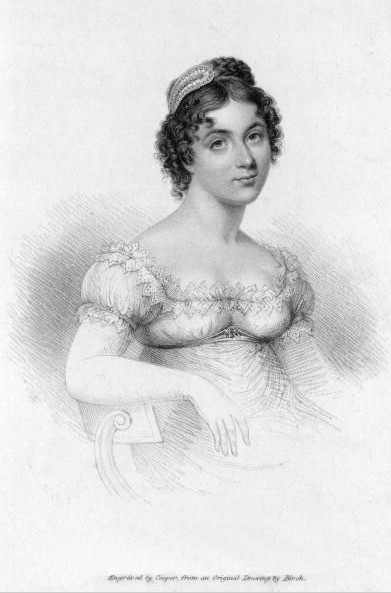
Lady Caroline Lamb was born Caroline Ponsonby, on the 13th November 1785. She was the daughter of Frederick Ponsonby, Viscount Duncannon, and Henrietta (known as Harriet), the sister of the infamous Georgiana, Duchess of Devonshire.
Caroline became an official lady when her grandfather died, and her father became Earl of Bessborough earning her the honorific title ‘Lady’ and she grew up in a world of luxury, even Marie Antoinette was a family friend. Caroline was always renowned as being lively, and now it is suspected she had a condition called bipolar. As a child she earned herself a title as a ‘brat’, by such things as telling her aunt Georgiana that Edward Gibbon’s (the author of The Decline and fall of the Roman Empire) face was ‘so ugly it had frightened her puppy’.
And when she grew up Byron once described Caroline as “the cleverest most agreeable, absurd, amiable, perplexing, dangerous fascinating little being that lives now or ought to have lived 2000 years ago.”
Last week I wrote about ‘The mist’ the group of children Caroline was brought up among who travelled with her mother, Harriet, and her aunt Georgiana; a group of charitably adopted and illegitimate children who lived with the family. One of these children was the child of Bess and the Duke of Devonshire’s (Georgiana’s husband) illegitimate child. This girl was the same age and also named Caroline.
But it was not only Georgiana’s husband who was disloyal in marriage, it was extremely common in the aristocracy of the 1700s and particularly the set Caroline’s aunt and mother favoured. Caroline’s mother, Harriet, had several affairs, and one of the men she had a relationship with, Sheridan, began his affair with Harriet three years before Caroline was born, and when Caroline was three years old, her mother was caught with Sheridan. Her father then wanted a divorce. Georgiana’s husband, the Duke of Devonshire, returned from a spa in Belgium (which he had been visiting with Georgiana and Bess, with an aim to get a son) to persuade Caroline’s father not to progress the divorce.
At one point in Caroline’s youth, her father is recorded as having regularly added sedatives to her mother’s food, to stop her infidelity.
The cousin who Caroline became closest to, Hart, the Duke of Devonshire’s son, was born to Georgiana in 1970, in a house they were temporarily staying at in France, after being evicted from Paris, due to the commencement of the revolution.
But then Caroline’s mother became ill, following the collapse of a business in which Harriet had shares, she lost as much as £50,000 an enormous sum at the time, and it was her lover Sheridan who had persuaded her to invest. Once again the Duke and Duchess of Devonshire came to her aid, promising to cover all of Harriet’s debt and taking Harriet along with all the children, including Caroline, to Bath, and along with them went Lord Charles Grey. But when the Duke left bath, Charles Grey remained, and Georgiana was with him constantly. She became pregnant.
There is a record of Caroline at this time, in the confusing life of debauchery which she grew up in. Mrs Burney wrote about visits to the Duchess of Devonshire’s home in Bath, she states she was extremely uncomfortable when Bess came into a room during Hario’s sixth birthday party. Mrs Burnley states she did not like being trapped in a room with the Duke’s concubine, and then she notes young Caroline, who was five, but nearly six herself, ran to Bess’s side to show her a prize she had won, and ‘cast herself in a thousand affected attitudes’ on Bess, saying “precisemenet ce qu’elle avoit la plus souhaite” (precisely what she had wished for the most). Bess then kissed Caroline affectionately and Mrs Burnley records being disgusted by Caroline’s intimacy with a fallen woman.
It was after this that Georgiana planned, with Harriet and Bess, to go away to Cornwall to bear Charles Grey’s child, with the excuse that Harriet still needed to recover from her illnesses. But the Duke found out and returned to Bath then insisted Georgiana must give up Charles Grey and go abroad to bear the child, disguising her situation under the rouse of Harriet needing to take care of her health, and on the understanding once born the child could not become part of the mist, but would be adopted.
It added more pressure on Caroline’s mother Harriet, who was completely financially reliant on her sister’s husband the Duke of Devonshire. So at the age of six, Caroline travelled through France, during the period of the revolution, with a mother so ill she was suffering frequent short bouts of partial paralysis and at one point walking with crutches and a father who travelled with them but was unhappy with the situation and financially insecure. They had to leave Georgiana in Montpellier because she was too heavily pregnant to continue. She bore Charles Grey’s child there, with Bess, and then the child was sent back to England, to Charles Grey’s parents, with a wet nurse.
The sisters together again, with the children, but now minus Caroline’s father, travelled on to Switzerland where the women wrote letters to the Duke of Devonshire urging him to be forgiving, and calling him a ‘brute and a beast’.
While they lived in Lausanne, just before Caroline’s seventh birthday, Georgiana wrote of Caroline, ‘she is very naughty and says anything that comes into her head’. They were living there with Mr Gibbon, and this is the time when Caroline said he had frightened her puppy, she also used to order the footmen to bounce her on their knees, and also bounce Mr Gibbon on their knees.
They then travelled on to Italy. Caroline’s father rejoined them at Pisa, then they journeyed via Florence and Sienna, San Lorenzo, Vitebro and then on to Rome, it was in Rome that they heard that Louis XVI had been guillotined and following this, in March 1973, they heard that the 2nd Lord Bessborough, Caroline’s grandfather had died, and now Caroline’s father at the age of thirty-five became the Earl, and Caroline then held the honorary title, Lady.
They reached Naples and then in May heard from that the Duke of Devonshire, who said he would allow Georgiana to return. So the family packed everything again to travel back, but Harriet, Caroline’s mother became more ill on the way home, and so Georgiana, desperate to see her children, left Harriet and Caroline behind, and travelled on alone.
And so this constant travelling, illicit affairs and family feuds created the first foundations of young Caroline’s life, but despite such an unsettled life, even by seven under the tuition of Dr Drew she was said to be able to speak and write in three languages, English, French and Italian…
Next week I will share some stories which tell a little of what Caroline’s life was like when she lived abroad with her mother.
P.S. If you would like to see some pictures of Florence, Sienna and Rome, some of the place Caroline visited, there are pictures on my Facebook page
~
The Lost Love of Soldier
The prequel to The Illicit Love of a Courtesan
is available to pre-order just click on the cover in the side bar
~
Go to the index
For
- the story of the real courtesan who inspired The Illicit Love of a Courtesan,
- another free short story, about characters from book #2, A Lord’s Scandalous Love,
- the prequel excerpts for book #3 The Scandalous Love of a Duke
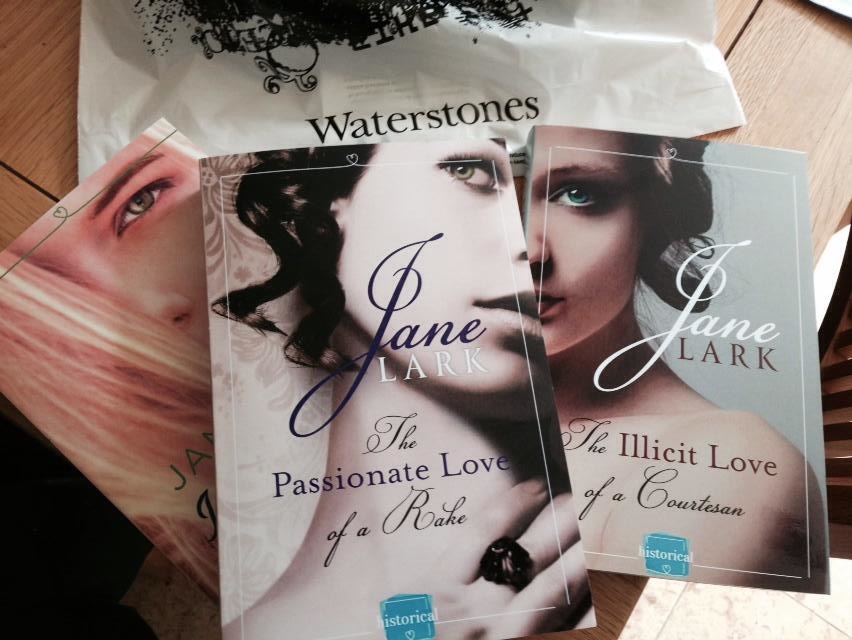
Jane Lark is a writer of authentic, passionate and emotional Historical and New Adult Romance stories, and the author of a No.1 bestselling Historical Romance novel in America, ‘The Illicit Love of a Courtesan’.
Click here to find out more about Jane’s books, and see Jane’s website www.janelark.co.uk to learn more about Jane. Or click ‘like’ on Jane’s Facebook page to see photo’s and learn historical facts from the Georgian, Regency and Victorian eras, which Jane publishes there. You can also follow Jane on twitter at @janelark
Jane’s books can be ordered from most booksellers in paperback
 Author, Jane Lark's stories