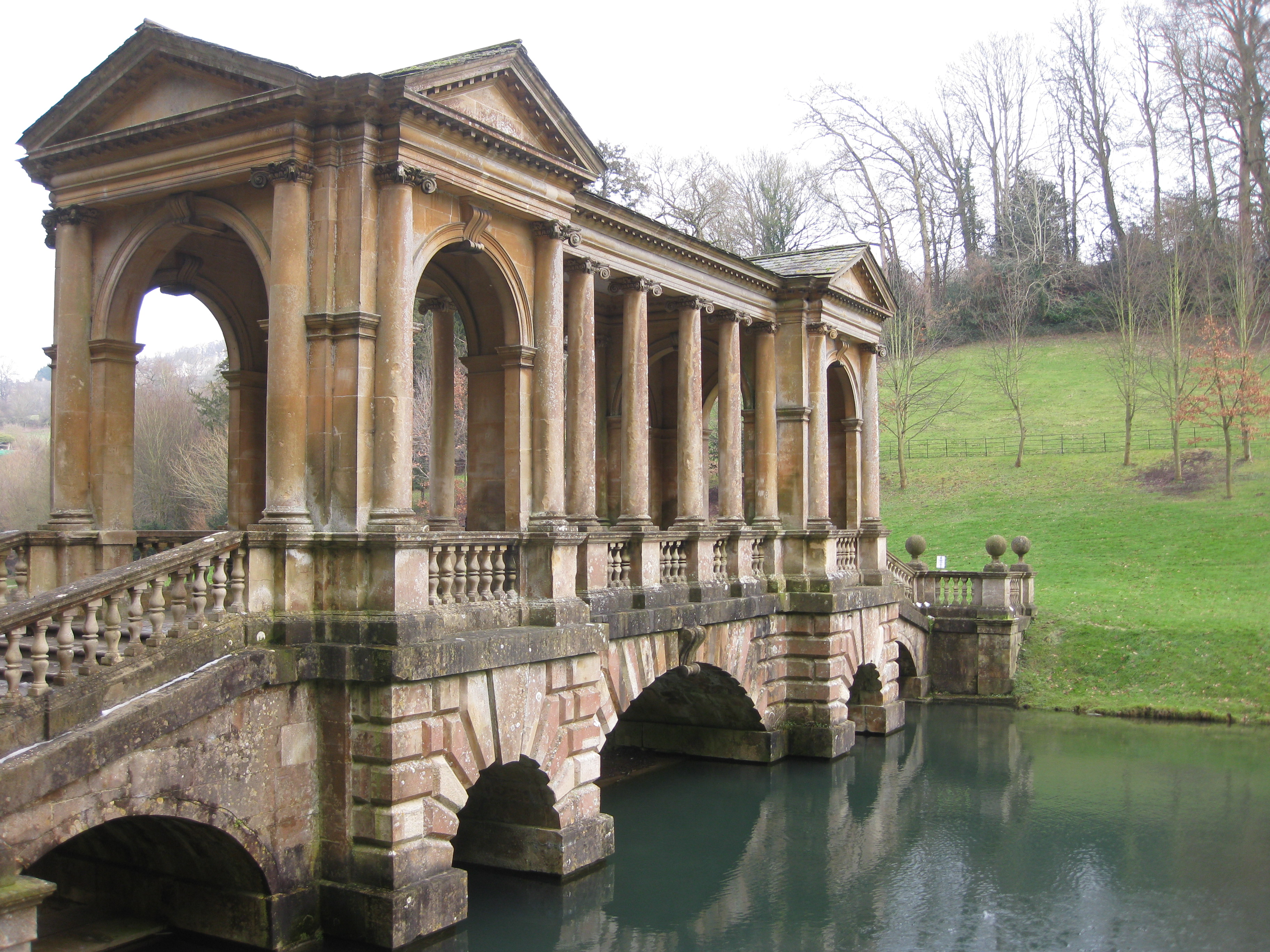
 Prior Park is positioned on a hill looking down onto the City of Bath. It is the ultimate example of landscape gardening. It was developed by Ralph Allen, an 18th Century entrepreneur. Ralph Allen made his money by establishing the postal service in Great Britain, which enabled him to rise from a mere Postmaster in Bath in 1712 to the owner of the longest Palladian mansion in Britain at the time, by 1752. His beautiful house still stands, perched on the hill, with Bath as the feature of his ornamental garden.
Ralph also invested the money he had made from the postal system into the purchasing of local quarries to supply Bath with its distinctive pale yellow stone; making a further fortune by establishing a railway and clearing the river Avon to Bristol to enable the stone to be transported more widely. Prior Park mansion and its follies, is a showcase for the stone which he quarried and transported.
Ralph Allen was a popular man of his era, with many influential friends and a penchant for the cultured clique, including Alexander Pope who was a close friend and frequent visitor at Prior Park and who helped Ralph design the garden. Also among this group was the author Henry Fielding, the actor David Garrick and William Pitt the elder (a man whom I have recently discovered my husband may be a descendent of – exciting).
Pope’s interest in the art of designing nature was shown in the Epistle IV he addressed to another friend, Lord Burlington;
Consult the genius of the place in all;
That tells the waters or to rise, or fall;
Of helps th’ambitious hill the heav’ns to scale,
Or scoops in circling theatres the vale;
Call in the country, catches opening glades,
Joins willing woods, and varies shades from shades,
Now breaks, or now directs, th’intending lines;
Paints as you plant, and, as you work, designs.
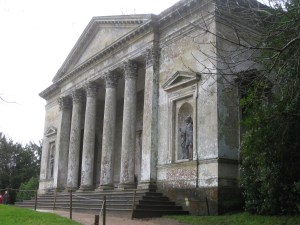
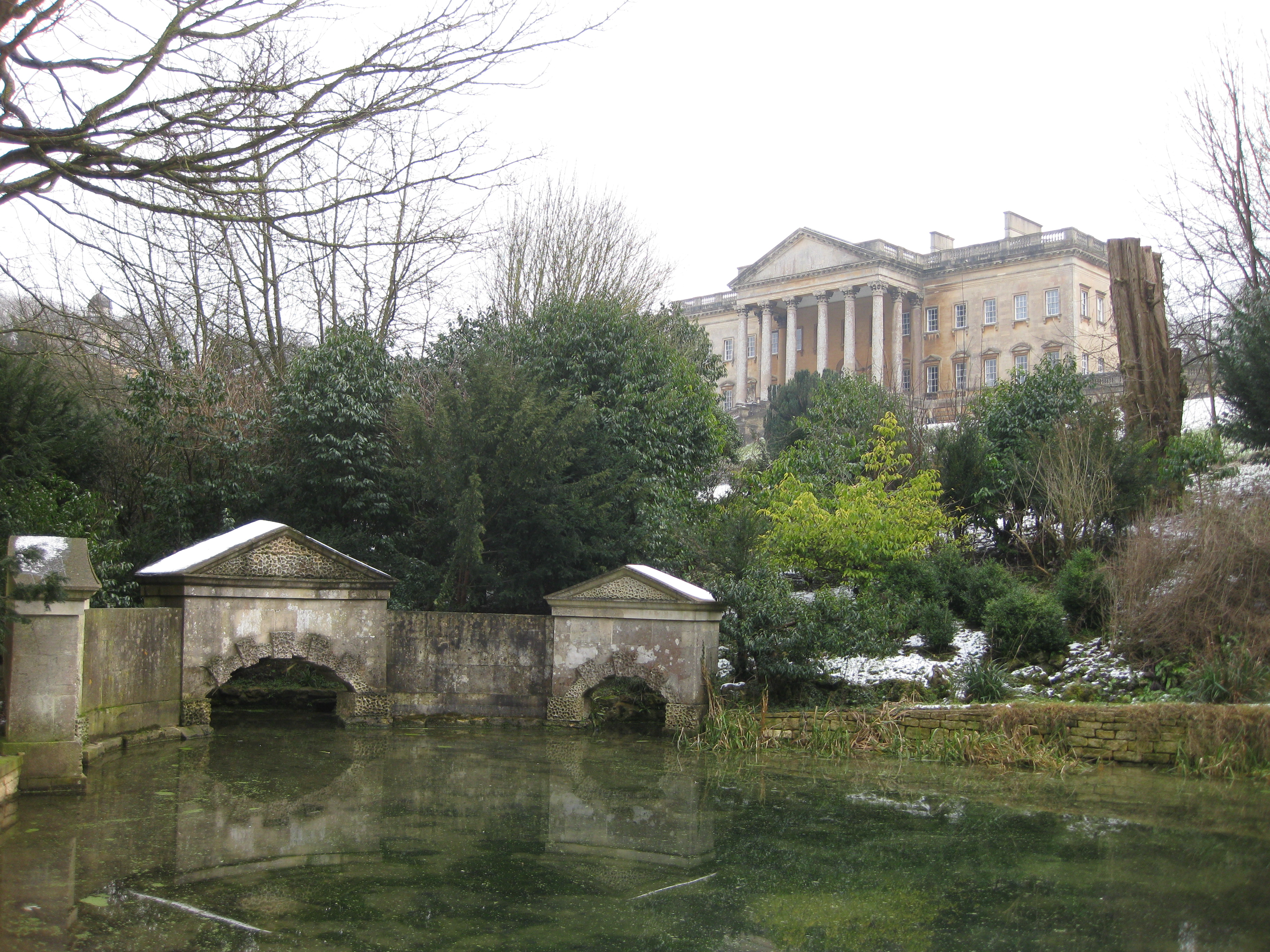 There was once a Gothic Temple in the garden, among other follies, but as Ralph Allen had no heir and the estate was sold off after his death, eventually becoming a school, the garden features were not all preserved. One folly, The Sham Bridge, has recently been restored. I have included a picture of this at the head of a formal lake.
However the most impressive architectural folly in the Garden is the Palladian Bridge stretching across and damming the lower ornamental lakes. It is a focal point for nearly every view and with the City of Bath as its backdrop, if you look down from the house, it would have been a perfect picture to constantly enjoy.
Ralph Allen opened the park to visitors on Thursday afternoon, but as he died in 1764, and Jane Austen was not born until 1775 and she did not come to Bath until the early 1800’s when Prior Park was a Seminary, I cannot say for certain whether she ever walked the Prior Park paths.
More on Prior Park, its Grotto and Graffiti next week.
http://www.nationaltrust.org.uk/history/item269128/
http://www.thisisbath.co.uk/Plans-uncover-Prior-Park-grotto/story-11349806-detail/story.html
Jane Lark is a writer of authentic, passionate and emotional love stories.
See the side bar for details of Jane’s books, and Jane’s website www.janelark.co.uk to learn more about Jane. Or click ‘like’ on Jane’s Facebook page to see photo’s and learn historical facts from the Georgian, Regency and Victorian eras, which Jane publishes there. You can also follow Jane on twitter at @janelark
 Author, Jane Lark's stories