 I say ‘hidden’ Regency fashion, I don’t think it was very hidden in the period, but I’ve heard this situation come up numerous times when I’ve searched aristocratic family letters and memoirs, but most modern stories about the time never mention it. So, thank you for sharing Harriette.
After spending an entire week and not once dipping into a historical setting, I cannot tell you the pleasure of returning to Harriette’s tales, and this week she’s come up with a gem.
But before I tell you, as always, if you’ve not read this series of posts before, here’s the background, and if you’ve already read it, carry on from after the italics.
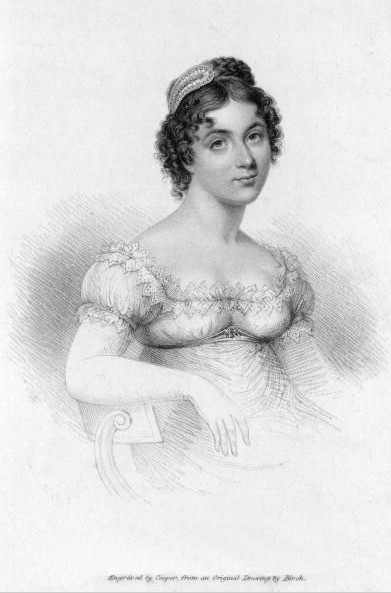
In 1825 Harriette Wilson, a courtesan, published a series of stories as her memoirs in a British broad sheet paper. The Regency gentleman’s clubs were a buzz, waiting to see the next names mentioned each week. While barriers had to be set up outside the shop of her publisher, Stockdale, to hold back the disapproving mob.
Harriette was born Harriette Debochet, she chose the name Harriette Wilson as her professional name, in the same way Emma Hart, who I’ve blogged about previously, had changed her name. Unlike Emma, it isn’t known why or when Harriette changed her name.
She was one of nine surviving children. Her father was a watchmaker and her mother a stocking repairer, and both were believed to be from illegitimate origin.
Three of Harriette’s sisters also became courtesans. Amy, Fanny and Sophia (who I have written about before). So the tales I am about to begin in my blogs will include some elements from their lives too.
For a start you’ll need to understand the world of the 19th Century Courtesan. It was all about show and not just about sex. The idle rich of the upper class aspired to spending time in the company of courtesans, it was fashionable, the thing to do.
You were envied if you were linked to one of the most popular courtesans or you discovered a new unknown beauty to be admired by others.
Courtesans were also part of the competitive nature of the regency period too, gambling was a large element of the life of the idle rich and courtesans were won and lost and bartered and fought for.
So courtesans obviously aspired to be one of the most popular, and to achieve it they learnt how to play music, read widely, so they could debate, and tried to shine in personality too. They wanted to be a favoured ’original’.
The eccentric and outspoken was admired by gentlemen who liked to consort with boxers and jockeys, and coachmen, so courtesans did not aim for placid but were quite happy to insult and mock men who courted them, and demand money for any small favour.
Well last week we left Harriette starting out on a new relationship with a young, ill-tempered, vibrant, passionate man. (I love this sort of character dramatic scenes are flying through my head, oh and in actual fact be prepared for darker men in my books, a few scenes like this appear in my third book, out in February 🙂 as Ellen’s son grows up in this world). But let’s get back to Harriette – last week she also admitted that this relationship had her reacting a little more by instinct than etiquette, she was in lust with him, if not in love with him, and her own passions were running very high. ‘There was, in fact, an expression in Meyler’s countenance, of such voluptuous beauty, that it was impossible for any woman to converse with him, after he had dined, in cold blood.’ I’ll be honest I don’t get what she means by ‘in cold blood’ but this sentence definitely carries passion, and heat, even anger, that I don’t think is feigned. This is one of those moments in Harriette’s memoirs, that you know you are getting the genuine article.
She goes on to describe one night when her passion, or rather her anger, is running high, and while she is sitting on one side of the opera house, he is sitting opposite in the box of the mother of her ex-lover, who he has been reputedly having an affair with for some years. Harriette loses patience with the whole charade and does not just send a servant, but goes out herself and around to the box (if you’ve been following these posts forever, you’ll know that is so unheard of for Harriette, she always makes men run to her – but no this night) once there, she sends the box keeper in to get Meyler out, saying ‘request he would come out and speak to a person in the hall’. She then tells us she said, in an urgent agitated voice, ‘Meyler, if you return, even for an instant, to the Duchess of Beaufort’s box, we part this night, and for ever. I cannot endure it.’
He did not go back in, accepting her jealousy as flattery.
‘Why will you agitate yourself for nothing? said Meyler, when we got home, this being his good-tempered night.’
Harriette says ‘You know you did once love the Duchess of Beaufort.’
‘Never,’ said Meyler, and then went on to explain to Harriette the story of himself and the Duchess of Beaufort.
Obviously he’d met the Duchess of Beaufort through her son (Lord Worcester, Harriette’s ex lover) who he was at Christchurch with, ‘and one day when I was too young to have ever compassed an intrigue in any higher line than what boys usually find in the streets of Oxford, he presented me to his mother…’ Mr Meyler describes the Duchess as very fine for her age. ‘No woman, in fine clothes, would have come amiss to me at that time; and I certainly felt a very strong desire for the Duchess; but without entertaining the shadow of a hope, not withstanding she always distinguished me with unusual attention.’ Which Harriette had heard, and had believed to mean they had, had an affair. But Meyler continues his tale… ‘one night when I was staying at Badminton, in the absence of the Duke, I happened to say that the cold had affected my lips, and made them sore. It was as late as twelve o’clock. Her Grace desired me to accompany her to her dressing-room, that she might give me some cold cream. When I entered, her night clothes were hanging to air, near the fire. We were alone. I hesitated. In another instant, I might have ventured to take this midnight invitation as a hint; but unluckily, my Lady Harrowby, who probably suspected something improper, entered the room like our evil genius.’ (Yes Harriette really did write evil genius, how brilliant, where in a text-book would you know they’d use that expression in the Regency era!)
But there’s more. Harriette tells us, that Meyler loved telling this tale. All his friends knew it. I should imagine it was one of those really good anecdotes you whip out whenever you’re in the mood to shock or intrigue a new acquaintance. But he also always added to add depth to it, that he asked his friend Napier, who was also a friend of the Duchess’s ‘whether he imagined the Duchess might have been had on that evening; (yes! She used the word ‘had’ too, love it, I can imagine a group of twenty year olds having this conversation today!) and Napier said, in answer, that whoever, in the absence of her husband, was to invite him to her dressing-room at midnight, he should feel bound, in common gallantry towards her, to attempt––whether he had felt disposed or not.’
I just love that story another real dunking in what was real life in Regency England. Thank you for your inspiration Harriette!
More next week.
Jane Lark is a writer of authentic, passionate and emotional Historical and New Adult Romance stories.
See below on the side bar for details of Jane’s books, and Jane’s website www.janelark.co.uk to learn more about Jane. Or click ‘like’ on Jane’sFacebook page to see photo’s and learn historical facts from the Georgian, Regency and Victorian eras, which Jane publishes there. You can also follow Jane on twitter at @janelark
 Author, Jane Lark's stories