How Harriette Wilson’s memoirs inspired me to write Illicit Love

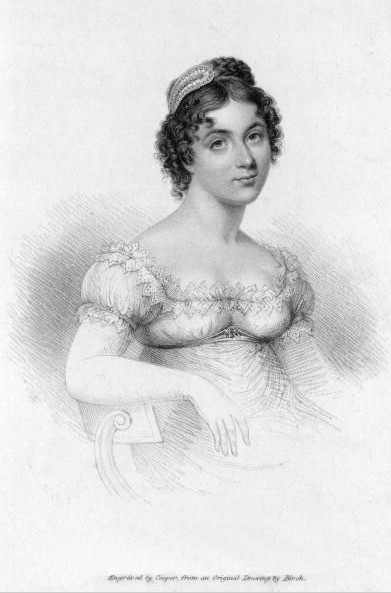
Harriette_Wilson00This week, I am deviating a little in this series of posts about the memoirs of Harriette Wilson, to celebrate the release of Illicit Love on Thursday, May, 2nd, by telling you how Harriette’s memoirs inspired me to write Illicit Love.

Before I go on though, I will still share the background to this series of posts, for anyone reading this for the first time today. You can skip to the end of the italics if you’ve already read it.

In 1825 Harriette Wilson, a courtesan, published a series of stories as her memoirs in a British broad sheet paper. The Regency gentleman’s clubs were a buzz, waiting to see the next names mentioned each week. While barriers had to be set up outside the shop of her publisher, Stockdale, to hold back the disapproving mob.

Harriette was born Harriette Debochet, she chose the name Harriette Wilson as her professional name, in the same way Emma Hart, who I’ve blogged about previously, had changed her name. Unlike Emma, it isn’t known why or when Harriette changed her name.

She was one of nine surviving children. Her father was a watchmaker and her mother a stocking repairer, and both were believed to be from illegitimate origin.

Three of Harriette’s sisters also became courtesans. Amy, Fanny and Sophia (who I have written about before). So the tales I am about to begin in my blogs will include some elements from their lives too.

For a start you’ll need to understand the world of the 19th Century Courtesan. It was all about show and not just about sex. The idle rich of the upper class aspired to spending time in the company of courtesans, it was fashionable, the thing to do.

You were envied if you were linked to one of the most popular courtesans or you discovered a new unknown beauty to be admired by others.

Courtesans were also part of the competitive nature of the regency period too, gambling was a large element of the life of the idle rich and courtesans were won and lost and bartered and fought for.

So courtesans obviously aspired to be one of the most popular, and to achieve it they learnt how to play music, read widely, so they could debate, and tried to shine in personality too. They wanted to be a favoured ’original’.

The eccentric and outspoken was admired by gentlemen who liked to consort with boxers and jockeys, and coachmen, so courtesans did not aim for placid but were quite happy to insult and mock men who courted them, and demand money for any small favour.

I’ll start with a quote from Harriette’s memoirs.

“The idol of romantic passion, in some unlucky moment of common sense, or common life, is discovered to be the last thing their worshippers would wish the idol to be found—a mere human being! With passions and wants utterly unprovided for by the statutes of romance.”

– Harriette Wilson’s Memoirs, quoting “a celebrated French writer,” published 1825.

I found this a beautiful truth for a romance writer. There are so many expectations on people to be perfect in life. These days the desire and expectation for perfection comes in the form of seeking a perfect appearance, people want a perfect figure and face, and, to never grow old. But I think Harriette was talking more about a perfect character, as a stained, imperfect, character separated woman from normal life in the 1800s. They were ostracized. But people are people and no one is perfect, as Harriette says above, human beings are passionate, and have uncontrollable desire, ‘outside of the boundaries of romance’. These are the characters I love to write, real people, people with faults and flaws, and humanity.

So then, I reached Harriette’s descriptions of how she fell in love with Lord Ponsonby. When she describes following him, walking in the park at dusk, even alone, just so she might see him, or hover outside his house in the hope of seeing him come or go, or peer at him through a window. Then she meets him and longs for what she’s never had before…

“Suppose he were to love me! Thought I, and the idea caused my heart to beat wildly. I would not dwell upon it. It was ridiculous. It would only expose me to after-disappointment.” – Harriette Wilson’s Memoirs, published 1825

The way she speaks about Lord Ponsonby is just dramatically different. It ceases to be something inanimate and becomes emotional. So then, I knew, I wanted to give a courtesan her love story. In Illicit Love, Ellen meets Edward, in a gambling hell, looking at him across a card table. It is not a scene from Harriette’s memoirs, but the scene which came into my mind when I visualized a meeting of kindred hearts. Neither of them can take their eyes off the other. Both of them drawn by physical attraction. As Harriette describes how she watched Lord Ponsonby and he watched her.  

“Dean Swift mentions having seen, in the grand academy of Legado, an ingenious architect, who had contrived a new method of building houses, by beginning at the roof, and working downwards to the foundation; and which he justified by the like practice of those two prudent insects, the bee and the spider. The operation of my love, then, was after the model of this architect. The airy foundations on which I built my castles caused them ever to descend.”

– Harriette Wilson’s Memoirs, published 1825

So of course, then, as Harriette says above, Ellen’s mind’s eye, and her heart and her soul, begin building castles in the sky. A hope for love, when love is what she has lacked as a courtesan. She wants to be with a man of her choosing, just as Harriette had hungered for Lord Ponsonby.

“Choice was a holy grail; a cup fallen woman longed to drink from,” Illicit Love, Jane Lark.

Yet Ellen is afraid to hope for love, like Harriette, because the life she lives will hurt even more if she gave her heart and did not have her love returned. But how is she to achieve such a hope anyway, when normal life is beyond reach for a woman who has fallen…

“Mr. Meyler Expressed himself in such strong terms of disgust, in reference to me that His Lordship had been obliged to desire him never to use my name in his presence again.” – Harriette Wilson’s Memoirs, published 1825

 “What can be expected from one thus destitute of every manly feeling of compassion, towards a poor, fallen, defenceless relative?”

– Harriette Wilson’s Memoirs, published 1825

The question in Illicit Love, is, can love redeem a life of sin?

“As though pulled by an invisible cord, Lord Edward’s gaze lifted to her while he contemplated Lord Gainsborough’s call…” Illicit Love, Jane Lark. May, 2nd.


Jane Lark is a writer of authentic, passionate and emotional love stories.

See the side bar for details of Jane’s books, and Jane’s website www.janelark.co.uk to learn more about Jane. Or click  ‘like’ on Jane’s Facebook  page to see photo’s and learn historical facts from the Georgian, Regency and Victorian eras, which Jane publishes there. You can also follow Jane on twitter at @janelark
 

Harriette Wilson does, what a courtesan should never do, she falls in love

Harriette_Wilson00For weeks now Harriette Wilson has recorded in her memoirs that she is obsessed with one gentleman she’s never spoken to. Yet they’ve shared looks, and followed each other, silently playing a game of interest and admiration.

After Lord Ponsonby’s long absence from town, when Harriette saw him passing her home and glancing into her drawing room window, can you imagine her heart palpitations. Her friends do not leave fast enough, and then she cannot sleep that night.

When she rings for her maid in the morning, she is tired, and yet still full of that inexplicable excitement engendered by a strong attraction.

This excitement only climbs when a letter arrives.

I have long been very desirous to make your acquaintance: will you let me? A friend of mine has told me something about you; but I am afraid you were then only laughing at me; ‘et il sepeut, qu’un home passe, ne sait bon, que pour cela!’ I hope, at all events, that you will write me one line, to say you forgive me, and direct it to my house in town.  P.

From Lord Ponsonby. Harriette was delirious with joy, and desperate with anticipation. Last week I spoke about Harriette’s comments about the wives of the men she had intrigues (affairs) with. And here again we get a hint of remorse, as she wrote these memoirs in hindsight, and she speaks of not being able to explain her thoughtlessness, as she buried any concern for the fate of Lord Ponsonby’s beautiful, innocent wife, and lets her thoughts race with desire. She admits, it was a heart bound infatuation.

So let me quickly recap on the history of this blog, before I go on, for anyone joining my blog today. As usual if you have already read this, please continue reading after the italics, from where I have highlighted the text in bold letters.

In 1825 Harriette Wilson, a courtesan, published a series of stories as her memoirs in a British broad sheet paper. The Regency gentleman’s clubs were a buzz, waiting to see the next names mentioned each week. While barriers had to be set up outside the shop of her publisher, Stockdale, to hold back the disapproving mob.

Harriette was born Harriette Debochet, she chose the name Harriette Wilson as her professional name, in the same way Emma Hart, who I’ve blogged about previously, had changed her name. Unlike Emma, it isn’t known why or when Harriette changed her name.

She was one of nine surviving children. Her father was a watchmaker and her mother a stocking repairer, and both were believed to be from illegitimate origin.

Three of Harriette’s sisters also became courtesans. Amy, Fanny and Sophia (who I have written about before). So the tales I am about to begin in my blogs will include some elements from their lives too.

For a start you’ll need to understand the world of the 19th Century Courtesan. It was all about show and not just about sex. The idle rich of the upper class aspired to spending time in the company of courtesans, it was fashionable, the thing to do.

You were envied if you were linked to one of the most popular courtesans or you discovered a new unknown beauty to be admired by others.

Courtesans were also part of the competitive nature of the regency period too, gambling was a large element of the life of the idle rich and courtesans were won and lost and bartered and fought for.

So courtesans obviously aspired to be one of the most popular, and to achieve it they learnt how to play music, read widely, so they could debate, and tried to shine in personality too. They wanted to be a favoured ’original’.

The eccentric and outspoken was admired by gentlemen who liked to consort with boxers and jockeys, and coachmen, so courtesans did not aim for placid but were quite happy to insult and mock men who courted them, and demand money for any small favour.

Harriette ends her declaration of future regrets, by saying,I should have stopped there, and then what pain and bitter anguish I had been spared; but I declare to my reader, that Lady Fanny Ponsonby, never entered my head. 

I had seen little or nothing of the world, I never possessed a really wise friend, to set me right, advise or admonish me. My mother had always ever seemed happiest in my father’s absence, nor did she vex or trouble herself to watch his steps; and I did not know, or at all events, I did not think, my making Lord Ponsonby’s acquaintance would be likely to injure any one of my fellow-creatures; or I am sure such reflection must have embittered that pure state of happiness I now enjoyed.

So, having admitted she thought only of herself, and that she was overflowing with obsession and adoration for this man, Harriette replied,

For the last five months I have scarcely lived but in your sight, and everything I have done or wished, or hoped, or thought about, has had a reference to you and your happiness. Now tell me what you wish.

If you have read my earlier blogs on Harriette, you can hear the difference in her words being whispered from the page. It is clear she thinks very differently of Lord Ponsonby than any other man. All her other letters have been brisk, and witty, and held men at a distance, tempting them to try harder to win her favour.  This immediately lays her feelings bare. She isn’t playing games with Lord Ponsonby, she is willing to accept him on his terms, on any terms, just to have him as her lover.

His reply,

I fancy, though we never met, that you and I are, in fact, acquainted, and understand each other perfectly. If I did not affect to disbelieve you, you will not say I am vain; and, when I tell you that we cannot meet immediately, owing to a very sever domestic calamity, you will not say I am cold. In the meantime, will you write to me?

Lord Ponsonby, explains his domestic calamity, saying his father is on his death bed, and has been ill for five months, and is so reliant on his son, that Lord Ponsonby declares the small watch he has sent Harriette as a gift, is unworthy, but states he could not find a worthy one because his father counts the minutes he is absent from the bedside.

So Harriette must continue waiting. But immediately she understood his solitary rides, with his dog, his paleness, and his melancholy expression of countenance. It was this state of his appearance which had drawn Harriette to him.

She learned from his letters, that the night she had seen him at the opera some weeks before, his father had recovered for a short period, only to then become worse.

Harriette states that her happiness, while this correspondence went on, was ‘the purest.’

And then, at last, he writes and asks to meet her, calling her, ‘his dearest’, and admitting he is so very exhausted, but his father is now scarcely aware of his presence, and so he will ask his brother George to take over, and come to meet her at nine.

Harriette went into panic. It would be the first time they had met close too. She speaks of fearing looking into his bright eyes, she feared she was dreaming, she feared he might die before she met him.

When she describes her feelings, I remember when I fell in love with this intensity. When it was an uncontrollable obsession, that seemed to take me over and have a life of it’s own. I can here this feeling in Harriette’s words. I can feel her heart racing, and her skin sweating, and the emotion racing in her blood which would make it impossible to stay still as she waited. See, again, one of the abiding themes of my blogs. The life about people was different when we look back in time, but feelings and thoughts, were the same.

She hears his footsteps on the stairs to her room, and then she sees him.

It was the fashion for pale skin, in the 1800s, and the most desired state was for a man’s skin, was to be a translucent grey. It was said that Lord Byron used to starve himself to try to obtain this pallor. Lord Ponsonby had this colouring. Harriette speaks of his expressive mouth, and a slight blush in his cheeks, and then she cries, overwhelmed to face him at last.

My dear, dear little Harriette.” Lord Ponsonby draws her to him, with his arm about her waist. “Let us be happy now we are met.”

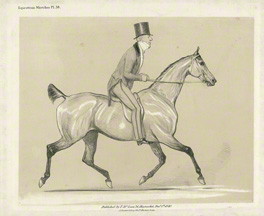
John Ponsonby, 4th Earl of Bessborough

John Ponsonby, 4th Earl of Bessborough

I do not think Lord Ponsonby a player either, as Lord Lorne, Harriette’s last real interest had been, unless perhaps he was extremely good at pretending heartfelt feeling.

Harriette says on this first occasion they just talked, all night, and it was as if they had known each other forever. And she says, she sat beside him with her head resting on his chest as they spoke.

He told her that while she had been afflicted with a desire for him for the last few months, his own adoration had run for two years. He had seen her when she lived with Frederick Lamb, and had watched her in the days she was under the protection of Lord Lorne. He speaks of her coming out at the opera, and then becoming notorious, and him trying to forget about her, because she had become someone everyone desired and he was no longer certain he wished to know her. But then he had seen her in the park, and again been attracted to the young vibrant, unusual woman, who walked alone and gave money to the poor.

Yes she admits to longing for a kiss, but says he did not kiss her, but said, “No, not tonight! I could no bear your kiss tonight. We will dream about it until tomorrow.”

They make declarations of love, ‘neither in doubt of the others affection,’ Harriette said. Then Harriette talks of having wished to keep her love from her memoirs, to hold it as her secret, suggesting again that it was something very precious and real, but her editor insisted this story must be included, or otherwise the memoirs would not be published.

I’m glad she put it in. It gives a far greater insight into the life of a courtesan… To capture a real understanding of her feelings…

Well, I’ll continue the story of Harriette’s love affair, next week…

Jane Lark is a writer of authentic, passionate and emotional love stories.

See the side bar for details of Jane’s books, and Jane’s website www.janelark.co.uk to learn more about Jane. Or click  ‘like’ on Jane’s Facebook  page to see photo’s and learn historical facts from the Georgian, Regency and Victorian eras, which Jane publishes there. You can also follow Jane on twitter at @janelark