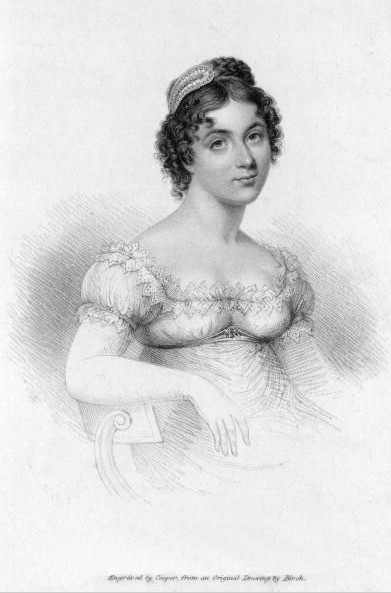
 In my last post about Harriette Wilson, a real Regency courtesan, I mentioned that the current man paying for her keep, returned from a visit out-of-town because someone had laughed at the idea of Harriette being constant.
On his return to town, Harriette talks about how one of his friends played other jealous games too. But before I share those stories, as usual, here’s the quick recap on the history of these posts for any one joining today. For all those who’ve been following Harriette’s story, as always, skip to the end of the italics.
In 1825 Harriette Wilson, a courtesan, published a series of stories as her memoirs in a British broad sheet paper. The Regency gentleman’s clubs were a buzz, waiting to see the next names mentioned each week. While barriers had to be set up outside the shop of her publisher, Stockdale, to hold back the disapproving mob.
Harriette was born Harriette Debochet, she chose the name Harriette Wilson as her professional name, in the same way Emma Hart, who I’ve blogged about previously, had changed her name. Unlike Emma, it isn’t known why or when Harriette changed her name.
She was one of nine surviving children. Her father was a watchmaker and her mother a stocking repairer, and both were believed to be from illegitimate origin.
Three of Harriette’s sisters also became courtesans. Amy, Fanny and Sophia (who I have written about before). So the tales I am about to begin in my blogs will include some elements from their lives too.
For a start you’ll need to understand the world of the 19th Century Courtesan. It was all about show and not just about sex. The idle rich of the upper class aspired to spending time in the company of courtesans, it was fashionable, the thing to do.
You were envied if you were linked to one of the most popular courtesans or you discovered a new unknown beauty to be admired by others.
Courtesans were also part of the competitive nature of the regency period too, gambling was a large element of the life of the idle rich and courtesans were won and lost and bartered and fought for.
So courtesans obviously aspired to be one of the most popular, and to achieve it they learnt how to play music, read widely, so they could debate, and tried to shine in personality too. They wanted to be a favoured ’original’.
The eccentric and outspoken was admired by gentlemen who liked to consort with boxers and jockeys, and coachmen, so courtesans did not aim for placid but were quite happy to insult and mock men who courted them, and demand money for any small favour.
They were soon arguing again when Meyler returned to town. ‘At the opera he was offended if I stood in a room with my sisters. ‘I will retire before the curtain drops if you will accompany me,’ Harriette says she would suggest, ‘but Meyler had fifty people to chat with in the round room’ so he would not leave the theatre early. One of his ‘particular’ friends was Sir Harry Mildmay, ‘both were Hampshire men’ and as Harriette puts it, ‘Sir Harry has ever a mind for all his friend’s wives or mistresses, ugly or handsome’
He sounds a little competitive doesn’t he – a grass is always greener over his neighbour’s fence type of gentleman 😀
‘He was, therefore, continually setting us by the ears, merely because I was among the few who had refused him.’ And what Harriette means by that is that he was continually causing friction between herself and Meyler, stirring up arguments and trying to separate them, using Meyler’s vanity and jealousy or Harriette’s anger.
One day he said to Meyler, ‘why in the deuce do you stand there with Harriette Wilson every night, like a frightful shepherd, to be laughed at? Why don’t you take to intriguing with women of fashion? Do you know, man, that you are by no means an ugly fellow?’ Meyler merely answered that he knew he was not an ugly fellow.
Another night he said to Harriette, ‘flying up to me, affecting surprise’ as she waited at the top of the stairs with her sister for Meyler to be ready to take her home. ‘You here!’ ‘Why I thought it was your ghost!’ ‘I really imagined it was you who went out just now with Meyler!’ Harriette queried it, but Sir Harry insisted. ‘I have this instant seen him hand a lady into his carriage and step in after her.’
Harriette admits to feeling herself ‘reddening with indignation’. It was raining, and her sister and friend had a lift with her friend’s protector, Mr Napier, and were heading in a completely different direction, and there was no one else she wished to beg a carriage seat from. But Sir Harry kindly offered ‘My carriage is much at your service, and I shall be very happy to set you down at your own door.’
Perhaps Harriette would have refused but she says, her sister, Amy, with whom she had competed her whole life, came up to them and made the whole room aware that Harriette had been left behind by her lover. So what else was Harriette to do, but for pride’s sake, make out as if she did not care. ‘I said I would forgive Meyler for cutting me, as often as he was disposed to send me such a very amiable substitute.’
Harriette says ‘It was a dark night, and Mildmay’s coachman drove like mad.’ This is her excuse for not realising that the carriage was not taking her home, but to Sir Harry’s house in Brook Street. She did not realise until the carriage stopped, ‘Sir Harry took hold of my hand, as I stood on the steps, and laughingly tried to pull me into the house.’
Harriette refused to enter, asking if he thought her foolish, she would not comply with his plan to elope with her and he offered to drive her home… ‘No,’ said I, ‘No power on earth shall induce me to enter your carriage again.’ He tried jokes, and earnestness, and begging, but she did not give in, and now her anger having cooled, she started feeling low at the idea Meyler had left her and then to be treated like this by Mildmay.
Her response was to walk home, with her shawl wrapped over her head as she had no bonnet, and Sir Harry walked with her, finally showing some gentleman like behavior and not wishing to leave her to walk alone. But when they reached Harriette’s Sir Harry, supposed close friend of Harriette’s lover Meyler, struck up his insistence again. ‘If Meyler is not there, I will come in.’
Harriette challenged him, ‘What do you think Meyler would say, if he found you in his house?’
‘Oh! Hang Meyler! We would lock him out.’ 🙂 Such reliable friendship.
When Harriette asked a servant if Meyler was in, the answer was that he had been and gone, ‘and appeared much agitated when they informed him I was not returned from the opera house.’
When Harriette asked where he had gone, the maid said she thought it was to Harriette’s sister Amy’s, he’d probably thought Harriette must have gone on to one of Amy’s famous parties. But Harriette was glad he was not there, because Sir Harry would not go.
As he insisted on coming into the house, if she went in; Harriette told the servant to lock her out as well, so he could not go in, and then spent a quarter-hour unsuccessfully trying to persuade him to go. In the end Harriette says two men on the street chased him off, when they thought he was tampering with a woman he had come across, and at that moment, Harriette pounded on the door to be let in before he could come back.
She’d expected to argue with Meyler when he did return a little later, but perhaps his concern and desperation had subdued his anger. He talked about looking for her at the opera house, seeing others in the room she’d left on the arm of Sir Harry laughing at him. Amy had told him who she’d gone with but he had not believed it. He’d gone to her sister Fanny’s and her friend Julia’s, to have Napier Julia’s lover laughing at his hunt. He’d spent fifteen minutes there pretending not to be in a panic, before moving on.
He’d gone to Amy’s house next, to be told again Harriette was with Sir Harry. Then he’d made the decision to come home once more to check, before taking the step of going to call on his friend.
But oddly when Harriette told him about Sir Harry’s ploys, he said simply, ‘I shall never be the least angry with Sir Harry, as long as you steadily refuse him… because I have for some time, wanted such a story to laugh at him about, he having so many against me, with which he takes upon himself to amuse the females of my acquaintance.’
Jane Lark is a writer of authentic, passionate and emotional Historical and New Adult Romance stories.
See below on the side bar for details of Jane’s books, and Jane’s website www.janelark.co.uk to learn more about Jane. Or click ‘like’ on Jane’s Facebook page to see photo’s and learn historical facts from the Georgian, Regency and Victorian eras, which Jane publishes there. You can also follow Jane on twitter at @janelark
 Author, Jane Lark's stories