Reckless in Innocence
for my Historical Romance readers ❤ © Jane Lark Publishing rights belong to Jane Lark, this should not be recreated in any form without prior consent from Jane Lark
Reckless in Innocence
(an early Jane Lark story that is not at all associated with the Marlow Intrigues)
~ Read the earlier parts listed in the index
~
Chapter Thirteen
Marcus
At the sound of a carriage crunching on the gravel drive Marcus came about from the stables to see who was calling, walking about the side of the house. As far as he was aware no one knew he was at Larchfield. He’d wanted no one to know.
“Where is my brother? Where is the Duke?”
Marcus knew the voice. Jason’s.
“At the stables, sir. Or he may be out in the fields with Johnson. I know that he was looking at the horses.” Marcus heard a groom respond, one of those who had gone out ahead of him, to help manage the carriage horses.
“And the woman he brought with him, Miss Derwent…”
Her name, stirred a tender pain in Marcus’s chest, opening the still unhealed wound. Marcus lengthened his stride. Why would Jason think she was here?
“His Grace did not bring any guests, sir. He came alone on this occasion.”
“Alone…” Jason’s voice turned sour.
When Marcus rounded the corner of the house, he saw not only his brother standing on the steps before the door, but standing by the carriage was his sister-in-law, and her hand had lifted to help his aunt descend from the carriage.
What on earth were they all doing here?
“My knees are stiff from travelling,” his aunt declared as she struggled with the steps. They had not seen him yet.
Marcus walked forward, his boots stirring the gravel as me moved swiftly towards his aunt. “What brings you here, Jason? I thought you had disowned me.” He was not in a mood to be conciliatory with his brother.
“Did I say disowned? I think I said you were not welcome in my home. We did not mention yours.” Jason threw back not moving from his position by the door as it was opened. The statement was a jest, but Jason did not smile, and his pitch was not humorous.
“Humour…” Marcus mocked as he reached his aunt’s side and took her elbow supporting her on the left as Angela supported her on the right. “Do I hear you eating humble pie? Careful, the taste can be bitter.”
“You smell of horse-flesh, Tay,” his aunt complained.
“And that would be because I have been working with the horses. Why are you all here?”
“We have come about Elizabeth Derwent -” Jason began.
Marcus looked up towards the steps, staring at his brother. It silenced Jason, as Marcus continued to grip his aunt’s arm. Marcus did not want to have this conversation again. He’d said his piece.
“Marcus,” his aunt snapped in a scalding voice as she stepped down onto the gravel.
Marcus let go of her arm and instead offered his for her to grasp. “I have said enough on the subject, Jason. My opinion has not changed.”
“Have I asked you to change it?”
Marcus looked up again as he walked forward with his aunt, narrowing his eyes at Jason. What had Jason thought he would gain by coming here? Unless it was to heal the rift between them… “You are here to eat your humble pie. I will not marry the woman, but I am not so blameless in this as to expect an apology.”
“I did not offer you one. She is missing.” Jason tossed at him, as he started walking down the shallow steps, away from the front door, towards Marcus.
“Missing… Elizabeth…”
“Yes.” His aunt’s fingers gripped at Marcus’s forearm, clawing into his muscle. It was not because she needed support.
What involvement did his aunt have in this? She did not know Elizabeth.
Marcus looked at Jason, his gaze asking silently, why did you bring her? Had Jason upset her so she would berate Marcus? Was this Jason’s bloody canon fire? If so, it was cruel on his aunt.
“We hoped to find her here,” his aunt said. “It is so extraordinary for you to come to Larchfield, when Jason heard, he hoped that you’d brought Miss Derwent with you. It is something you should not do, and yet we all know what you are like.”
“Well, as you see, she is not here. And why do you care? It seems to me my family is far too concerned about a fortune hunter than they are for me. She will have found some other fool to dupe.”
“Did you hear about her father?” Jason asked as he reached them and stood before them, meaning Marcus, his aunt and Angela had to stop too.
“I heard.” Marcus replied, meeting his brother’s gaze, unflinching and unrepentant.
“Since then no one has seen her. I have been trying to find her, to offer her a room with myself and Angela, but no one knows where she is.”
Pain caught like a stitch through Marcus’s chest. Concern. He denied the emotion. “Very chivalrous of you, Jason.” He looked past his brother, and turned his shoulder, to steer his aunt about Jason and on towards the house, leaving Angela behind. “But Elizabeth is not worth your concern.” he added as he walked past. “She wrote to Percy. When she realised she could not win me, she turned to him. Despite every warning I have given her and the fact that she had promised me she would leave the man alone. I saw the letter she wrote to him. He took great satisfaction in showing it to me.”
“Is she with Lord Percy then?” Angela’s voice lifted high behind him. Marcus did not look back to face her rebuke.
“I do not know. I do not think so.” I refuse to care.
“Marcus.” Jason walked beside him. Not allowing Marcus to escape the rebuke.
His brother would not wish that fate on any woman. Nor would Angela.
Marcus glanced at Angela, guilt rising inside him, but her gaze was focused on his aunt as she walked on the other side of her. Angela had liked Elizabeth, she was concerned, and that meant she must also be sincerely out of charity with him.
When they reached the steps, Marcus concentrated on helping his aunt, but at the top she thrust his arm aside. “I can manage from here, Tay. I am not happy with you.”
Damn it, he was feeling more and more like a scolded child. He let Angela lead his aunt on across the marble lined hall towards the drawing room and hung back, turning to face Jason.
“Tea, and refreshments.” He said to the butler, glancing over Jason’s shoulder. Then to Jason, Marcus said, as the butler walked away. “I do not think he would have taken her. I decided that if Elizabeth could lie then so could I. I told him she carried my child. He did not seem interested in supporting my bastard. She will not be with Percy.”
Jason gave him a hard judging look. “Angela, I and Aunt Margaret are concerned. The Derwents’ house is empty.” Jason gripped Marcus’s arm when he would have turned to follow the women to the drawing room. “She is with child. I do not doubt it, and if Percy has her…”
Marcus opened his mouth to argue, but Jason’s grip on Marcus’s arm firmed and silenced him. “Listen, just think; if you are wrong, what then? If you are wrong, you have deserted an innocent, young woman, leaving her in an impossible situation. Are you proud of that? It makes you as bad as him.”
Jason’s words made the air heavier in Marcus’s lungs and his heart became a weight in his chest, as heavy as stone. But it was not true. She was not carrying his child. “It is not true. And why is Aunt Margaret here, why would she care?” He pulled his arm loose from Jason’s grip and turned to the drawing room. “I suppose you brought her to add strength to your condemnation.”
When Marcus entered the drawing room the women were seated in the chairs before the hearth. He walked across the room and bowed to Angela. Then bowed to his aunt and took her hand so he might kiss the back of her fingers. As he straightened and let her fingers fall, he said with a mocking smile. “Aunt, did you also come only in search of Miss Derwent, or merely to berate me? As you see the groom was not lying, she is not here.”
“I can see that,” his aunt replied. “And in that case you may tell me what the girl has had to do with you, and why your brother thinks she may have come away with you unchaperoned? What trouble have you drawn the poor girl into?”
“She is not a girl, Aunt.”
“She is a young woman who has no experience of the sort of skulduggery you are involved in.”
“Perhaps that was why she was so attractive.” Marcus’s tone was dismissive and biting.
“You are a wretch, Tay. Do not tease me on this. The girl is missing and I want to know where I may find her.”
Marcus sat in a winged chair close to his aunt. “What is it to you, Aunt? Why do you care what happens to Miss Derwent?”
Jason sat beside Angela on a sofa.
“She was to be my companion,” Aunt Margaret proclaimed.
Companion… Marcus frowned. What? He glanced at Jason. Jason’s eyebrows lifted, reinforcing his aunt’s words. Jason was challenging Marcus’s earlier testimony that Elizabeth would have found herself another man to keep her. “Your companion…” Doubt rang in Marcus’s voice.
“She replied to my advert. I interviewed Miss Derwent a week ago and she was perfect, biddable, but not over quiet, a very pleasant young woman. Yet when I wrote to advise her that I wished to employ her, she had disappeared. My solicitor informed me that she had left her address and was nowhere to be found.”
“Her father is bankrupt.” Marcus dismissed with a sigh, denying the concern brewing in his chest. “They would have had no choice but to move.”
“But she had come for a position with me. It would have been the perfect solution to her problem. Why would she have left without a word to me to find out if she had the position?” Frustration brimmed in his aunt’s voice.
It was odd behaviour, yet he could not imagine Elizabeth, the schemer, wishing for work as a companion… “Perhaps she discovered you were my aunt and realised there would be no hope of success.” Marcus shrugged, the expression dismissive. He did not have the will nor the heart to worry over this, he had survived by not thinking of Elizabeth.
“Why would she think that, Marcus?” Aunt Margaret challenged.
He did not reply.
She looked at Jason for her answer. “Tell me why? I have had enough of these guessing games. You would not tell me, and if he will not, how am I to understand? My mind shall not be at rest until I know. If there’s good reason for her to walk away from this position, then I may rest in peace.”
“Marcus…” Jason encouraged, his eyes saying, it is not my place to account for your actions.
“I’m afraid, Aunt Margaret, Elizabeth deceived you.” Marcus sighed, and turned in his chair to face his aunt, leaning forward a little. “Miss Derwent is a fortune hunter. I was unfortunately snagged on her hook. As you saw for yourself though, Elizabeth Derwent is very enticing bait. A wonderful combination of innocence and wickedness.”
“I will not listen to you mock me, Tay. I do not believe it. Not of that young woman. I do not believe it all. She was charming, and my judgement of character has never been wrong.”
A sharp knock struck the half open door. Marcus stood. “Come.” The tea was brought in, carried by two maids. His family remained silent as it was laid out. Angela poured as Marcus stewed over his answer.
Elizabeth did not deserve his aunt’s favour!
Yet the Elizabeth who’d deceived him was not the sort to apply for a post, and the Elizabeth who had hidden behind the potted palms, and whispered to him at the edge of ballrooms, in the beginning, had never mentioned applying for posts. She had written to Percy after all. It did not match up.
Yet no matter that his family were not in charity with him, he was not in charity with Elizabeth. He had heard her father’s plan.
When the tea was poured and the servants left, he ordered the door closed, then picked up his cup and sat back down, passing a look about them all, warning them to listen and listen well, before looking solely at his aunt. “A charming creature she was, aunt, and so charming she did her best to force my hand. She claimed that she was carrying my child, and expected me to marry her. She is not with child.” He looked at Angela and Jason. “I would have fallen for it too, had I not overheard her father securing a business deal with the promise that his daughter would be marrying me, and assuring his partner she was doing everything she could to persuade me, everything including getting my child.” A bitter smile pulled at Marcus’s lips. The memory still cut in deep.
“And you did nothing…” His Aunt’s voice lifted with horror.
He nodded. There had been nothing to do except walk away.
“I have never thought you cruel before, Tay. I have never once condemned your rakish behaviour. But this is beyond sense or reason. You left the girl without a home and her father is in jail -”
“The child was a lie.” Marcus repeated. “A final trick to catch me when her flirting had not achieved it.”
“Yet she could be with child…” The accusation was firm.
He said nothing.
“So you do not deny that.” His aunt pressed, anger rising in her voice.
He would not lie. He nodded. His sense of self-righteousness losing strength as he faced his aunt’s outrage which held a measure of justice. There was one thing he did know; Elizabeth had been innocent when he had first joined with her in that dark conservatory. The moments he’d shared with Elizabeth there came back to him.
“I have lost any respect I held for you. I am appalled. You disgust me.” His aunt thrust a finger in his direction. “The letter I received from Miss Derwent was not the hand of a fortune hunter.” She looked away from him, delving into her reticule, then pulled out a letter and held it out towards him. “Here. Read it and tell me if you still believe she sought your fortune.”
Marcus set his cup aside and rose, to take the letter from his aunt, then sat back down. He recognised the style of the writing, it was the same as the letter Percy had held out. It was Elizabeth’s then.
His heart thumped just at the thought of touching a damned piece of paper which she had touched. God he was pathetic.
Dear Lady Fareham,
I am writing to apply for the position you advertised within the Times. I am a gentlewoman. My father’s estate is in Wiltshire and I have recently come to town for my first season. However, as I have no dowry I would be very surprised if any man considered me for his wife. I have decided therefore to apply for the position of a companion. I am happy to oblige you in any way. I can read English, Latin and French, and speak German, French and a little Italian. I am well studied in history and geography; can play the pianoforte and sing (although I do not profess to have the greatest of singing voices). I am well read also.
I shall look forward to receiving your response with eagerness, Lady Fareham, and greatly wish that you would consider me for the position.
Yours most sincerely,
Miss Elizabeth Derwent
Elizabeth… God his heart ached for her.
“How can anyone not be charmed by such an uncomplicated young woman?” his aunt stated. “She hid nothing in her letter, she gives me every reason for her application and not once does she indicate that she believes she will take a husband, let alone trick a man into marriage. From that letter she has never considered marriage.”
Marcus read the words again. He’d seen his aunt at the time she’d placed the advert. It was the day he’d taken Angela shopping. The day that he’d met Elizabeth in the street. The day after… He swallowed as his throat suddenly dried. “What date was this letter sent? When did you receive it? Before or after you met myself and Angela in town that day and told us you had placed the advertisement?”
“The advert had been placed by then, of course, and the letter was received the day before I saw you, I believe. Yes, it must have been. Look at the date.”
The blood drained from Marcus’s head, as nausea twisted in his stomach.
Had he been wrong?
He read the words again. His aunt was right, they were innocent words, the words of a young woman who was enjoying her season, enjoying his company, with no expectation of more – and there had been no more at the point she’d written this.
What had made her ask him to touch her that night? When she’d sent this letter hours before… Why had she given herself to him if she did not expect more?
He folded the letter along the creases which had been worn into it in his aunt’s possession, and handed it back. Unconsciously he wiped his palm on his trousers, as though to clean dirt from his hand.
“What do you think now, nephew? Do you say she deceived me also?”
“When was the interview?”
“A week ago. Why? What difference does that make?”
Marcus looked at Jason. He was watching Marcus’s expression, trying to glean an understanding of his thoughts. “It was before she called, before she looked for me.”
Jason nodded, but Marcus could see he did not understand.
The puzzle had fallen into place, each piece slotting neatly into the other. He saw the truth. He had forced the pieces into place before, they’d never fitted. His aunt was right. The picture he’d painted of Elizabeth had never fitted. She had seduced him. That was true. His seduction had been planned by her and by her parents, but her plan had not been the same as theirs. She had not planned to tie herself to him, but to escape them. She’d presented her ultimatum to him, knowing he would not offer marriage, and then her plan had been to simply disappear.
What had she said in the letter to his aunt? … She would be very surprised if any man considered her for his wife. Surprised… She had hoped, then. She had hoped that he would offer marriage, and she had taken the first step, hoping that he would fall in love with her, like good men did in the type of fairytales she must have read as a child.
He’d crushed her. Taken her offer and told her bluntly that nothing would come of it. He’d spoken to her in the way he would have spoken to a fast widow who’d experienced a hundred affairs. Elizabeth had experienced none before him. She’d played the game once to try her luck, before she’d planned to run from her parents. It had been like Rapunzel letting down her locks of hair. The offer had been a desperate cry for help and he had put his bloody fingers in his ears.
He shut his eyes for a moment, willing the pain to go away, but it would not and nor would his aunt.
When Marcus opened his eyes he looked directly at his aunt, meeting her accusing stare. “She did not find out she was with child until after she had seen you.”
“You believe her now?” Angela shifted forward on the sofa, her voice challenging him also.
He had to admit his fault. Jason knew enough to work it out. “The letter was written before.”
“Before…” Angela questioned in a high-pitched tone of disbelief.
“Angela dear, must we have the details?” His aunt looked at Angela, who blushed.
“Yes, I believe I was wrong. Elizabeth told me nothing about that letter.” Marcus looked at his aunt. “She said nothing about looking for employment.”
“And you did nothing. No, I am wrong. You quite obviously did one thing.”
“It was a mistake!” His response was swift and sharp.
“And that is no doubt what you told Miss Derwent, you wretch,” his aunt responded.
Heat flooded Marcus’s skin. Wretch. Yes, he was that – and a rogue and a scoundrel, and a sinner – like his father.
“How long? How far would she have been when she told you?” His aunt looked at him with piercing accusation.
Marcus sighed. “A little over four months.”
“Then she would show soon, if she does not already.” The judgement was vivid in Aunt Margaret’s tone.
“You are thinking as I am,” Jason intervened. “She did not wait for a possible offer of employment because she knew she could not take it. Not when she was carrying a child.” He looked at Marcus. “She’d found out the night she came to Angela and me. She did not know before. She must have spent weeks fearing what was wrong, and you’d rejected her at Larchfield. It must have taken courage for her to come to you again.”
Marcus could not think of it, yet the image of her face when he’d told her he thought her a liar pierced his mind. Marcus stood and walked to the mantel. He needed something to grip to hold him steady. His back was turned to the room and his family.
He heard his aunt struggle to her feet, and glanced back as another finger of accusation was pointed at him. “Your mother used to say that she feared you would turn out like your father. I always reassured her you would not. You should know that I now think myself wrong and your mother right; you have shirked your responsibility towards this girl, and acted like the worst cad!”
That was a raw nerve that Marcus did not need poking. Marcus turned fully. “Perhaps if mother had not hounded us as children and driven my father mad then I would have offered for Elizabeth without need for coercion!”
He’d never seen his aunt angry before. She reminded him of his mother, everything his mother said would sting like the aftermath of a strike from a cane. He was stinging again now.
“You cannot blame your parents for your choices! Your mother was a good woman and she fought hard for both of you boys, but even harder for you to keep your inheritance intact, and you have ignored and belittled her efforts for years. I am tired of it, Tay! You had better sit down and listen.”
Marcus sat in the seat she had vacated, pulled down by the years of condemnation he’d received from his mother.
“You have run away all your life. It is time you stopped this nonsense and faced your responsibilities. You are a coward, Marcus Campbell.”
He leant back and shrugged his shoulders. “I admit it. If you refer to marriage, I admit it, Aunt, but you did not see what I saw.” His grief slipped into the end of his sentence as anger.
“Shall I discuss the menu for supper with your housekeeper, Marcus?” Angela interrupted.
He looked at her, she was tactfully looking for an excuse to leave them. The conversation had become too personal. He nodded.
“Then if you will excuse me.” Angela rose and left, closing the door behind her.
“I am tired of that excuse,” his aunt began again. “We have made allowances for your behaviour, all your life, because the poor child found his father dead. Well I do not excuse you any longer.”
“I did not find him dead, Aunt, I found him dying, and I tried to save him. I could not. I knew that my mother had hung him there, as good as if she had tied the rope about his neck.”
“If you were still a child, Marcus, I would smack you, and heavens, I wish that was what I had done when you were young. Perhaps you would not have grown up to be so obstinate and cruel in the way you manage your affairs. Your mother loved you. She loved your father, but she was sixteen when they were wed. A slip of a girl is not capable of managing an estate the size of Larchfield, and your father did nothing but amuse himself with his friends. It was your mother who was refused her trade when she ordered gowns, or even food to feed the many guests he brought to Larchfield. Alexander Campbell was an excellent entertainer. He enjoyed the company of his friends, and they enjoyed living off his funds. It did not take long until his inheritance was spent and Larchfield was making a loss. He would do nothing. He could do nothing; he did not have the ability to apply himself, he did not care about figures or managing people. That is what sent him mad. He hated every hour in the house when he was not entertaining. He needed the constant company of people, constant parties and when he could not afford them it became a shadow over him. It broke your mother’s heart that he did not love her, or wish to be with her alone. She argued with him because he would not accept the responsibility to clear his debts. Your father chose to take his life. Your mother proved there was another way.”
His aunt glared at him for a moment, but then she turned away, looking for somewhere to sit now the energy of her anger had burned out. She took Angela’s place as she added. “And my judgement of your father is worse for the fact that he chose a place and a method that would enable you to find him. That was not your fault. It was his. No one was responsible but your father.”
In the years he remembered of his parents’ marriage his father had never left Larchfield and no one had visited.
Marcus remembered how he’d avoided Larchfield and the country. Why? Because his mother had been so adamant that he should understand how Larchfield ran, that he should know how to manage the accounts, how to earn an income from the farms to pay for the keep of the house. She had been determined to blend him into the heart of Larchfield, and blend Larchfield into the heart of him. She had tried to make him love it. He’d hated it to spite her. He’d never even tried to like the place, or wanted anything to do with it. She had died here alone, but she had written a will detailing exactly how the place should run, even then she had hoped he would care for it.
There was truth in his aunt’s words. For the first time when he heard his mother’s voice in his memory he heard concern as well as condemnation.
He had enjoyed his days since he’d come Larchfield alone. He had enjoyed being here with Elizabeth. He was not like his father. He was nothing like his father.
~
To be continued…
If you cannot wait until next week for more of Jane Lark’s writing there’s plenty to read right now.
And if you’ve read them all already, then there’s another treat available for preorder, The Jealous Love of a Scoundrel is available in the Magical Weddings Boxset and all the books together are only 99c or 99p

To read the Marlow Intrigues series, you can start anywhere, but the actual order is listed below ~ and click like to follow my Facebook Page not to miss anything…
The Marlow Intrigues
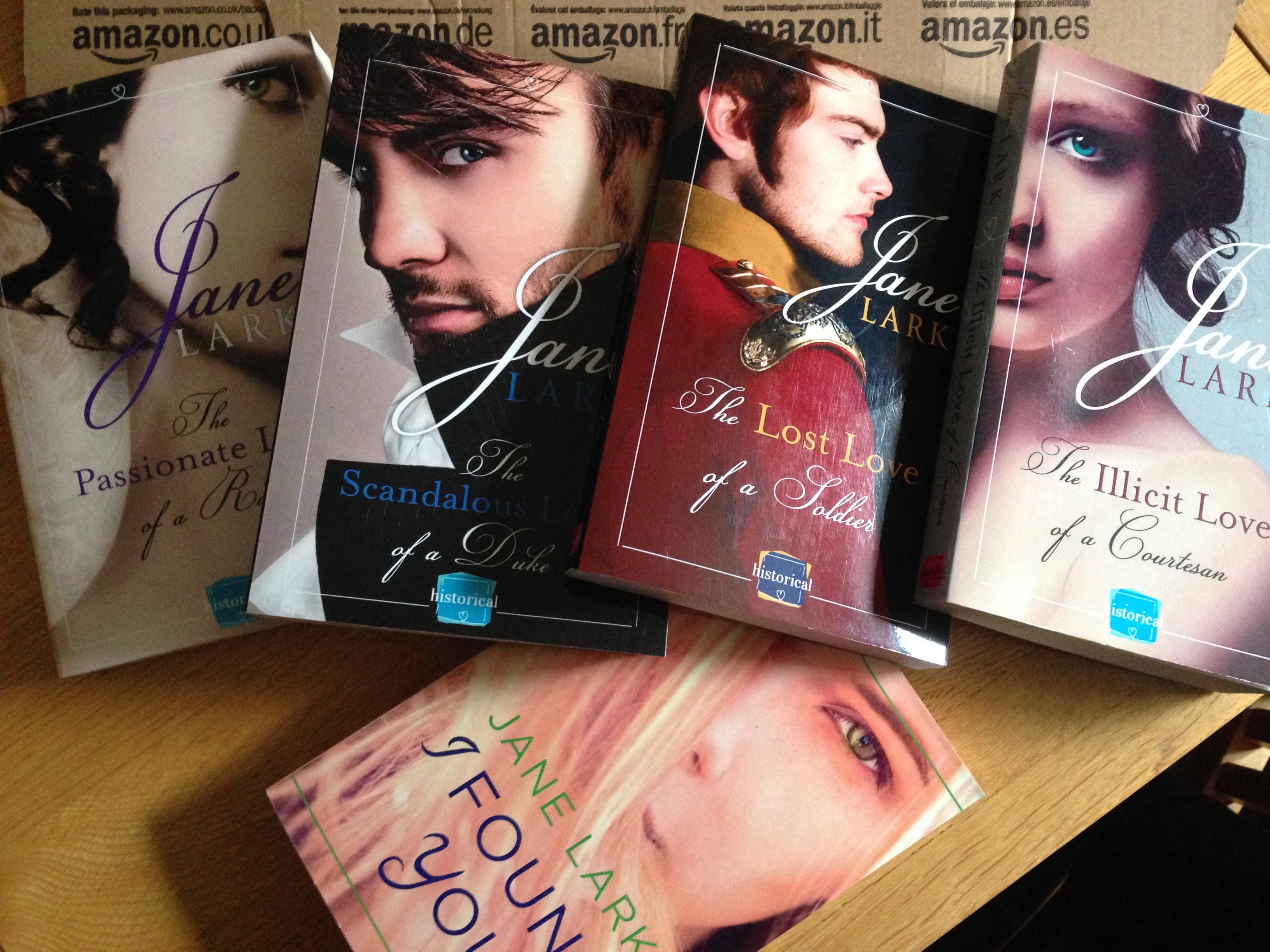
![IMG_6159[1]](https://janelark.blog/wp-content/uploads/2015/05/img_61591.jpg)
The Lost Love of Soldier ~ The Prequel #1 ~ A Christmas Elopement began it all
The Illicit Love of a Courtesan #2
Capturing The Love of an Earl ~ A Free Novella #2.5
The Passionate Love of a Rake #3
The Desperate Love of a Lord ~ A second Free Novella #3.5
The Scandalous Love of a Lord #4
The Dangerous Love of a Rogue #5
The Secret Love of a Gentleman #6
Jane’s books can be ordered from most booksellers in paperback and, yes, there are more to come 🙂

Go to the index
For
- the story of the real courtesan who inspired The Illicit Love of a Courtesan,
- another free short story, about characters from book #2, A Lord’s Scandalous Love,
- the prequel excerpts for book #3 The Scandalous Love of a Duke
Jane Lark is a writer of authentic, passionate and emotional Historical and New Adult Romance stories, and the author of a No.1 bestselling Historical Romance novel in America, ‘The Illicit Love of a Courtesan’.Click here to find out more about Jane’s books, and see Jane’s website www.janelark.co.uk to learn more about Jane. Or click ‘like’ on Jane’s Facebook page to see photo’s and learn historical facts from the Georgian, Regency and Victorian eras, which Jane publishes there. You can also follow Jane on twitter at @janelark



 Author, Jane Lark's stories