In my Regency period novels I often set scenes in theatre boxes, and for some that may seem a strange place when there would be little conversation between characters, yet, for the 19th Century that wasn’t true. As I learned from descriptions in the diary of a courtesan, Harriette Wilson.
Writings that talk about the every day life in that era are rarer, and I usually search this information out in letters between family members, but it was Harriette’s diary that helped me visualise what going to the theatre meant at the time. For the middle and upper class, it was a place to meet people, to see people and be seen, in the same way we might use a night club now. The rich paid to retain a box for months. Though, if they were not using the box they may let others hire their seat for an evening. The owner of the box often saw entertainments numerous times, and so they had no desire to listen, or men may pop in to listen to one particular element of a performance that they loved most and leave again. Those with no interest in the performance often talked through a whole performance. Something Harriette laughed about when someone became annoyed with her, because talking was why people used the boxes. She told the couple they should have sat in the seats below. For Harriette, the theatre was also part of her shop window. It was one of the best places where she and her fellow courtesans could meet new men, they clubbed together to rent a box and dressed up to be admired and deliberately laughed and conversed loudly to sell themselves as good company. They needed to be admired because the more men who were interested in them the higher price they could charge the men they agreed to enter into a relationship with.
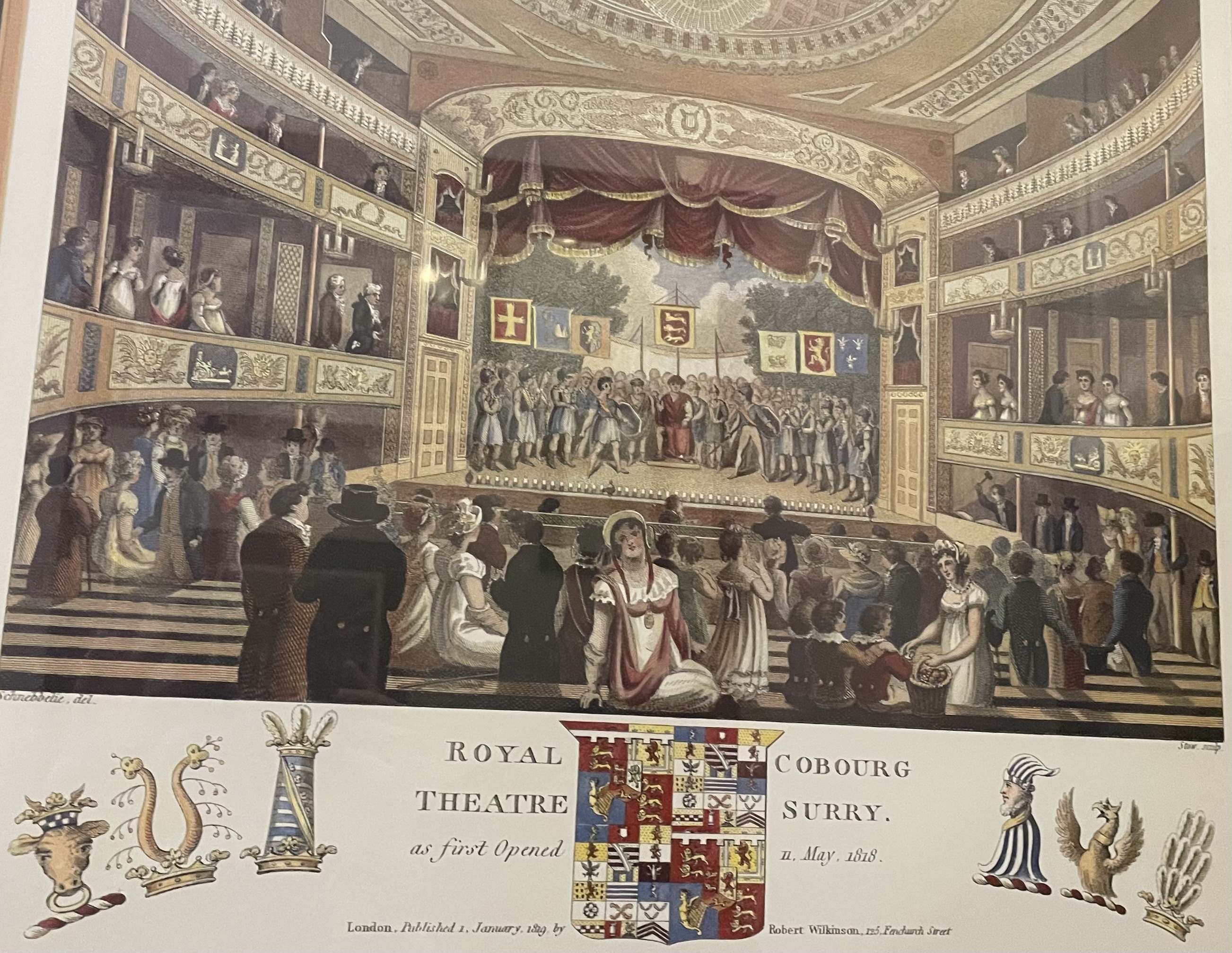
So then, with all of these comings and goings, and the continual conversation, and I’m sure the actors shouting to be heard, the theatre would have been a very different place than it is today, and it’s one of those regency ways of life that fascinates me. I was, therefore, thrilled when I saw these prints hiding high up on the stairway of a 17th Century pub in the Lake District which depicted exactly what I have imagined from Harriette’s descriptions.
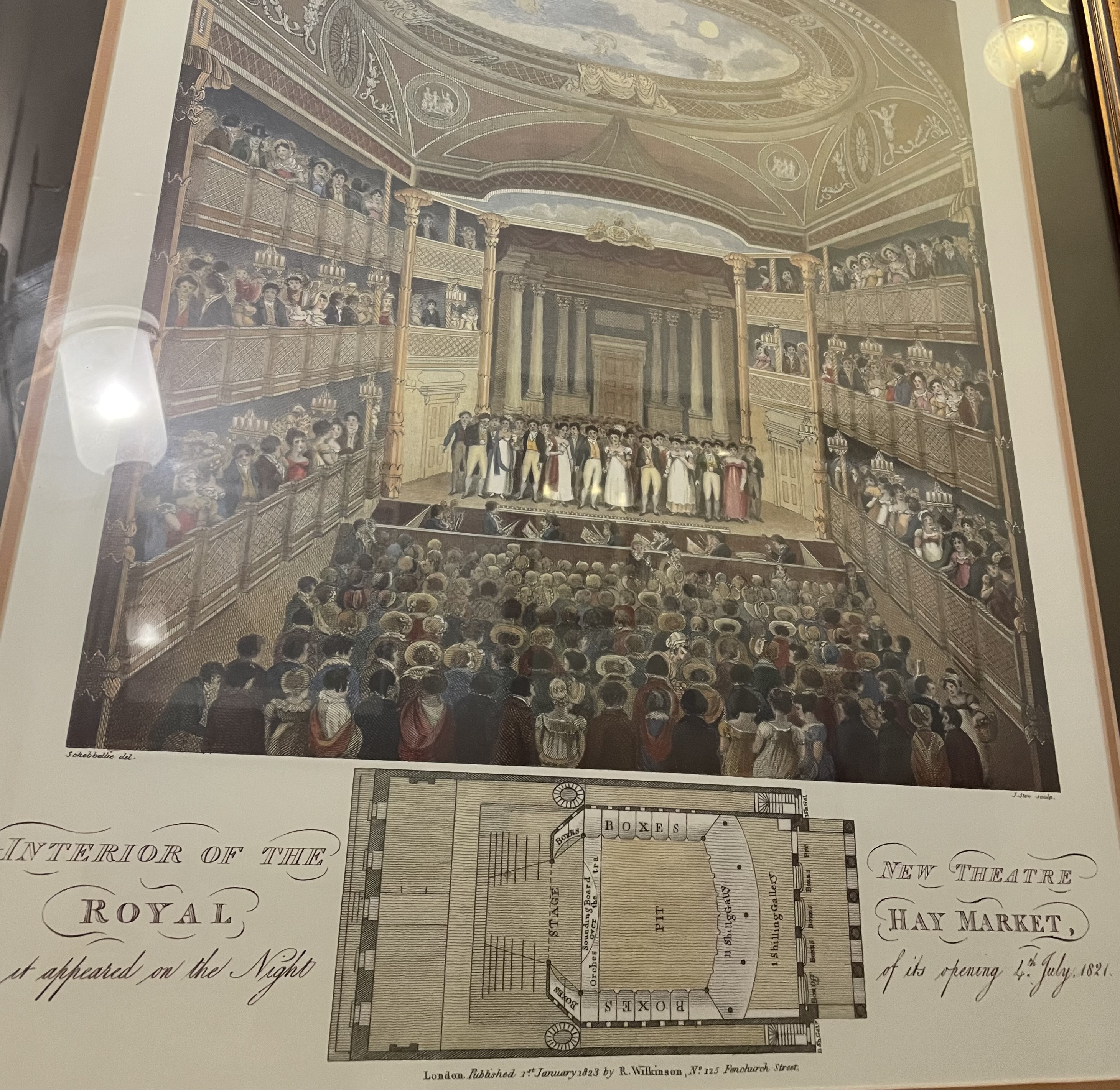
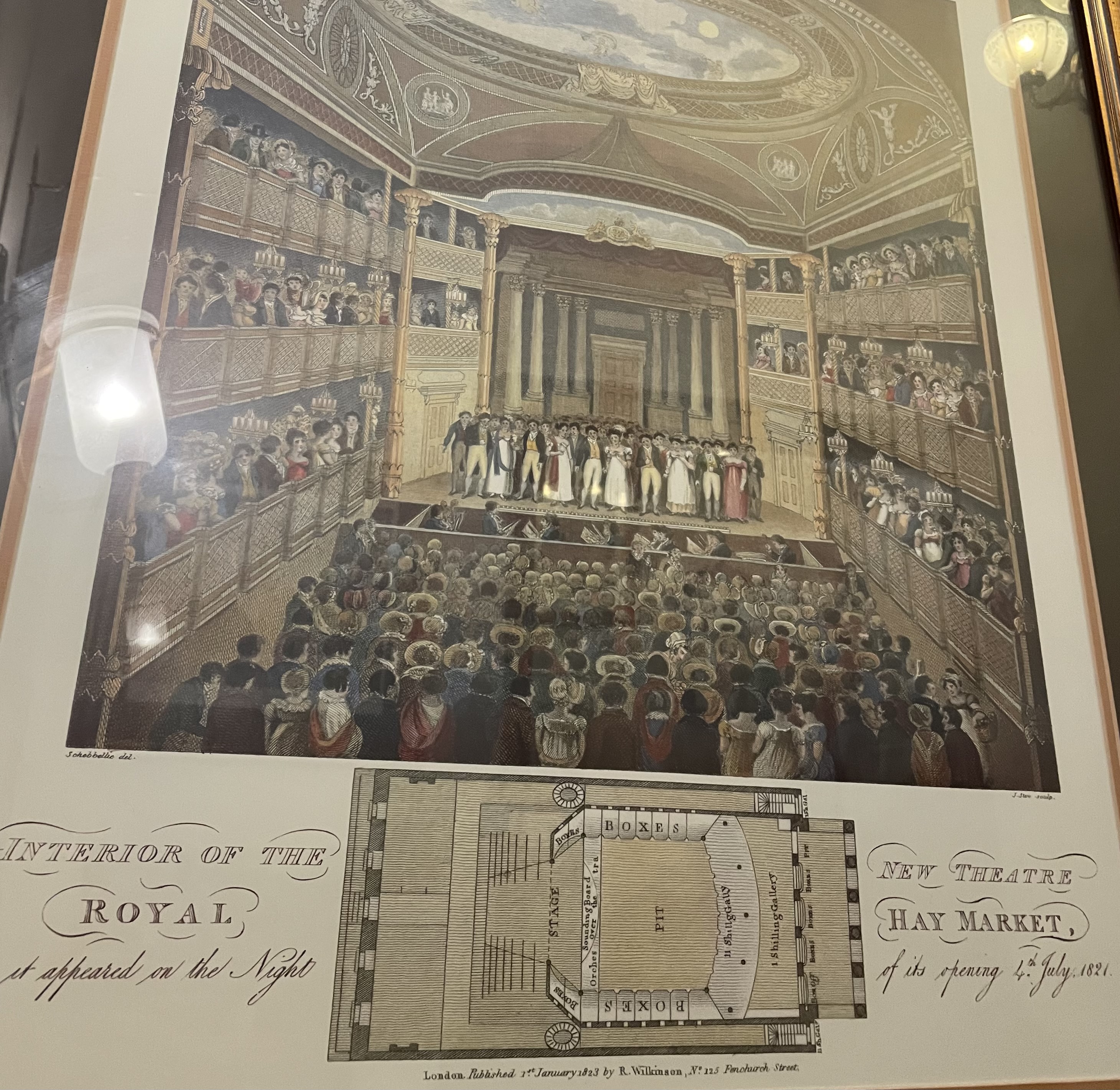
The Interior of the Royal ~ as it appeared on the night – New Theatre Hay Market – of it’s opening night 4th July 1821, published London 1 January 1823
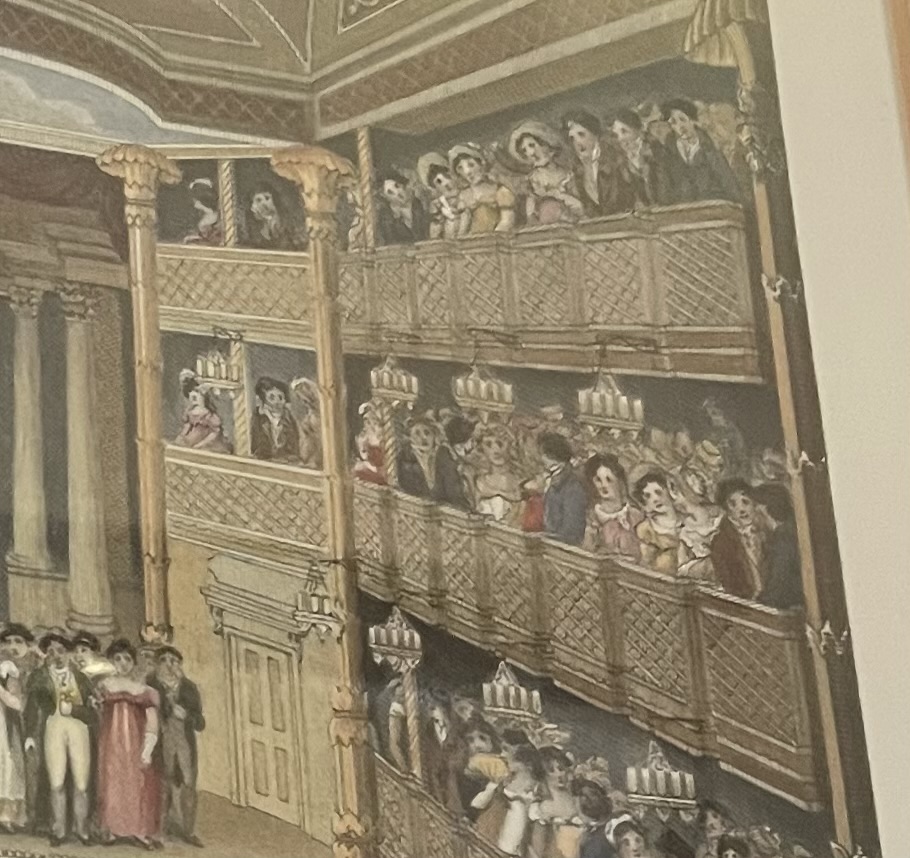
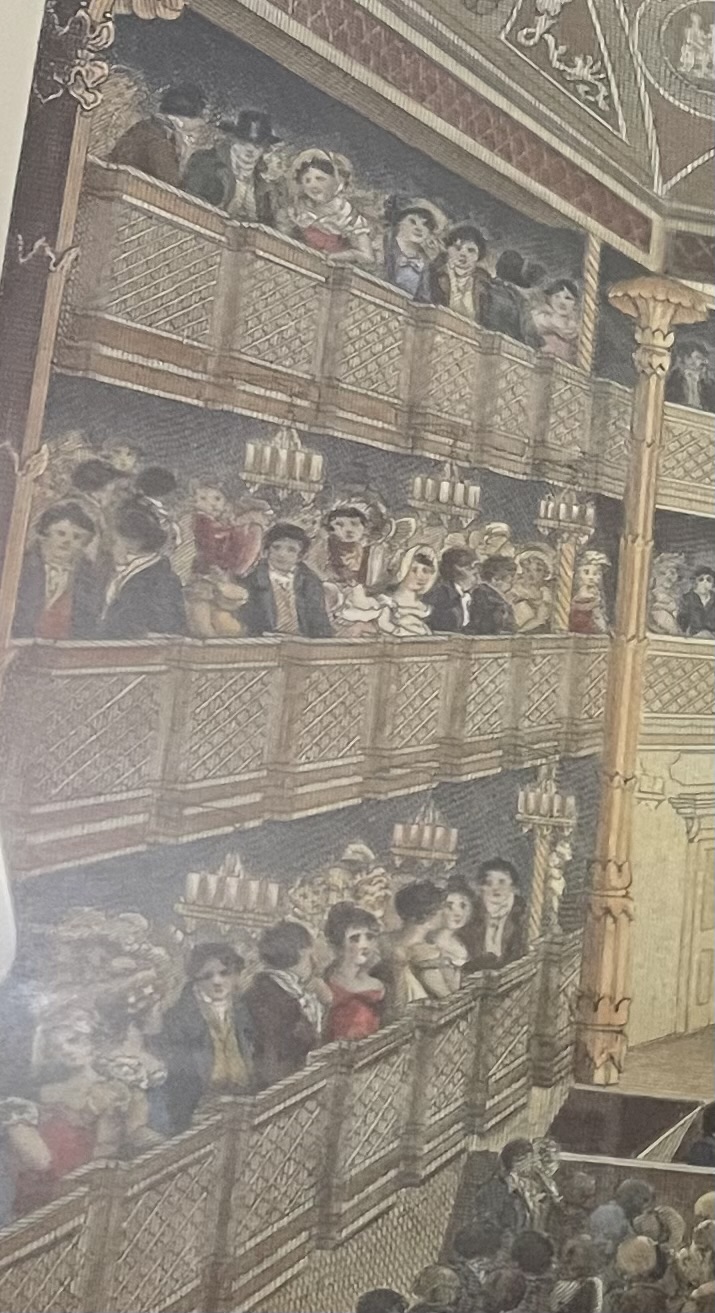
This first print, which is contemporary to the time, shows exactly what I have read described, look at how many people in the boxes are seated with their backs to the stage, and are clearly talking, it displays how much of a social event theatre going was for those with money. While in the pit, we see those who may have their one and only opportunity to see the entertainment facing forward and concentrating on the stage.
The image of the second theatre, The Royal Theatre Cobourg Surrey dated as the opening night in 1818 published 1 January 1819, is not anywhere near as busy a picture, and yet again it portrays that the people attending are talking, some with their backs turned on the stage. Both images portraying the theatre was a social hub.
A wonderful insight, so, if you love insights into history as I do, keep your eyes peeled for those interesting wall-filling prints in old hotels and pubs. I always have a walk around and a good look.
For more information on the history of theatres take a look at the UK’s National Archives here https://www.bl.uk/romantics-and-victorians/articles/19th-century-theatre




 Author, Jane Lark's stories