The Truth by Jane Lark ~ a free book exclusive to my blog ~ part thirty-eight

The Truth

© Jane Lark Publishing rights belong to Jane Lark,

this should not be recreated in any form without prior consent from Jane Lark

Part 1, 2, 3, 4, 5, 67, 8, 9, 10, 11, 12, 13,14,15,16,17,18 ,19,20,21,22,23,24,25, 26, 27, 28, 29, 30, 31, 32, 33, 34, 35, 36, 37

shutterstock_8588308_rendered

Chapter Twelve 

Emerald

For the next seven days Emerald went to Richard’s cabin every night, running through the day cabin in her nightgown, feeling like a ghost as she flitted through the room full of shadows. Then she came alive again in his cabin as he taught her new things, new ways to touch him, or to be touched by him and new ways to rise to the heavens together. There was an intensity in everything he did and she felt worshipped. Cherished. Loved.

His cabin became another world.

On the eighth night she fell asleep in his bunk, her back and hips pressed to his chest and groin. She awoke because his hand gripped her hip pulling her back to make love to her for a second time. He pulled her over him, so his body undulated beneath her with the rock of the sea as he bit and kissed her neck, while she lay on top exposed to the air and the moonlight. It felt wicked.

A sound came from the day cabin, a door opening. The door from the deck into that cabin.

“Joseph,” Richard whispered to her ear. “Hush.”

It was still dark; Mr Swallow must be looking for something and if he came looking for Richard he would discover her. Her heart thumped with a heavy beat of fear but Richard merely covered her mouth and continued while Mr Swallow walked about in the room next door. She heard him opening drawers and speaking to himself. He was barely feet away from where she was joined with Richard. Richard’s strokes were swift as he forcefully pushed them both on towards the end. She bit the skin on his palm as Richard’s form of paradise claimed her mind and body and then a low deep sound rang heavily on his breath near her ear as he came to his end.

Afterwards she stayed still and quiet until Mr Swallow had left the day cabin, then she put on her nightdress, said goodbye to Richard and ran across the day cabin, returning to her own. Rita’s eyes were open and she looked at Emerald but said nothing as Emerald slipped into her bunk.

When Emerald rose in the morning there was a smile on her lips that would not be banished. It had been there for days.

Mr Bishop withdrew her chair at the breakfast table and she looked down wanting to laugh over the secret she and Richard were hiding from the others. When she looked up she caught his gaze, his lips did no more than lift slightly and yet his eyes displayed a broad twinkling smile. “Good morning, Miss Martin.”

“Good morning, Mr Farrow.”

He generally spoke to her less in the day, to camouflage any inkling of the intimacy of their relationship. But she could sense him thinking of her and she watched him when she sat on the deck while she was sewing. Her concentration continually wandered to him and then her eyes followed. She stared as he spoke to his crew on the quarterdeck and when he stood on the poop-deck. She adored him as much as he said he adored her and there was a virile strength in his body that she liked to admire when he was working.

He did not look at her, though, yet she knew he wanted to, he was simply hiding the urge.

After they had lain together in his bunk that night she teased him for it as she dressed. “You do not dare to look at me on the ship in the day and yet in here you stare when I dress… You are coward, Richard, and I have never thought you to be that…”

His eyes narrowed. “It is not that. You will have to stop staring at me on the deck, some of the men are noticing it.”

She did not answer as she slid her arms into the sleeves of her nightdress then pulled it over her head. She enjoyed looking at him.

“You glow like a lantern the way you smile while you look at me. You will give us away.” He was complaining but he sounded amused as though he was not angry but happy over it and she could not  extinguish her smiles if she tried. “Your mother has just died, Emerald,” he added as the nightdress fell and sheathed her body. “People expect you to be sad.” She looked at him as the words cut across her middle. That was cruel. She had not forgotten her mother. There was a hollowness within her, an empty place of pain that could swallow her up if she let it but she had been ignoring that darkness and seeking light with Richard.

“If I want to smile I will smile.” She would have walked  out of his cabin but he rose and took hold of her hand to stop her.

“I did not mean to upset you.”

“Well you did.”

“I do not want you to be unhappy. I merely do not want you to be ruined by this.”

“I am already ruined, Richard. It is too late to change that.”

His eyes looked hard at her, undecided over something. “But I may still protect you from the needless judgement of others. Please try to be careful.”

She did try the next day. She bit her lip so many times to stop a smile she made it sore because she could not stop herself from feeling proud to have won him. They always spoke at night even as they made love and she asked him questions about his business and the things he traded, the people he employed and the places he’d been to, and she asked how he had begun. He had always held himself back from others but he was not holding back from her. His openness in his conversation had refreshed the sense of self-importance she’d discovered in Malta. She felt as though she saw the world through his eyes as she imagined the things that he spoke of. It had made her feel free. Despite the lack of her mother she had discovered a happiness she had never considered possible and as she sat on the deck reading a book Mr Bishop had loaned to her her thoughts drifted to the future, to returning to India as Richard’s wife and she shut sorrow out. She would rather smile.

***

Over the next few days the air became too cold to walk about on the deck without a thick shawl and she noticed that the hours of daylight were shorter and the sky frequently darkened to a steel grey colour that she had never seen in India.

“You will need a cloak to walk  about the deck soon,” Mr Bishop said one day. “It is springtime in England and it can still be chilly.”

Spring, her mother had said, was the end of winter. Emerald had never known the seasons beyond those in India. She had no understanding of what her mother had described as cold winters of ice and snow.

The next day it was colder still and she held her mother’s shawl tightly about her shoulders as she stood on the poop-deck with Mr Pritchard. He was leaning on the rail beside her as Mr Swallow held the giant wheel that steered the ship’s rudder. There was a storm ahead of them and everyone’s eyes were on the haze in the distance that was falling rain, and the line of dark cloud.

Richard was on the quarterdeck below, shouting orders at the crewmen to bring down some of the sails.

“Nature is a dramatic thing isn’t it?” she said to Mr Pritchard as they continued watching the rain approach. When they came closer to it she could see the ripples on the top of the waves but there was no thunder nor lightning and the waves did not look aggressive. It was just a heavy persistent rainstorm. The sound of it striking the water filled the air.

“Miss Martin! Go below!” Richard shouted up from the quarterdeck in his harsh commanding tone. It was not a request. It was an order.

She looked down and met his gaze, smiled, then turned her back to the rail, disobeying as she looked upward turning her face to await the refreshing feel of a shower. “I am not afraid of a little rain, Mr Pritchard, are you?”

It was exhilarating as it swept over them, like sailing through a waterfall. It drenched her, soaking her straw bonnet and her clothes through to her skin. But it had a cleansing feeling.

To be continued…

The Marlow Intrigues: Perfect for lovers of period drama, like Victoria and Poldark.

IMG_6159[1]

The Lost Love of Soldier ~ The Prequel #1 ~ A Christmas Elopement began it all 

The Illicit Love of a Courtesan #2 

Capturing The Love of an Earl ~ A Free Novella #2.5 

The Passionate Love of a Rake #3 

The Desperate Love of a Lord ~ A second Free Novella #3.5 

The Scandalous Love of a Duke #4

The Dangerous Love of a Rogue #5

The Jealous Love of a Scoundrel #5.5

The Persuasive Love of a Libertine #5.75  now included in Jealous Love, (or free if you can persuade Amazon to price match with Kobo ebooks) 😉

The Secret Love of a Gentleman #6 

The Reckless Love of an Heir #7

Jane’s books can be ordered from most booksellers in paperback and, yes, there are more to come  :-) 

CompleteCollecvtion_Facebook_Advertv5

Go to the index

For

  • the story of the real courtesan who inspired  The Illicit Love of a Courtesan,
  • another free short story, about characters from book #2, A Lord’s Scandalous Love,
  • the prequel excerpts for book #3  The Scandalous Love of a Duke

Jane Lark is a writer of authentic, passionate and emotional Historical and New Adult Romance stories, and the author of a No.1 bestselling Historical Romance novel in America, ‘The Illicit Love of a Courtesan’.Click here to find out more about Jane’s books, and see Jane’s website www.janelark.co.uk to learn more about Jane. Or click  ‘like’ on Jane’s Facebook  page to see photo’s and learn historical facts from the Georgian, Regency and Victorian eras, which Jane publishes there. You can also follow Jane on twitter at @janelark
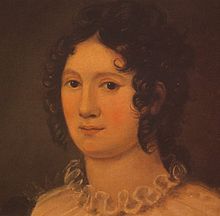
My Scandalous woman today is Claire (Jane) Clairmont – Byron’s mistress and Mary Shelley’s (who wrote Frankenstein) stepsister

Jane (later Claire)Clairmont

Well, my title has kind of given away what made Claire scandalous, but there was far more than her affair with Lord Byron, the infamous poet and seducer. So let’s begin at the beginning.

I mentioned Claire last week, when I told her other stepsister’s, Fanny Imlay’s, sad story.

Claire was born, Jane Clairmont, and grew up being called Jane.

Claire was three when her mother, Mary Jane Vial Clairmont, married, Mary’s father, William Godwin, and Claire was the youngest of the girls, but only eight months younger than her stepsister, Mary Godwin (later Shelley).

If you didn’t read my blog last week, then for your benefit, Claire also had a second stepsister, who was Fanny Imlay as mentioned above, a half-brother, and a half-brother who was born from the marriage between Claire’s and Mary’s parents.

Like Fanny, Claire had conspicuous beginnings, she was illegitimate. Her father is now known to be Sir John Lethbridge of Sandhill Park. Her mother had hidden both Claire’s and her brother’s illegitimacy, changing their surnames to Clairmont and moving away from the locality she grew up in. Perhaps Claire never even knew she was illegitimate.

The relationship between Claire’s mother and her stepfather was known to be volatile, to say the least. Both were intelligent and outspoken, and frequently argued, and Claire’s mother never held back on her opinions and openly favoured her children over Mary and Fanny.

In his younger days William Godwin had been politically active and preached anarchy, when Claire was growing up though he wrote and published children’s books with Claire’s mother.

Through her mother’s preference for her, for a while Claire was able to attend boarding school without the other girls, and she learned to speak French fluently and is known to have spoken other languages in later life. So clearly she had inherited her mother’s intelligence.

But Claire was caught up in the Regency whirl of romance in the 1800’s when she fell into the orbit of the poet Shelley. Shelley respected Claire’s stepfather’s views on anarchy, and he preached free-love.

Oh you thought that was invented in the 60’s? No. It’s just in the 60’s women could then cease falling pregnant as a consequence.

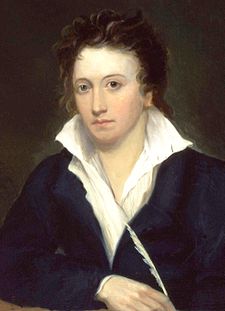
Percy Shelley

In the early 1800s Shelley, preached communal living, and spoke of the rights of women to choose their lovers and instigate affairs. (Mary’s and Fanny’s mother had written on the subject of the freedom of women, which was another reason why Shelley had sought the family out only to make friends with the three girls).

Can you imagine Claire and Mary, who knew Shelley from the age of fifteen, sitting in their small family parlour, watching and listening to Shelley speaking to their older sister, Fanny, avidly engaged, as he discussed his beliefs and debated with Fanny on her mother’s writing. Let’s remember Shelley was a celebrity of the time and famous for his romantic poems and gothic tales at this early stage in his life.

When Fanny was sent away by her father, perhaps because William Godwin feared an affair, Shelley turned his quixotic (love that word, it means dreamy, imaginable, romantic) attentions on Mary.

But intelligent, exuberant Claire was not to be set aside. She was not to be cut off from this beautiful exciting world which she had only just begun picturing.

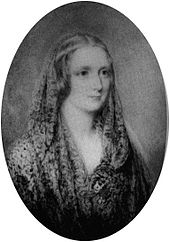
Mary Godwin later Shelley

Each generation thinks it invents ways of life, but if you have followed my blogs for a while you’ll know my abiding theory is that people now are exactly as people have been all the way back through history, it is only our environments and the rules about us which have changed. People did and thought the same things back then as we do now.

Claire was a groupie, wrapt up in Shelley’s ideal, of course she was not about to let herself be excluded, she’d do anything to be kept in the loop. So she took on the role of co-conspirator when Mary and Shelley’s affair began, encouraging and supporting their budding love, enjoying and revelling in the intrigue.

When Shelley then planned to run away with Mary, leaving his wife and children, whom he’d already separated from, behind, Claire ensured she was a part of the plan.

They left the country, leaving Fanny, who’d thought herself loved by Shelley, behind and excluded, still banished in Wales.

Claire’s mother followed them, not necessarily to urge Shelley and Mary to come back, Shelley was paying William Godwin money after all and helping to support him and keep his increasing debts at bay, but she desperately wanted to save her own daughter from such disgrace.

In true rebellious teenager style, Claire was not to be persuaded. She had an exciting life ahead of her with beautiful horizons of a romantic dashing life, in which she would become notable, famous and remembered. Why would she go back?

Her mother returned from Calais without Claire, but then she had walked the path of mistress, she must have known what Claire was getting herself into, and if Claire did know her origins, then she would have had a strong argument not to be persuaded. Her mother could hardly judge.

She, Mary and Shelley then progressed on a tour of the war-torn continent. It was not a time for travel, there were food and accommodation shortages, and they mention in their journals walking through villages burned to the ground. But Shelley ‘and his two wives’ fancied themselves in a romantic novel and read and wrote their way through Europe. You can still read their Journals of the time.

Claire clearly had a fanciful imagination but lacked the family talent for writing. A clue as to the state of her imagination and her involvement in romantic notions was what she wrote in her journal when reading King Lear, ‘What shall poor Cordelia do – Love & be silent’ and ‘Oh this is true – Real Love will never show itself to the eye of broad day – it courts the secret glades

Mmm, I wonder if she was in fact speaking of her own affection for Shelley. Despite rumour saying he slept with both girls, and Claire actively imagining herself, and proudly believing herself, the third in their free love relationship. There is no evidence there was anything beyond friendship between Shelley and Claire. However comments such as this and something I’ll mention later do sort of imply there was something.

It was during this time that Claire, changed her name from Jane Clairmont to Claire, which she considered more romantic, she had tried Clara first.

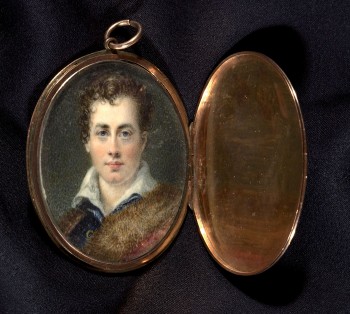
Lord Byron

When Shelley and Mary returned to England, Claire continued to live with her stepsister and her stepsister’s lover, supported by Shelley and revelling in the infamous indecency of their relationship.

But living in her sister’s and Shelley’s shadows perhaps began to gall. Or maybe she no longer liked playing second fiddle to her sister and wished to have pride of place with someone. So she sought to snare a poet for herself and shamelessly threw herself at Lord Byron.

By then eighteen, Claire wrote to him daily, initially asking for his advice on becoming an actress or a writer, and then gradually becoming more and more blatant in her interest and her offers.

At the beginning she proclaimed that when she saw him she only wished to sit on a stool at his feet – human instinct – exactly the same in the 1800s as 2012 -(I’ll talk far more about this in my new book blog at some point). Then later she told him he only need accept ‘that which it has long been the passionate wish of my heart to give you’.  The little Groupie.

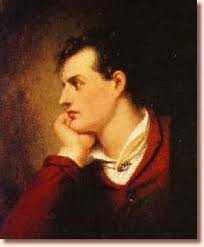
Byron

Byron did indeed eventually accept, but like her mother there was a consequence for Claire, who still imagined herself in love and hoped for far more than Byron gave.

She was nothing to him, Claire was not her sister, Mary.

Claire had possibly hoped to win Byron’s undying love. She only earned his almost immediate desertion.

Her affair with Byron occurred in his last months in England, at the time scandal raged about him. He’d declared himself depressed and Claire was probably only a moment’s entertainment to take his mind from his woes. Soon after their affair began he left the country for Europe in self-imposed exile.

But still enthused by romantic fiction and blissful illusions of excitement and grandeur Claire refused to be separated from him and urged Shelley to follow, Shelley was after all of a similar mind to Byron, a political revolutionary. So once again Claire, Mary and Shelley set off for the continent.

We can only guess whether or not Claire knew she was carrying Byron’s child at the time, but if she did not know already, she learned the truth on her travels, as did Mary and Shelley. By this time Mary had already born Shelley’s illegitimate child.

Byron had made it clear to Claire he had no further interest in her before he’d left England, but he was a man who inspired fixation (more on that in later blogs). He knew how to charm women (huh-hum and potentially men).  Scandal and desperation followed him like a plague.

Byron recorded his opinion on the subject of Claire and her presence in Europe in a letter dated 20, January 1817;

‘You know, and I believe, saw once that odd-headed girl, who introduced herself to me shortly before I left England, but you do not know, that I found her with Shelley and her sister at Geneva. I never loved her nor pretended to love her, but a man is a man, and if a girl of eighteen comes prancing to you at all hours of the night, there is but one way, the suite of all this is that she was with child, and returned to England to assist in peopling that desolate island. This comes of “putting it about” (as Jackson calls it) and be damned to it, and thus people come into the world.’

Now do you see what I mean about people being the same then as now. Could that not have been written yesterday, apart from the structure of the language. The thought is the same.

I bet you assumed the phrase ‘putting it about’ recently invented, as you did free love.

Well poor old misguided Claire, had, put it about, as Byron so bluntly described, and despite taking her to his bed again to end her endurance in persuasion, he still then turned her away once more.

To set this in context it was in this period that Shelley and Byron, Mary and Claire, concocted awful gothic stories for entertainment to terrify one another, and it was in this period the idea of Frankenstein was born in Mary’s head.

When Claire’s cast for Byron failed again, Shelley brought her home to England to birth the child. He smuggled her back into the country in secrecy and hid her away in Bath, seeking to keep the pregnancy quiet. He had his own battles to fight and needed no further scandal linked to him at the time.

It was during Claire’s pregnancy that Fanny, her eldest stepsister committed suicide, as I spoke of last week.

Shelley’s wife also committed suicide within two months.

He must have thought himself heavily burdened at the time.

Heaven knows what Claire thought now facing the consequences of the pleasure of free love. In later life she was known to say her affair with Byron had ‘given her only a few minutes of pleasure but a lifetime of trouble’.

Allegra Byron

When the child was born, with Shelley deeply in debt, as was Claire’s stepfather, and Mary and Shelley married, the trio set off abroad again, taking Byron’s daughter, Allegra, with them. They thought the child would have a better life with her father, although Claire probably also still hoped that she too might have a future with Byron. She did not.

All through her pregnancy Claire had continued to seek Byron’s attention and affections, writing to him frequently without any recognition and when she caught up with him on the continent, he initially refused to have anything to do with the child. But eventually Claire, or perhaps Shelley, persuaded Byron to take Allegra. It meant though that Claire must cut herself off from her daughter and cease her obsessive pursuit of Byron. It was the condition by which he took the child––that Claire leave him alone. (Yes there were stalkers in the 1800s too).

Claire consented, though afterwards she was horrified by Byron’s ill-treatment of Allegra, I doubt he felt any affection for the daughter his brief liaison with Claire had created. He packed Allegra off to a house he didn’t live in, to be brought up by servants, and later had her placed in a convent where she died at the age of five. Claire had seen her daughter a couple of times but not for two years at the point Byron admitted her to the convent. Claire had sought to plot to steal her away from the convent but Shelley would not agree to the plan and she did not feel able to do it alone.

Here is a link to a copy of the letter Claire wrote to Byron when he told her he was putting Allegra in a convent.

http://shelleysghost.bodleian.ox.ac.uk/?location_id=63#Transcript

And here a link of Byron’s reply, refusing to communicate with Claire.

http://shelleysghost.bodleian.ox.ac.uk/?location_id=64#Transcript

Also another link to a letter written by Allegra to her mother, click on the transcript tab for the content of the letter.

http://shelleysghost.bodleian.ox.ac.uk/?location_id=65

After her affair with Byron, Claire remained with Shelley and Mary until Shelley’s death.

Whether or not there was anything between Shelley and Mary physically who knows? But there were rumours that Claire bore Shelley a child, which Byron publicly believed and he had spent time with the three of them.

We learnt in my last blog that Shelley was quite capable of subterfuge when he covered up Fanny’s death so the scandal would not reflect on him. Did he therefore do the same in Naples in 1818. He is known to have registered the birth of a child on the 27th December, the mother’s name was given as an Italian woman. The child was immediately placed in foster care in the city at the time and although Mary denied any possibility of the child being Claire’s, Claire was known to have been ill within hours of the child being registered. Perhaps? Certainly Shelley left Claire a generous sum in his will. For favours rendered?

That child also died, left behind in Naples, the child only reached the age of one.

In a letter on the link  below, there his a rather odd plea from Shelley, who was at the time again in the company of Byron, claiming to Mary that if she has heard that anything has occurred between himself and Claire, it is not true. (Me thinks the man doth protest too much).

http://shelleysghost.bodleian.ox.ac.uk/?location_id=66#Transcript

As Claire grew older though, after such bitter experiences and such public rejection from Byron, her desire for men waned. After Shelley’s death, Claire separated from Mary and lived more peacefully adopting the life of a governess and companion in a number of positions, with various families who treated her well.

When she wrote to her sister, Mary, of men she joked about their interest, but expressed little return affection, joking once that two men had commented on her disdain, and that therefore she might shock them and fall for them both at once. At one point in letters she mentioned an idea to write a story expressing the ‘erroneous opinions’ about male and female relationships, planning to cite the beliefs of both Byron and Shelley. Clearly she was no longer blinded by her youthful infatuation for romantic poets and their free love principles.

Still Claire, unlike many of my stories of scandalous women, had a happier ending, out living most of Byron’s and Shelley’s set and living a contented, more simple and peaceful life, less scandalous and more inconspicuous certainly.

She died at the age of eighty.

I have not read Mary’s Journal, I am going to, and next week I’ll tell Mary’s story. I love these juicy real life tales. Sad though when you think of the person who endured this life in reality. Clearly Claire found some happiness in the end but I suspect her youthful rebellion left her bitter and injured emotionally.

The Marlow Intrigues

Discover hours of period drama (2)


The Lost Love of Soldier ~ The Prequel

The Illicit Love of a Courtesan  

The Passionate Love of a Rake

The Scandalous Love of a Duke

The Dangerous Love of a Rogue 

The Secret Love of a Gentleman  

The Reckless Love of an Heir 

The Tainted Love of a Captain 

Jane’s books can be ordered from booksellers in ebook or paperback