 There is of course another form of folly, the memorial of the Grand Tour, an article obtained in pursuit of antiquity.
William Bankes, a friend of Lord Byron, who travelled through the period of Peninsular War was a collector.
In the later years he travelled with the well known excavator of Egyptian artefacts, Geovanni Belzoni, who he engaged to bring back an obelisk, which was a feat which took years.
On its first move, it plunged into the river out of sight.
However the obelisk did eventually make it to William Bankes home in Kingston Lacy, Dorset.
It arrived in England in 1821 and the Duke of Wellington offered to ship it to Dorset on a gun carriage.
The Duke of Wellington was then asked to lay the foundation stone in April 1827, when the granite steps it is mounted on and other fragments of the obelisk arrived in England.
This is commemorated in the plaques about the obelisk. As is the fact that King George IV donated granite from the ruins of Leptis Magna to repair damage to the obelisk which occurred during travel.
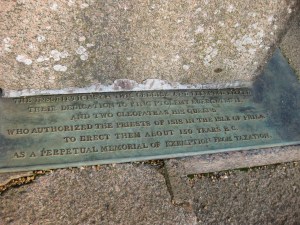
The obelisk still stands proudly erect in full view of the house at Kingston Lacy. It comes from the temple of Isis on the island of Philae, and is inscribed with the names of Ptolemy VII Euergetes II who died in 116BC, and his second consort Cleopatra III recording the exemption granted to the priests of Isis from the expense of local administration and has both Egyptian and Greek inscription.
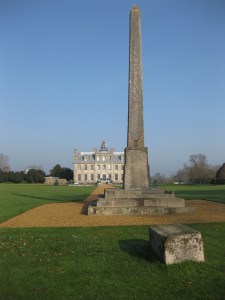
There are many more tales to come from Kingston Lacy, but I’ll save those for another day.
To find out more go to:
http://en.wikipedia.org/wiki/William_John_Bankes
http://en.wikipedia.org/wiki/Giovanni_Battista_Belzoni

 Jane Lark’s debut novel is due to be published 2nd May 2013, by Sapphire Star Publishing See Jane’s website www.janelark.co.uk to learn more or click like on Jane’s Facebook page. You can also follow Jane on twitter at @janelark
 Author, Jane Lark's stories