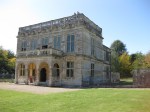
 Recently I visited Lodge Park, in the Cotswolds, near Cirencester. Lodge Park is a 17th century grandstand.
It was built for John ‘Crump’ Dutton, a Civil War politician, for the purpose of viewing deer coursing.
It stands within the Sherborne Estate, in 18th century parkland designed by English garden designer, Charles Bridgeman.
The deer course is a mile long, and would have originally been walled.
John Dutton, and the political friends he’d brought to his estate to charm, would have ridden up the course from Sherborne House, and then in the luxury of this fully equipped stand dined and watched the deer coursing from the roof.
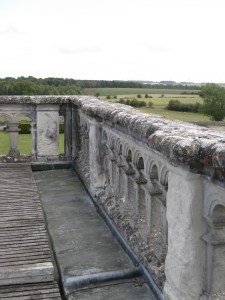
His lesser guests would have watched it from the balcony.


At the time it was built, from the roof he and his guests could have viewed the whole length of the course and watched their hunting hounds chase the deer into the run and follow them all the way along the course, laying bets even as they ran.
 Blood sports are frowned upon these days, but in the 17th and 18th century they were part of life in every form, and the animals caught were eaten. There are the remains of a slaughter house at the end of the course where the venison would have been prepared for John Dutton’s table.
With my imagination rampant I can picture the idle, self-centred rich of the 17th Century drinking, cheering and jeering and laughing as the dogs fly along the course and the deer race ahead in a leaping run, lurching from side to side, looking for escape. There was a ditch at the head of the course the deer could leap if they won.

On the map of Lodge Park you can see the fields which still outline the old deer course. They run a long rectangular length from the A420 to the slaughter house.

The fountain in the picture above is a later addition, put in when Lodge Park was once used as a family home.
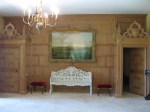
And as you see, to add to the ambience of the venue, the day we visited the large hall was being used as a concert hall. I do not doubt John Dutton would have had numerous entertainments to thrill his guests and gain their influence in his political field when he owned and entertained in the grandstand.
Jane Lark is a writer of authentic, passionate and emotional love stories.
See the side bar for details of Jane’s books and Jane’s website www.janelark.co.uk to learn more about Jane. Or click ‘like’ on Jane’s Facebook page to see photo’s and learn historical facts from the Georgian, Regency and Victorian eras, which Jane publishes there. You can also follow Jane on twitter at @janelark
 Author, Jane Lark's stories