” There is a good deal to be said for frivolity. Frivolous people, when all is said and done, do less harm in the world than some of our philanthropisers and reformers.
Mistrust a man who never has an occasional flash of silliness.’ Lord Berners
It is no wonder that I am fascinated and inspired by follies as I grew up in the shadow of the one Lord Berners built.
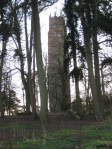
The Folly at Faringdon in Oxfordshire, England, dominates the horizon, standing proud and tall on a hill looking down on the market town.
It is the end of an era, the last Folly Tower to have been built in Britain.

Lord Berners, commissioned it as a birthday present for his friend, Robert Heber-Percy, of course it had to be ‘utterly useless’ in true folly fashion.
 Life can be very mundane if there is no frivolity and Lord Berners was obviously a believer in a bit of folly as I am. He once wrote, ‘There is a legend that Our Lord said “Blessed are the Frivolous, for theirs is the Kingdom of Heaven” and that it was suppressed by St Paul’.
Lord Berners was witty. He seems to me the epitome of the folly builder, although they lived more in previous generations, in the glamour of the Regency and Georgian periods, when the wealthy wished to flaunt their money in excesses.
I just love the hedonism of the folly builder, building for the sake of building, for beauty or view, or just for pleasure. And now this out of fashion art remains for us to admire and enjoy.
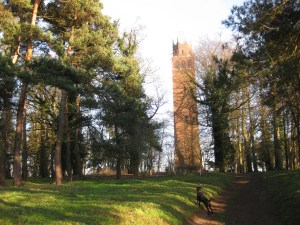
Folly hill was well known even before Lord Berners built the folly there. Its was a prominent post for historic battles. King Charles stayed in Faringon in the Civil War and the hill became Cromwell’s camp, and in the 1100’s it played a part in the war between King Stephen and Queen Matilda. A couple of years ago the ruins of the castle built in the medieval civil war were discovered beneath the ground at the bottom of the hill by the river Thames.
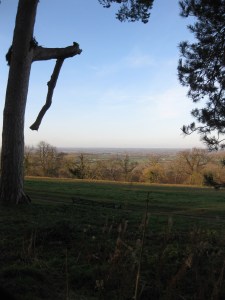
In 1774 it became famous for its views when the Poet Laureate, Henry Pye, wrote, ‘Faringdon Hill’.
‘Here lofty mountains lift their azure heads,
There in green lap the grassy meadows spread;
Enclosures here the sylvan scene divide,
There plains extended spread their harvests wide’.
I have included some photographs so you may enjoy the view as Henry Pye did. To find out more on Faringdon folly go to http://www.faringdonfolly.org.uk/


Jane Lark is a writer of authentic, passionate and emotional love stories.
See the side bar for details of Jane’s books, and Jane’s website www.janelark.co.uk to learn more about Jane. Or click ‘like’ on Jane’s Facebook page to see photo’s and learn historical facts from the Georgian, Regency and Victorian eras, which Jane publishes there. You can also follow Jane on twitter at @janelark




 Author, Jane Lark's stories