Stourhead house and landscaped garden was built between 1717 and 1725 by Henry Hoare, whose father, Sir Richard 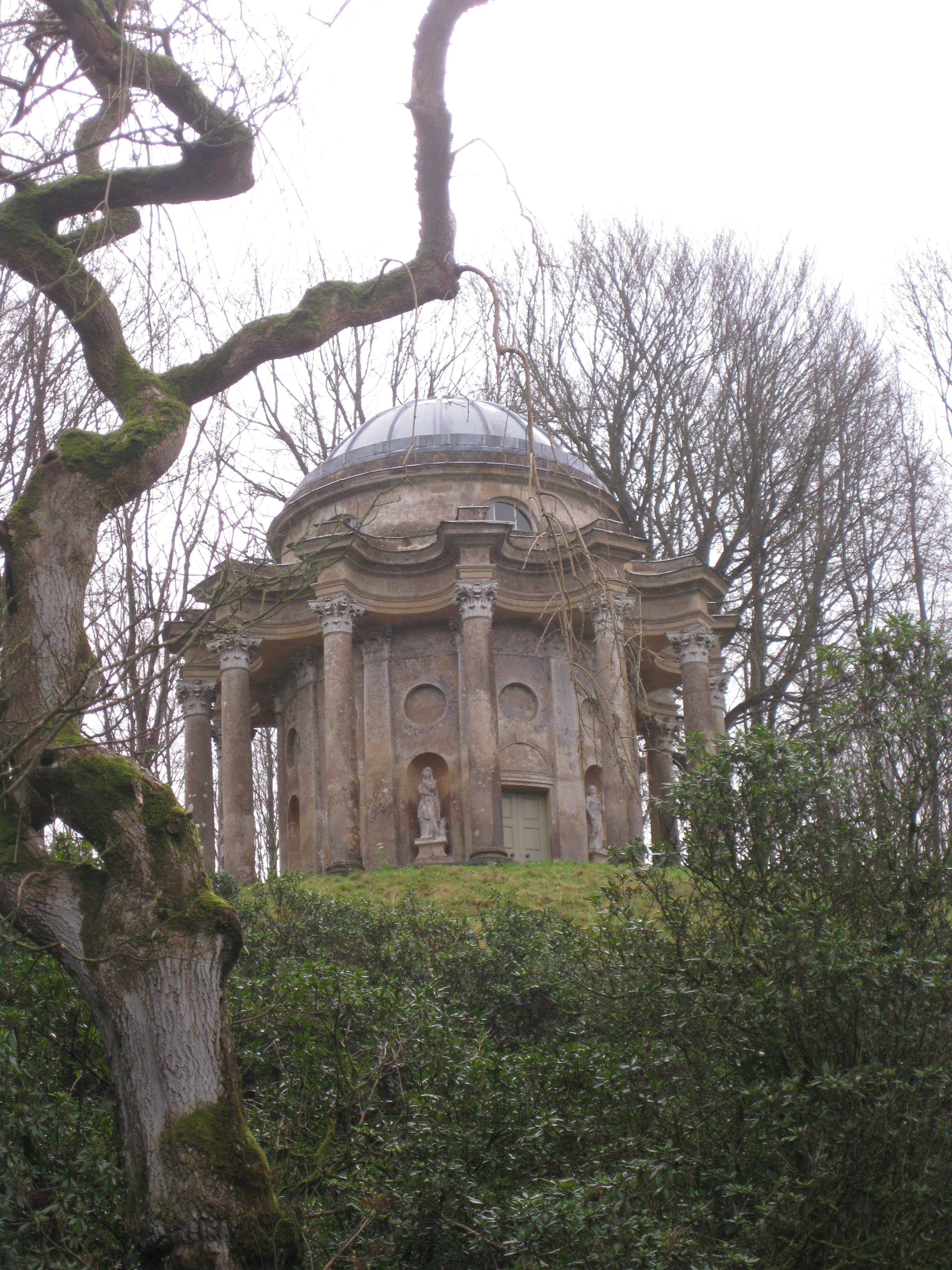 Hoare, had made his fortune in establishing Hoare’s Bank.
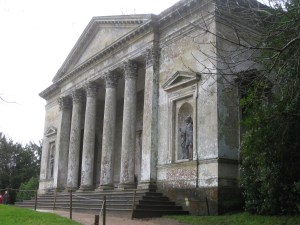
Henry Hoare obviously had a passion for the folly as the garden ornament. There are several in the garden including smaller temples, a large Pantheon like building, a tall tower, a grotto and a small Gothic Cottage. He clearly did not wish to be out done in anything.
Keira Knightley, as Elizabeth Bennett, stands in the Apollo Temple at Stourhead when she is rejecting Mr Darcy in the 2005 film of Pride and Prejudice and runs across the Palladian bridge over the lake.
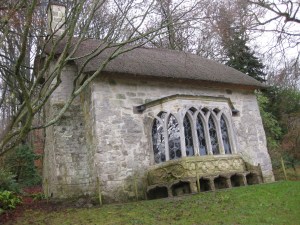
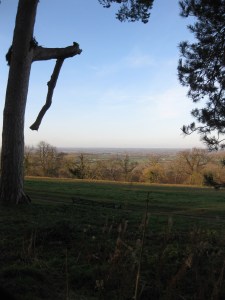
I think why I love follies is for their romance, they romance the eye and the imagination, positioned in places where you can hide away and allow indiscretions or secret observation. Or in a place high up for the view, where you feel like a king, inspired, looking down on your creation and ordering the world.
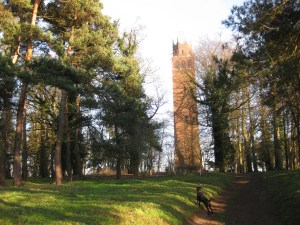
Henry Hoare’s King Alfred’s tower, a crenulated, castle like tower, has 205 steps to reach the top, and stands away from the house, looking over the acres he owns. The little rustic Gothic Cottage is believed to have been built after Henry Hoare ‘the magnificent’ was inspired by a visit to Horace Walpole’s Gothick house at Strawberry Hill, in 1763. However Henry Hoare left the cottage hidden, tucked away, behind vegetation, until his grandson Richard Colt Hoare made the cottage more of a feature by adding a porch and a Gothic bow window with a seat in 1806. Now it overlooks the lake the Palladian Bridge and the Temple of Flora.
The Grotto, which you descend to surrounded by rustic jagged edges, is a tribute to the river God, with statues sunken in caves, surrounded by running water. One statue, lying on a plinth is Ariadne and before her is engraved a poem by Alexander Pope.
Nymph of the Grot these sacred springs I keep,
And to the murmur of these waters sleep;
Ah! Spare my slumbers, gently tread the cave,
And drink in silence, or in silence lave.
Whenever I walk around the garden at Stourhead I imagine how Henry Hoare’s and his later family’s guests may have used these various hideaways and vantage points. Laughing, talking and whispering as they process for an afternoons walk, or entertainment, picnic or even dinner in the Pantheon perhaps.
Jane Lark is a writer of authentic, passionate and emotional love stories.
See the side bar for details of Jane’s books, and Jane’s website www.janelark.co.uk to learn more about Jane. Or click ‘like’ on Jane’s Facebook page to see photo’s and learn historical facts from the Georgian, Regency and Victorian eras, which Jane publishes there. You can also follow Jane on twitter at @janelark
 There is a good deal to be said for frivolity. Frivolous people, when all is said and done, do less harm in the world than some of our philanthropisers and reformers.


 Author, Jane Lark's stories