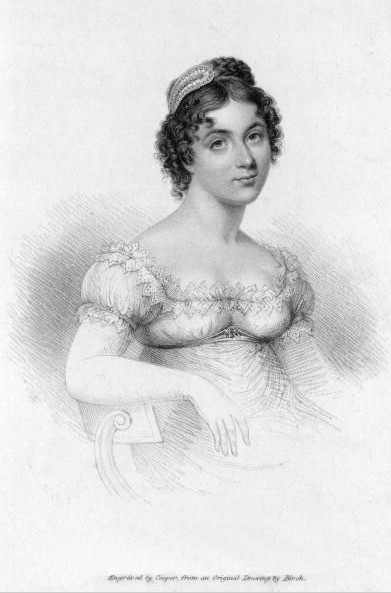
 Last week I promised to tell you more about Harriette’s enforced agreement, to let Meyler see his frenchwomen, if he equally allowed her to see others, but at that point, their promise of inconstancy had not survived as they ended up pulled together again by attraction within twenty-four hours. But…
Before I tell you though, here’s the usual recap of the background for this series of posts, if you are joining the story today, and if you’ve read it, then as always skip to the end of the italics, where I have begun the story in bold.
In 1825 Harriette Wilson, a courtesan, published a series of stories as her memoirs in a British broad sheet paper. The Regency gentleman’s clubs were a buzz, waiting to see the next names mentioned each week. While barriers had to be set up outside the shop of her publisher, Stockdale, to hold back the disapproving mob.
Harriette was born Harriette Debochet, she chose the name Harriette Wilson as her professional name, in the same way Emma Hart, who I’ve blogged about previously, had changed her name. Unlike Emma, it isn’t known why or when Harriette changed her name.
She was one of nine surviving children. Her father was a watchmaker and her mother a stocking repairer, and both were believed to be from illegitimate origin.
Three of Harriette’s sisters also became courtesans. Amy, Fanny and Sophia (who I have written about before). So the tales I am about to begin in my blogs will include some elements from their lives too.
For a start you’ll need to understand the world of the 19th Century Courtesan. It was all about show and not just about sex. The idle rich of the upper class aspired to spending time in the company of courtesans, it was fashionable, the thing to do.
You were envied if you were linked to one of the most popular courtesans or you discovered a new unknown beauty to be admired by others.
Courtesans were also part of the competitive nature of the regency period too, gambling was a large element of the life of the idle rich and courtesans were won and lost and bartered and fought for.
So courtesans obviously aspired to be one of the most popular, and to achieve it they learnt how to play music, read widely, so they could debate, and tried to shine in personality too. They wanted to be a favoured ’original’.
The eccentric and outspoken was admired by gentlemen who liked to consort with boxers and jockeys, and coachmen, so courtesans did not aim for placid but were quite happy to insult and mock men who courted them, and demand money for any small favour.
The night that Harriette met Meyler, her current on-off lover, at the opera, and came home with him again despite their agreement of inconstancy, he told her that the next day, he was to be presented at court by Lord Ebrington, a very old flame of Harriette’s – and Harriette saw an opening to get control of their relationship again.
‘What do you think of His Lordship?’ I inquired.
‘He is one of the handsomest, most sensible, and distinguished looking young nobleman in Europe,’ Meyler replied.
‘Very well, I am glad you like him, and I am glad he is here; because, if you treat me too ill, or again mortify me by saying you are sick of my constancy, and wish nobody was constant in the world, alors, vois-tu, on peut se consoler.’ (then how can you offer comfort in two places at once)
‘Point de tout, (a minor point)’ answered Meyler, ‘for, of course, if Lord Ebrington had any fancy for you he would prove it. I am not such a vain fool as to believe any woman breathing would have me, or remain an hour with me, if she could be even tolerated by Lord Ebrington.’
‘Now Meyler, pray, don’t go out of your way to provoke me. You cannot, nobody can, or ever did imagine I would stay with a man whom I disliked, merely for his money: and further, what pleasure do you find in striving to wound and humble my vanity thus, as if I was and had been constant to you from necessity alone?’
‘I did not say you could not get others. I know to the contrary. I only said what I firmly believe, which is that, were you, this very night, to send a note to Lord Ebrington, inviting him to your bed even, he would not come.’
Thus did this provoking creature delight in teasing me, and the next half-hour he would seem passionately devoted to me.’
So how did this end… Well for the first month they lived separately in Paris, they were both happy. Meyler went everywhere and was often busy, leaving Harriette to enjoy a life of parties, masquerades and balls which she did not mind until… One night, one of Meyler’s friends, informed Harriette that in the hours of their separation, he’d been extremely busy fulfilling his promise of inconstancy, living ‘a most dissipated life, and made up to at least half a dozen Frenchwomen in a week.’
Angry, hurt and disappointed, Harriette cried off her planned entertainment that night and went home, to sit at her window, and watch Meyler’s door to observe his coming and going. When she saw his carriage, she sent a servant over with a note, begging him to come and visit her.
‘He obeyed my summons in very ill humour, declaring that I made him feel as though he had a net thrown over him, and that it was impossible to be happy without perfect liberty.’ Before this Harriette had been with a man who had treated her like porcelain and idolized her, and so Meyler’s attitude cut at her vanity and pride, and also her heart, because I believe she really did have feelings for him, and of course she was in a foreign land, away from her sister, who she could have gone to for comfort.
‘Meyler’ said I, almost in tears, ‘I wish all the world to enjoy perfect liberty, and you must admit that, generally speaking, it has been my request that you only remain with me while my society is pleasant to you; but this night I am unwell, and my spirits are greatly depressed by what Mr Bradshaw has told me. You know I am not a likely person to wear the willow, or be long unhappy, if you have ceased to prefer me to all other women; but, this night I would entreat and consider it as a favour, if you would remain with me for an hour.’
‘Can’t you enter into the secret of my temper?’ said this most provoking little man in his usual impressive, slow way. ‘Can’t you understand that, were you to make it your particular request that I should sit down on that chair at the very moment when I was about to do so, it would the very reason why I should determine against it.’
‘Common delicacy, such as is due to yourself as a gentleman,’ I continued, ‘might induce you not to wound my pride, or insult me by leaving me, at the moment when I have every reason to believe it is for the purpose of visiting another woman; one, two, of that class which is even unsought by any Englishman who may fall in their way. This had been told me by your friend; but if you will give me your honour that such is not the case I will believe you.’
‘You are not my father-confessor,’ answered Meyler roughly, and then ran downstairs, got into his carriage, and drove off...’
Well, as Harriette says, ‘anger now took the place of tenderness.’ She had given him a chance to redeem himself he had not taken it, and she could sit at home and cry over his mean unfaithfulness, or she could get even. And it had doubly kicked that she believed some of the women he was unfaithful with were plain prostitutes, who Harriette deemed much lower than herself.
Harriette chose vengeance. ‘I thought only on the person who might be most likely to inspire Meyler with jealous rage and envy.’ Of course the best way to do that, would be to prove his words about Lord Ebrington, who Meyler admired, wrong.
Harriette wrote to him,
‘MY DEAR LORD EBRINGTON
You and I made each other’s acquaintance when I was very young, and soon parted. By mutual consent we cut each other’s acquaintance. Yesterday I saw you looking remarkably well. You were in Meyler’s barouche. You have sense enough to love candour, and, when women mean the same thing, you have the same respect for them, whether they go a roundabout way to work, or straight-forward. In a word then, I am willing to renew our acquaintance, believing it just possible that, if you were tired of me long ago, when I was quite a different sort of person, you may like me now; while, at the same time, I may be less afraid of you than I was formerly. Qu’en pensez-vous? (What do you think)
Answer:
Will ten o’clock this evening suit you? If so, I shall have much pleasure in visiting you.
So assignation and revenge planned.
‘Revenge is sometimes sweet, even to the most forgiving lady, when the manner of it is not too desperate. Ebrington came. He was then particularly handsome and sensible, and his manners were gentle, shy, and graceful almost as those of Lord Posonby himself. Few women could have disliked a têtê-a têtê with Lord Ebrington. The thing was scarcely possible, supposing he had been in the humour to make them like it.’
Harrriette was up front and honest with him, she says she told him that she had invited him, only because Meyler was being unfaithful. ‘I paid his vanity a wretched complement, he said: but still he should have been proud to have accepted my invitation under any circumstances.’
Harriette says, when she had been with Ebrington previously she had not been confident enough to come out of her own shell, and he had been too shy to draw her true self out, but now when they spoke, she enjoyed his conversation, and it made her very aware how uncommunicative Meyler was, he was not a person of much conversation apparently and what conversation he did have was not very informed. ‘Moreover, at this instant, I had good reason to believe the provoking little reptile was actually in the arms of some frail, very frail, Frenchwoman.’
‘I asked Ebrington, while we were taking our chocolate the next morning, in my very gay, luxurious dressing-room, how he came to be so cold a lover at a time when I was certainly handsomer and in the very first bloom of my youth.’
‘I cannot account for it,’ answered Ebrington; ‘but, since you love candour, I will tell you that you did not then inspire me with any warmer sentiment than such general admiration as one cannot help feeling towards any fine girl. We met by accident, and soon parted, I believe without much regret on either side.’
‘Since that,’ continued Ebrington, ‘I have heard of nothing but Harriette Wilson wherever I went. I could not help wondering what Ponsonby or Worcester had discovered in you that was so very charming, and yet could so entirely have escaped my observation.’
‘You vile, impertinent monster!’ interrupted I.
‘Never mind, dear Harry,’ continued Ebrington, ‘for I love you dearly now.’
‘And I like you twice as well as I did six or seven years ago,’ I retorted.
‘Very complimentary to us both,’ said Ebrington, ‘In fact, you are now exactly what I always liked. Formerly you were too shy for my taste… Nothing can be so gratifying and delightful to my feelings, as the idea of having inspired a fine woman with a strong, irresistible desire to make me her lover…’
He stayed with Harriette until two in the afternoon, and agreed to return that evening. But then Meyler returned half-an-hour after he’d gone – and as was usual for their relationship, having previously fallen out, he returned all smiles and kindness.
‘My dearest Harriette,’ said he, ‘I confess Bradshaw told you the truth. I have been intriguing, since I came to Paris, with almost every Frenchwoman I could find. Que voules-vous? (What can I do about it) It is the nature of the animal. I am not naturally sentimental. Frenchwomen, being a great novelty to me, inspired me for the moment; but I could never visit any one of them a second time. So much the contrary, that I ran away from anyone I had once visited, when I met them in the streets, with feelings of the strongest disgust. Last night has cured me of intriguing with Frenchwomen. I returned home more in love with you, dearest Harriette, than ever. In short, I was dying to see you, to kiss you, and ask your forgiveness on my knees: but it was too late your house was shut up, and I dared not disturb you.’
Too late Meyler 🙂
‘You will never disturb me again,’ answered I, very quietly.
‘What do you mean.’
‘I have seen Lord Ebrington.’
‘What! When we passed your house in my barouche.’
‘I am not so platonic as to have been satisfied with that. No, I sent for him: but you know you affirmed that I might do this with safety, since you were sure he would not obey my summons. Qu’en pensez-vous actuellement? (What do you think now)’
‘Pray,’ said Meyler, trembling from head to foot, ‘put me out of suspense.’
‘Je ne demande pas mieux, je t’en réponds, (There’s nothing I would like better, than to explain the meaning)’ answered I, ‘only’ and I looked at him as I advanced towards the door for safety, ‘only promise not to beat me nor break my head.’
‘Nonsense! Pray, pray don’t torment me.’
‘Why not? You felt no remorse in vexing me, last night.’
‘Yes, indeed I did, after I had left you.’
‘And of what service was that to me, think you? However, I never wished to deceive you nor any man. Briefly then, I beg to inform you that I sympathize with you in your love of variety, and you will, I am sure, give me credit for excellent taste, when I inform you that I have made a transfer of my affection from you to Lord Ebrington, who passed the night here, et qui doit faire autant ce soir. (to flout you by sleeping with me).
Harriette had expected anger, but his answer was despair, he really hadn’t believed she would be inconstant. He actually cried tears, and got down on his knees to beg forgiveness. ‘You have a good heart, Harriette,’ said he, ‘and whatever my faults may have been, I now sufficiently punished. My health, as you know, has been seriously affected lately. I therefore implore you to send away Lord Ebrington and give me one more trial. I will be as constant and as attentive to you as you can possibly wish.’
He would not leave her, even when it came to the dinner hour he would not go, but stayed to plead his case refusing to leave, and then it went past eight, and Harriette expected Lord Ebrington to arrive at nine.
‘Meyler,’ said I to him at last, just as the clock was about to strike the hour of nine, and I was in momentary expectation of seeing Lord Ebrington enter the room, ‘since you have stayed here so long, and appear really annoyed, I will not turn you out of the room to admit another man.’
I then hastily scribbled a few lines of apology to Lord Ebrington and handed it to my woman.’
And so Harriette and Meyler were back on again, but Lord Ebrington, ‘seemed at least to respect and love me. He was handsome, accomplished, of high birth, and not quite turned thirty,’ and so Meyler now had some serious competition, and there was no way Harriette was making any promises not to see him again. Let Meyler prove his constancy first.
More next week 🙂
Jane Lark is a writer of authentic, passionate and emotional Historical and New Adult Romance stories.
Why not also read A Lord’s Desperate Love the story of two of the characters from The Passionate Love of a rake which Jane is telling for free here, access each part on the index of posts.
Click here to find out more about Jane’s books, and see Jane’s website www.janelark.co.uk to learn more about Jane. Or click ‘like’ on Jane’s Facebook page to see photo’s and learn historical facts from the Georgian, Regency and Victorian eras, which Jane publishes there. You can also follow Jane on twitter at @janelark
 Author, Jane Lark's stories