
Trip to Bath Arrival at Bath
Thomas Rowlandson
In ‘Beau’ Nash’s day when a gentleman or lady arrived at Bath, as described by Oliver Goldsmith in 1762, they were welcomed by a peal of the Abbey bells. For this luxury people generally gave the bell ringers a gift of half a guinea or more, dependent on the person’s fortune, generosity or ostentation. Oliver Goldsmith comments on the disturbance this caused the sick, then says the ‘pleasure of knowing the name of every family that comes to town recompenses the inconvenience. Invalids are fond of news, and upon the first sound of the bells, every body sends out to enquire for whom they ring.’
Once the family’s arrival has been announced by the bells, the master of it would go to the public places ‘and subscribe two guineas at the assembly-houses towards the balls and music in the pump-house, for which he is entitled to three tickets every ball night. His next subscription is a crown, half a guinea, or a guinea, according to his rank and quality, for the liberty of walking in the private walks belonging to Simplon’s assembly-house, a crown or half a guinea is also given to the booksellers, for which the gentleman is to have what books he pleases to read at his lodgings. And at the coffee-house another subscription is taken for pen, ink and paper, for such letters as the subscriber shall write at it during his stay. The ladies too may subscribe to the booksellers, and to a house by the pump-room, for the advantage of reading the news, and for enjoying each other’s conversation.’
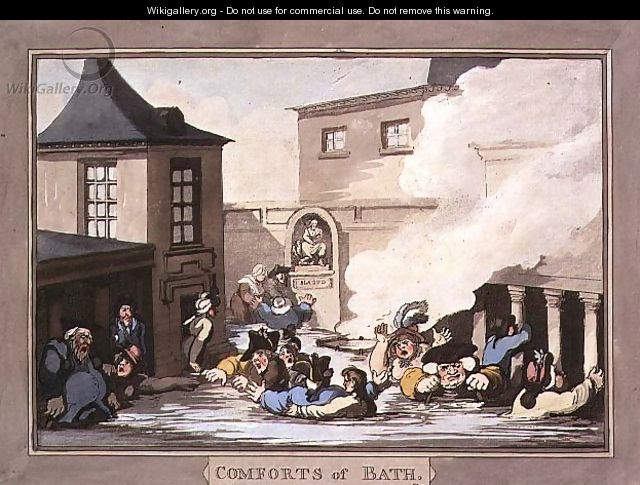
The Kings Bath from Comforts of Bath
Thomas Rowlandson 1798
Once a family was established the day was usually begun by bathing for an hour or so. Women were brought in a chair in the morning, dressed in their bathing clothes, and went into the water and given a small floating bowl by an attendant. The lady put a handkerchief, snuffbox and nosegay in this bowl and then traversed the baths, either alone or with a guide if she was new to Bath; until she’d amused herself fully and then she called for her chair and returned to her lodgings.
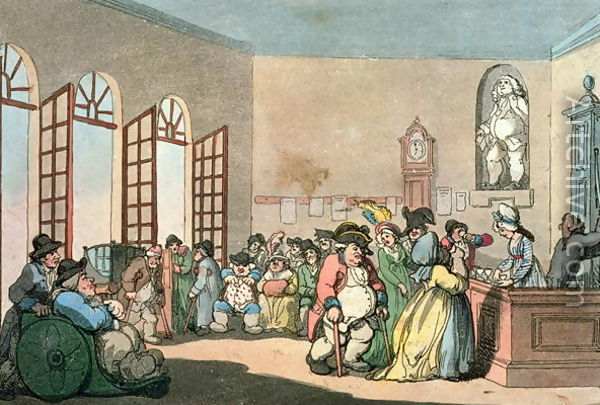
The Pump Room
Thomas Rowlandson
After bathing people immediately gathered in ‘general assembly’ at the pump-house, ‘some for pleasure and some to drink the hot waters’. To take the waters three glasses were drunk at intervals. And while people drank the waters and enjoyed the ‘conversation of the gay, the witty, or the forward’ a small band of musicians played to enliven the atmosphere.
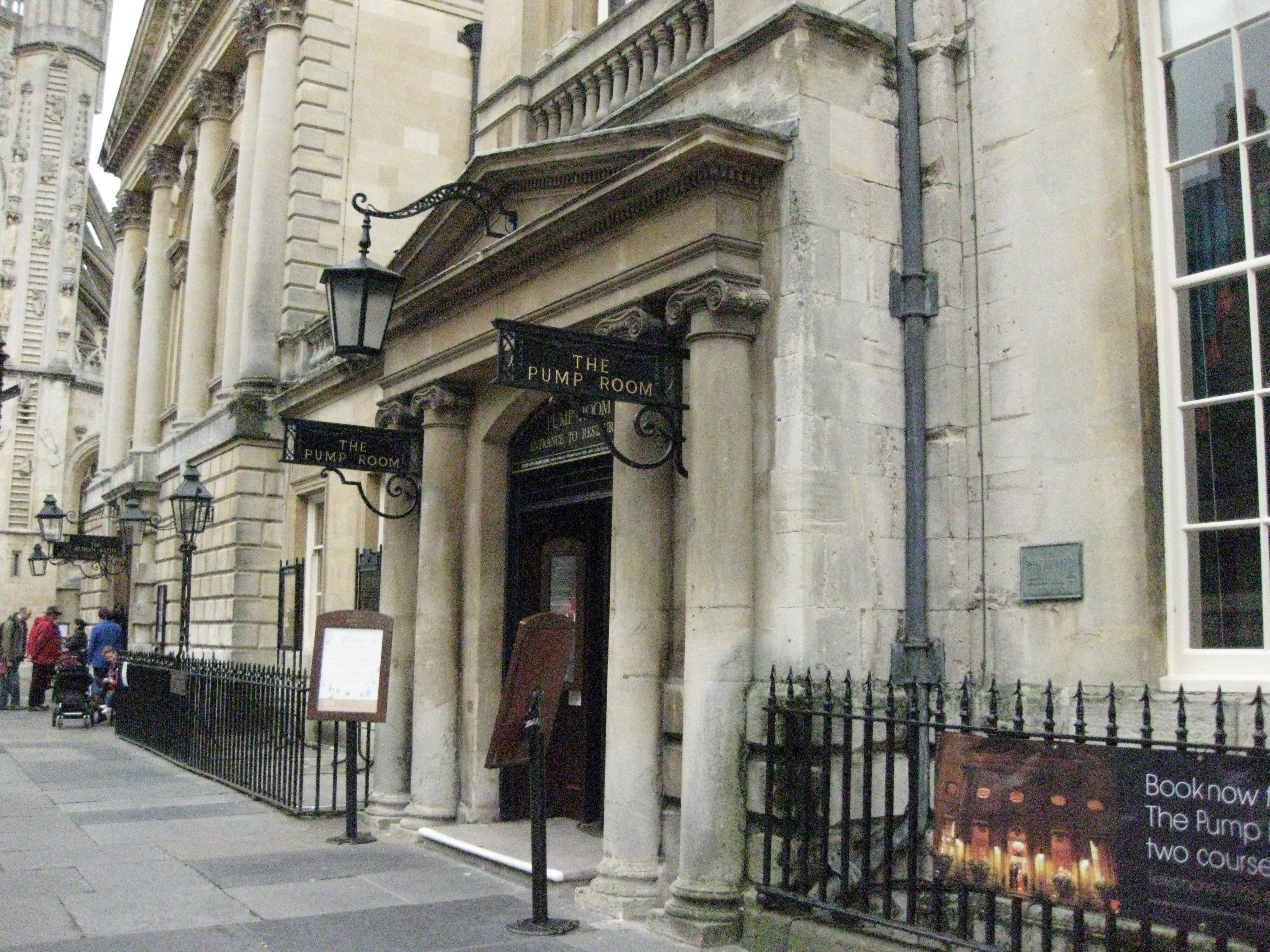
The Pump Room, Abbey entrance
From the pump-house ladies sometimes withdrew to a female coffee-house before returning to their lodgings. While gentlemen withdrew to ‘their coffee-houses to read the papers, or converse on the news of the day, with a freedom and ease not to be found in the metropolis’.
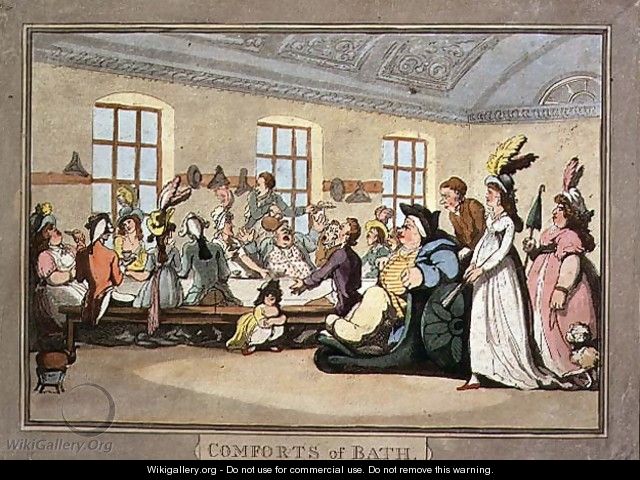
The Public Breakfast, Comforts of Bath
Thomas Rowlandson 1798
Fashionable people ate public breakfasts at the assembly-houses, where they would invite acquaintances, and sometimes order private concerts. Or they might attend lectures on the arts and sciences, ‘which are frequently taught there in a pretty superficial manner, so as not to tease the understanding, while they afford the imagination some amusement’. The concerts were performed in the ballrooms, tickets a crown each. And concert breakfasts were sometimes held at the assembly-houses paid for by the gentlemen’s subscriptions. During these, ‘persons of rank and fortune’ might perform in the orchestra for the pleasure of joining the performers.
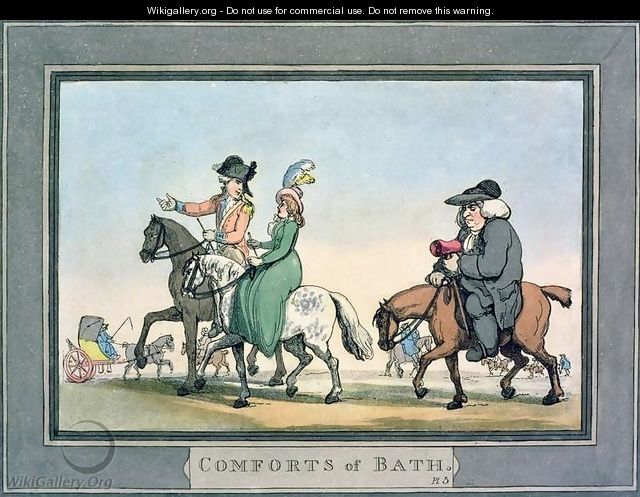
The Morning Ride, Comforts of Bath
Thomas Rowlandson 1798
Another morning diversion was to attend a morning service in the Abbey.
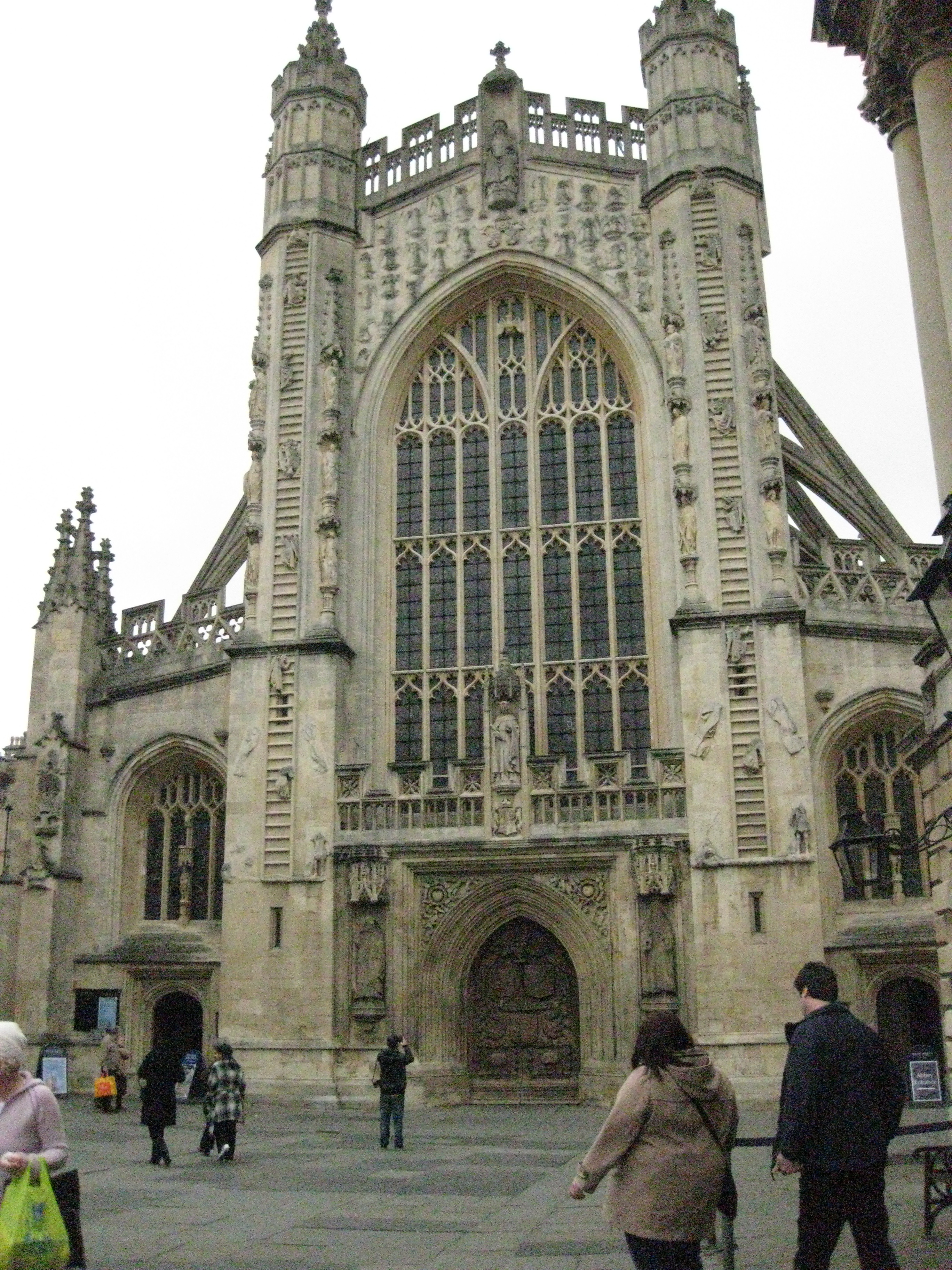
Bath Abbey
As Oliver Goldsmith says ‘Thus we have the tedious morning fairly over’. So what of the afternoon?
As noon approaches some people appear on ‘the parade and other public walks, where they continue to chat and amuse each other, till they have formed parties for the play, cards, or dancing for the evening’. While others divert themselves reading in the bookshops, or take the air, walking in town, riding on horseback or in carriages, or even walking into ‘the meadows round the town or, winding along the side of the river Avon, and the neighbouring canal’. Some more adventurous walkers even scaled ‘those romantic precipices that overhang the city’.
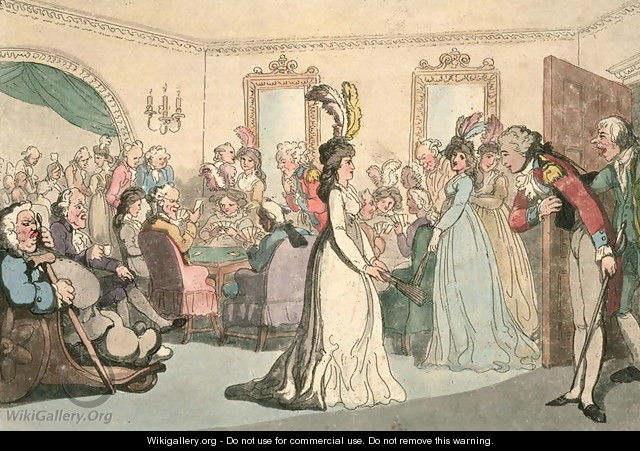
Company at Play, Comforts of Bath
Thomas Rowlandson 1798
For the dinner hour people returned from their various recreations and dined on ‘mutton, butter, fish, and fowl’ with ‘utmost elegance and plenty’. After dinner people met again at the pump-house, and then retired with companions to the walks and then to drink tea at the assembly-houses before the evening entertainments began.
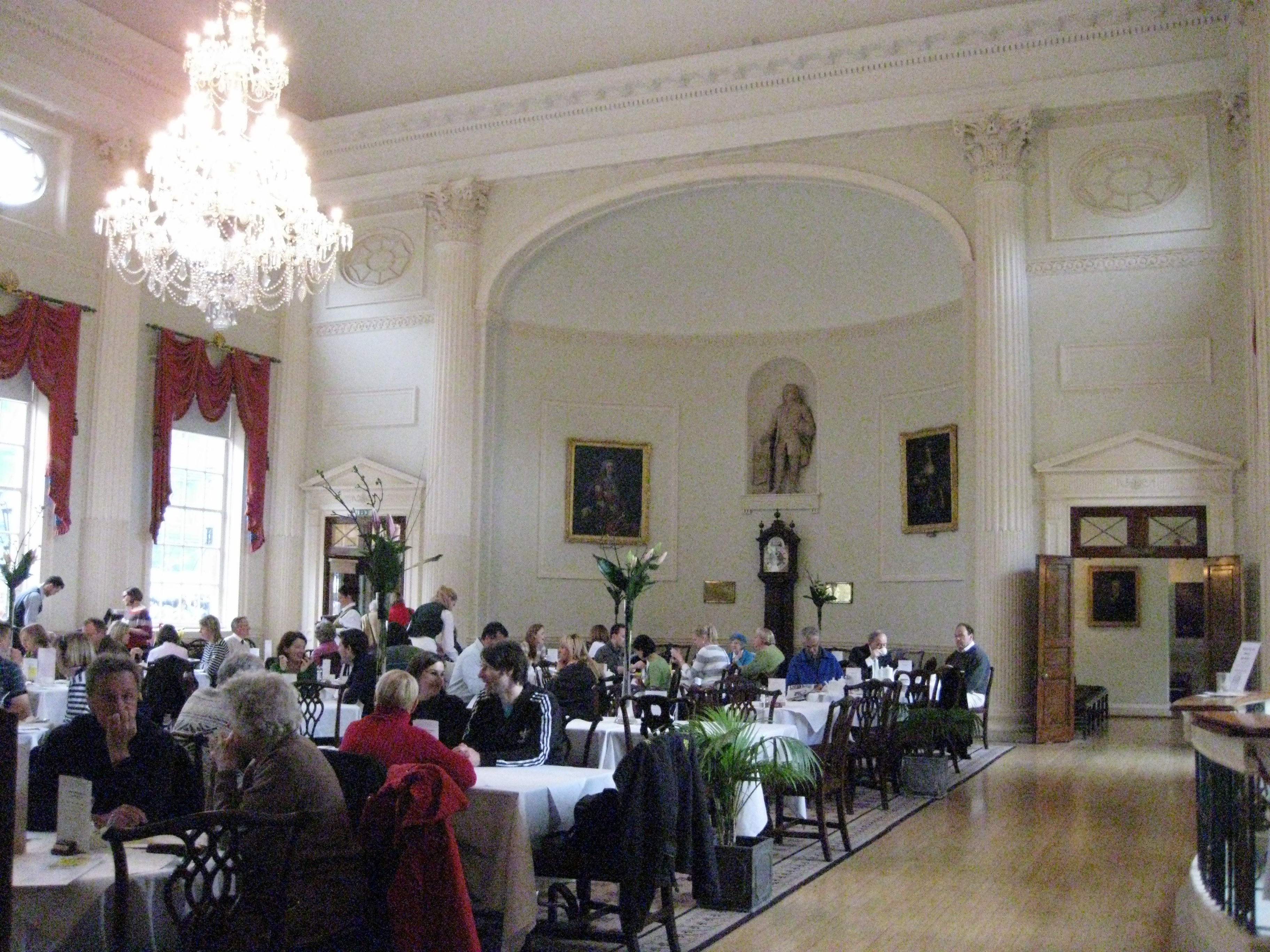
The Pump Room
Evening entertainment included ‘balls, plays or visits’ A theatre was erected in 1705 by subscription and there was a public ball every Tuesday and Friday evening.
The evening’s balls began at six with minuets, as I have said in earlier blogs, and as master of Ceremonies Beau Nash insisted the first was danced by ‘two persons of the highest distinction present.’ When the minuet concluded, the lady was to return to her seat, and Mr Nash was to bring the gentleman a new partner. This ceremony was observed by every succeeding couple, every gentlemen obliged to dance with at least two ladies until the minuets were over. They lasted two hours. At eight the country dances began and ladies of quality, according to their rank stood up first. During the short interval at nine the gentlemen helped their partners to tea, before the amusements began again. And then at eleven, Beau Nash entered the ball-room and ordered the music to desist by lifting up his finger. After allowing time for people to ‘become cool’ the ladies were then escorted to their carriages.
And so a day in eighteenth century Bath‘yields a continued rotation of diversions.’ And ‘people of all ways of thinking, even from the libertine to the Methodist, have it in their power to complete the day with employments suited to their inclinations.’
Jane Lark is a writer of authentic, passionate and emotional love stories.
See the side bar for details of Jane’s books, and Jane’s website www.janelark.co.uk to learn more about Jane. Or click ‘like’ on Jane’s Facebook page to see photo’s and learn historical facts from the Georgian, Regency and Victorian eras, which Jane publishes there. You can also follow Jane on twitter at @janelark
 Author, Jane Lark's stories