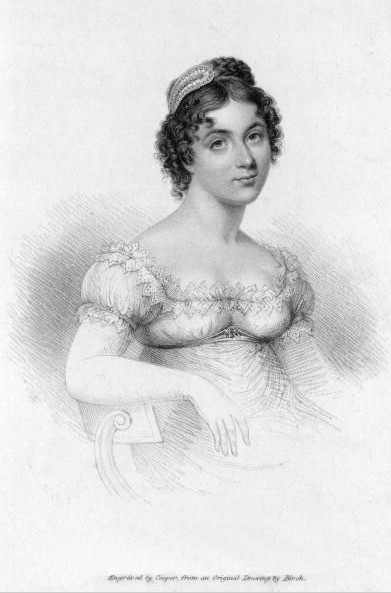
 Last week I began sharing the true stories which Harriette Wilson, the real 19th century courtesan, left out of her memoirs, and this week’s truth is truly amazing. I was really surprised when I discovered it.
I am going to carry on my tradition of a little background though 😉 so below is the background I posted last week, if you read it last week, skip to the text marked with bold type.
If you have been following my blog for a little while, you will know that Harriette Wilson, the real Regency courtesan who published her memoirs in 1825 as a kiss and tell series, inspired the first novel in the Marlow Intrigues series, The Illicit Love of a Courtesan, I have been sharing the version of her life she told in her memoirs here for about a year, but over that year so many times people have told me – but it’s known she lied in them.
Well recently, I discovered the work of someone who has researched Harriette’s real life, and so I can now share with you some of the things she did not include.
As to whether or not she lied, well I will also cover that… But… I will say now, I have used her memoirs as a wealth of insight into the Regency world, her writing is like looking in through a window to see how life was for someone who lived then, and yes, you can definitely spot the scenes where there is some embellishment, either because she was writing for an audience, or because she wished to hurt someone who had hurt her… But overall, many of her scenes are from truth. Plenty more of this in the next couple of weeks, including some insights which I have found really upsetting.
I left Harriette last week as she ran away from home with her first gentleman lover (or maybe not her first, that we don’t know for sure, but definitely the first man she agreed to become the recognized mistress of). Her memoirs began at the point she was living with the man she ran away with in Brighton, but that was not where he took her to first. What she doesn’t mention at all in her memoirs is where her relationship with Lord Craven began…
So where did Harriette Wilson start her first affair and begin to learn the artistry of a courtesan…? At Ashdown House.

Ashdown House is an isolated hunting lodge, up on the top of the Wiltshire downs, it sits in acres of grounds, in the hollow of a hill, with amazing views. It was built as a love nest by the 1st Earl of Craven, who received his earldom for his funding and loyal support of the Stuart family, even during their exile. But Lord Craven had a reason for his devotion, he was in love with the Queen of Bohemia, known as the Winter Queen, and when her nephew allowed her to return to England, Lord Craven supported her and kept her at his home in London. Ashdown was to be his gift to her… Their love nest in the country… However she died before it was completed. I shared their story a while ago, here, with no idea Ashdwon had any link to Harriette Wilson, or Jane Austen…
When the Queen of Bohemia died, after Ashdown was completed, it became a lordly playground, and instead of a love nest, a den of iniquity. King Charles II was entertained there often, among his group of courtiers who, like the Lord Craven of that time, all enjoyed women and wine, there is a huge wine cellar, which was filled for there hunting visits, and women would be brought in, or mistresses brought with them. There are many accounts of the debauchery of King Charles II’s court in Samuel Pepy’s diaries.
So how do we know Harriette was there – at this stately house with its history of love and sin. Well here is another stunning link… Jane Austen wrote about Harriette in a letter… How bizarre is that?!
William Craven, the 7th Baron, and 1st Earl of the second creation was oddly linked to Jane Austen… Tom Fowle was Jane Austen’s sister’s, Cassandra’s, fiancé, and Lord Craven, the Earl, was Tom Fowle’s uncle and patron, he’d funded Tom’s education. Had Tom lived to marry Cassandra, he would have likely been given a job on one of Lord Craven’s estates. Tom’s father had been appointed Reverend on an estate having married Lord Craven’s sister. Cassandra would have obviously lived with Tom there. Tom died of yellow fever serving as a Chaplin to Lord Craven’s private regiment. So like other lesser sons and high society family members who had no actual status or income themselves – just like Jane Austen’s father, and his own – Tom would have probably taken on a parish on one of Lord Craven’s estates. Lord Craven had several.
Ashdown was one of his smaller, minor properties. The perfect place to tuck away a mistress, who at that time, was considered boyish, and little more than a child.
So, when Jane Austen heard rumours of Lord Craven’s extremely young new mistress, she included the news in a letter to her sister. Jane’s letter was dated, Thursday, January, 8th, 1801, “Eliza has seen Lord Craven at Barton, & probably by this time at Kintbury, where he was expected for one day this week. – She found his manners very pleasing indeed . – The little flaw of having a Mistress now living with him at Ashdown Park, seems to be the only unpleasing circumstances about him.” Jane Austen was speaking of Harriette Wilson. Then Harriette was just fifteen years of age.
Strangely, just to add to all the bizarre links in this, I grew up about seven miles from Ashdown House, in a village below the downs, looking up from my bedroom window at the White Horse on a hill Harriette was known to have walked to in her time at Ashdown. I used sit on the windowsill when I was really young, looking up at the Horse, daydreaming all sorts of nonsense. The teacher who told me I would write a novel when I was eight, lived in a bungalow opposite that house. So weird… Anyway, I have spent hours of my young life up on the hills where Harriette began her career as a courtesan, how odd then to discover this link to Harreitte, especially as Harriette’s Memoirs have been so influential in the development of The Illicit Love of a Courtesan and all of the Marlow Intrigues series, which have brought me writing success.
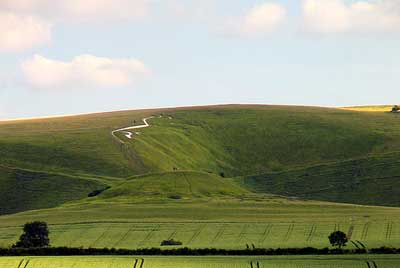
I’ve always loved the hills and the countryside, my soul needs it. When I have lived in towns, I’ve walked miles, caught buses and caught ferries to get out into the countryside for days here and there. I am like Jane Austen… Who loved country life and hated her years in Bath…
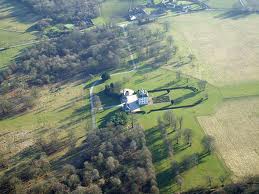
Ashdown House from the air, the Uffington, White Horse is on a hill about 3 miles to the right
Harriette, though, how would she have felt…? We can only imagine. But her memoirs frequently say how bored she was whenever she became isolated or lived away from London, or Brighton, or somewhere with many forms of entertainment and a lot of people. But she had escaped a house full of noisy siblings at the time, been freed from a life of labour and then deposited in a huge house, filled with luxuries. I am sure at first she must have felt like crowing – Look at me! She’d beaten her sisters. She was the mistress of an Earl, and living in a huge house, with acres of grounds to wander about… and she had many servants to wait on her, and order about… as if she was the lady of the house. But… She was the mistress of an old man, who wore a night-cap to bed – her memoirs told us she was unimpressed with that – and her memoirs also indicate he treated her like a child. He must have talked down to her, she tells us he drew her pictures nightly of the cocoa trees on the shores of the countries he’d visited in his years in the navy, telling her stories of his successes in battles at sea.
Everything implies Harriette did not find him physically attractive at all, the role she had taken on must have been a duty, she cannot have enjoyed it, and she must have been bored stiff, it is no wonder then that at the beginning of her memoirs, she talks more about the other men who called on her while she lived with Lord Craven in Brighton. I am sure there were no love scenes of the sort I write about in The Illicit Love of a Courtesan.
When she left Lord Craven, it was to take up with a man who gave her no money at all, and had nothing to offer her financially, not even a home to put her up in, she had to lodge with her old nurse when she was Frederick Lamb’s mistress, and he came to visit her there, and gave her no income either. But she was back in London, and the one thing he could offer was influential friends, he was the second son of an Earl, poor, but very well-connected, and his network of friends presented possibilities…
Harriette said she was extremely glad to leave Lord Craven and his cocoa trees behind…
Next week – were the stories she did tell in her memoirs true, or not?
~
Jane Lark is a writer of authentic, passionate and emotional Historical and New Adult Romance stories, and the author of a No.1 bestselling Historical Romance novel in America, ‘The Illicit Love of a Courtesan’.
Look at the index to discover all the true stories Jane has discovered during research, and to find links to excerpts and a FREE novella ~ A Lord’s Desperate Love
Click here to find out more about Jane’s books, and see Jane’s website www.janelark.co.uk to learn more about Jane. Or click ‘like’ on Jane’s Facebook page to see photo’s and learn historical facts from the Georgian, Regency and Victorian eras, which Jane publishes there. You can also follow Jane on twitter at @janelark
 Author, Jane Lark's stories